
If your lawn mower won’t start, the most common culprits are fuel issues, a dirty air filter, or a fouled spark plug.
We’ve all been there. You’re ready to tackle that overgrown lawn, you pull the starter cord, and… nothing. Or perhaps a cough, a sputter, and then silence. A lawn mower that refuses to start can be a frustrating experience, especially when the grass is getting out of control. But before you call for expensive repairs or resign yourself to a weekend of pushing a dull mower, let’s dive into the common reasons why your trusty garden machine might be giving you the silent treatment. We’ll break down the issues into simple, manageable steps that you can follow to get your mower roaring back to life.
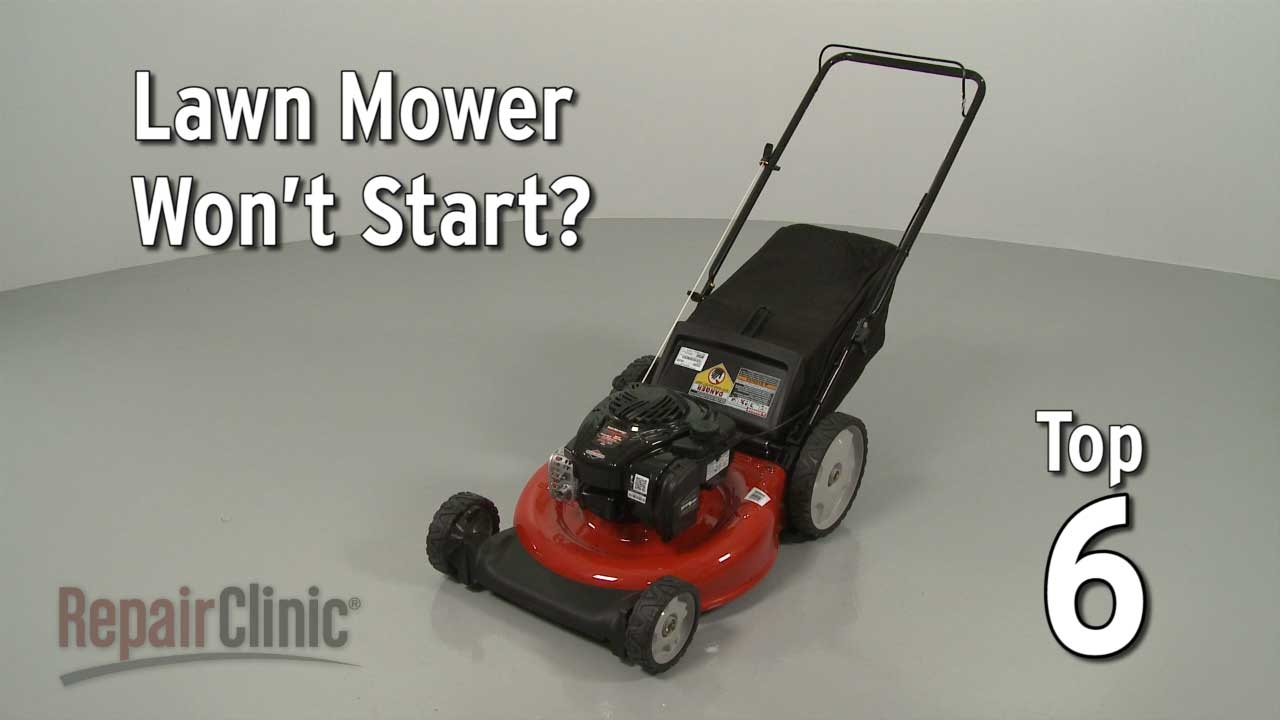
Image Source: i.ytimg.com
The Anatomy of a Starting Problem
For a lawn mower to start, it needs three essential things: fuel, air, and a spark. Think of it like a recipe for fire. If any of these ingredients are missing, or if they aren’t in the right proportion, the engine simply won’t ignite. We’ll explore each of these crucial elements and what can go wrong.
Fuel: The Lifeblood of the Engine
Fuel is what powers your mower. If there’s no fuel, or if the fuel isn’t clean and flowing correctly, the engine can’t run. This is the most frequent reason for a mower to refuse to start.
Gas Tank Empty: The Simplest Fix
It sounds obvious, but sometimes the simplest solution is overlooked. Is there actually gas in the tank? Check your gas tank empty status. If it’s low or completely empty, that’s your problem. Refill it with fresh, clean gasoline. Always use the correct octane level recommended by your mower’s manufacturer.
Old Fuel: The Silent Saboteur
Gasoline doesn’t last forever. Over time, especially if left in the tank over winter, gasoline can degrade. This old fuel can lose its combustibility and also develop gummy deposits that can clog fuel lines. If your mower sat unused for more than a month or two, especially with ethanol-blended fuel, the fuel might be the issue.
What to do with old fuel:
- Drain it: Carefully drain the old fuel from the tank into an approved container.
- Dispose of it properly: Take the old fuel to a local hazardous waste disposal site. Don’t pour it down the drain or on the ground.
- Refill with fresh fuel: Add fresh gasoline to the tank.
Fuel Filter Follies
Many mowers have a small fuel filter located in the fuel line between the tank and the carburetor. This filter is designed to catch any debris that might be in the fuel, preventing it from reaching the carburetor. If this filter becomes clogged with sediment or rust from the fuel tank, it will restrict fuel flow.
Checking and replacing the fuel filter:
- Locate the fuel filter. It’s usually a small, cylindrical component in the fuel line.
- If it looks dirty or clogged, replace it. They are inexpensive and readily available at hardware or auto parts stores.
- Ensure you orient the filter correctly (there’s usually an arrow indicating the direction of fuel flow).
Fuel Line Blockages
Even without a clogged filter, the fuel lines themselves can become blocked by gummed-up fuel residue or even insect nests if the mower has been stored for a long time.
Clearing fuel lines:
- Disconnect the fuel line from the carburetor.
- Gently blow compressed air through the line back towards the tank. If you can’t blow through it, there’s a blockage.
- You might need to use a thin wire or a specialized fuel line cleaner to dislodge stubborn clogs.
Spark: The Ignition Source
Once you have fuel, you need a spark to ignite it. A weak or non-existent spark will prevent your engine from starting.
Spark Plug Problems: The Most Common Culprit
The spark plug is a small but vital component. It creates the spark that ignites the fuel-air mixture. Over time, the spark plug can become fouled with carbon deposits, oil, or unburned fuel, or its electrode can wear down. This is why spark plug problems are a leading cause of starting issues.
Signs of a bad spark plug:
- Cracked or chipped ceramic insulator.
- Black, sooty, or oily deposits on the electrode.
- Excessive wear on the electrodes.
What to do:
- Remove the spark plug: Use a spark plug wrench.
- Inspect it: Look for the signs mentioned above.
- Clean it: If it’s just slightly dirty, you can try cleaning it with a wire brush and some carburetor cleaner. Make sure to blow it dry thoroughly afterward.
- Check the gap: The distance between the electrodes is crucial. Consult your owner’s manual for the correct gap specification and use a feeler gauge to set it.
- Replace it: If the plug is heavily fouled, damaged, or very old, it’s best to replace it with a new one. Make sure it’s the correct type for your mower.
Ignition Coil Failure: The Spark’s Powerhouse
The ignition coil is responsible for generating the high voltage needed to create a strong spark at the spark plug. If the ignition coil fails, you won’t get a spark, even with a good spark plug. This is known as ignition coil failure.
Diagnosing ignition coil failure:
- This is a more complex diagnosis. Often, if you have a good spark plug and still no spark, the coil is suspect.
- You can test the coil using a multimeter, but this requires some electrical knowledge.
- If you suspect the coil, it’s often best to consult a qualified mechanic or replace it if you’re comfortable doing so.
Air: The Breath of the Engine
Just like us, an engine needs air to run. If the air supply is restricted, the fuel-air mixture will be off, preventing combustion.
Air Filter Clogged: The Breathing Obstacle
The air filter prevents dirt, dust, and debris from entering the engine. If the air filter clogged, it restricts the flow of air into the carburetor, causing the engine to run rich (too much fuel, not enough air). This can lead to hard starting, rough running, or a complete failure to start.
Checking and cleaning/replacing the air filter:
- Locate the air filter housing. It’s usually a plastic or metal box on the side of the engine.
- Open the housing (often secured by clips or a screw).
- Remove the air filter.
- Paper filters: If it’s a paper filter and looks dirty, it’s best to replace it. You can try tapping it gently to remove loose debris, but don’t wash them.
- Foam filters: If it’s a foam filter, you can wash it with mild soap and water, rinse it thoroughly, and let it dry completely before reinstalling. You can lightly re-oil it with a specific foam filter oil (don’t overdo it).
- Always ensure the filter is completely dry before reinstalling.
Mechanical Issues: When Parts Get Stuck or Wear Out
Sometimes, the problem isn’t with fuel, air, or spark, but with the mechanical components that allow the engine to operate.
Starter Cord Stuck: The Pull of Frustration
You pull the cord, and it feels jammed or won’t retract. A starter cord stuck can be caused by a few things.
Possible causes for a stuck starter cord:
- Sheared flywheel key: This is a small metal key that connects the flywheel to the crankshaft. If the mower hits a hard object, this key can shear to protect the engine. This will prevent the engine from firing.
- Seized engine: In rare cases, the engine itself might be seized due to lack of oil or internal damage.
- Damaged recoil starter assembly: The spring or housing within the starter mechanism might be broken.
What to do:
- Gently try to jiggle the cord.
- Inspect the starter housing for obvious damage.
- If you suspect a sheared flywheel key or seized engine, this requires more advanced mechanical work.
Oil Level Low: A Critical Warning
While a low oil level might not directly prevent a spark or fuel delivery, most modern engines have a low oil sensor that will prevent the engine from starting as a safety measure to avoid catastrophic damage. If the oil is too low, the engine won’t turn over.
Checking and topping up oil:
- Locate the oil dipstick.
- Ensure the mower is on a level surface.
- Pull out the dipstick, wipe it clean, reinsert it fully, and pull it out again.
- Check the oil level against the markings on the dipstick.
- If low, add the recommended type and amount of oil specified in your owner’s manual.
Battery Dead (For Electric Start Mowers): The Missing Charge
If your mower has an electric start, a battery dead or discharged battery will prevent it from cranking.
Troubleshooting a dead battery:
- Check connections: Ensure the battery terminals are clean and the cables are securely attached.
- Test the battery: Use a multimeter to check the battery voltage. A fully charged 12-volt battery should read around 12.6 volts.
- Charge the battery: Use a compatible battery charger.
- Replace the battery: If the battery is old or won’t hold a charge, it needs to be replaced.
The Carburetor: The Fuel-Air Mixer
The carburetor is a complex part that mixes the right amount of fuel and air for combustion. If it’s not working correctly, the engine won’t start.
Carburetor Cleaning: Clearing the Clutter
Over time, especially with old fuel, varnish and debris can build up inside the carburetor, clogging its tiny passages and jets. This is a very common issue. Carburetor cleaning is often the solution.
Steps for cleaning a carburetor:
- Remove the carburetor: This usually involves disconnecting the fuel line, throttle linkage, and any mounting bolts. Take pictures as you go to help with reassembly.
- Disassemble the carburetor: Carefully take apart the carburetor, noting the location of each part (float, needle, jets, etc.).
- Clean the parts: Use a specialized carburetor cleaner spray. Pay close attention to the jets and small orifices, ensuring they are completely clear. You can use a thin wire or compressed air for stubborn clogs.
- Reassemble: Put the carburetor back together, ensuring all parts are correctly seated.
- Reinstall: Mount the carburetor back onto the mower.
Note: Carburetor cleaning can be a detailed process. If you’re not comfortable with it, seek professional help.
Troubleshooting Steps: A Systematic Approach
When your lawn mower won’t start, it’s best to work through a series of checks methodically.
Step 1: Basic Checks (The Quick Wins)
- Is there fuel? Check the gas tank.
- Is the fuel fresh? If it’s old, drain and refill.
- Is the fuel valve open? Some mowers have a fuel shut-off valve.
- Is the choke set correctly? For a cold engine, the choke should be on. For a warm engine, it should be off or in the half-choke position.
- Is the spark plug wire attached? Make sure the wire is firmly connected to the spark plug.
Step 2: Checking for Spark
- Remove the spark plug: As described earlier.
- Reconnect the spark plug wire: Leave the spark plug attached to the wire.
- Ground the spark plug: Hold the metal body of the spark plug against a clean metal part of the engine block.
- Pull the starter cord: Have someone help you if needed.
- Observe: You should see a strong, blue spark jump across the spark plug gap.
- No spark: This points to an ignition system problem (coil, kill switch, loose wire).
- Weak yellow spark: Could be a dirty spark plug, bad spark plug wire, or a weak ignition coil.
- Good spark: The problem is likely fuel or air related.
Step 3: Checking Fuel Delivery
- Disconnect the fuel line: Do this at the carburetor end.
- Place a container under the fuel line: Have a small container ready.
- Turn the fuel valve on (if applicable):
- Observe fuel flow: You should see fuel flowing out of the line.
- No fuel flow: Check for blockages in the fuel line, fuel filter, or a faulty fuel valve.
- Fuel flows, but slowly: The fuel filter is likely clogged.
Step 4: Inspecting Airflow
- Remove the air filter: As described earlier.
- Try starting the mower without the air filter: Briefly, just to see if it makes a difference.
- If it starts: The air filter is definitely the problem and needs replacement or thorough cleaning.
- If it doesn’t start: The air filter isn’t the primary issue, but it should still be cleaned or replaced if dirty.
Step 5: Advanced Troubleshooting (If Basics Fail)
If the above steps don’t reveal the problem, you might be looking at more involved issues.
- Compression Test: A lack of compression means the engine can’t build enough pressure to ignite the fuel. This can be caused by worn piston rings, valves, or a blown head gasket. This requires a compression tester.
- Carburetor Issues: As mentioned, a clogged carburetor is common. If cleaning doesn’t work, the carburetor may need rebuilding or replacement.
- Flywheel Key: If you suspect a sheared flywheel key, you’ll need to access the flywheel to check it. This is a more involved repair.
Common Lawn Mower Problems at a Glance
Here’s a quick reference table to help you diagnose your starting issues:
| Symptom | Possible Cause(s) | Recommended Action |
|---|---|---|
| No crank/turn over | Battery dead (electric start), Ignition switch off | Check/charge battery, check connections, ensure ignition switch is on. |
| Cranks but won’t start | Gas tank empty, Old fuel, Air filter clogged, Spark plug problems, Fuel line blockage, Carburetor issues | Refill/replace fuel, clean/replace air filter, inspect/clean/replace spark plug. |
| Starts then stalls | Old fuel, Air filter clogged, Carburetor issues, Fuel cap vent blocked | Drain/refill fuel, clean/replace air filter, check carburetor, check fuel cap. |
| Starts then runs rough | Air filter clogged, Spark plug problems, Carburetor issues, Incorrect fuel/oil mix | Clean/replace air filter, inspect/clean/replace spark plug, check carburetor. |
| Starter cord won’t pull | Starter cord stuck (e.g., sheared flywheel key), Seized engine | Inspect starter assembly, check for sheared flywheel key, check oil level. |
Frequently Asked Questions (FAQ)
Q: How often should I change my lawn mower’s spark plug?
A: It’s generally recommended to replace the spark plug at the beginning of each mowing season, or after about 100 hours of use. Regular inspection and cleaning can extend its life.
Q: My mower was working fine yesterday, but now it won’t start. What could have changed?
A: If the mower worked recently, the most likely culprit is old fuel that has started to degrade, or a clogged air filter from dust kicked up during the last use. A loose spark plug wire is also a possibility.
Q: Can I use automotive gasoline in my lawn mower?
A: Yes, you can use automotive gasoline, but it’s best to use regular unleaded fuel with the lowest octane rating possible, as recommended by your mower’s manufacturer. Be aware that gasoline with a high ethanol content can degrade rubber parts in older fuel systems.
Q: My mower sputtered and died. What should I do?
A: This often indicates a fuel issue. Check the fuel level, look for any blockages in the fuel line or filter, and consider if you might have used old fuel. If it happened after a long run, the carburetor might be getting starved for fuel due to a partial clog or a vent issue in the gas cap.
Q: I tried starting my electric start mower, but it just clicks. What’s wrong?
A: A clicking sound usually means the starter solenoid is engaging, but the starter motor isn’t turning the engine. This could be due to a battery dead (low charge), corroded battery terminals, or a faulty starter motor.
Q: How can I prevent my mower from having starting problems next season?
A: Proper winterization is key. This includes running the engine dry of fuel or adding a fuel stabilizer, changing the oil, cleaning the air filter, and removing the spark plug to pour a small amount of oil into the cylinder and slowly pull the starter cord to coat the cylinder walls.
By systematically working through these common issues, you can often diagnose and fix why your lawn mower won’t start, saving you time, money, and the frustration of an unusable yard. Happy mowing!