
If your lawn mower won’t start, it could be due to a few common issues. This guide will help you diagnose the problem and get your mower running again.
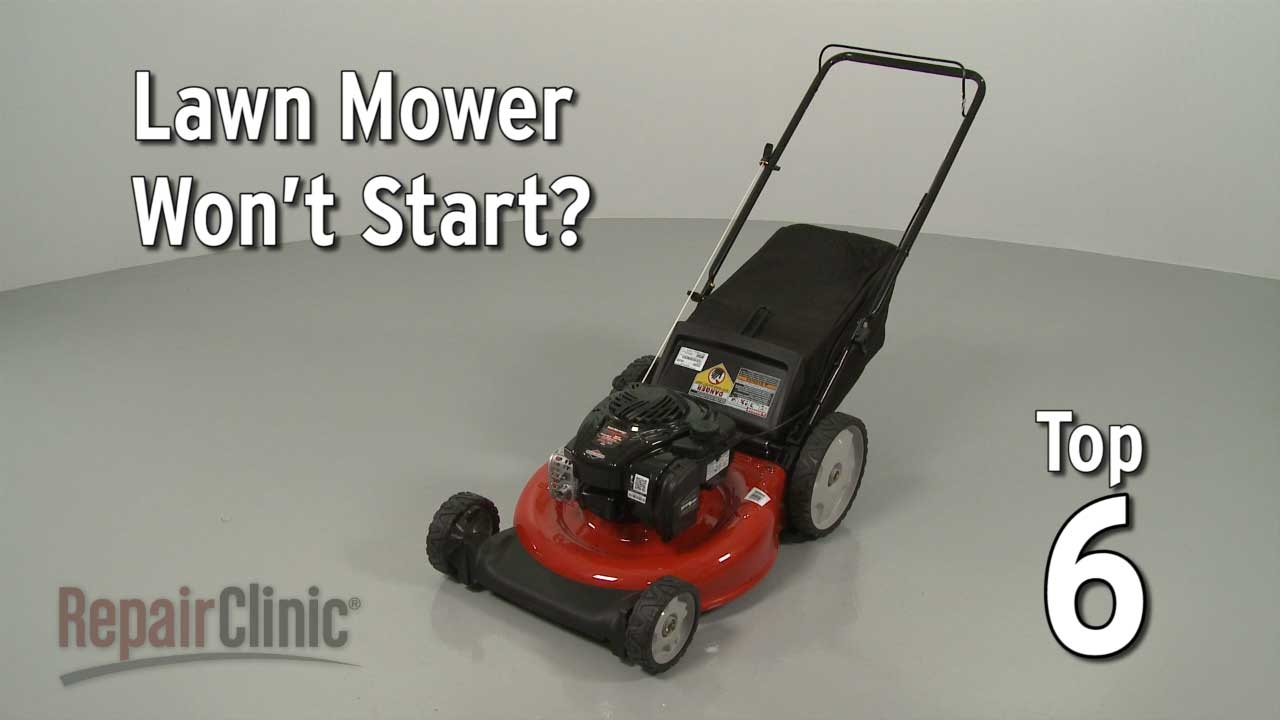
Image Source: i.ytimg.com
Is Your Lawn Mower Engine Won’t Turn Over?
When your lawn mower engine won’t turn over, it means the engine isn’t even attempting to spin. This is different from an engine that cranks but doesn’t fire up. This usually points to an electrical or mechanical blockage preventing the engine’s internal components from moving. It’s crucial to distinguish this symptom from a mower that won’t crank, which indicates a problem with the starting mechanism itself, but not necessarily the engine’s ability to rotate.
Common Causes for an Engine Won’t Turn Over
Several factors can lead to your engine refusing to turn over. Let’s explore them.
Fuel System Issues: The Lifeblood of Your Mower
A lawn mower gas problem is one of the most frequent culprits when your mower refuses to start. Gasoline is essential for combustion, and if it’s not reaching the engine properly, nothing will happen.
Stale Fuel: The Silent Killer
Gasoline degrades over time. If your mower sat through the winter with old fuel in the tank, it’s likely the problem. Old gas loses its volatility and can become gummy, leading to a lawn mower gas problem.
- Why it happens: Ethanol in modern gasoline absorbs moisture, which can cause it to separate and corrode fuel system components.
- How to check: Smell the fuel. Fresh gasoline has a distinct, strong odor. Old gasoline smells stale and unpleasant.
- Solution: Drain the old fuel from the tank and carburetor. Refill with fresh, high-quality gasoline. Consider using a fuel stabilizer, especially if you won’t be using the mower for extended periods.
Insufficient Fuel: A Simple Oversight
It sounds basic, but an empty gas tank is a surefire way to prevent your mower from starting.
- How to check: Look at the fuel gauge (if your mower has one) or visually inspect the tank.
- Solution: Add fresh gasoline.
Clogged Fuel Filter: The Bottleneck
The fuel filter prevents debris from entering the carburetor. If it becomes clogged, fuel flow is restricted.
- How to check: Locate the fuel filter, usually in the fuel line between the tank and the carburetor. If it looks dirty or discolored, it needs replacing.
- Solution: Replace the fuel filter. This is a relatively inexpensive part and a simple DIY fix.
Carburetor Clogged: The Heart of Fuel Delivery
A carburetor clogged with old fuel or debris is a very common reason for starting issues. The carburetor mixes air and fuel in the correct ratio for combustion. If it’s blocked, the engine won’t get the necessary fuel.
- Symptoms: The mower might sputter and die, or it might not start at all.
- How to check: This is a bit more involved. You might need to remove the carburetor for cleaning. Look for gummy deposits inside the fuel bowl and jets.
- Solution: Clean the carburetor. This can often be done with carburetor cleaner spray and compressed air. For heavily clogged carburetors, a full rebuild kit might be necessary.
Fuel Line Obstruction: A Blocked Pathway
The fuel line itself can become kinked, clogged, or damaged, preventing fuel from reaching the carburetor.
- How to check: Disconnect the fuel line from the carburetor and see if fuel flows freely from the tank when the fuel valve is open.
- Solution: Straighten any kinks. If the line is clogged or damaged, replace it.
Ignition System Problems: The Spark of Life
Even with fuel, your mower needs a spark to ignite it. Problems with the ignition system will prevent the engine from starting.
Spark Plug Issue: The Ignition Source
A fouled, damaged, or incorrectly gapped spark plug issue is a prime suspect. The spark plug delivers the electrical spark to ignite the fuel-air mixture.
- Symptoms: Mower might not start, or it might run rough.
- How to check: Remove the spark plug. Look for carbon buildup, damage to the electrode, or signs of oil fouling. Check the gap with a feeler gauge. Refer to your mower’s manual for the correct gap.
- Solution: Clean the spark plug with a wire brush and carburetor cleaner, or replace it with a new one. Ensure the gap is set correctly.
Ignition Coil Bad: The Spark Generator
The ignition coil converts the battery’s low voltage into the high voltage needed for the spark plug. If the ignition coil bad, no spark will be produced.
- Symptoms: No spark, or a weak spark.
- How to check: This often requires a multimeter to test the coil’s resistance. You can also try holding the spark plug wire near a metal part of the engine block (while grounded) and pulling the starter rope – you should see a strong blue spark.
- Solution: Replace the ignition coil. This is typically a more complex repair.
Faulty Ignition Switch or Safety Switches: The Gatekeepers
Modern mowers have safety switches that prevent them from starting if certain conditions aren’t met (e.g., the blade brake is not engaged, the mower is not on a level surface). A faulty switch can trick the mower into thinking it’s unsafe to start. The ignition switch itself can also fail.
- How to check: Bypass the safety switches one by one (carefully!) to see if the mower starts. Test the ignition switch for continuity.
- Solution: Repair or replace faulty switches or the ignition switch.
Mechanical Issues: Internal Roadblocks
Sometimes, the problem isn’t with fuel or spark, but with the engine’s ability to move internally.
Compression Low: The Engine’s Squeeze
The engine needs to compress the fuel-air mixture for efficient combustion. If there’s compression low, the engine won’t start. This can be caused by worn piston rings, damaged valves, or a blown head gasket.
- Symptoms: The starter rope might pull very easily with little resistance, or the engine might try to start but won’t catch.
- How to check: A compression tester is needed for an accurate reading. You can also get a general idea by how much resistance you feel when pulling the starter rope.
- Solution: This is a more serious mechanical issue that often requires professional repair.
Valve Timing Issues: The Engine’s Rhythm
If the engine’s valves are not opening and closing at the correct time, it can prevent starting. This is less common but can happen if the timing chain or belt has slipped or broken.
- Symptoms: Similar to low compression – difficulty starting or no start.
- How to check: This requires detailed disassembly of the engine’s valve train.
- Solution: Professional repair is usually needed to correct valve timing.
Electrical System Issues: Power Problems
While less common for basic push mowers, riding mowers and those with electric start have more complex electrical systems.
Battery Dead: No Juice for Electric Start
If your mower has an electric start, a battery dead is the most obvious reason it won’t crank.
- How to check: Check the battery’s voltage with a multimeter. Look for corrosion on the terminals.
- Solution: Charge the battery or replace it. Clean the terminals.
Starter Motor Failure: The Cranking Mechanism
If the engine won’t turn over and the battery is good, the starter motor failure could be the issue. This motor is responsible for spinning the engine to get it going.
- Symptoms: You might hear a clicking sound, or nothing at all, when you try to start with the electric start.
- How to check: Check for power at the starter solenoid and motor.
- Solution: Replace the starter motor or solenoid.
Troubleshooting Steps When Engine Won’t Turn Over
When your mower’s engine won’t turn over, follow these logical steps:
- Check the Fuel: Ensure you have fresh gasoline in the tank.
- Inspect the Spark Plug: Remove it, check its condition, and the gap.
- Check for Spark: With the spark plug removed (but connected to the wire), ground it against the engine block and pull the starter cord. Look for a strong spark. If no spark, suspect the ignition coil or safety switches.
- Examine the Air Filter: A severely clogged air filter can sometimes impede starting.
- Look for Blockages: Ensure the blade is not obstructed by grass, debris, or the mower deck itself. Sometimes a lodged object can prevent the engine from turning.
Why My Mower Won’t Crank?
When your mower won’t crank, it means the starter mechanism isn’t engaging the engine to begin the combustion process. This is distinct from the engine not turning over, which implies the engine could turn but isn’t, for reasons we discussed above. Cranking issues are almost always electrical or mechanical within the starting system itself.
Common Reasons for a Mower Won’t Crank
Let’s delve into why your mower might not be getting that initial “crank.”
Electrical System Hiccups: The Power Flow
The starting system relies on a flow of electricity. Any break in that chain can stop it from working.
Battery Dead or Weak: The Power Source Fails
For mowers with electric start, a battery dead or significantly discharged is the most common cause of a no-crank situation. Even if it has some charge, it might not be enough to turn the starter motor effectively.
- How to check: Use a multimeter to test the battery voltage. A fully charged 12V battery should read around 12.6 volts. If it’s below 12 volts, it’s likely discharged or failing. Inspect terminals for corrosion.
- Solution: Charge the battery. If it doesn’t hold a charge, it needs to be replaced. Clean battery terminals with a wire brush and apply terminal protectant.
Loose or Corroded Battery Cables: The Connection
Even with a good battery, loose or corroded cables prevent power from reaching the starter.
- How to check: Visually inspect the battery cable connections. Are they tight? Is there any white or greenish powdery buildup (corrosion)?
- Solution: Tighten loose connections. Clean corroded terminals with a wire brush.
Faulty Starter Solenoid: The Relay Switch
The starter solenoid acts as a heavy-duty relay, sending power from the battery to the starter motor. If the solenoid fails, the starter motor won’t receive power.
- Symptoms: You might hear a single click when you turn the key or push the start button, but the starter motor doesn’t spin.
- How to check: With a multimeter, check for battery voltage reaching the solenoid’s large terminal when you try to start. Then, check for voltage exiting the solenoid’s small terminal (which engages the starter) and going to the starter motor.
- Solution: Replace the starter solenoid.
Starter Motor Failure: The Motor Itself
The starter motor failure means the motor that physically turns the engine is broken.
- Symptoms: No sound, or a grinding sound, when trying to start. Sometimes a single click if the solenoid is working but the motor isn’t.
- How to check: Check for voltage at the starter motor itself when the solenoid is activated. If voltage is present but the motor doesn’t spin, the motor is likely bad.
- Solution: Replace the starter motor.
Ignition Switch Problems: The Command Center
The ignition switch sends the signal to the solenoid. If it’s faulty, it won’t send that signal.
- Symptoms: No response at all when you try to start.
- How to check: Test the ignition switch for continuity using a multimeter.
- Solution: Replace the ignition switch.
Safety Switch Malfunctions: The Guardian Angels
As mentioned earlier, safety switches are critical. If any of them are faulty or engaged incorrectly, the starter circuit will be interrupted.
- Examples: Brake pedal switch (riding mowers), PTO switch (power take-off for blades), seat switch, neutral safety switch.
- How to check: Consult your mower’s manual to locate and test each safety switch.
- Solution: Repair or replace faulty safety switches.
Mechanical Impediments: Physical Obstructions
While less common for a “won’t crank” scenario (more likely for “won’t turn over”), a severe mechanical issue could prevent the starter from engaging or turning the engine.
Blade Obstruction: A Stuck Mower
If the mower deck is severely clogged with grass or debris, or if something is physically jamming the blade, the starter motor might struggle or fail to turn the engine.
- How to check: Always ensure the spark plug is disconnected before checking the blade. Try to manually turn the blade. If it’s seized, clear any obstructions.
- Solution: Remove debris from under the mower deck. Ensure the blade can spin freely.
Internal Engine Seizure: A Catastrophic Failure
In rare cases, a catastrophic internal engine failure, like a seized piston or connecting rod, can prevent the starter from even attempting to turn the engine.
- Symptoms: The starter might make a loud clunk or groan but not spin, or there might be no response at all.
- How to check: This is usually evident if the engine is also seized manually (i.e., the blade and engine won’t turn by hand).
- Solution: This often means the engine needs a complete overhaul or replacement.
Troubleshooting Steps When Mower Won’t Crank
Here’s a systematic approach when your mower won’t crank:
- Check the Battery: Ensure it’s charged and the terminals are clean and tight.
- Inspect Safety Features: Make sure all safety switches (brake, seat, PTO, etc.) are correctly engaged or bypassed for testing.
- Listen for Clicks: If you hear a click, the solenoid is likely engaging, pointing towards the starter motor or a weak battery. If you hear nothing, suspect the ignition switch, solenoid, or main power supply.
- Test the Solenoid: Use a multimeter to trace the flow of power.
- Check the Starter Motor: Ensure it’s receiving power when the solenoid is activated.
- Verify Blade Clearance: Make sure the blade isn’t jammed.
Deciphering Why Your Lawn Mower Won’t Start: A Comprehensive Look
When your trusty lawn mower decides not to cooperate, it can be a frustrating experience. The sheer number of potential issues can seem overwhelming, but by systematically addressing the most common problems, you can often diagnose and fix the issue yourself. We’ll break down the most frequent reasons your mower might be refusing to start.
The Core Components: Fuel, Spark, and Air
At its heart, an internal combustion engine, like the one in your lawn mower, needs three things to run:
1. Fuel: To provide the combustible material.
2. Spark: To ignite the fuel-air mixture.
3. Air: To mix with the fuel and support combustion.
If any of these are missing or compromised, your mower won’t start. We’ve touched on these, but let’s reiterate and expand.
Fuel System Deep Dive: More Than Just Gas
A lawn mower gas problem is a broad category, but it’s so common it warrants a closer look.
Freshness is Key: The Age of Your Gas
Gasoline is not a timeless substance. It degrades. Modern gasoline, especially with ethanol, can go bad in as little as 30 days.
- Why it matters: Degraded fuel loses volatility, meaning it doesn’t vaporize and mix with air as effectively. It can also leave behind gummy deposits.
- When to suspect: If the mower was stored with gas from last season, or if you haven’t used it in a few months.
- Solution: Drain all old fuel. Use a fuel stabilizer for storage.
Fuel Filter as a Bottleneck
The fuel filter dirty acts like a coffee filter for your gasoline. If it gets clogged, the fuel can’t flow freely to the carburetor.
- Location: Typically inline between the fuel tank and the carburetor.
- Signs of trouble: If you’ve checked fuel freshness and the tank isn’t empty, a dirty filter is a strong candidate.
- Replacement: They are usually inexpensive and simple to swap out.
Carburetor Clogged: The Mower’s “Lungs”
A carburetor clogged is a frequent offender. This is where the magic of mixing fuel and air happens. If the tiny jets and passages are blocked by gunk, the engine won’t get the right fuel-air ratio.
- Common causes: Old fuel sitting in the carburetor, debris in the fuel system.
- Symptoms: Mower might sputter and die after starting, or refuse to start at all.
- Cleaning: Requires disassembly. Use carburetor cleaner spray and compressed air. Be gentle with delicate parts.
Fuel Lines and Vents: Uninterrupted Flow
The fuel line itself can be a point of failure.
- Kinks: A bent or kinked fuel line restricts flow.
- Blockages: Debris can get lodged within the line.
- Vents: Fuel tanks have vents to allow air in as fuel is used. A blocked vent can create a vacuum, stopping fuel flow.
- Checking: Visually inspect fuel lines for damage or kinks. Ensure the fuel cap vent isn’t blocked.
The Spark: When Electricity Meets Fuel
No spark, no boom. It’s that simple.
Spark Plug Issue: The Humble Hero
The spark plug issue can range from it being dirty to completely worn out.
- Cleaning and Gapping: A common DIY fix. Use a wire brush and check the gap against your manual’s specifications.
- Replacement: Spark plugs are cheap. Replacing it is often the easiest first step.
Ignition Coil Bad: The Voltage Transformer
The ignition coil is responsible for stepping up the battery’s voltage to the thousands of volts needed to jump the spark plug gap. If the ignition coil bad, there will be no spark.
- Diagnosis: Requires testing with a multimeter. Visual inspection might reveal cracks or damage.
- Replacement: Often a more involved repair, requiring careful wiring.
Flywheel Key Sheared: The Timing Link
The flywheel key is a small metal piece that aligns the flywheel with the crankshaft. If you hit a hard object (rock, root), this key can shear to protect the engine’s internal components. This misalignment will prevent the spark from occurring at the correct time.
- Symptoms: Mower might have been running fine, you hit something, and now it won’t start, often with no spark.
- How to check: This requires removing the flywheel to inspect the key.
- Solution: Replace the flywheel key.
Air Intake: The Breath of Life
While less common to cause a complete no-start, a severely restricted air filter can make starting very difficult.
Dirty Air Filter: The Smothered Engine
An air filter clogged with grass clippings and dirt prevents enough air from entering the carburetor for proper combustion.
- Check: Visually inspect the air filter. If it’s dark and clogged, it needs attention.
- Solution: Clean or replace the air filter. For paper filters, replacement is usually best. Foam filters can often be washed and re-oiled.
Mechanical Hurdles: When the Engine Itself Fails
These are often more serious issues that require a deeper dive.
Low Compression: The Squeeze Problem
Compression low means the engine isn’t building enough pressure inside the cylinder to ignite the fuel-air mixture efficiently.
- Causes: Worn piston rings, leaky valves, damaged head gasket.
- Symptoms: The starter cord might pull very easily, with little resistance. The engine might crank but never “catch.”
- Testing: Requires a compression tester.
- Repair: Often involves significant engine work.
Valve Issues: The Engine’s Timing
Incorrectly adjusted or damaged valves can prevent compression or proper fuel-air mixture flow.
- Symptoms: Similar to low compression.
- Diagnosis: Requires checking valve clearances or inspecting for damage.
Starter System Woes: When the Cranking Fails
This section focuses on why the engine won’t even try to start.
Battery Issues: The Power Source
A battery dead is the most straightforward cause for an electric-start mower that won’t crank.
- Checks: Voltage, terminal cleanliness, and cable security.
- Solutions: Charging or replacement.
Starter Motor Failure: The Motor Itself
If the battery is good, but the starter motor failure is the culprit, you won’t hear the engine turning over.
- Diagnosis: Testing for power at the motor.
- Solution: Replacement of the motor.
Solenoid or Relay Problems: The Signal Transmission
The starter solenoid is a crucial link. If the starter motor failure is due to the solenoid not sending the signal, it’s a different problem.
- Diagnosis: Tracing power through the solenoid.
- Solution: Replacing the solenoid.
Ignition Switch & Safety Features: The Control System
A faulty ignition switch or a misbehaving safety switch will prevent the starter signal from ever being sent.
- Diagnosis: Testing switches and circuits.
- Solution: Repair or replacement of the faulty component.
Troubleshooting Table: Common Problems and Solutions
Here’s a quick reference table to help pinpoint the issue:
| Symptom | Potential Cause(s) | Troubleshooting Steps |
|---|---|---|
| Engine Won’t Turn Over | Stale Fuel, Clogged Fuel Filter, Carburetor Clogged, Ignition Coil Bad, Low Compression | Check fuel, clean/replace filter, clean carburetor, test spark, check compression. |
| Mower Won’t Crank (Electric Start) | Battery Dead, Loose Cables, Faulty Solenoid, Starter Motor Failure, Safety Switch Issue | Check battery voltage/connections, test solenoid/starter motor, check safety switches. |
| Engine Cranks but Won’t Start | Stale Fuel, Clogged Fuel Filter, Carburetor Clogged, Spark Plug Issue, Fuel Line Blocked | Verify fresh fuel, clean/replace filter, clean carburetor, check/replace spark plug, inspect fuel lines. |
| Mower Starts, Then Dies Quickly | Fuel Filter Dirty, Carburetor Clogged, Loose Fuel Line, Vent Blocked | Check fuel filter, clean carburetor, ensure fuel lines are secure, check fuel cap vent. |
| Mower Runs Rough or Lacks Power | Spark Plug Issue, Fuel Filter Dirty, Carburetor Clogged, Low Compression | Clean/replace spark plug, check fuel filter, clean carburetor, test compression, check air filter. |
| Mower Smells Like Gas | Leaking Fuel Line, Loose Carburetor Gasket, Flooded Carburetor | Inspect fuel lines and connections, check carburetor gaskets, ensure proper starting procedure is followed. |
| Mower Backfires (Explodes from exhaust) | Ignition Timing Off, Lean Fuel Mixture (e.g., Carburetor Clogged) | Check flywheel key alignment, clean carburetor, ensure correct fuel-air mix. |
Frequently Asked Questions (FAQ)
Q1: My lawn mower won’t start, and I just filled it with fresh gas. What else could it be?
A1: Even with fresh gas, a lawn mower gas problem can persist if the fuel filter is dirty, the carburetor is clogged, or the fuel lines are blocked. Beyond fuel, check your spark plug for issues, ensure you have spark, and verify that your air filter isn’t completely clogged.
Q2: Can a dirty fuel filter really stop a mower from starting?
A2: Absolutely. A fuel filter dirty acts as a bottleneck, restricting the flow of gasoline to the carburetor. If the fuel can’t get to the engine, combustion cannot occur, and the mower will not start.
Q3: My mower cranks but won’t fire up. Is it a spark plug issue or something else?
A3: A spark plug issue is a common cause for a mower that cranks but won’t start. However, it could also be a fuel delivery problem (clogged carburetor, dirty fuel filter) or an ignition system problem where the spark isn’t strong enough or timed correctly (e.g., ignition coil bad).
Q4: What does it mean if my lawn mower engine won’t turn over at all?
A4: If your engine won’t turn over, it means the starter motor isn’t even making the engine rotate. This often indicates a problem with the battery (if electric start), the starter motor itself, the starter solenoid, or a mechanical blockage preventing the engine from moving. It’s different from the mower won’t crank, which implies the starter mechanism isn’t engaging the engine.
Q5: How do I know if my carburetor is clogged?
A5: A carburetor clogged will typically prevent your mower from starting or cause it to run very poorly. Symptoms include sputtering, stalling, difficulty starting, or a rough idle. You might also notice a strong gasoline smell if fuel is backing up or leaking. The definitive way to check is to remove and inspect it for gummy deposits or debris in the jets and fuel bowl.
Q6: My electric start mower just clicks, but the engine doesn’t turn. What’s wrong?
A6: This usually points to an issue with the starter solenoid or a weak battery. The click indicates the solenoid is trying to engage, but there isn’t enough power to turn the starter motor, or the solenoid itself is failing to send power to the motor. It could also be starter motor failure.
Q7: My mower ran fine yesterday, but today it won’t start. What’s the most likely cause?
A7: If it worked yesterday and not today, and assuming no physical damage occurred, the most common culprits are fuel-related: stale fuel if it sat overnight, or a minor blockage in the fuel system that has worsened. Check the fuel level and ensure fresh gas is in the tank. A spark plug issue or a loose connection could also be the cause.
Q8: Is low compression dangerous for my mower?
A8: Yes, compression low indicates a significant internal engine problem. Without adequate compression, the engine cannot effectively ignite the fuel-air mixture, preventing it from starting or running properly. It often requires professional repair.
Q9: I found water in my lawn mower gas tank. What should I do?
A9: Water in the fuel is a serious problem. You’ll need to drain the fuel tank completely. It’s also advisable to drain and clean the carburetor, as water can have entered there as well. Refill with fresh gasoline.
Q10: What is a common reason for a riding mower not to crank?
A10: For a riding mower, besides the common issues like a battery dead or faulty starter, safety interlocks are very common reasons. Ensure the parking brake is set, the transmission is in neutral, and you are seated on the mower (if it has a seat safety switch). A faulty PTO switch can also prevent cranking.