
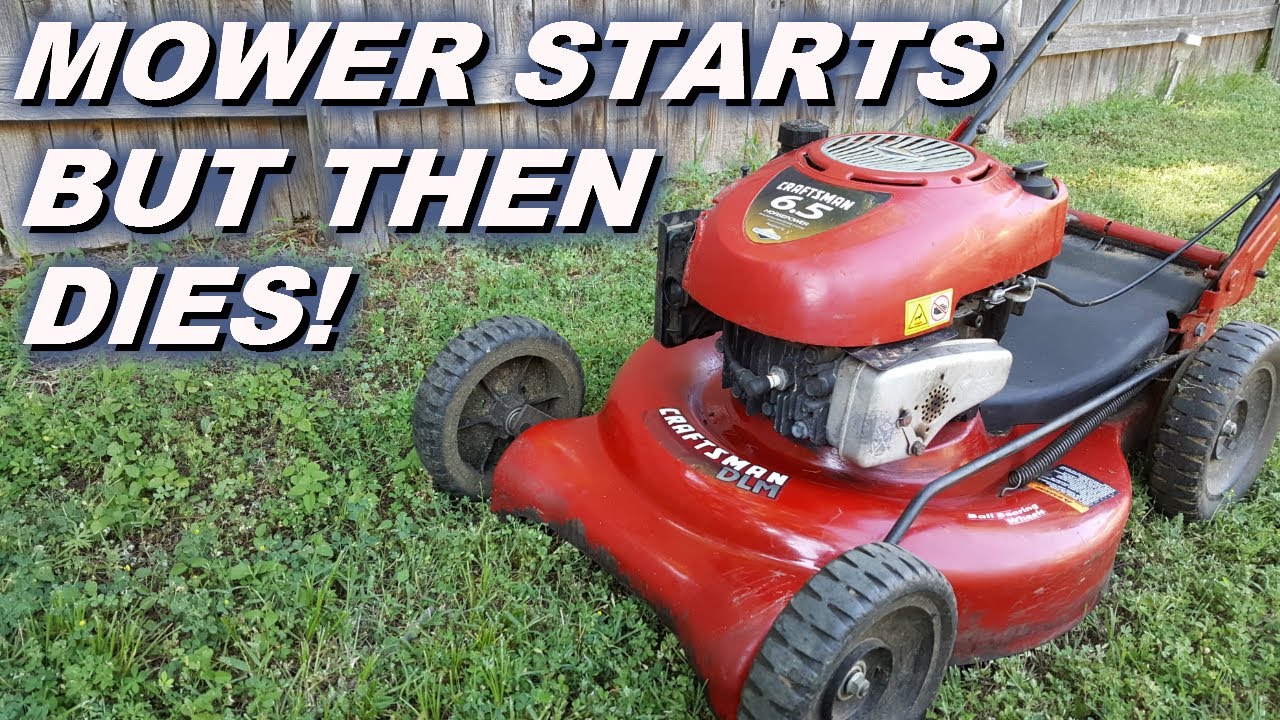
Image Source: i.ytimg.com
Solved: Why Does A Lawn Mower Start Then Stop?
A lawn mower starting and then immediately stopping is a common and frustrating problem. It usually happens because of a problem with the fuel system, a dirty air filter, a faulty spark plug, or a lack of oil. This article will dive deep into these issues and help you get your mower running smoothly again.
The Mystery Unraveled: Common Culprits Behind a Stalling Mower
There’s nothing more disheartening than pulling the starter cord, hearing your mower roar to life, only to have it choke and die a few seconds later. This cycle can be maddening, but it’s usually a sign of a few key components not working in harmony. Let’s break down the most frequent reasons your mower might be exhibiting this behavior.
Fuel System Issues: The Lifeline of Your Engine
Your lawn mower’s engine needs a steady supply of fuel to run. If that supply is interrupted or compromised, the engine will sputter and die. Fuel system issues are at the top of the list for a mower that starts then stops.
Carburetor Problems: The Heart of Fuel Delivery
The carburetor is a crucial component responsible for mixing air and fuel in the correct ratio for combustion. When a carburetor has carburetor problems, it can lead to the exact symptoms you’re experiencing.
How the Carburetor Works:
- Fuel Intake: Fuel flows from the tank to the carburetor.
- Float Bowl: A small reservoir within the carburetor, the float bowl, maintains a constant level of fuel. A float, like a tiny toilet flapper, rises and falls with the fuel level, controlling the valve that lets more fuel in.
- Jet System: Tiny passages, called jets, meter the fuel into the air stream.
- Air Intake: Air is drawn through an air filter and mixes with the fuel.
- Mixture Control: The throttle, controlled by your hand or the engine’s governor, regulates how much of this air-fuel mixture enters the engine’s cylinder.
Common Carburetor Issues Leading to Stalling:
- Clogged Jets: Over time, small particles of dirt, debris, or dried fuel can accumulate in the tiny jets. Even a slight blockage can disrupt the precise air-fuel mixture, causing the engine to run too rich (too much fuel) or too lean (too little fuel), both leading to stalling. This is especially common if the mower has been sitting for a long time with old fuel.
- Dirty or Stuck Float: If the float in the float bowl gets stuck or is dirty, it can prevent the correct amount of fuel from entering. Too much fuel can flood the engine, while too little can starve it.
- Worn Gaskets or Seals: Leaks in the carburetor can allow air to enter, leaning out the fuel mixture and causing the engine to run poorly and stall.
- Diaphragm Issues (on some models): Mowers with diaphragm carburetors can suffer from a cracked or hardened diaphragm, which prevents proper fuel delivery.
Troubleshooting Carburetor Problems:
The most common fix for carburetor issues is cleaning it. This typically involves:
- Disassembly: Carefully take apart the carburetor, taking note of the order of parts.
- Cleaning: Use a carburetor cleaner spray and small brushes to remove any debris from jets, passages, and the float bowl.
- Reassembly: Put it back together precisely as it was.
- Adjustment: Sometimes, a slight adjustment to the idle speed or mixture screws might be necessary.
If cleaning doesn’t work, the carburetor might need to be replaced.
Fuel Line Blockage: The Pathway to the Carburetor
Think of the fuel line as the highway for fuel. If this highway is blocked, fuel can’t reach the carburetor, and the engine won’t run. A fuel line blockage is another prime suspect.
Causes of Fuel Line Blockage:
- Kinked Fuel Line: The rubber or plastic hose that carries fuel can get kinked or pinched, restricting flow. This might happen if the hose is old and brittle or if it’s been routed incorrectly.
- Debris in the Fuel Tank: Small bits of rust from the fuel tank or other contaminants can travel through the fuel line.
- Clogged Fuel Filter (if equipped): Many mowers have a small inline fuel filter to catch debris before it reaches the carburetor. If this filter gets clogged, it will stop fuel flow.
Identifying a Fuel Line Blockage:
- Check for Fuel Flow: Disconnect the fuel line from the carburetor and place it into a suitable container. Turn the fuel valve on (if present) and see if fuel flows freely. If it trickles or doesn’t flow at all, you have a blockage.
- Inspect the Fuel Filter: If your mower has one, remove and inspect the fuel filter. Replace it if it looks dirty or clogged.
- Clear the Line: You might be able to clear a minor blockage by gently blowing compressed air through the fuel line (disconnect it from both ends first).
Old or Contaminated Fuel: The Silent Killer
Fuel degrades over time, especially gasoline containing ethanol. Stale fuel loses its octane rating and can leave gummy deposits that clog the fuel system. Water contamination is also a major problem.
Signs of Bad Fuel:
- Difficulty starting: The engine may crank but not catch, or it might start and die.
- Rough running: The engine may sputter, backfire, or run erratically.
- Loss of power: The mower won’t have the usual strength.
Solution:
- Drain and Replace: The best solution is to drain all old fuel from the tank and carburetor. Refill with fresh gasoline.
Air Filter Issues: The Engine’s Lungs
Just like us, an engine needs to breathe. The air filter cleans the air that enters the engine. If it’s dirty, the engine struggles to get enough air. A clogged air filter is a very common reason for a mower to start and stop.
How a Clogged Air Filter Causes Stalling:
When the air filter is clogged with grass clippings, dust, and dirt, it restricts airflow into the carburetor. This results in an overly rich fuel mixture (too much fuel, not enough air). The engine may start briefly on the remaining fuel, but it quickly fouls its own spark plug or runs so rich it can’t sustain combustion.
Identifying and Fixing a Clogged Air Filter:
- Location: The air filter is usually housed in a plastic or metal casing on the side of the engine.
- Inspection: Remove the air filter and visually inspect it. If it’s visibly dirty, matted with grass, or looks dark brown/black, it needs attention.
- Cleaning: Paper filters can often be lightly tapped to remove loose debris, but if they are heavily soiled, they should be replaced. Foam filters can typically be washed with soap and water, dried thoroughly, and then lightly oiled before reinstallation.
- Replacement: If in doubt, replace the air filter. They are inexpensive and a regular maintenance item.
Spark Plug Issues: The Ignition Source
The spark plug is responsible for igniting the air-fuel mixture in the cylinder. If the spark is weak, intermittent, or non-existent, the engine won’t run. Spark plug fouling is a frequent offender.
Spark Plug Fouling: The Insidious Problem
Spark plug fouling occurs when deposits build up on the electrode tip of the spark plug. This can happen due to:
- Rich Fuel Mixture: Too much fuel and not enough air (often caused by a clogged air filter or carburetor issues) can lead to unburnt fuel coating the plug.
- Burning Oil: If the engine is burning oil (due to worn piston rings or valve seals), the oil residue can foul the plug.
- Carbon Buildup: Normal combustion can create carbon deposits, but excessive amounts indicate an issue.
Symptoms of a Fouled Spark Plug:
- Engine starts then dies: This is a classic symptom. The initial spark might be strong enough to get it going, but the fouling prevents a consistent spark.
- Misfiring: The engine runs unevenly, hesitates, or backfires.
- Difficulty starting: The engine may crank but not fire up at all.
Checking and Replacing the Spark Plug:
- Locate the Spark Plug: It’s usually a ceramic-insulated component with a wire cap attached.
- Remove the Wire Cap: Gently pull the wire cap off the plug.
- Unscrew the Plug: Use a spark plug wrench to unscrew the plug.
- Inspect: Look at the tip of the plug. Is it black, oily, or covered in deposits?
- Clean or Replace: You can try cleaning a slightly fouled plug with a wire brush and carb cleaner. However, for best results, especially if it’s heavily fouled or old, it’s best to replace it with a new one of the correct type for your mower.
- Check the Gap: Ensure the gap between the electrodes on the new plug is set to the manufacturer’s specification (check your mower’s manual).
Ignition Coil Failure: The Spark’s Power Source
The ignition coil is like a transformer that boosts the battery’s voltage to a high enough level to create a strong spark at the plug. If the ignition coil is failing, it might produce a weak spark that can only start the engine briefly. A ignition coil failure can be intermittent.
Symptoms of a Failing Ignition Coil:
- Engine starts then dies.
- Engine sputters and dies.
- Engine runs rough or misfires.
Troubleshooting Ignition Coils:
Diagnosing ignition coil issues often requires specialized tools like a spark tester and multimeter. If you suspect a failing coil, it’s usually best to consult a qualified small engine mechanic. Replacing an ignition coil is a more involved repair.
Engine Overheating: A Sign of Stress
An engine needs to maintain a specific operating temperature. If it gets too hot, it can seize or shut down to prevent damage. Engine overheating can lead to a mower starting and stopping.
Causes of Engine Overheating:
- Blocked Cooling Fins: Most lawn mower engines are air-cooled. They have fins on the engine block designed to dissipate heat. If these fins are covered in grass clippings, dirt, or debris, airflow is restricted, and the engine overheats.
- Low Oil Level: Oil lubricates the engine’s moving parts and also helps to cool them. A low oil level means less cooling and more friction, leading to overheating.
- Running the Engine Under Heavy Load for Too Long: Mowing very tall, thick grass can put a strain on the engine, causing it to run hotter.
Preventing and Addressing Overheating:
- Clean Cooling Fins: Regularly clean the cooling fins on the engine block with a brush or compressed air.
- Check Oil Level: Always ensure the oil level is within the recommended range before starting the mower. Top it up if necessary.
- Avoid Overworking: If you have very tall grass, mow it in passes, gradually lowering the cutting height.
Low Oil Level: A Critical Factor
As mentioned above, oil is vital for lubrication and cooling. A low oil level is a critical issue that can cause an engine to overheat, seize, or trigger a low-oil shutdown sensor (if equipped). Many modern mowers have a safety feature that prevents the engine from running if the oil is too low.
Checking and Maintaining Oil Level:
- Dipstick: Locate the oil dipstick (usually a yellow or orange handle).
- Procedure: Ensure the mower is on a level surface. Remove the dipstick, wipe it clean, reinsert it fully, and then remove it again to check the oil level.
- Topping Up: If the level is low, add the recommended type and amount of oil according to your mower’s manual. Never overfill.
Governor Setting: Maintaining Engine Speed
The governor is a mechanism that automatically adjusts the engine speed to maintain a consistent RPM, regardless of the load on the engine. If the governor setting is incorrect, it can cause the engine to run erratically and stall.
How a Governor Affects Performance:
- The governor senses engine speed and controls the throttle linkage.
- If the engine speeds up too much, the governor will close the throttle slightly.
- If the engine slows down, the governor will open the throttle more.
Potential Governor Issues:
- Misadjustment: The governor linkage can become loose or misadjusted over time.
- Sticking: Dirt or debris can cause governor parts to stick.
Addressing Governor Issues:
Governor adjustments are often complex and best left to experienced technicians. If you suspect a governor problem, it’s wise to seek professional help.
Loose Electrical Connection: The Unseen Culprit
Even simple issues like a loose electrical connection can cause your mower to start and stop. A poor connection to the ignition system or a kill switch that is shorting out can interrupt the spark at the wrong moment.
Common Electrical Issues:
- Kill Switch: The kill switch is designed to ground the ignition system, stopping the spark. If the wiring to the kill switch is frayed or a loose connection is causing it to intermittently engage, the engine will stop.
- Ignition Module/Coil Connections: Loose wires leading to the ignition module or coil can interrupt the spark.
- Grounding Points: Ensure all grounding points for the ignition system are clean and secure.
Troubleshooting Electrical Connections:
- Visual Inspection: Carefully inspect all visible wiring for damage, fraying, or loose connectors.
- Wiggle Test: Gently wiggle wires and connectors while the engine is running (briefly, if it starts) to see if you can replicate the stalling.
- Kill Switch: If your mower has a separate kill switch, ensure its wiring is secure and that the switch itself isn’t faulty.
A Step-by-Step Diagnostic Approach
When your mower starts and stops, follow these steps to pinpoint the problem:
-
Check the Obvious First:
- Fuel Level: Is there enough fresh fuel in the tank?
- Oil Level: Is the oil level correct?
-
Inspect the Air Filter:
- Remove and clean or replace the air filter. This is a quick and easy check that often resolves the issue.
-
Examine the Spark Plug:
- Remove, inspect, and clean or replace the spark plug. Check its gap.
-
Investigate the Fuel System:
- Check the fuel line for kinks or blockages.
- If your mower has a fuel filter, check and replace it if dirty.
- If you suspect stale fuel, drain the tank and refill with fresh gas.
-
Listen and Observe:
- Does the engine sound like it’s struggling for air? (Likely air filter).
- Does it sound like it’s being flooded with fuel? (Likely carburetor).
- Does it die immediately and consistently? (Could be spark, fuel delivery, or low oil shutdown).
-
Carburetor Cleaning:
- If the above steps don’t solve it, cleaning the carburetor is the next logical step.
-
Electrical System Check:
- Inspect wiring for loose connections, especially around the kill switch and ignition coil.
-
Seek Professional Help:
- If you’ve tried these steps and the mower still stalls, it’s time to take it to a qualified small engine mechanic. Issues with the governor, ignition coil, or internal engine problems require specialized knowledge and tools.
Maintenance for a Smooth-Running Mower
Regular maintenance is key to preventing these frustrating starting and stopping issues.
Key Maintenance Tasks:
- Change Oil Regularly: Follow the manufacturer’s recommendations for oil changes.
- Clean or Replace Air Filter: Do this at least once a season, or more often if you mow in dusty conditions.
- Replace Spark Plug Annually: It’s a cheap part that makes a big difference.
- Use Fresh Fuel: Use fuel that is less than 30 days old, or use a fuel stabilizer if you store gas for longer periods.
- Keep the Engine Clean: Regularly clean grass and debris from the engine, especially the cooling fins.
- Check Fuel Lines: Inspect fuel lines for cracks or wear and replace them if they look deteriorated.
Frequently Asked Questions (FAQ)
Q1: My lawn mower starts but dies after a few seconds. What is the most likely cause?
A1: The most common causes are a clogged air filter, a fouled spark plug, or a fuel system issue like a partially blocked fuel line or a dirty carburetor.
Q2: Can I fix a carburetor myself?
A2: Yes, for many common carburetor problems like clogged jets, cleaning the carburetor is a manageable DIY task. You’ll need carburetor cleaner and some basic tools. However, if the carburetor is severely damaged or you’re uncomfortable disassembling it, it’s best to seek professional help.
Q3: How often should I change the spark plug?
A3: It’s generally recommended to replace the spark plug at least once a year, or every 100 hours of operation, whichever comes first.
Q4: My mower starts fine but bogs down and dies when I engage the blades. What’s wrong?
A4: This often indicates a lack of power due to a clogged air filter, a dirty fuel filter, or a carburetor needing cleaning. It can also be a sign of an engine struggling under load, possibly due to an incorrect governor setting or an engine that’s not running efficiently.
Q5: What is the function of the governor on a lawn mower?
A5: The governor’s function is to maintain a consistent engine speed (RPM) regardless of the load applied. It automatically adjusts the throttle to keep the engine running at its optimal speed.
Conclusion
A lawn mower that starts and then stops is a puzzle, but one that can usually be solved by systematically checking the most common culprits. By regularly performing basic maintenance and knowing where to look when problems arise, you can keep your mower running reliably season after season. From fuel system issues and carburetor problems to spark plug fouling, clogged air filter, engine overheating, low oil level, ignition coil failure, fuel line blockage, incorrect governor setting, or a loose electrical connection, these are the primary reasons your mower might be giving you trouble. With a little patience and the right approach, you’ll have your lawn looking neat and tidy again in no time.