
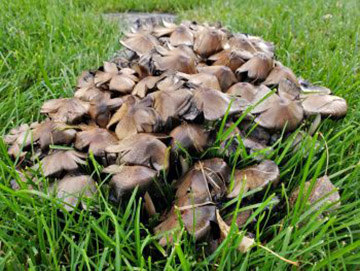
Image Source: organolawn.com
Why Are So Many Mushrooms Growing In My Yard? Get Answers
Seeing a cluster of mushrooms popping up in your yard can be both fascinating and a little perplexing. Yes, mushrooms can grow in your yard due to favorable conditions like moisture, organic matter, and specific soil types. This article will delve into why this fungal growth occurs and what it signifies for your lawn and garden.
Fathoming the Flourish of Yard Fungi
The sudden appearance of yard fungi, commonly known as mushrooms, is a sign that your lawn or garden is providing an ideal environment for these fascinating organisms. Mushrooms are the fruiting bodies of a much larger, often unseen, underground network called mycelium. This intricate web of fungal threads is a vital part of the ecosystem, playing a crucial role in breaking down organic material.
The Primary Mushroom Causes in Your Yard
Several factors contribute to the proliferation of lawn mushrooms. These aren’t random occurrences; they are direct responses to environmental cues.
Moisture is a Major Mover
One of the most significant reasons for widespread fungal growth is ample soil moisture. Mushrooms require a damp environment to develop and release their spores. Heavy rains, overwatering, or prolonged periods of humidity can create the perfect conditions.
- Recent Rainfall: A few days of consistent rain can saturate the soil, providing the necessary hydration for mycelium to produce mushrooms.
- Overwatering: If you’re watering your lawn or garden too frequently or too deeply, you might be creating a perpetually damp environment.
- Humidity: High humidity levels, especially in shaded areas, can also keep the soil surface moist for extended periods.
The Role of Decomposition
Mushrooms are nature’s recyclers. They thrive on decomposition, breaking down dead organic matter in the soil. Your yard is likely rich in these materials, which serve as food for the mycelium.
- Dead Plant Material: Fallen leaves, grass clippings, decaying roots, and even buried woody debris provide an excellent food source.
- Compost or Mulch: If you’ve recently added compost or mulch, these materials are rich in organic matter and can encourage mushroom growth.
- Buried Wood: Sometimes, old tree stumps or buried lumber can be a long-term source of nutrients for fungi.
Shade as a Supporter
Many types of mushrooms prefer shady, cool conditions. If your yard has areas that receive little direct sunlight, these spots can be particularly prone to mushroom causes.
- Large Trees: The canopy of mature trees can create deep shade, reducing evaporation and keeping the soil consistently moist and cool.
- Dense Shrubbery: Overgrown bushes and dense ground cover can also block sunlight and retain moisture.
- North-Facing Areas: Parts of your yard that naturally receive less sun will be more hospitable to yard fungi.
Soil Type and Health
The composition of your soil can also play a role. Some fungi are more prevalent in certain soil types.
- Rich Organic Soil: Soils with a high content of organic matter are prime real estate for mushroom-growing fungi.
- Compacted Soil: In some cases, compacted soil can retain more moisture, indirectly benefiting certain fungi. However, compacted soil is generally bad for lawn health.
Fertilizer and Pet Waste
Believe it or not, certain fertilizers and even pet waste can contribute to lawn mushrooms.
- High-Nitrogen Fertilizers: Fertilizers rich in nitrogen can provide a boost of nutrients for fungal growth.
- Pet Urine: The nitrogen and other compounds in pet urine can act as a localized fertilizer, sometimes leading to fairy rings or scattered mushrooms.
Identifying the Types of Yard Fungi
Mushrooms come in countless varieties, and while many are harmless, some can be toxic. It’s important to recognize that not all mushrooms are the same, and the term “toadstools” is often used to describe poisonous or unpleasant-looking mushrooms.
Common Lawn Mushrooms
Many mushrooms you find in your yard are saprophytic, meaning they feed on dead organic matter.
- Meadow Mushrooms (Agaricus campestris): These are edible and common in lawns, often growing in rings.
- Ink Caps (Coprinus spp.): These mushrooms famously turn into an inky black liquid as they mature.
- Shaggy Manes (Coprinus comatus): A larger, edible variety of ink cap with a distinctive shaggy appearance.
- Marasmius spp. (e.g., Fairy Ring Mushroom): These small, often clustered mushrooms are frequently found in lawns and can form fairy rings.
The Mystery of Fairy Rings
Fairy rings are circular or arc-shaped patterns of mushrooms or darker green grass. They are caused by the outward growth of mycelium from a central point. As the mycelium spreads, it consumes nutrients in the soil, which can kill the grass in the center, creating a dead patch. The mushrooms then appear at the outer edge of the active mycelial growth.
- How They Form: A single mushroom spore lands, and its mycelium grows outwards in a circle, feeding on organic matter.
- Lifespan: Fairy rings can persist for many years, slowly expanding each season.
Deciphering the Significance of Fungal Growth
The presence of mushrooms in your yard is rarely a cause for alarm, but it does tell you something about your lawn’s condition.
What Does It Mean for My Lawn?
Generally, mushrooms are a sign of a healthy soil ecosystem. Their fungal growth indicates that your soil has:
- Sufficient Organic Matter: The mycelium has food to thrive.
- Adequate Moisture: The soil is not overly dry.
- A Balanced Ecosystem: The presence of fungi suggests a diverse microbial community.
However, an excessive number of mushrooms might also point to:
- Over-fertilization: Too much nitrogen can lead to a fungal bloom.
- Poor Drainage: If your soil holds too much water, it can create an environment conducive to unwanted fungi.
- Thatch Buildup: A thick layer of thatch (dead grass at the soil surface) can retain moisture and provide food.
Are They Harmful?
For the most part, the mushrooms growing in your yard are harmless to your lawn and garden plants. They are focused on breaking down dead material, not attacking living roots. The primary concern with lawn mushrooms is if they are ingested by pets or children, as some species can be poisonous.
- Pet Safety: If you have pets that frequently graze on grass or chew on plants, it’s wise to identify any mushrooms present and remove them if they are potentially toxic.
- Child Safety: Keep a close eye on young children who may be tempted to pick and eat mushrooms they find.
Practical Approaches to Managing Yard Fungi
While mushrooms are a natural part of the ecosystem, you might want to control their appearance for aesthetic reasons or due to concerns about toxicity.
Removal Strategies
- Hand-Picking: The most straightforward method is to simply pick the mushrooms by hand. This removes the visible fruiting bodies. Be sure to wear gloves, especially if you’re unsure of the species.
- Method: Gently twist and pull the mushroom from the ground. Try to remove the entire stem.
- Disposal: Dispose of them in a sealed bag in the trash, or compost them in a hot compost pile where they won’t spread.
- Raking: Regularly raking your lawn can disturb the soil and break up emerging mushrooms.
Addressing the Underlying Causes
To prevent excessive fungal growth, it’s best to address the conditions that encourage it.
- Improve Drainage: If your yard stays waterlogged, consider aerating your lawn or amending the soil to improve drainage.
- Reduce Thatch: Dethatch your lawn if the thatch layer is more than half an inch thick.
- Water Wisely: Water your lawn deeply but infrequently, allowing the soil surface to dry out between waterings.
- Manage Organic Debris: Remove fallen leaves and grass clippings promptly. If you have buried wood, consider removing it.
- Adjust Fertilization: Avoid over-fertilizing, especially with high-nitrogen products. Follow recommended application rates for your lawn type.
- Increase Sunlight: If possible, prune trees or shrubs that cast excessive shade.
When to Call a Professional
If you’re concerned about the type of mushrooms growing in your yard, or if you have a persistent problem with excessive growth, consult a local garden center or a horticultural expert. They can help identify the species and recommend appropriate management strategies.
Common Questions About Yard Mushrooms
What is mycelium?
Mycelium is the vegetative part of a fungus, consisting of a network of fine white filaments called hyphae. It lives underground or within dead organic matter and is responsible for absorbing nutrients. Mushrooms are simply the reproductive structures that emerge from the mycelium.
Can I eat the mushrooms growing in my yard?
It is strongly advised NOT to eat any wild mushrooms unless you are an expert mycologist or have had them positively identified by one. Many edible mushrooms have poisonous look-alikes, and ingesting the wrong type can be extremely dangerous, even fatal.
Is fungal growth bad for my lawn?
Generally, fungal growth like mushrooms is not bad for your lawn. They are decomposers, helping to break down organic matter and return nutrients to the soil. However, an excessive amount might indicate underlying issues like overwatering or poor drainage.
What causes toadstools?
Toadstools are simply mushrooms, often referring to those that are poisonous or have a less desirable appearance. The mushroom causes are the same: a combination of moisture, a food source (organic matter), suitable temperatures, and the presence of fungal spores that can germinate under these conditions.
How can I prevent mushrooms from growing?
Preventing mushrooms involves managing the conditions that favor their growth. This includes improving drainage, reducing thatch, watering appropriately, removing organic debris, and ensuring adequate sunlight. Regularly removing any emerging mushrooms can also help reduce the spread of fungal spores.
What are those white threads in the soil?
The white threads you see in the soil are likely mycelium, the main body of the fungus. They are part of the extensive underground network that feeds on organic material and produces mushrooms.
Is it normal to see mushrooms after rain?
Yes, it is very common to see mushrooms after rain. The increased moisture saturates the soil and triggers the mycelium to produce fruiting bodies (mushrooms) to release fungal spores for reproduction.
What causes mushrooms to grow in a ring?
Mushrooms growing in a ring, known as a fairy ring, are caused by the outward growth of mycelium from a single point in the soil. As the mycelium spreads, it forms a circular pattern, and mushrooms emerge at the outer edge of this expanding network.
Do mushrooms mean my soil is healthy?
The presence of mushrooms can indicate healthy soil because it suggests there is enough organic matter and moisture for fungi to thrive. However, excessive growth might point to imbalances in watering or nutrient levels.
Are all yard fungi harmful?
No, not all yard fungi are harmful. Most are beneficial decomposers. The primary concern is with toadstools or species that are toxic if ingested by pets or humans.
How do fungal spores spread?
Fungal spores are microscopic reproductive units that are spread by wind, water, insects, and animals. When conditions are right, these spores germinate and begin to grow into new mycelial networks.
What is the best way to get rid of mushrooms?
The best way to manage mushrooms is to address the underlying causes. For immediate removal, hand-picking is effective. For long-term control, focus on improving drainage, reducing organic matter, and ensuring proper watering practices to make the environment less hospitable for fungal growth.
Conclusion: A Sign of a Living Landscape
Seeing yard fungi emerge from your soil is a testament to the dynamic and living nature of your landscape. While the sight of toadstools or clusters of mushrooms might prompt action, remember that these organisms are integral to the soil’s health. By understanding the mushroom causes—primarily moisture, organic matter, and shade—you can better manage their appearance and ensure a healthy, thriving yard. Whether you choose to admire them, remove them, or modify the conditions that foster their growth, the presence of mushrooms is a natural phenomenon that reveals much about the unseen life beneath your feet.