
The question, “Why are lawn jockeys racist?” arises because these garden ornaments, though seemingly innocuous, carry a deeply problematic past rooted in racial prejudice and the perpetuation of harmful stereotypes. Their origins and evolution are intrinsically linked to the eras of slavery and minstrelsy, making them symbols of a painful chapter in American history.
The debate surrounding lawn jockeys and their perceived racism is complex, involving historical context, cultural appropriation, and the lasting impact of derogatory imagery. To truly grasp why these figures are considered racist, we must delve into their origins, the societal norms they emerged from, and how they have been interpreted and used over time.
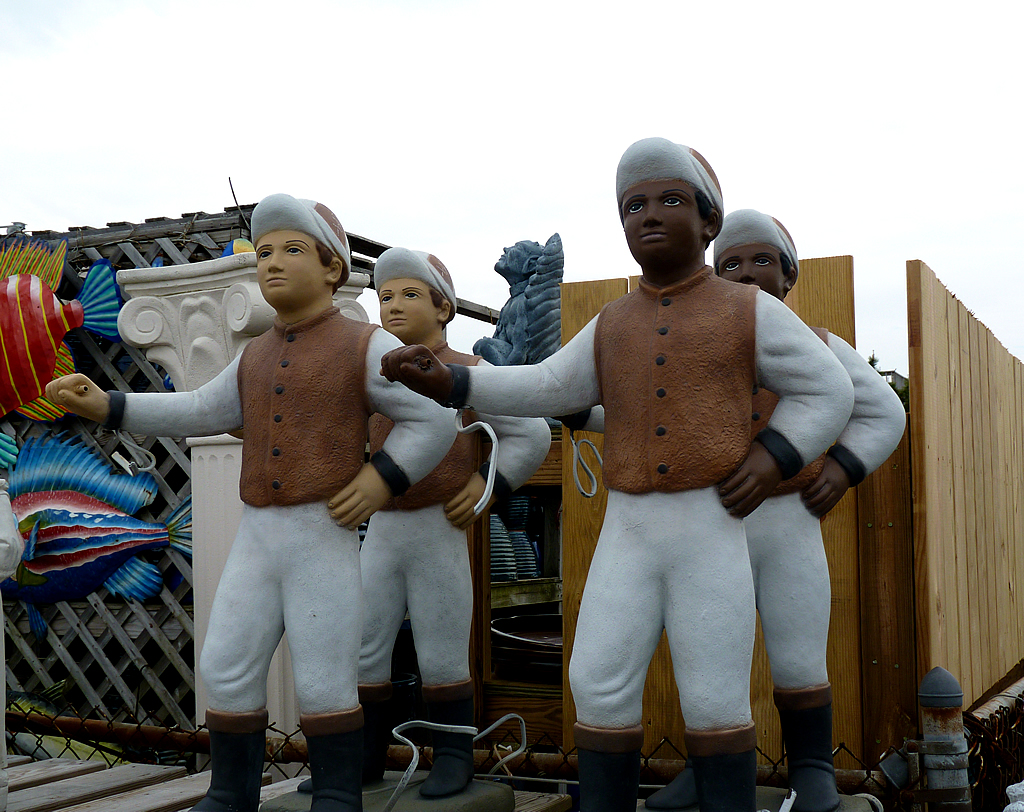
Image Source: upload.wikimedia.org
The Unveiling of a Painful Past: Lawn Jockeys’ Origins
The story of the lawn jockey is not one of simple garden decoration but a narrative woven from the threads of American racial history. To understand their problematic nature, we must first look at their genesis.
Early Representations and Their Societal Roots
The precise origin of the lawn jockey is debated, with some accounts placing its emergence in the mid-19th century. However, the common thread across most theories points to a connection with the prevailing societal attitudes towards Black people during that era.
- Servitude and Labor: The figure often depicts a Black boy in livery, holding a lamp or a hitching post. This imagery taps into the historical reality of enslaved and later, exploited Black labor. During the antebellum period and beyond, Black individuals were systematically relegated to roles of service and manual labor. The lawn jockey can be seen as a visual representation of this enforced subservience.
- The Legend of Greenbury Lee: One popular, though often disputed, origin story involves a young Black boy named Greenbury Lee. Legend has it that during a harsh winter in the 1750s, he froze to death while holding a lantern for a politician’s horse. While a poignant tale, it’s crucial to examine its historical veracity and how it might have been used to frame the figure. The narrative itself, regardless of its accuracy, served to humanize a figure that would later become a symbol of dehumanization through its racist interpretations.
The Specter of Minstrelsy and Black Americana
The 19th century was also the era of minstrel shows, a form of popular entertainment that relied heavily on grotesque caricatures of Black people. These shows, performed by white actors in blackface, presented exaggerated and offensive stereotypes of Black individuals, portraying them as lazy, ignorant, and buffoonish.
- Exaggerated Features: Many early lawn jockey figurines exhibit exaggerated features, such as large lips and wide eyes, consistent with the blackface minstrel tradition. This deliberate exaggeration was a hallmark of minstrelsy, designed to mock and demean Black people.
- Black Americana Context: These figures also fit into the broader category of Black Americana, a collection of memorabilia and artifacts that often depicted Black people in demeaning ways. While some items in Black Americana are collected for their historical value, many others, including lawn jockeys, are recognized as painful reminders of racist caricatures and the commodification of Black suffering and stereotypes. The very term “Black Americana” itself can be complex, as it encompasses both authentic expressions of Black culture and products created by the dominant culture to exploit and mock Black identity.
- Stereotypes Reinforced: The lawn jockey, by embodying these minstrel-inspired features, served to reinforce existing stereotypes about Black people. It presented a static, one-dimensional image that contributed to the ongoing marginalization and dehumanization of an entire group of people.
The Evolution of Meaning: From Novelty to Symbol
Over time, the meaning and perception of lawn jockeys have shifted, but their problematic roots have not been erased. Understanding this evolution is key to grasping their current status.
The Heyday of Popularity and the Erosion of Awareness
During the late 19th and early 20th centuries, lawn jockeys enjoyed a period of significant popularity as garden ornaments. This widespread adoption often occurred during the Jim Crow era, a period characterized by systemic racial segregation and discrimination against Black Americans.
- Ubiquitous Presence: These figures became a common sight in front yards across America. Their ubiquity, however, did not sanitize their origins or the messages they conveyed. For many, they were simply charming decorations, a testament to the American public’s often-unquestioning acceptance of cultural artifacts, even those with a problematic past.
- Ignoring the Subtext: The prevailing societal norms of the time often allowed for the overlooking of the racial undertones. The focus was on the decorative aspect, and the historical historical context of racial oppression was either ignored, unknown, or considered irrelevant to the item’s function as a lawn ornament. This selective blindness allowed a symbol of racism to become normalized.
The Impact of the Civil Rights Movement
The civil rights movement of the mid-20th century brought about a profound societal shift, challenging long-standing racial inequalities and raising awareness about the injustices faced by Black Americans. This period of social awakening inevitably led to a re-examination of cultural symbols and practices that perpetuated racism.
- Challenging Discriminatory Imagery: As the nation grappled with its problematic past, symbols like the lawn jockey came under scrutiny. Activists and scholars began to highlight the racist connotations of these figurines, pointing out their origins in minstrelsy and their role in reinforcing harmful stereotypes.
- Reclaiming Narratives: The Civil Rights Movement empowered marginalized communities to challenge oppressive imagery and reclaim their narratives. For many Black Americans, lawn jockeys were not just decorative items; they were painful reminders of the dehumanization and ridicule they had endured.
Deconstructing the Racism: Why the Ornament is Problematic
The core reasons why lawn jockeys are considered racist lie in the historical context of their creation, the stereotypes they embody, and the ongoing impact of their presence.
Stereotypes Encapsulated
Lawn jockeys are not neutral objects. They are visual embodiments of racist stereotypes that were used to marginalize and oppress Black people.
- The Happy-Servant Trope: The imagery often presents a Black child in a subservient role, seemingly content and eager to serve. This aligns with racist tropes that depicted Black people as naturally inclined to servitude and lacking ambition beyond their designated roles.
- Dehumanizing Features: As mentioned earlier, exaggerated facial features, often associated with blackface performances, serve to dehumanize the figure. They reduce a complex human being to a caricature, stripping away individuality and dignity.
- Lack of Agency: The static pose of the lawn jockey, holding a lamp or post, further emphasizes a lack of agency and individuality. It presents a passive object, devoid of the complexity and richness of human experience, which is a common tactic in racist representation.
The Nuance of Cultural Appropriation
While not always the primary concern for lawn jockeys, the concept of cultural appropriation can also be relevant in discussions surrounding their use.
- Commodification of Identity: When elements of a marginalized culture are adopted and used by the dominant culture without regard for their original meaning or the historical context of oppression, it can be seen as appropriation. In the case of lawn jockeys, their design draws upon racist caricatures of Black people, and their widespread adoption by non-Black individuals can be viewed as a trivialization and commodification of a painful aspect of Black history.
- Ignoring the Source: The uncritical adoption of lawn jockeys by some, without acknowledging their racist origins, reflects a disregard for the lived experiences of those who have been historically harmed by such imagery.
The Enduring Impact of Derogatory Imagery
The impact of derogatory imagery like that embodied by lawn jockeys extends beyond the historical period in which they were created.
- Normalization of Racism: When racist symbols are allowed to persist in public spaces without critical examination, they can contribute to the normalization of racist attitudes. For children, especially, encountering these figures without proper explanation can lead to a distorted understanding of racial history and the acceptance of harmful stereotypes.
- Psychological Toll: For Black individuals, the continued presence of these ornaments can be a source of ongoing pain and discomfort, serving as a constant reminder of the racism they and their ancestors have faced. It’s not just about an object; it’s about the historical trauma it represents.
The Modern Discourse: Re-evaluating Lawn Jockeys
In contemporary society, there is a growing awareness and rejection of symbols that perpetuate racism. The conversation around lawn jockeys is no exception.
Historical Re-evaluation and Changing Perceptions
As societies become more conscious of their historical context and the impact of past injustices, the way we view and interact with historical artifacts changes.
- Educational Awareness: Museums, historical societies, and educational institutions are playing a crucial role in educating the public about the problematic nature of objects like lawn jockeys. This increased awareness encourages critical thinking about the artifacts we surround ourselves with.
- Shifting Aesthetics: What was once considered a charming or even quaint decoration is now often recognized as a symbol of racial insensitivity. This shift reflects a broader societal evolution towards greater inclusivity and a rejection of racist iconography.
The Debate: Ornament vs. Offense
The ongoing debate often pits the perceived decorative value against the undeniable historical harm.
- Intent vs. Impact: Some argue that the intent behind placing a lawn jockey today is not necessarily malicious, but rather a continuation of a decorative tradition. However, the impact of such imagery, regardless of intent, remains harmful due to its deeply ingrained racist associations.
- The Importance of Representation: In discussions about representation, the lawn jockey highlights how the lack of diverse and respectful portrayals of Black people in historical artifacts has contributed to enduring negative stereotypes.
Deciphering the Symbol: A Call for Critical Engagement
The lawn jockey serves as a potent example of how seemingly harmless objects can carry significant historical baggage. Its racist connotations are not a matter of interpretation but a well-documented consequence of its origins and evolution.
Confronting the Legacy
- Acknowledging the Past: It is crucial to acknowledge the historical context from which lawn jockeys emerged. To ignore this context is to perpetuate the harm.
- Responsible Display: For those who still own or display lawn jockeys, a critical reflection on their meaning and impact is essential. This might involve choosing not to display them, or if displayed, to provide context and education about their problematic history.
- Promoting Positive Representation: The focus should be on promoting positive and accurate representation of all people, moving away from caricatures and stereotypes.
The Broader Conversation
The conversation about lawn jockeys is part of a larger societal reckoning with racism and its enduring legacy. It reminds us that:
- Objects Carry Meaning: Cultural artifacts, even those intended for decoration, are not neutral. They are imbued with the social, political, and historical forces that shaped them.
- Education is Key: Educating ourselves and future generations about the problematic past is vital to preventing the repetition of historical injustices.
- Challenging Stereotypes: We must actively challenge and dismantle stereotypes in all their forms, whether they appear in media, art, or even garden ornaments.
Fathoming the Symbol’s Impact
The lawn jockey, with its roots in minstrelsy and Jim Crow era stereotypes, is a tangible reminder of America’s problematic past. While its popularity as an ornament might have waned, its legacy as a symbol of racial prejudice continues to provoke important conversations about history, representation, and the ongoing fight against racism. By actively engaging with its history and understanding the harm it represents, we can move towards a more equitable and inclusive future.
Frequently Asked Questions About Lawn Jockeys
Q1: What is a lawn jockey?
A lawn jockey is a garden ornament, typically depicting a young Black boy dressed in livery, often holding a lamp or a hitching post.
Q2: Why is a lawn jockey considered racist?
Lawn jockeys are considered racist because their design and historical context are deeply rooted in racist caricatures and stereotypes of Black people, particularly those originating from minstrel shows and the era of slavery and segregation. They often feature exaggerated features associated with blackface performances and represent a subservient role, perpetuating dehumanizing imagery.
Q3: Can I still display a lawn jockey if I don’t mean it in a racist way?
While individual intent may not be malicious, the impact of displaying a lawn jockey remains significant due to its historical associations. The ornament carries a strong legacy of racist symbolism, and its presence can be hurtful to many, particularly Black individuals, regardless of the owner’s intentions. Many people choose not to display them to avoid causing offense or perpetuating harmful imagery.
Q4: Where did lawn jockeys come from?
The exact origins are debated, but they emerged in the mid-to-late 19th century. Theories link them to the historical roles of Black servants, a popularized legend about a boy named Greenbury Lee who froze holding a lantern, and the prevalent racist caricatures of Black people found in minstrel shows of the era.
Q5: Are all Black Americana items racist?
No, not all Black Americana items are racist. This category encompasses a wide range of memorabilia and artifacts related to Black history and culture. However, many items within Black Americana, especially those from earlier periods, unfortunately depict Black people in stereotypical and offensive ways, reflecting the racial prejudices of their time. It’s important to examine each item within its specific historical and cultural context.
Q6: What can I do if I see a lawn jockey?
You can choose to ignore it, educate yourself further about its history, or, if you feel it’s appropriate and safe, engage in a respectful conversation with the owner about its problematic nature. Supporting businesses that avoid such imagery and promoting positive, accurate representations of all people are also positive actions.