
A cubic yard of mulch can weigh anywhere from 400 to 1,000 pounds, depending heavily on the type of mulch, its moisture content, and its density. This wide range is why a simple guess isn’t enough when planning your landscaping projects.
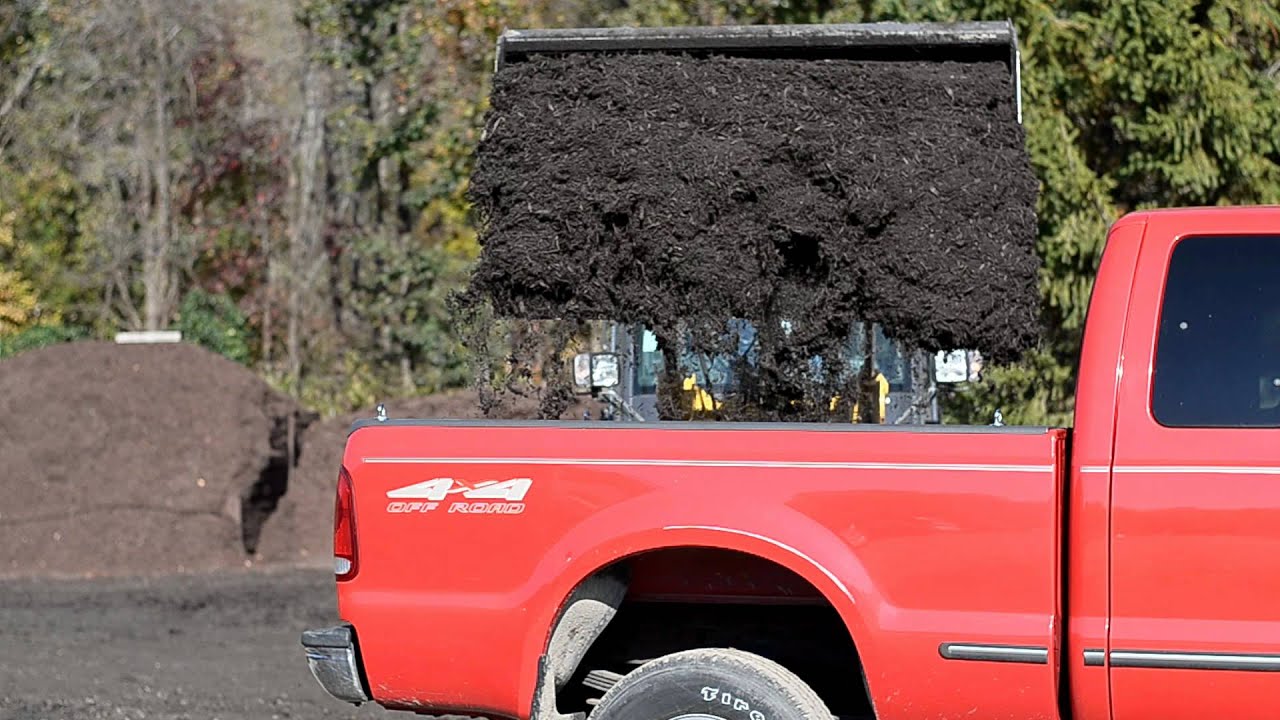
Image Source: i.ytimg.com
Deciphering Mulch Weight: A Crucial Factor for Landscaping Success
When you embark on a landscaping project, whether it’s refreshing flower beds or creating new garden pathways, you’ll inevitably be dealing with mulch. You’ll see it advertised by the cubic yard, a measure of volume. But when it comes time to actually move, spread, or order it, understanding the mulch weight per cubic yard becomes incredibly important. This isn’t just a matter of curiosity; it directly impacts your ability to handle the material, your budget, and even the health of your plants.
Many people assume mulch is relatively light, like feathers or packing peanuts. However, this couldn’t be further from the truth. Dry mulch is lighter than wet mulch, and different types of wood or organic materials have varying intrinsic densities. Knowing how heavy is a cubic yard of mulch will help you avoid over-ordering, prevent physical strain, and ensure you have enough material without buying too much.
This guide aims to provide a comprehensive look at mulch weight, covering everything from mulch density to specific material types and practical advice. We’ll help you make informed decisions for your next garden adventure.
Factors Influencing Mulch Weight
Several key elements contribute to the significant variation in mulch weight per cubic yard. It’s not a one-size-fits-all answer. Let’s break down the primary drivers:
The Type of Mulch Material
The raw ingredients used to make mulch play a foundational role in its weight. Different organic materials have different densities naturally.
Wood-Based Mulches
Wood mulches are the most common type. Their weight varies based on the type of wood and how it’s processed.
- Hardwood Mulch: Generally denser and heavier than softwood mulches. Think oak, maple, or walnut. These woods have tighter cell structures.
- Softwood Mulch: Typically lighter. Pine, cedar, and fir are common examples. Their cell structures are less dense.
- Shredded vs. Chipped: The processing method also matters. Shredded bark tends to pack more tightly than chunky chips, potentially increasing its weight per cubic yard if moisture is present.
- Color-Treated Mulch: The dyeing process itself adds a negligible amount of weight. The primary weight difference will still stem from the original wood material.
Other Organic Mulches
Beyond wood, other materials are used, each with its own weight profile.
- Bark Mulch: Often from pine, fir, or cedar. The weight will be on the lighter side of the spectrum, especially when dry.
- Compost: This is decomposed organic matter. Its weight can vary significantly depending on the source materials (grass clippings, leaves, food scraps) and how well it’s composted. Wetter, more finely composted material will be heavier.
- Straw or Hay Mulch: Lighter when dry, but can become quite heavy when wet due to its fibrous nature and ability to absorb water.
- Leaf Mulch: Similar to compost, its weight depends on the type of leaves and their moisture content.
Moisture Content: The Great Weight Multiplier
This is arguably the most significant factor influencing how heavy is a cubic yard of mulch. Mulch is porous, and it acts like a sponge.
- Dry Mulch: Straight from a manufacturer or after sitting in a dry yard, mulch will be at its lightest.
- Wet Mulch: After rain or even just absorbing ambient humidity, mulch can absorb a considerable amount of water. Water is heavy! A cubic yard of mulch that is saturated can weigh nearly double what it does when dry. This is why if you buy bulk mulch, the delivery day’s weather can subtly affect the actual weight you receive.
Particle Size and Compaction
How the mulch is processed and how it settles also plays a part in its density and, consequently, its weight.
- Fine Mulch: Smaller particles can pack together more tightly, potentially leading to a higher weight per cubic yard if moisture is present, as it can trap more water within the smaller air pockets.
- Coarse Mulch: Larger, chunkier pieces will have more air space between them. This can make it lighter when dry, but also means water can drain more easily, potentially making it lighter than finely mulched material of the same type when damp.
- Compaction: Mulch in a bag is often compressed. When you open the bag, it “fluffs up.” Bulk mulch delivered might be less compacted initially. The mulch density directly correlates to how much material is packed into that cubic yard of space.
Estimating Mulch Weight: A Cubic Yard Mulch Estimate
So, we’ve established that there’s no single answer to “How Much Does A Cubic Yard Of Mulch Weigh?” However, we can provide realistic ranges based on common mulch types and conditions. These are general estimates, and your specific mulch might fall slightly outside these ranges.
To get a good cubic yard mulch estimate, consider the material and assume a moderate moisture level unless you know it’s exceptionally dry or saturated.
Typical Mulch Weight Ranges per Cubic Yard
Here’s a breakdown of common mulch types and their approximate weights:
| Mulch Type | Approximate Dry Weight (lbs/cubic yard) | Approximate Wet Weight (lbs/cubic yard) | Notes |
|---|---|---|---|
| Pine Bark Fines | 300 – 500 | 600 – 900 | Lightweight, consistent texture. |
| Shredded Hardwood | 400 – 600 | 700 – 1000 | Dense hardwoods, can hold more moisture. |
| Shredded Softwood | 350 – 550 | 650 – 950 | Lighter woods like pine or cedar. |
| Cedar Mulch | 350 – 500 | 600 – 850 | Aromatic, naturally resistant to decay. |
| Cypress Mulch | 400 – 600 | 700 – 1000 | Durable, but environmental concerns exist for harvesting. |
| Compost | 500 – 800 | 800 – 1200+ | Highly variable, depends on composition and moisture. Can be very dense. |
| Rubber Mulch | 700 – 900 | 700 – 900 | Artificial, weight is more consistent, less affected by moisture. |
| Straw Mulch | 100 – 150 | 400 – 600 | Very light when dry, but absorbs water readily. Often sold by the bale. |
These figures are estimates. The average mulch weight can shift based on the specific source and processing.
Wood Mulch Weight Considerations
When focusing on wood mulch weight, the key differences are between hardwoods and softwoods, and the degree of processing.
- Hardwood Mulches: These tend to have a higher mulch density. For example, oak mulch, a common hardwood, might weigh around 500-600 pounds per cubic yard when dry and up to 900-1000 pounds when wet.
- Softwood Mulches: Pine or cedar mulches are generally lighter. Dry, shredded pine bark might weigh around 300-400 pounds per cubic yard, increasing to 600-700 pounds when wet.
- Shredded vs. Chipped: Shredded mulches can compact more effectively, especially when moist, making them potentially heavier than chunkier chipped mulches of the same wood type.
The Importance of Bulk Mulch Weight
If you’re ordering bulk mulch, the weight becomes even more critical. Trucks that deliver bulk mulch have weight limits, and knowing the approximate weight of a cubic yard helps you estimate how much you can have delivered at once. A load of mulch can weigh several tons!
Bulk mulch weight is also a factor in delivery costs. Some suppliers might charge based on weight, while others charge by volume. However, even if you pay by volume, understanding the weight is essential for logistics.
Mulch Volume to Weight Conversion: Practical Applications
Knowing the mulch volume to weight conversion is vital for several practical reasons in landscaping.
Why Weight Matters for Landscaping Projects
- Transportation and Handling: Can you load it into your truck? Can you move it with a wheelbarrow? A cubic yard of dry mulch might be manageable, but a cubic yard of wet mulch can be a serious challenge. Knowing the weight helps you plan your labor and equipment needs. A full wheelbarrow of wet mulch can easily weigh 200-300 pounds!
- Ordering and Budgeting: While mulch is typically sold by the cubic yard, understanding the weight helps when comparing prices from different suppliers. Sometimes, a slightly cheaper price per cubic yard might be for a lighter (and perhaps less dense or drier) mulch.
- Foundation Stability: In some landscaping applications, like building raised beds or pathways, the weight of the mulch can affect the underlying ground. While less of a concern for standard mulching, it’s a factor for heavier applications.
- Soil Health: Overly dense, compacted mulch, especially when wet, can impede water and air circulation to the soil and plant roots. Lighter, fluffier mulches often provide better aeration.
Tools and Techniques for Estimation
- Supplier Information: Reputable mulch suppliers can often provide you with weight estimates for their specific products. Don’t hesitate to ask!
- Online Calculators: Many landscaping websites offer mulch calculators that consider volume and type to estimate weight.
- DIY Weighing: If you buy bagged mulch, you can weigh a few bags and multiply by the number of bags in a cubic yard (typically 12-13 bags of 2-cubic-foot bags make a cubic yard). This gives you a very accurate mulch material weight for that specific product.
Mulch Density Explained: The Science Behind the Weight
Mulch density refers to how much mass is contained within a given volume. For mulch, it’s typically measured in pounds per cubic foot or pounds per cubic yard.
- Density = Mass / Volume
A higher density means more material is packed into the same space, resulting in greater weight.
Factors Affecting Mulch Density
- Wood Type: As mentioned, hardwoods are denser than softwoods.
- Particle Size: Finer materials can pack more closely, increasing density, especially when wet.
- Moisture: Water fills the pore spaces within the mulch material, significantly increasing its mass and therefore its density. A cubic foot of dry mulch will have a lower density than a cubic foot of waterlogged mulch.
- Decomposition: As organic mulches decompose, they can become more compact and dense over time, especially if they are not regularly turned.
Understanding Landscaping Mulch Density
In the context of landscaping mulch density, it’s important to consider not just how heavy it is, but also how it performs in the landscape.
- Good Density (for stability): A mulch with moderate density will stay in place better on slopes and in windy areas compared to very light, fluffy mulches.
- Poor Density (for aeration): If mulch becomes too dense and compacted (often due to over-watering or fine particles), it can create an impermeable layer, hindering air and water movement to the soil. This is detrimental to plant roots.
Calculating Your Mulch Needs: Beyond Just Volume
While you order mulch by volume, translating that to an actionable plan requires considering weight.
Step 1: Determine the Volume Needed
First, calculate the square footage you need to cover and the desired depth. A common depth is 3 inches (0.25 feet).
- Volume (cubic feet) = Length (ft) × Width (ft) × Depth (ft)
- Volume (cubic yards) = Volume (cubic feet) / 27
Example: You need to cover a garden bed that is 10 feet long by 5 feet wide, and you want a 3-inch (0.25 ft) deep layer of mulch.
- Volume (cubic feet) = 10 ft × 5 ft × 0.25 ft = 12.5 cubic feet
- Volume (cubic yards) = 12.5 cubic feet / 27 = 0.46 cubic yards
You would likely round up and order 0.5 cubic yards or 1 cubic yard, depending on how suppliers sell small quantities.
Step 2: Estimate the Weight for Handling
Now, let’s factor in the weight. Using our previous table for shredded hardwood mulch (400-600 lbs dry, 700-1000 lbs wet):
- If you need 0.5 cubic yards of shredded hardwood mulch, and you anticipate it being moderately moist:
- Weight estimate = 0.5 cubic yards × 750 lbs/cubic yard (mid-range wet) = 375 pounds.
This 375 pounds is a substantial amount to move with a wheelbarrow and shovel. You might need two people or multiple trips, or consider if your vehicle can handle this weight.
Step 3: Consider Delivery Options
If you’re ordering bulk mulch, especially more than half a cubic yard, delivery is usually the most practical option. Knowing the total estimated weight helps you confirm if your driveway can support the delivery truck and if the mulch can be dumped where you need it.
Common Mistakes to Avoid When Estimating Mulch Weight
- Assuming All Mulch is the Same Weight: This is the biggest pitfall. A cubic yard of pine bark is significantly lighter than a cubic yard of wet compost.
- Forgetting About Moisture: Never assume mulch will be perfectly dry. Always factor in the possibility of it absorbing water, especially if you’re ordering in the rainy season or if it has been stored outdoors.
- Underestimating Handling Weight: Believing that a cubic yard is light enough to move easily with a standard wheelbarrow can lead to physical strain and frustration.
- Not Checking Supplier Specifications: While general estimates are useful, the specific product from your supplier might vary. Always try to get their specific weight or density information if possible.
FAQ: Your Burning Questions About Mulch Weight Answered
Here are some frequently asked questions to further clarify the topic of mulch weight:
Q1: How much does a cubic yard of bagged mulch weigh?
Bagged mulch is usually sold in 2 or 3 cubic foot bags. A standard 2 cubic foot bag of mulch typically weighs between 15 to 30 pounds when dry, and can double or triple when wet. To get a cubic yard (27 cubic feet), you’d need about 13-14 bags. So, a cubic yard of bagged mulch would weigh roughly 200-400 pounds dry, and 400-800 pounds wet, depending on the material.
Q2: Is it better to buy mulch by the bag or in bulk?
Buying in bulk is often more economical for larger projects and typically offers a wider variety of mulch types. However, bags offer convenience for smaller jobs and easier transport if you don’t have a suitable vehicle for bulk delivery. The weight considerations are similar, but bulk delivery means someone else handles the heavy lifting to your property line.
Q3: How can I tell if my mulch is too wet?
If your mulch feels heavy, sticky, and doesn’t easily break apart in your hands, it’s likely quite wet. If it clumps together firmly, it has absorbed a significant amount of water.
Q4: Does mulch shrink or expand in volume?
Mulch doesn’t significantly expand or contract in volume due to temperature or minor moisture changes once it’s been processed. However, as organic mulch decomposes over time, it will gradually break down into smaller particles and become more compact, effectively reducing its volume and increasing its density.
Q5: What is the average weight of a cubic yard of mulch?
The average mulch weight across all types and moisture levels is difficult to pinpoint precisely due to the vast variations. However, a commonly cited average for moderately moist hardwood mulch is around 600-800 pounds per cubic yard.
Conclusion: Smart Mulching Starts with Knowing the Weight
When planning your next landscaping endeavor, remember that mulch weight per cubic yard is not a trivial detail. It’s a critical piece of information that affects logistics, labor, and even your budget. By considering the type of mulch, its potential moisture content, and its mulch density, you can make more accurate calculations and avoid common pitfalls.
Whether you’re ordering bulk material or filling your truck with bags, a solid grasp of how heavy is a cubic yard of mulch will empower you to tackle your projects efficiently and safely. So next time you’re eyeing that pile of beautiful mulch, you’ll know not just its volume, but also its true weight and how to manage it effectively. Happy gardening!