
Image Source: lawn.com.au
Decoding Lawn Mower Smoke: Blue, White, Black & More
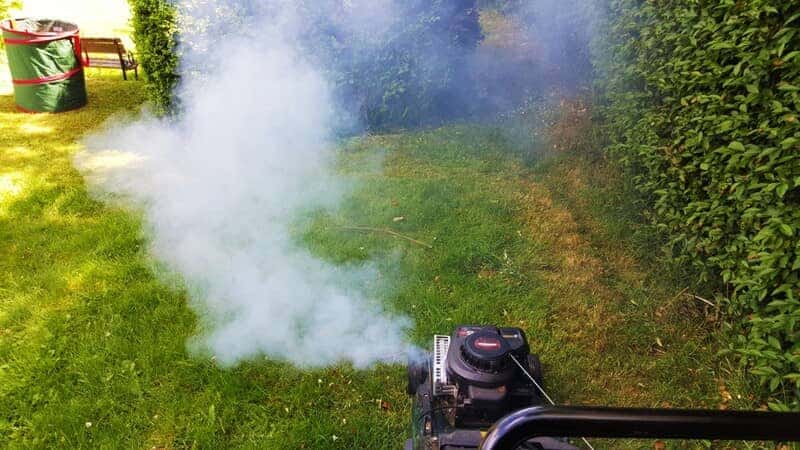
A lawn mower puffing out smoke can be a concerning sight, but lawn mowers smoke primarily due to issues with combustion, oil burning, or fuel problems. Understanding the color of the smoke is key to diagnosing the problem.
Fathoming Lawn Mower Smoke Colors: A Guide to Common Issues
When your trusty lawn mower starts to emit smoke, it’s natural to feel a pang of worry. Is it a minor hiccup or a major repair bill looming? The good news is that the color of the smoke is often a clear indicator of what’s going on under the hood. This guide will help you decipher those smoky signals and get your mower back to purring like a kitten.
Blue Smoke: The Tell-Tale Sign of Burning Oil
Seeing blue smoke from your lawn mower is almost always a sign that oil is making its way into the combustion chamber and burning. This isn’t ideal for your engine’s health, and if left unaddressed, it can lead to more significant problems.
Why Oil is Entering the Combustion Chamber
Several factors can cause oil to leak into the combustion chamber. Let’s explore the most common culprits:
-
Overfilling the Oil: This is perhaps the simplest and most common reason for blue smoke. If you’ve recently changed the oil or topped it up, you might have added too much. Excess oil can be forced past the piston rings and into the cylinder.
- How to Check and Fix:
- Ensure the mower is on a level surface.
- Remove the dipstick, wipe it clean, and reinsert it fully.
- Remove the dipstick again and check the oil level.
- If the oil level is above the “full” mark, you’ll need to drain some oil. This can usually be done by carefully tipping the mower to allow excess oil to drain from the oil fill cap or by using a syringe to extract it.
- How to Check and Fix:
-
Worn Piston Rings: Piston rings are crucial seals that prevent oil from entering the combustion chamber. Over time, these rings can wear down, lose their tension, or become stuck. This wear allows oil to seep into the cylinder, where it burns, creating that characteristic blue haze.
- Symptoms of Worn Piston Rings:
- Persistent blue smoke, even after correcting oil levels.
- A drop in engine power.
- Increased oil consumption.
- Potential for fouling spark plugs.
- Fixing Worn Rings: This is a more involved repair that typically requires disassembling the engine’s cylinder. It’s often a job best left to experienced DIYers or a professional mechanic.
- Symptoms of Worn Piston Rings:
-
Damaged Cylinder Walls: Similar to worn rings, damaged or scored cylinder walls can create gaps that allow oil to pass into the combustion chamber. This damage can occur from debris in the oil, improper lubrication, or overheating.
- Repairing Cylinder Walls: This is a significant engine repair. If the cylinder walls are significantly damaged, it might be more cost-effective to replace the engine.
-
Faulty Valve Seals: The valve stems pass through the cylinder head and are lubricated by oil. Valve seals prevent this oil from dripping down the valve stems into the combustion chamber. If these seals degrade or crack, oil can leak past them and burn.
- Identifying Valve Seal Issues: This often produces blue smoke, especially on startup or after the mower has been sitting for a while, as oil has had time to pool around the valve stems.
- Replacing Valve Seals: This is a moderately complex repair, usually involving removing the cylinder head.
-
Tilting the Mower Incorrectly: If you’ve ever tilted your mower to clean the deck or perform maintenance, the way you tilt it matters. Tilting it with the carburetor or air filter facing downwards can allow oil to flow into the combustion chamber. Always tilt your mower with the air filter and carburetor pointing upwards.
White Smoke: Often Indicating Moisture or Coolant Issues
White smoke from a lawn mower is less common than blue or black smoke, but it’s still an important signal to heed. Most often, white smoke indicates that moisture or coolant is entering the combustion chamber.
Moisture and Its Impact
-
Water in the Fuel: If your fuel has absorbed moisture, it can cause the engine to run poorly and produce white, steam-like smoke. This is more common with gasoline that has been stored for a long time, especially in humid environments.
- Checking Fuel:
- Drain a small amount of fuel into a clear container.
- Look for any cloudiness or separation, which would indicate water.
- Fixing Water Contamination: If you suspect water in the fuel, drain the fuel tank and carburetor. Refill with fresh, high-quality gasoline.
- Checking Fuel:
-
Condensation: Especially on cold mornings, a small amount of white, steamy smoke can be normal condensation burning off as the engine warms up. If the smoke persists after the engine is fully heated, it’s likely a different issue.
Coolant Leaks (More Common in Liquid-Cooled Engines)
While most lawn mowers are air-cooled, some larger or more specialized ones use liquid cooling. In these cases, white smoke can be a sign of a blown head gasket or a crack in the engine block, allowing coolant to leak into the combustion chamber.
-
Signs of Coolant Leakage:
- White smoke that smells sweet (like antifreeze).
- Loss of engine coolant.
- Milky or frothy oil on the dipstick, indicating coolant mixing with oil.
- Engine overheating.
-
Addressing Coolant Leaks: This is a serious engine problem requiring immediate attention. A blown head gasket or cracked block will need professional repair or engine replacement.
Black Smoke: The Classic Sign of a Rich Fuel Mixture
Black smoke is the most common type of smoke you’ll see from an internal combustion engine, and for lawn mowers, it usually points to a problem with the fuel mixture being too rich. This means there’s too much gasoline and not enough air being burned.
Reasons for a Rich Fuel Mixture
-
Clogged Air Filter: The air filter’s job is to prevent dirt and debris from entering the engine. If it becomes clogged with grass clippings, dust, or debris, it restricts airflow. With less air, the fuel-to-air ratio becomes unbalanced, leading to a rich mixture and black smoke.
- Checking and Replacing the Air Filter:
- Locate the air filter housing.
- Open the housing and remove the air filter.
- Inspect it for dirt and debris. If it’s dirty, you can often tap it clean for temporary use, but replacement is usually the best option.
- Install a new air filter. This is a simple and inexpensive maintenance task.
- Checking and Replacing the Air Filter:
-
Carburetor Problems: The carburetor is responsible for mixing the correct amount of fuel and air. If the carburetor is dirty, damaged, or out of adjustment, it can deliver too much fuel.
- Common Carburetor Issues Leading to Black Smoke:
- Stuck Choke: The choke enriches the fuel mixture for starting. If the choke mechanism sticks in the “on” position, it will continue to supply too much fuel.
- Dirty Jets: Small passages (jets) within the carburetor can become clogged with fuel varnish or debris, disrupting the fuel-air mixture.
- Incorrect Float Level: The float in the carburetor bowl regulates fuel flow. If it’s set too high, it can allow too much fuel into the bowl and then into the engine.
- Fixing Carburetor Issues: Cleaning a carburetor can involve disassembly, using carburetor cleaner spray, and ensuring all passages are clear. Sometimes, a faulty carburetor might need replacement.
- Common Carburetor Issues Leading to Black Smoke:
-
Faulty Ignition Timing: While less common in simpler lawn mower engines, incorrect ignition timing can sometimes contribute to incomplete combustion, which can appear as black smoke.
-
Engine Overload: Running the mower at full throttle in very tall or dense grass can put a significant strain on the engine. This can lead to incomplete combustion and black smoke, especially if the engine isn’t getting enough air or is otherwise struggling.
Other Smoke Colors and What They Might Mean
While blue, white, and black are the most common, you might occasionally see other colors of smoke, or a combination.
-
Gray Smoke: This can sometimes be an indication of oil burning, similar to blue smoke, but it might also suggest a less efficient combustion process, perhaps a combination of oil and unburnt fuel.
-
Thick, Oily Smoke: This is almost certainly a sign of burning oil, usually due to excessive oil in the crankcase or worn internal components.
Troubleshooting Flowchart for Lawn Mower Smoke
To help you diagnose the issue, consider this simplified troubleshooting approach:
- Identify the Smoke Color: Is it blue, white, or black?
- Check the Oil Level: If it’s blue or thick, oily smoke, ensure the oil isn’t overfilled.
- Inspect the Air Filter: If it’s black smoke, a clogged air filter is a prime suspect.
- Consider Recent Maintenance: Did the smoking start after an oil change or other work?
- Observe When the Smoke Appears: Does it happen on startup, during operation, or when the engine is hot?
Here’s a table summarizing common smoke colors and their likely causes:
| Smoke Color | Likely Cause(s) | What to Check/Do |
|---|---|---|
| Blue | Burning oil (overfilled oil, worn rings, valve seals) | Check oil level; ensure it’s not overfilled. If correct, suspect internal engine wear (rings, seals). Consider professional inspection. |
| White | Moisture in fuel, condensation, coolant leak | Check fuel for water contamination. Small amounts on startup may be normal condensation. If persistent or smells sweet, suspect a coolant leak (blown head gasket). |
| Black | Rich fuel mixture (clogged air filter, carb issues) | Check and clean/replace the air filter. Inspect the carburetor for blockages or a stuck choke. |
| Gray | Incomplete combustion, possible oil burning | Similar to blue smoke, but may indicate less severe oil issues or general inefficient combustion. Check oil level and air filter. |
| Thick Oily | Significant oil burning (overfilled oil, internal wear) | Confirm oil level is correct. If so, this indicates more serious internal wear, requiring professional diagnosis. |
Internal Engine Wear: A Silent Killer of Performance
Engine wear is a gradual process, but when it affects critical components, it can lead to smoking. As mentioned, worn piston rings and valve seals are common culprits for blue smoke. However, wear can also affect other parts, leading to less efficient combustion and potential smoke.
Signs of Engine Wear Beyond Smoking
- Loss of Power: As seals and rings wear, compression can decrease, leading to a noticeable loss of power.
- Increased Oil Consumption: Even if not smoking heavily, a worn engine will start to consume more oil as it leaks past worn components.
- Rough Idling: Inconsistent compression can cause the engine to run rough, especially at idle.
- Difficulty Starting: Reduced compression can make it harder for the engine to start.
Addressing Engine Wear
Unfortunately, engine wear is often a sign of an engine nearing the end of its lifespan. For minor wear on seals, replacement might be feasible. However, for significant wear on rings or pistons, a full engine rebuild or replacement is usually necessary. Regular maintenance, using the correct oil, and avoiding over-reving or overheating can help prolong engine life and minimize wear.
Low Oil Level: Not Always the Cause of Smoking, But Crucial for Engine Health
It’s important to distinguish between oil that is burning (causing blue smoke) and a low oil level. A low oil level itself doesn’t typically cause smoking, but it’s critical for preventing engine damage. If your engine runs without sufficient oil, it can quickly overheat and suffer severe internal damage, which can eventually lead to smoking and catastrophic failure.
-
Consequences of Low Oil:
- Increased friction and heat.
- Rapid wear of internal components.
- Seizure of the engine.
- Eventual smoking as damaged parts fail.
-
Prevention: Always check your oil level before each use, especially during heavy mowing sessions. Maintain the oil at the recommended level.
Exhaust Leak: Sometimes Mistaken for Engine Smoke
An exhaust leak can sometimes be mistaken for smoke, especially if it’s a minor leak near the exhaust manifold or pipe. However, this is typically more of a noise issue than a smoke issue. If you have a leak, you might hear a puffing sound that intensifies with engine load. It’s unlikely to produce colored smoke.
-
Identifying an Exhaust Leak:
- Listen for unusual noises coming from the exhaust system.
- Visually inspect the exhaust pipe, muffler, and manifold for any cracks or signs of soot where a leak might be present.
-
Fixing Exhaust Leaks: Minor leaks might be fixable with exhaust repair putty or by tightening connections. More significant cracks in the muffler or manifold usually require replacement of the affected part.
When to Call a Professional
While many lawn mower smoke issues are fixable with basic maintenance, some require specialized knowledge and tools. You should consider calling a professional if:
- You’re uncomfortable performing the suggested repairs.
- The smoke is persistent and you can’t identify the cause.
- You suspect serious internal engine damage (e.g., blown head gasket, severe engine wear).
- You’ve tried basic fixes, but the problem remains.
A qualified technician can accurately diagnose the issue, whether it’s a carburetor problem, burning oil, a fuel mixture imbalance, or something more complex, and perform the necessary repairs.
Frequently Asked Questions (FAQ)
Q1: Can I still use my lawn mower if it’s smoking a little?
A1: It depends on the color and severity of the smoke. A small amount of white, steamy smoke on a cold start might be normal. However, any persistent blue or black smoke indicates a problem that should be addressed promptly to prevent further damage. Continuing to use a smoking mower can lead to more costly repairs or even complete engine failure.
Q2: How often should I check my lawn mower’s oil?
A2: It’s best practice to check your lawn mower’s oil level before each use. This ensures you always have the correct amount of oil for proper lubrication and to prevent burning oil or other issues caused by low oil.
Q3: What kind of oil should I use in my lawn mower?
A3: Always refer to your lawn mower’s owner’s manual for the recommended oil type and viscosity. Using the incorrect oil can lead to improper lubrication, increased wear, and potentially smoking. Most walk-behind mowers use SAE 30 or 10W-30 oil, but it’s crucial to confirm with your manual.
Q4: My lawn mower is smoking black, and I just cleaned the air filter. What else could it be?
A4: If you’ve cleaned or replaced the air filter and are still experiencing black smoke, the next most likely culprit is the carburetor. Check if the choke is stuck, or if the carburetor jets might be clogged. A dirty or malfunctioning carburetor is a common cause of a rich fuel mixture leading to black smoke.
Q5: Is it normal for a new lawn mower to smoke?
A5: Some new lawn mowers might emit a small amount of smoke during the initial break-in period as manufacturing residues burn off. However, if the smoke is significant, persistent, or any particular color (blue, black), it’s advisable to check the oil level and consult the owner’s manual or the manufacturer.
By paying attention to the color and characteristics of the smoke your lawn mower emits, you can effectively diagnose and address the underlying issues, ensuring your equipment stays in good working order for seasons to come.