
What can cause a lawn mower not to start after winter? A lawn mower won’t start after winter due to several common issues, including stale fuel, a dead battery, a fouled spark plug, a dirty carburetor, a clogged fuel filter, recoil starter issues, low oil levels, a seized engine, a bad ignition coil, or a blocked air filter.
Winter can be tough on your lawn mower. When spring arrives, you’re eager to get back to a tidy yard, but your trusty mower might refuse to cooperate. Don’t let a stubborn engine ruin your day. This guide will help you diagnose and fix why your lawn mower won’t start after winter. We’ll walk through common problems and offer simple solutions to get your mower purring again.
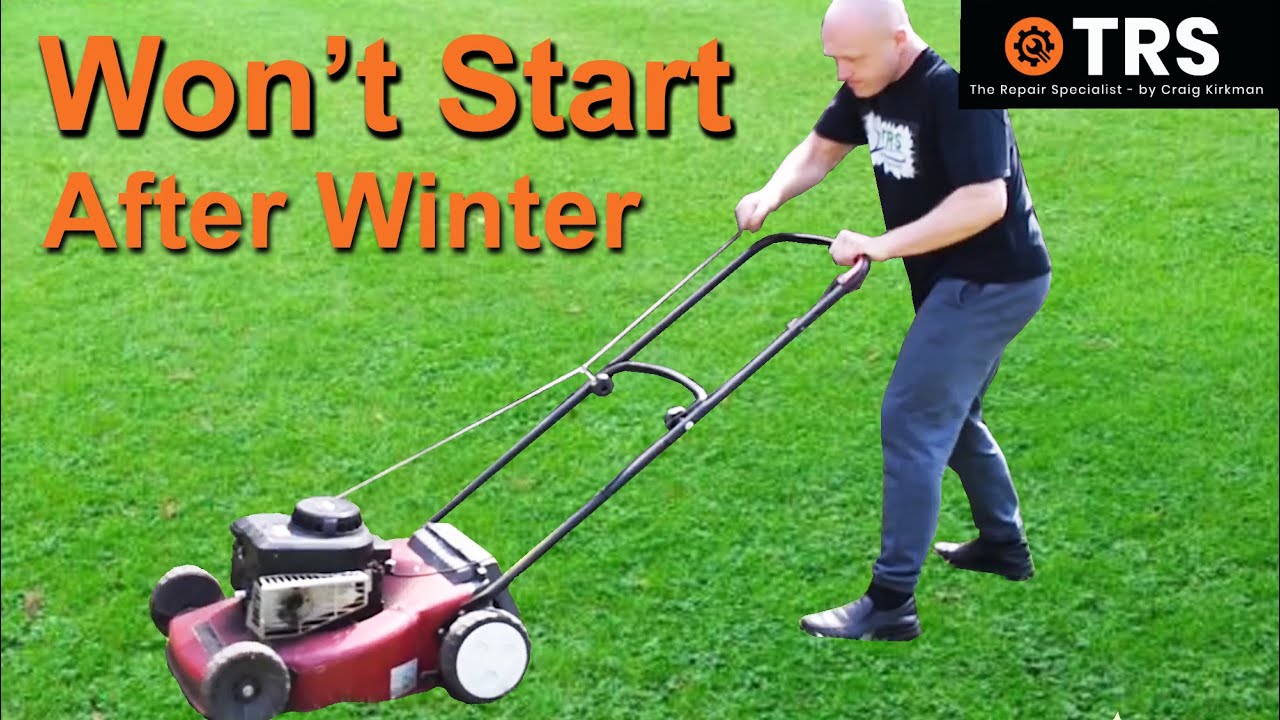
Image Source: i.ytimg.com
Fathoming the Fuel: The Heart of the Matter
Fuel is the lifeblood of your lawn mower’s engine. If it’s not right, nothing will happen. Over the winter, fuel can degrade, leading to starting problems.
Stale Fuel: A Common Culprit
What is stale fuel? Stale fuel is gasoline that has lost its potency due to oxidation and the evaporation of volatile components over time. This often happens when a mower sits for extended periods, especially over winter.
-
Why it matters: Modern gasoline contains ethanol, which attracts moisture. This moisture can lead to corrosion in fuel lines and the carburetor. Over time, gasoline breaks down, leaving behind a gummy residue that can clog vital parts of the engine.
-
Symptoms of stale fuel:
- The engine cranks but won’t fire up.
- The engine sputters and dies shortly after starting.
- You notice a varnish-like buildup inside the fuel tank or on fuel system components.
Fuel Filter Clogged: A Blocked Pathway
What does a fuel filter do? A fuel filter is a small component designed to trap dirt, debris, and other contaminants before they reach the carburetor, protecting the engine from damage.
-
Why it matters: A clogged fuel filter restricts the flow of gasoline to the engine. If it’s blocked with sediment from the fuel tank or old fuel residue, the engine won’t get enough fuel to run.
-
How to check and replace:
- Locate the fuel filter. It’s usually in the fuel line between the fuel tank and the carburetor.
- Turn off the engine and let it cool.
- Use pliers to pinch off the fuel line leading to the filter.
- Carefully remove the old filter, noting the direction of fuel flow (usually indicated by an arrow).
- Install the new filter, ensuring it’s oriented correctly.
- Release the fuel line and check for leaks.
Carburetor Dirty: The Engine’s “Food” Mixer
What is a carburetor? The carburetor is a crucial part of the engine that mixes air and fuel in the correct ratio for combustion.
-
Why it matters: Stale fuel can leave deposits that clog the small jets and passages within the carburetor. This prevents the proper mixture of air and fuel from entering the engine cylinders, making it impossible to start.
-
Cleaning a dirty carburetor:
- For minor clogs: You can try using a fuel additive designed to clean carburetors. Add it to fresh gasoline and run the engine for a while.
- For significant clogs: The carburetor may need to be removed, disassembled, and thoroughly cleaned. This involves using carburetor cleaner spray and a soft brush or compressed air to clear out any blockages. If you’re not comfortable with this, a small engine repair shop can help.
Preventing Fuel Problems for Next Winter
To avoid stale fuel issues next year:
- Use a fuel stabilizer: Before storing your mower for the winter, add a fuel stabilizer to the gas tank. Run the engine for a few minutes to ensure the stabilized fuel circulates through the entire fuel system.
- Empty the fuel tank: Alternatively, you can drain the fuel tank completely before storage.
Igniting the Spark: The Spark Plug’s Role
The spark plug is responsible for igniting the fuel-air mixture in the engine’s cylinder. If it’s not working correctly, the engine won’t start.
Spark Plug Fouled: Clogged and Ineffective
What is a fouled spark plug? A fouled spark plug has deposits of carbon, oil, or fuel on its electrode, preventing it from creating a strong spark.
-
Why it matters: If the spark plug is fouled, it can’t produce the necessary spark to ignite the fuel. This is a very common reason for an engine not starting.
-
Checking and cleaning/replacing:
- Locate the spark plug. It’s usually connected to a thick wire from the ignition system.
- Gently pull off the spark plug wire boot.
- Use a spark plug socket wrench to unscrew the spark plug.
- Inspect the tip of the spark plug. If it’s black, sooty, oily, or covered in gunk, it’s fouled.
- You can try cleaning a fouled spark plug with a wire brush and carburetor cleaner. Make sure to wipe it dry and check the gap between the electrodes (refer to your mower’s manual for the correct gap).
- However, spark plugs are inexpensive. Replacing it with a new one is often the easiest and most reliable solution. Ensure you get the correct replacement plug for your mower model.
Ignition Coil Bad: No Spark Generation
What is an ignition coil? The ignition coil is an electrical component that transforms the battery’s low voltage into the high voltage needed to create a spark at the spark plug.
-
Why it matters: If the ignition coil fails, it won’t be able to generate the high voltage for the spark plug, resulting in no spark and a non-starting engine.
-
Diagnosing a bad ignition coil: This is a bit more complex. You can check for spark by removing the spark plug, reattaching the wire, and grounding the spark plug against the engine block. When you pull the starter cord, you should see a strong blue spark. If there’s no spark or a weak yellow spark, the ignition coil might be the issue. Replacing an ignition coil usually requires some mechanical aptitude and potentially specialized tools.
Air and Oil: The Engine’s Vital Fluids
Even the best engines need proper airflow and lubrication to function.
Air Filter Blocked: Gasping for Breath
What does an air filter do? The air filter prevents dust, dirt, and debris from entering the engine’s combustion chamber.
-
Why it matters: An air filter that is clogged with dirt and debris restricts airflow to the engine. Just like us, an engine needs to breathe. Without enough air, it can’t mix properly with fuel, leading to difficulty starting or poor running performance.
-
Checking and cleaning/replacing:
- Locate the air filter housing. It’s usually a plastic cover held by screws or clips.
- Remove the cover and take out the air filter.
- Inspect the filter. If it’s visibly dirty or clogged with debris, it needs attention.
- Paper filters: Most paper filters cannot be cleaned effectively and should be replaced.
- Foam filters: Foam filters can often be washed with soap and water, rinsed thoroughly, and allowed to dry completely. After drying, lightly re-oil the filter with clean engine oil (for foam filters only, as specified by the manufacturer) before reinstalling.
Oil Level Low: Insufficient Lubrication
What is the oil level? The oil level refers to the amount of engine oil present in the crankcase, which lubricates moving parts.
-
Why it matters: While low oil level won’t typically prevent an engine from starting, some modern engines have safety features that will disable ignition if the oil level is critically low to prevent engine damage. More importantly, running an engine with low oil can cause severe internal damage, leading to an engine seized.
-
Checking and topping up:
- Ensure the mower is on a level surface.
- Locate the oil dipstick (usually a yellow or orange handle).
- Pull out the dipstick, wipe it clean, reinsert it fully, and pull it out again.
- Check the oil level against the markings on the dipstick. If it’s below the “add” or “low” mark, you need to add oil.
- Use the type and weight of oil recommended in your mower’s owner’s manual. Add oil slowly, checking the level frequently until it reaches the “full” or “max” mark. Do not overfill.
Mechanical and Electrical Hurdles
Sometimes, the problem lies deeper within the mower’s mechanical or electrical systems.
Recoil Starter Issues: The Pull-Start Problem
What is a recoil starter? The recoil starter is the mechanism you use to start the engine by pulling a cord. It uses a spring and a ratchet system to engage the engine’s crankshaft.
-
Why it matters: If the recoil starter is damaged, the pull cord may not engage with the engine’s flywheel properly. This means pulling the cord won’t turn the engine over, and it won’t start.
-
Common recoil starter problems:
- Broken recoil spring: The spring might break, preventing the cord from retracting or engaging the engine.
- Damaged pawls/ratchet: The small teeth that engage the flywheel might be worn or broken.
- Stuck mechanism: Debris or rust can cause the recoil starter to seize up.
-
Addressing recoil starter issues: Inspect the starter mechanism for visible damage. If the cord pulls freely without any resistance or engagement, or if it feels jammed, the recoil starter assembly may need to be replaced. This is often a straightforward repair that involves removing a few screws.
Battery Dead: No Juice for the Starter
Can a lawn mower have a dead battery? Yes, especially riding mowers or some self-propelled models with electric start. Battery-powered mowers obviously rely entirely on their battery.
-
Why it matters: If your mower has an electric start, a dead or weak battery won’t have enough power to turn the engine over. For battery-powered mowers, a depleted battery is the most obvious reason it won’t start.
-
Checking and charging/replacing:
- For electric start gas mowers: Check the battery terminals for corrosion. Clean them with a wire brush and a battery terminal cleaner solution if necessary.
- Try charging the battery with a suitable charger. If it doesn’t hold a charge, it needs to be replaced.
- For battery-powered mowers: Ensure the battery is fully charged according to the manufacturer’s instructions. If the battery is old or has been stored improperly, it may have lost its capacity and will need replacement.
Engine Seized: The Worst-Case Scenario
What does it mean for an engine to be seized? An engine is seized when its internal moving parts (like pistons, crankshaft, and connecting rods) are locked up and cannot move freely, usually due to lack of lubrication or overheating.
-
Why it matters: If the engine is seized, it means catastrophic internal damage has occurred. The crankshaft will not turn over at all, even with significant force. This is often a result of running the engine with critically low oil levels or severe overheating.
-
Diagnosing a seized engine: Try to manually turn the engine over using the pull cord or a wrench on the crankshaft bolt. If it feels completely locked and won’t budge, it’s likely seized. Unfortunately, a seized engine usually means the mower is beyond economical repair, and you might need to consider a replacement.
Troubleshooting Checklist
Here’s a quick checklist to help you systematically diagnose the problem:
| Component | Potential Issue | Action |
|---|---|---|
| Fuel System | Stale Fuel | Drain old fuel, refill with fresh fuel and stabilizer. |
| Fuel Filter Clogged | Inspect and replace the fuel filter. | |
| Carburetor Dirty | Clean the carburetor (or add cleaner additive). | |
| Ignition System | Spark Plug Fouled | Remove, clean, or replace the spark plug. Check gap. |
| Ignition Coil Bad | Check for spark. Replace coil if no spark. | |
| Air System | Air Filter Blocked | Inspect and clean or replace the air filter. |
| Lubrication | Oil Level Low | Check oil level and add if necessary. |
| Starting Mech. | Recoil Starter Issues | Inspect for damage or jams. Repair or replace assembly if needed. |
| Electrical | Battery Dead (Electric Start) | Charge or replace the battery. Check terminals. |
| Engine Health | Engine Seized | Check if engine turns over. If not, likely seized; repair may be costly. |
Frequently Asked Questions (FAQ)
Q1: How much fresh fuel should I put in my mower after winter?
A1: It’s best to fill the tank almost completely with fresh gasoline, adding a fuel stabilizer before you start. This minimizes the amount of air in the tank, which can reduce condensation and fuel degradation.
Q2: Can I use E85 gasoline in my lawn mower?
A2: No, never use E85 or any fuel with a high ethanol content in a standard lawn mower. Most small engines are designed for unleaded gasoline with a lower ethanol content (typically E10 or less). High ethanol content can damage fuel lines, seals, and carburetor components.
Q3: My mower starts but dies after a few seconds. What’s wrong?
A3: This is a classic symptom of a fuel delivery problem. It could be stale fuel, a partially clogged fuel filter, or a dirty carburetor that’s not delivering a consistent fuel-air mixture. Ensure you have fresh fuel and clean out the fuel system.
Q4: I pulled the cord, and nothing happens. Is the recoil starter broken?
A4: Not necessarily. Check if the spark plug wire is securely attached. If the engine is not turning over at all, it could also be a seized engine or a very damaged recoil starter.
Q5: How often should I change my spark plug?
A5: It’s a good practice to replace your spark plug at least once a year, typically at the beginning of the mowing season. This ensures optimal performance and reduces the chance of starting issues.
By systematically working through these troubleshooting steps, you can identify and resolve most common reasons why your lawn mower won’t start after winter. Remember to always consult your mower’s owner’s manual for specific instructions and part numbers relevant to your model. Happy mowing!