
Can you water your lawn in winter? Yes, you can water your lawn in winter, but it’s generally not needed very often. Your grass is usually dormant during the colder months and doesn’t require much water. However, in certain situations, supplemental winter watering can be beneficial, especially in areas prone to drought or during unusually dry winters.
Winter can be a tricky time for lawn care. Many homeowners assume that once the growing season is over, their lawn’s water needs disappear. While it’s true that grass slows down significantly in cold weather, it’s not entirely shut off. This period of dormancy means your grass isn’t actively growing and using water as it does in spring and summer. But this doesn’t mean it’s completely immune to thirst. Fathoming your lawn’s winter moisture needs is key to its survival and its ability to bounce back strong in the spring.
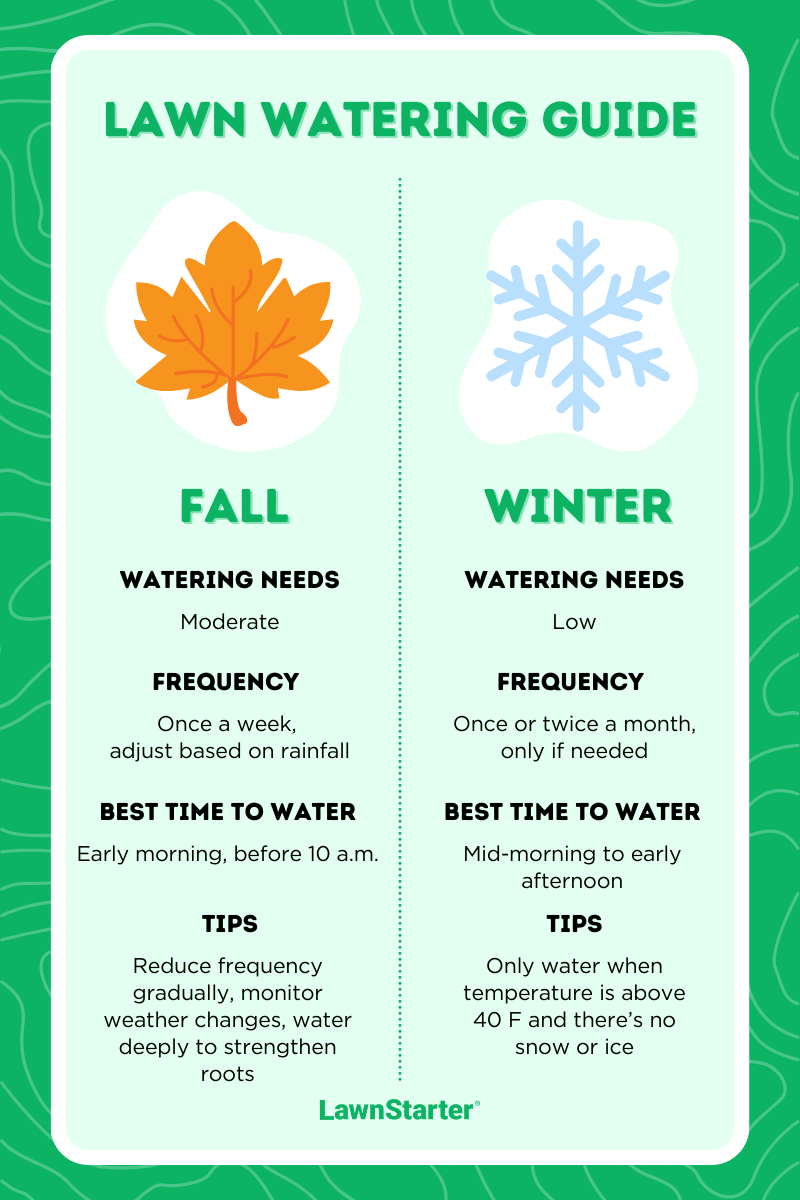
Image Source: www.lawnstarter.com
The Science of Dormant Lawn Watering
Your lawn’s grass species plays a big role in its winter behavior. Cool-season grasses, like fescues and bluegrasses, can tolerate cold but will go dormant, turning brown. Warm-season grasses, common in warmer climates, typically die back completely and are not a concern for winter watering. The focus for dormant lawn watering is almost exclusively on cool-season grasses.
When grass goes dormant, its metabolic processes slow down. It’s like a bear hibernating; it needs less energy and, consequently, less water. The blades may turn brown, but the crown and roots remain alive, waiting for warmer temperatures and more sunlight. This is why overwatering can be more harmful than underwatering in winter. Excess moisture can lead to disease and root rot, especially when temperatures are cold.
Factors Influencing Winter Watering Needs
Several factors dictate if and when your lawn might need supplemental winter watering:
- Soil Type: Sandy soils drain quickly and can dry out faster, even in winter. Clay soils retain moisture longer.
- Rainfall and Snowfall: Natural precipitation is the primary source of moisture. A dry winter with little to no snow or rain will increase the likelihood of needing to water.
- Wind: Dry, cold winds can draw moisture out of the grass blades and the soil. This is a significant factor in drought stress winter conditions.
- Sunlight and Temperature: While less important than in summer, sunny days can still contribute to drying, especially if there’s no precipitation.
- Grass Species: As mentioned, cool-season grasses are the ones to consider.
- Local Climate: Regions with naturally dry winters will have different watering needs than those with consistent winter moisture.
How Much Water Does a Dormant Lawn Need?
A dormant lawn generally needs about 1 inch of water every 3 to 4 weeks. This is significantly less than a growing lawn, which might need 1 to 1.5 inches per week. The goal isn’t to encourage growth but to prevent the grass from drying out too much, which can damage the crown and roots.
Interpreting Your Lawn’s Thirst:
- Wilting: Even dormant grass can wilt. Look for a dull, grayish-green color or a bluish tint, and the blades may appear to curl or fold.
- Footprints: If you walk on your lawn and your footprints remain visible for an extended period, it’s a sign the grass is dry and lacks moisture. Healthy, hydrated grass will spring back quickly.
- Soil Moisture: The best way to tell is to check the soil. You can use a soil moisture meter or simply dig a small hole with a trowel. If the soil is dry more than an inch or two down, your lawn may need water.
When to Water Your Lawn in Winter
The frequency of watering is highly dependent on your specific location and the winter’s weather patterns. Seasonal watering in winter is about observation and strategic intervention, not routine application.
General Guidelines for Winter Watering
- Infrequent Winter Watering is Key: Aim for no more than once every 3-4 weeks, and only if conditions warrant.
- Avoid Watering in Freezing Temperatures: This is crucial for frost protection. Watering when the ground is frozen or when temperatures are expected to drop below freezing within 24 hours can damage the grass and create icy patches on your lawn.
- Water Early in the Day: If you must water, do so in the morning. This allows the grass blades and the soil surface to dry before nightfall, minimizing the risk of freezing.
- Check the Forecast: Before you water, look at the extended forecast. If rain or snow is expected, hold off.
Specific Scenarios Requiring Winter Watering
- Extended Dry Spells: If your region experiences a prolonged period without significant rain or snow (more than 3-4 weeks), and the soil feels dry, a deep watering might be necessary. This is particularly important in areas that typically receive winter precipitation but are experiencing an unusually dry season.
- Windy Conditions: Persistent, dry, and cold winds can dehydrate the grass. If you notice your lawn looks unusually dry and brittle, and there hasn’t been enough moisture, watering can help.
- Thin or Newly Seeded Lawns: Lawns that were established late in the fall or are still developing may have weaker root systems and be more susceptible to drying out. These might require slightly more attention.
- Under Evergreen Trees: Lawns under evergreen trees can be drier because the trees’ roots compete for moisture, and their canopy can also intercept rainfall or snow.
How to Water Your Lawn in Winter Effectively
When you decide to water your cold weather lawn, doing it correctly is vital. The goal is to provide deep, infrequent moisture.
Watering Techniques
- Deep Watering: When you water, aim to moisten the soil to a depth of at least 6 inches. This encourages deeper root growth, which is beneficial for the grass’s overall health.
- Sprinkler System Checks: If you have an automatic sprinkler system, ensure it’s properly winterized and not running. If you plan to use it for supplemental watering, be sure it’s set to water in the early morning and can be easily turned off.
- Hose Watering: Using a hose with a sprinkler attachment allows you to control the watering area and duration more precisely.
- Avoid Shallow Watering: Lightly sprinkling the lawn is counterproductive. It wets the surface but doesn’t reach the roots and can encourage shallow root development, making the grass more vulnerable.
How Much Water to Apply
The general rule of thumb for winter lawn care when watering is to apply about 1 inch of water every 3 to 4 weeks, but only if natural precipitation hasn’t met this need. This translates to approximately:
- For sprinklers: Run them for a duration that delivers 1 inch of water. You can test this by placing an empty can or tuna can in the watering path to measure how long it takes to collect 1 inch of water.
- For hoses: Water slowly and deeply until the soil is moist to the desired depth.
Timing Your Watering for Frost Protection
Timing is everything for frost protection.
- Ideal Time: Early morning is best.
- Avoid: Never water when temperatures are at or near freezing, or when a hard freeze is predicted for the next day. Watering frozen ground can damage the grass and create hazardous icy patches.
- Soil Temperature Matters: The soil itself should ideally be above freezing for watering to be beneficial and not harmful.
Common Mistakes to Avoid in Winter Lawn Watering
- Overwatering: This is the most common and detrimental mistake. It can lead to root rot, fungal diseases, and a weakened lawn. Remember, your grass is dormant.
- Watering at the Wrong Time of Day: Watering in the evening or at night when temperatures are low increases the risk of freezing damage to the grass blades and the entire lawn.
- Frequent, Shallow Watering: This encourages weak, shallow root systems and is generally ineffective for dormant grass.
- Ignoring Natural Precipitation: Relying solely on watering schedules without checking if it has rained or snowed is a waste of water and can lead to overwatering.
- Watering Frozen Ground: This can literally kill your grass and create dangerous ice.
Understanding Snow Cover and Dormant Lawn Watering
Snow is nature’s blanket and a vital source of moisture for your lawn.
Snow as a Water Source
- Moisture Retention: Snow cover protects the ground from drying winds and insulates the grass from extreme temperature fluctuations.
- Slow Release of Water: As snow melts, it provides a slow, consistent release of water that the soil can absorb. This is ideal seasonal watering.
- Don’t Water if it’s Snowing: If you have adequate snow cover, there’s no need to water. The melting snow will provide sufficient moisture.
When to Remove Snow for Watering
In most cases, you should leave snow cover intact. However, there are rare exceptions:
- Heavy, Wet Snow Followed by Freeze: If a very heavy, wet snow falls and is then followed by a rapid freeze, it can sometimes compact and smother the grass, preventing air exchange. In such extreme cases, very lightly disturbing the snow’s surface to allow some air in might be considered, but this is very advanced winter lawn care and usually unnecessary.
- Ice Encapsulation: If your lawn becomes completely encased in a thick layer of ice from freezing rain, this can be detrimental. While you can’t always prevent this, if it’s a prolonged and severe issue, gently breaking the ice surface might be considered, but this is also a risky maneuver.
Assessing Drought Stress Winter Conditions
Recognizing signs of drought stress winter is critical for knowing when intervention is necessary.
Indicators of Winter Drought Stress
- Grayish-Green or Bluish Hue: Grass blades that appear dull or have a muted color are often a sign of dehydration.
- Crinkled or Folded Blades: Healthy dormant grass lies flat. Dehydrated grass may curl or fold its blades.
- Footprints Persist: As mentioned, if your footsteps leave impressions that don’t spring back, the soil and grass are likely dry.
- Dry, Cracking Soil: In more severe cases, the soil itself might start to pull away from the crown of the grass.
When to Act
If you observe these signs and there has been no significant precipitation for over a month, it’s time to consider supplemental winter watering. Remember to water deeply and infrequently, following the guidelines for timing and temperature.
Winter Lawn Care Beyond Watering
While watering is a component, effective winter lawn care also includes other practices that help your lawn stay healthy.
Other Winter Lawn Care Practices
- Leaf Removal: Keep your lawn clear of fallen leaves. A thick layer of leaves can smother the grass and harbor disease, especially when combined with moisture.
- Avoid Compaction: Try to stay off the lawn as much as possible during wet or frozen periods to prevent soil compaction, which can damage grass roots and hinder water and air penetration.
- Control Weeds: Some winter weeds can compete for moisture and nutrients. Spot-treat as needed, but avoid broad applications of herbicides when the grass is dormant.
- Fertilizing (with Caution): If you fertilize in late fall, it’s usually done to help the grass store energy for winter and prepare for spring. Avoid fertilizing in mid-winter, as this can stimulate growth when the grass is trying to stay dormant, making it vulnerable.
Frequently Asked Questions (FAQ)
Q1: Can I water my lawn if there’s a light frost?
A1: It’s best to avoid watering if there’s a light frost or if temperatures are expected to drop below freezing within 24 hours. If you must water, do it early in the morning when temperatures are still relatively mild, and aim for the sun to dry the grass before evening.
Q2: How do I know if my lawn needs water in winter?
A2: Look for signs like a dull, grayish-green color, blades that fold or curl, and footprints that remain visible for a long time. Checking the soil moisture directly by digging a small hole is also effective. If the soil is dry more than an inch or two down, watering might be necessary.
Q3: Is it okay to water my lawn in the evening during winter?
A3: No, it’s generally not recommended to water your lawn in the evening during winter. Water left on the grass blades and soil surface overnight can freeze, causing damage to the grass and creating slippery ice patches. Always water in the early morning.
Q4: What’s the difference between watering in summer and winter?
A4: In summer, you water frequently and deeply to encourage active growth and combat heat and evaporation. In winter, you water very infrequently and only when necessary to prevent extreme drying, as the grass is dormant and has minimal lawn moisture needs. The goal is survival, not growth.
Q5: Will watering my lawn in winter promote growth?
A5: Generally, no. While excessive watering can sometimes stimulate a little weak growth, the primary purpose of dormant lawn watering is to prevent desiccation, not to encourage new growth. Growth is primarily dictated by temperature and sunlight.
Q6: Should I water my lawn if it has snow cover?
A6: No, if your lawn is covered in snow, it is receiving adequate moisture from the melting snow. Snow acts as an insulator and a water source, so additional watering is unnecessary and potentially harmful.
Q7: My sprinkler system is winterized. How can I water my lawn manually in winter?
A7: You can use a garden hose with a sprinkler attachment. Connect it to an outdoor faucet, set the sprinkler, and water the lawn according to the guidelines for depth and duration. Ensure you disconnect the hose and drain it afterward to prevent freezing.
Q8: How often should I check my lawn for dryness in winter?
A8: You can check your lawn’s dryness by observing its appearance and doing the footprint test weekly or bi-weekly, especially after extended dry periods or windy spells. However, only water if the signs of dryness persist and there has been no natural precipitation for 3-4 weeks.
By following these guidelines, you can effectively manage your lawn’s lawn moisture needs during the winter months, ensuring it remains healthy and ready to thrive when spring arrives. Remember, observation and judicious application are the cornerstones of successful winter lawn care.