
One cubic yard of mulch, when applied at a depth of 3 inches, will cover approximately 108 square feet. This fundamental calculation is key to determining your landscaping mulch volume needs and ensuring you purchase the right amount of material for your garden beds.
Estimating the amount of mulch needed for your landscaping projects can seem daunting, but with a few simple calculations, you can accurately determine your requirements. Whether you’re tackling a small flower bed or a large garden, knowing how much mulch a cubic yard covers is the first step. This guide will delve into the specifics of mulch coverage, helping you efficiently calculate mulch needed and avoid both under- and over-buying.
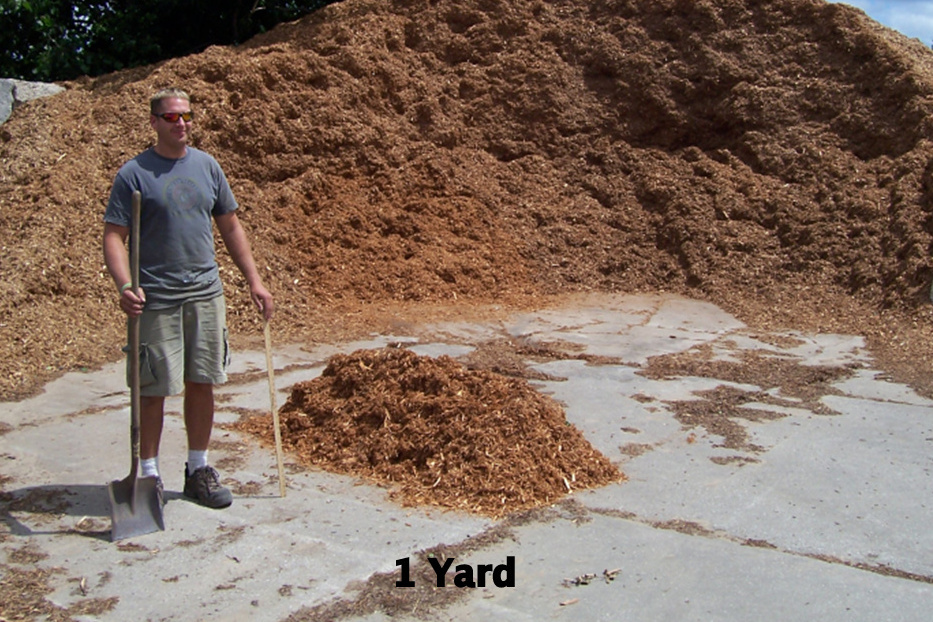
Image Source: klsupplies.com
Deciphering Mulch Coverage: The Cubic Yard Factor
The unit of measurement for mulch is typically the cubic yard. This is a measure of volume, and its coverage area depends entirely on the depth at which you spread it. Think of it like filling a box: the amount of stuff you can fit inside depends on how deep you pack it. Similarly, the more mulch you spread per square foot, the less area a single cubic yard will cover.
The Standard Mulch Depth
For most landscaping applications, a mulch depth of 2 to 4 inches is recommended. This depth provides several benefits:
- Weed Suppression: A thicker layer of mulch acts as a barrier, preventing weed seeds from germinating.
- Moisture Retention: Mulch helps keep the soil moist by reducing evaporation, which is crucial for plant health, especially during dry spells.
- Temperature Regulation: It insulates the soil, keeping it cooler in summer and warmer in winter, protecting plant roots from extreme temperature fluctuations.
- Aesthetics: A uniform layer of mulch gives garden beds a neat, finished appearance.
Calculating Coverage Based on Depth
To determine how much area one cubic yard of mulch will cover, we can use a simple formula:
Coverage Area (sq ft) = (Volume of Mulch in cubic feet) / (Mulch Depth in feet)
Since one cubic yard is equal to 27 cubic feet (3 ft x 3 ft x 3 ft), and we typically measure mulch depth in inches, we need to convert inches to feet by dividing by 12.
Let’s look at common mulch depths and their coverage:
- 2-inch depth: 1 cubic yard = 27 cubic feet. Depth in feet = 2 inches / 12 inches/foot = 0.167 feet.
Coverage = 27 cubic feet / 0.167 feet = 161 square feet. - 3-inch depth: 1 cubic yard = 27 cubic feet. Depth in feet = 3 inches / 12 inches/foot = 0.25 feet.
Coverage = 27 cubic feet / 0.25 feet = 108 square feet. - 4-inch depth: 1 cubic yard = 27 cubic feet. Depth in feet = 4 inches / 12 inches/foot = 0.333 feet.
Coverage = 27 cubic feet / 0.333 feet = 81 square feet.
This means that for a typical 3-inch application, one cubic yard of mulch will cover roughly 108 square feet. Using a mulch coverage calculator or a landscape material calculator can streamline these calculations for larger projects.
Converting Cubic Yard to Square Foot Mulch: A Practical Approach
When you’re planning your garden, you’ll often measure your beds in square feet. So, how do you translate that into the landscaping mulch volume you need to buy? It’s all about applying the depth consistently.
Imagine you have a rectangular garden bed that is 10 feet long and 5 feet wide. The area of this bed is 10 ft * 5 ft = 50 square feet.
If you want to apply mulch at a 3-inch depth, you know that 1 cubic yard covers 108 square feet at this depth.
To find out how many cubic yards you need for your 50 square-foot bed, you can use this formula:
Cubic Yards Needed = (Total Square Footage to Cover) / (Coverage per Cubic Yard at Desired Depth)
For our 50 sq ft bed at a 3-inch depth:
Cubic Yards Needed = 50 sq ft / 108 sq ft/cubic yard ≈ 0.46 cubic yards.
Since you can’t usually buy fractions of a cubic yard, you’d likely round up to 0.5 cubic yards (or a full cubic yard if that’s the smallest available quantity). It’s always better to have a little extra mulch than to run out midway through your project.
Table: Mulch Coverage for One Cubic Yard
| Desired Mulch Depth | Coverage Area (Square Feet) |
|---|---|
| 1 inch | 324 sq ft |
| 2 inches | 162 sq ft |
| 3 inches | 108 sq ft |
| 4 inches | 81 sq ft |
| 5 inches | 65 sq ft |
| 6 inches | 54 sq ft |
This mulch coverage chart provides a quick reference for various depths.
Estimating Mulch Needs for Different Garden Sizes
Let’s walk through a few more scenarios to solidify your estimating mulch skills.
Scenario 1: A Small Flower Bed
Suppose you have a flower bed that is circular with a radius of 3 feet.
- Calculate the area: Area of a circle = π * r².
Area = 3.14 * (3 ft)² = 3.14 * 9 sq ft = 28.26 square feet. - Determine the mulch depth: Let’s aim for a 3-inch depth.
- Calculate cubic yards needed: Using our chart, 1 cubic yard covers 108 sq ft at a 3-inch depth.
Cubic Yards Needed = 28.26 sq ft / 108 sq ft/cubic yard ≈ 0.26 cubic yards.
You would need to purchase at least half a cubic yard.
Scenario 2: A Larger Rectangular Garden
Consider a garden bed that is 20 feet long and 8 feet wide.
- Calculate the area: Area = length * width.
Area = 20 ft * 8 ft = 160 square feet. - Determine the mulch depth: For this larger area, let’s stick with a 3-inch depth.
- Calculate cubic yards needed:
Cubic Yards Needed = 160 sq ft / 108 sq ft/cubic yard ≈ 1.48 cubic yards.
In this case, you would need to purchase 1.5 cubic yards or round up to 2 cubic yards to be safe and account for any settling or unevenness.
Scenario 3: Mulching Along a Fence Line
Imagine you want to mulch a strip along a 50-foot fence line, and the strip is 4 feet wide.
- Calculate the area: Area = length * width.
Area = 50 ft * 4 ft = 200 square feet. - Determine the mulch depth: Let’s go with a 4-inch depth this time to really combat weeds.
- Calculate cubic yards needed: From our chart, 1 cubic yard covers 81 sq ft at a 4-inch depth.
Cubic Yards Needed = 200 sq ft / 81 sq ft/cubic yard ≈ 2.47 cubic yards.
You would need to purchase approximately 2.5 cubic yards, likely rounding up to 3 cubic yards to ensure adequate coverage.
Factors Affecting Mulch Coverage
While the calculations provide a solid estimate, several factors can influence how much mulch you actually use:
- Irregular Bed Shapes: Gardens with many curves, corners, or slopes can be more challenging to cover evenly. You might use slightly more mulch in these areas to ensure consistent depth.
- Settling Over Time: Mulch, especially organic types like wood chips or bark, will break down and settle. Applying mulch a bit thicker initially can compensate for this gradual compaction.
- Type of Mulch: Some mulches, like shredded bark, are fluffier and might spread further initially than denser materials like gravel or stone mulch. However, for typical landscaping mulch, the volume calculation remains the same.
- Existing Mulch Layer: If you are refreshing an existing mulch bed, you only need to add enough to bring it back to the desired depth, not create a new layer from scratch.
- Uneven Ground: Sloping or bumpy terrain can make it harder to maintain a consistent mulch depth. You might need to add extra mulch in lower spots to achieve the desired coverage.
The Ease of Mulch Bag Coverage
While bulk cubic yards are often more economical for larger projects, mulch is also sold in bags. Understanding mulch bag coverage is essential if you’re dealing with smaller areas or prefer the convenience of bags.
Mulch bags typically contain either 2 cubic feet or 3 cubic feet of material. Let’s see how this translates to coverage at a 3-inch depth (where 1 cubic yard = 108 sq ft):
- 2 cubic foot bag:
Coverage = (2 cubic feet) / (0.25 ft depth) = 8 square feet per bag. - 3 cubic foot bag:
Coverage = (3 cubic feet) / (0.25 ft depth) = 12 square feet per bag.
So, if you have a 48 square-foot garden bed and want a 3-inch depth:
- Using 2 cubic foot bags: 48 sq ft / 8 sq ft/bag = 6 bags.
- Using 3 cubic foot bags: 48 sq ft / 12 sq ft/bag = 4 bags.
It’s always wise to check the specific volume listed on the bag, as this can vary slightly between brands and products. This makes comparing mulch bag coverage straightforward.
Putting It All Together: How Much Mulch Per Bed?
The question “how much mulch per bed?” is best answered by breaking down the process:
- Measure Your Bed(s): Accurately measure the length and width of each area you intend to mulch. If the shapes are irregular, break them down into simpler geometric shapes (rectangles, squares, circles) and sum their areas.
- Decide on Your Mulch Depth: Consider the benefits of different depths. 3 inches is a good all-around choice.
- Use a Mulch Coverage Calculator: Many garden supply websites and online tools offer a mulch coverage calculator or a landscape material calculator where you can input your dimensions and desired depth to get an instant estimate in cubic yards or bags.
- Calculate Manually: If you prefer to do it yourself, use the formulas provided earlier:
- Area = Length x Width (for rectangles)
- Area = π x radius² (for circles)
- Cubic Yards = Total Area / Coverage per Cubic Yard (at your chosen depth)
- Add a Buffer: It’s always smart to add 5-10% extra to your estimate to account for settling, uneven application, or spills.
Example: Calculating Mulch for Multiple Beds
Let’s say you have two beds:
* Bed 1: 10 ft x 6 ft
* Bed 2: 8 ft x 4 ft
You want a 3-inch mulch depth.
- Bed 1 Area: 10 ft * 6 ft = 60 sq ft
- Bed 2 Area: 8 ft * 4 ft = 32 sq ft
- Total Area: 60 sq ft + 32 sq ft = 92 sq ft
At a 3-inch depth, 1 cubic yard covers 108 sq ft.
- Cubic Yards Needed: 92 sq ft / 108 sq ft/cubic yard ≈ 0.85 cubic yards.
You would need to purchase 1 cubic yard to cover both beds with a 3-inch depth.
Frequently Asked Questions (FAQ)
Q1: How deep should I apply mulch?
A1: A general recommendation is 2 to 4 inches. For most garden beds, 3 inches is ideal for weed suppression, moisture retention, and temperature regulation. For trees and shrubs, mulch should be applied 2-3 inches deep and kept a few inches away from the trunk to prevent rot and pest issues.
Q2: Can I use mulch from a bag and from bulk at the same time?
A2: Yes, you can. The key is to ensure you are applying the same depth across all areas, regardless of whether you are using bagged or bulk mulch. Keep track of your measurements and desired depth to maintain consistency.
Q3: How do I calculate mulch for irregularly shaped beds?
A3: Break down the irregular shape into simpler geometric shapes (rectangles, squares, triangles, circles), calculate the area of each section, and then add them together for the total area. Online landscape material calculators can also help with complex shapes.
Q4: Does the type of mulch affect how much I need?
A4: While the cubic yard to square foot mulch calculation remains the same based on volume and depth, some mulches are fluffier and may appear to cover more area initially. However, over time, all organic mulches will compact. It’s best to stick to the depth recommendations for optimal benefits.
Q5: What if I have a very large area to mulch?
A5: For large areas, purchasing mulch in bulk by the cubic yard is generally more cost-effective than buying bags. Use a mulch coverage calculator to determine the total volume needed, and order slightly more than calculated to account for any unforeseen needs.
Q6: How much mulch do I need to cover a driveway or path?
A6: This depends on the purpose. For a decorative pathway, a depth of 1-2 inches is common. For a play area or path that needs good cushioning, you might opt for 4-6 inches. Always adjust your calculations based on the intended use and desired outcome.
By accurately calculating your needs and applying mulch at the correct depth, you can enhance the beauty and health of your landscape while making the most of your budget. Happy mulching!