
Fertilizer helps your lawn grow by giving it the nutrients it needs. These nutrients are like food for grass, helping it become greener, thicker, and healthier.
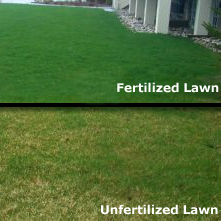
Image Source: aalawns.com
Fathoming the Science: What Fertilizers Do for Your Grass
Your lawn is a living thing, and just like you need food to grow and stay healthy, your grass needs specific nutrients. Fertilizer is essentially a supplement that provides these essential building blocks. It’s not just about making your grass look good; it’s about promoting robust plant growth and improving overall soil health.
Think of your soil as a pantry. Over time, as your grass grows and you mow your lawn, it uses up the available nutrients in that pantry. If you don’t replenish them, the grass will start to struggle. This is where fertilizer application comes in. It’s like restocking that pantry, ensuring your grass has everything it needs to thrive.
The Core Trio: Macronutrients for Lawn Vitality
When we talk about lawn fertilizer, there are three primary nutrients, known as macronutrients, that are almost always present. These are Nitrogen (N), Phosphorus (P), and Potassium (K). The numbers you see on a fertilizer bag, like 10-10-10 or 20-5-10, represent the percentage by weight of these three macronutrients.
Nitrogen (N): The Green Powerhouse
Nitrogen is arguably the most crucial nutrient for healthy, green grass. It plays a vital role in photosynthesis, the process by which plants convert sunlight into energy.
- Leafy Growth: Nitrogen directly promotes the growth of leaves and stems. This is why lawns fertilized with a high nitrogen content often appear lush and green.
- Chlorophyll Production: It’s a key component of chlorophyll, the pigment that gives plants their green color. More chlorophyll means more efficient energy production.
- Root Development: While primarily known for above-ground growth, Nitrogen also indirectly supports a stronger root system by fueling overall plant growth.
However, too much Nitrogen can be detrimental, leading to rapid, weak growth that is more susceptible to disease and stress, and can even burn the grass if applied incorrectly.
Phosphorus (P): The Root Builder
Phosphorus is essential for the early stages of plant growth, particularly for developing a strong and extensive root system.
- Root Establishment: It helps young grass seedlings develop deep, healthy roots, which are vital for accessing water and nutrients from deeper in the soil.
- Energy Transfer: Phosphorus is involved in energy transfer within the plant, making it crucial for all metabolic processes, including germination and flowering (though flowering isn’t a primary concern for most lawn grasses).
- Plant Maturity: It contributes to the overall maturity and resilience of the grass plant.
While essential, many established lawns already have sufficient Phosphorus in the soil. Over-application can lead to environmental issues, such as algal blooms in waterways, so it’s important to use Phosphorus only when a soil testing indicates a deficiency.
Potassium (K): The All-Rounder
Potassium is the third major macronutrient and acts as a general health booster for the grass plant. It’s involved in numerous physiological processes.
- Stress Tolerance: Potassium significantly enhances a lawn’s ability to withstand stress from drought, heat, cold, and disease. It helps the grass manage water more effectively.
- Disease Resistance: A good supply of Potassium can bolster the plant’s natural defenses against fungal diseases and insect damage.
- Overall Vigor: It contributes to the plant’s overall strength, promoting better enzyme activity and aiding in the production of essential proteins.
Think of Potassium as the immune system for your lawn, helping it bounce back from challenges and maintain its vigor.
The Supporting Cast: Micronutrients for Fine-Tuning
Besides the main macronutrients, grass also needs smaller amounts of other elements, called micronutrients, to function properly. These are often present in healthy soil but can become depleted.
- Iron (Fe): Crucial for chlorophyll production, iron helps grass maintain its deep green color. Iron deficiencies often manifest as yellowing grass.
- Manganese (Mn): Aids in photosynthesis and enzyme activation.
- Zinc (Zn): Involved in enzyme activity and the production of growth hormones.
- Copper (Cu): Essential for enzyme activity and chlorophyll formation.
- Boron (B): Important for cell wall development and flowering (again, less critical for lawns but part of the overall plant nutrient picture).
- Molybdenum (Mo): Involved in nitrogen metabolism.
- Chlorine (Cl): Plays a role in osmosis and ion balance.
While in smaller quantities, micronutrients are vital. If a lawn shows signs of deficiency (like discoloration or stunted growth that isn’t explained by macronutrient issues), a fertilizer containing micronutrients might be beneficial, or a soil testing could reveal specific needs.
Deciphering Fertilizer Types: Slow-Release vs. Quick-Release
Fertilizers are formulated in different ways, impacting how and when the nutrients become available to your grass.
Quick-Release Fertilizers
- How they work: These fertilizers contain nutrients in a readily available form that grass can absorb immediately.
- Pros: They provide a rapid green-up and boost in plant growth. They are often less expensive.
- Cons: The effect is often short-lived, requiring more frequent applications. There’s a higher risk of burning the grass if over-applied or if it rains heavily immediately after application, as the nutrients can leach out of the soil quickly. They can also lead to flushes of growth that require more frequent mowing.
Slow-Release Fertilizers
- How they work: The nutrients in these fertilizers are released gradually over time. This can be achieved through various methods:
- Coated granules: The fertilizer granules are coated with a material (like sulfur or plastic polymers) that breaks down slowly, releasing the nutrients as the coating degrades.
- Organic fertilizers: These come from natural sources and break down slowly in the soil through microbial activity.
- Naturally derived synthetic compounds: Some synthetic fertilizers are designed to break down slowly through natural soil processes.
- Pros: They provide a more consistent and prolonged supply of nutrients, leading to steady plant growth. They reduce the risk of burning the grass and are generally better for the environment as they minimize nutrient leaching. They also mean fewer fertilizer application events throughout the year.
- Cons: They are typically more expensive than quick-release options.
The Importance of Soil Testing: Knowing What Your Lawn Truly Needs
Applying fertilizer without knowing what your soil lacks is like cooking without knowing what ingredients you have. A soil testing is your best friend for effective lawn care.
Why Test Your Soil?
- Identify Deficiencies and Excesses: A test will tell you precisely which nutrients are low and which might be in excess. This is crucial for Phosphorus, as many soils already have enough.
- Determine Soil pH: Soil pH affects how well grass can absorb nutrients. If the pH is too high or too low, even if nutrients are present, the grass might not be able to utilize them. Fertilizer companies often recommend pH adjustments based on test results.
- Prevent Over-fertilization: By knowing what your lawn needs, you avoid wasting money and prevent potential environmental damage from excess nutrients running off into waterways.
- Optimize Fertilizer Choice: A soil testing can guide you in selecting the right N-P-K ratio and whether micronutrients are needed.
How to Get a Soil Test
- Collect Samples: Take several small samples from different areas of your lawn, digging about 3-4 inches deep. Mix these samples thoroughly in a clean container.
- Send to a Lab: Many local extension offices offer affordable soil testing services. You can also purchase home kits, though lab tests are generally more comprehensive.
- Interpret Results: The lab will provide a report detailing the nutrient levels, pH, and recommendations for amendments and fertilizer.
Complying with Proper Fertilizer Application
The effectiveness and safety of fertilizer depend heavily on how it’s applied.
Timing is Everything
- Spring: This is a crucial time to feed your lawn after the winter dormancy. Fertilizing in early spring encourages new growth and helps the grass recover.
- Summer: Avoid fertilizing during periods of extreme heat or drought, as this can stress the grass. If you must fertilize, opt for a slow-release formula and water thoroughly.
- Fall: This is arguably the most important feeding time. Fall fertilizer helps the grass store energy for the winter and promotes root development, ensuring a healthy start in the spring.
Application Methods
- Granular Fertilizers:
- Spreader: Use a broadcast spreader (rotary spreader) or a drop spreader for even coverage.
- Calibration: Ensure your spreader is calibrated correctly according to the fertilizer bag instructions to avoid overlap or missed spots.
- Watering: For most granular fertilizers, watering after application helps the nutrients start to dissolve and move into the soil. However, check the product label, as some recommend waiting a day.
- Liquid Fertilizers:
- Sprayer: Applied using a hose-end sprayer or a backpack sprayer.
- Coverage: Ensure even coverage to avoid streaks or burning.
- Timing: Liquid fertilizers are often absorbed quickly through the leaves and roots.
Key Application Tips
- Read the Label: Always follow the specific instructions on the fertilizer bag regarding application rates and methods.
- Avoid Overlap: Overlapping passes with a spreader can lead to over-application and fertilizer burn.
- Water Wisely: Water deeply after fertilizing to help the nutrients penetrate the soil. However, avoid watering if a heavy rain is expected immediately, as this can wash away the fertilizer.
- Clean Up Spills: Sweep or blow any spilled fertilizer off hard surfaces (sidewalks, driveways) back onto the lawn to prevent it from washing into storm drains.
How Fertilizer Interacts with Soil and Plant Growth
Fertilizer doesn’t just magically make grass grow. It works in tandem with the soil and the plant’s biological processes.
Nutrient Uptake by Roots
Once applied and watered, the nutrients in the fertilizer dissolve in the soil’s moisture, forming a nutrient solution. Grass roots, which are constantly seeking water and sustenance, absorb these dissolved nutrients through a process called osmosis. The roots take in essential elements like Nitrogen, Phosphorus, and Potassium, along with micronutrients.
Role of Soil Microbes
Soil is teeming with beneficial microorganisms (bacteria and fungi). These microbes play a crucial role in breaking down organic matter and, in some cases, transforming inorganic nutrients into forms that plants can absorb. For example, certain bacteria convert atmospheric Nitrogen into a usable form for plants. Healthy soil health directly supports efficient nutrient cycling and uptake.
Photosynthesis and Plant Metabolism
Once the nutrients are absorbed by the roots, they are transported up through the plant’s vascular system to the leaves. Here, they are utilized in various metabolic processes:
- Nitrogen is a key component of chlorophyll and enzymes essential for photosynthesis.
- Phosphorus is vital for energy transfer (ATP) and is a component of DNA and RNA, which control cell growth and reproduction.
- Potassium helps regulate water movement within the plant (transpiration) and activates enzymes involved in growth and photosynthesis.
These processes, fueled by nutrients, lead to increased leaf production, stronger stems, and overall enhanced plant growth. The result is a denser, greener, and more resilient lawn.
Common Lawn Fertilizer Numbers: A Closer Look
The N-P-K ratio on a fertilizer bag is your guide. Let’s break down what a few common examples mean:
| Fertilizer Ratio | Primary Focus | When to Use |
|---|---|---|
| 20-5-10 | Rapid greening, leaf growth | Early spring to promote quick green-up and recovery from winter. |
| 10-10-10 | Balanced growth for all grass types | General feeding, good for all-around plant growth and soil health maintenance. |
| 15-0-15 | Nitrogen and Potassium boost, no Phosphorus | Established lawns where Phosphorus is not needed, or for lawns with a history of root problems. |
| 5-10-5 | Root development and overall plant health | When seeding or sodding, or if a soil testing indicates a Phosphorus deficiency. |
- First Number (Nitrogen): Promotes leafy green growth. Higher numbers mean more Nitrogen.
- Second Number (Phosphorus): Aids in root development and establishment.
- Third Number (Potassium): Boosts disease resistance and stress tolerance.
Frequently Asked Questions (FAQ)
Q1: How often should I fertilize my lawn?
A1: Most lawns benefit from 2-4 fertilizer applications per year, typically in early spring, late spring/early summer, and fall. The exact frequency depends on your grass type, climate, and the type of fertilizer used. Slow-release fertilizers can extend the time between applications.
Q2: Can I fertilize my lawn when it’s dry?
A2: It’s best to fertilize a slightly moist lawn and then water it in. Fertilizing a very dry lawn, especially with quick-release fertilizers, increases the risk of burning the grass. If the lawn is severely dry and stressed, it’s better to wait until after rain or irrigation.
Q3: What happens if I put too much fertilizer on my lawn?
A3: Over-fertilizing can lead to fertilizer burn, which appears as brown or yellow patches on the grass. It can also cause excessive, weak growth that is more susceptible to disease and pests, and can damage the soil health by disrupting microbial activity and increasing salt buildup.
Q4: Do I need to fertilize in the fall?
A4: Yes, fall fertilization is very important. It helps the grass store energy for winter, promotes root growth, and sets the stage for a healthy green lawn in the spring. Fertilizing in fall is often considered more beneficial than spring fertilization for long-term lawn health.
Q5: What does “slow-release” fertilizer mean?
A5: Slow-release fertilizers release their nutrients gradually over an extended period, rather than all at once. This provides a more consistent supply of food for the grass, reduces the risk of burning, and minimizes nutrient runoff into the environment.
Q6: Can I fertilize a new lawn?
A6: Yes, but it’s best to use a starter fertilizer, which typically has a balanced N-P-K ratio with an emphasis on Phosphorus to help establish strong roots. Follow the specific instructions for new lawns, as they are more sensitive to high fertilizer concentrations.
Q7: Are organic fertilizers better than synthetic ones?
A7: Both have pros and cons. Synthetic fertilizers provide nutrients quickly and precisely. Organic fertilizers improve soil health over time by adding organic matter and feeding soil microbes, releasing nutrients slowly and reducing the risk of burn. Often, a combination or a focus on improving soil health with organic amendments can lead to a very robust lawn.
Q8: How do I know which fertilizer is best for my lawn?
A8: The best fertilizer depends on your specific lawn’s needs. A soil testing is the most accurate way to determine nutrient deficiencies. Otherwise, consider the type of grass you have, the time of year, and your goals (e.g., rapid greening vs. long-term health). Look for balanced N-P-K ratios or ones that match your soil test recommendations.