
Deciding how much mulch to buy for your yard can seem tricky, but it’s straightforward once you know the basics. The number of wheelbarrows of mulch you’ll need depends on the size of your yard, the area you want to cover, your desired mulch depth, and the size of your wheelbarrow. Generally, a standard wheelbarrow holds about 2 to 3 cubic feet of mulch, so for a typical garden bed needing 3 cubic yards of mulch, you might be looking at anywhere from 54 to 81 wheelbarrows. This guide will break down how to calculate your needs precisely, ensuring you get the right amount of mulch delivery quantity for your landscaping project.
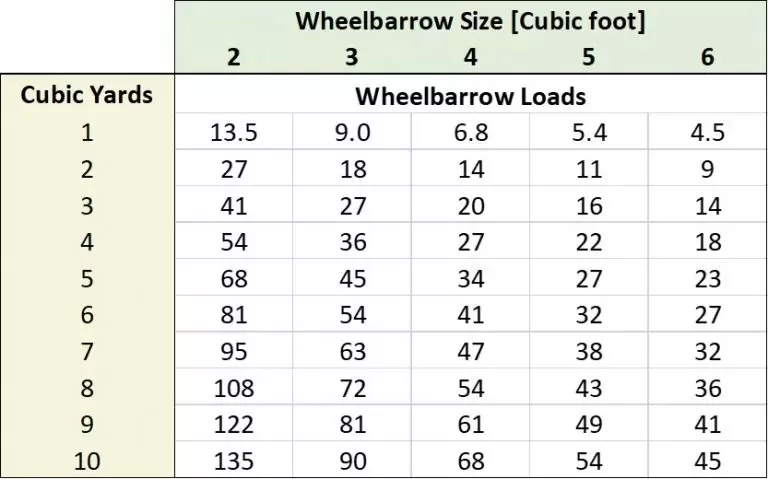
Image Source: www.appletreenursery.net
Figuring Out Your Mulch Needs: A Step-by-Step Approach
Getting your yard looking great with mulch is a rewarding project. To do it right, you need to know exactly how much mulch to buy. We’ll walk you through calculating your mulch volume for garden beds, trees, and other areas.
Step 1: Measure Your Mulch Areas
First, you need to measure the spaces where you’ll be spreading mulch. Grab a tape measure and a notepad.
Garden Beds
- Length and Width: For rectangular or square beds, measure the length and width in feet.
- Irregular Shapes: For curved or odd-shaped beds, break them down into simpler shapes like rectangles, squares, or triangles. Measure the longest parts and approximate. You can also use a string to trace the edge and then measure the string’s length.
Tree Rings
- Diameter: Measure the diameter of the circle around the base of each tree. You’ll then use the radius (half the diameter) in your calculations.
Other Areas
- Paths: Measure the length and width of any paths you want to mulch.
Step 2: Calculate the Square Footage of Each Area
Once you have your measurements, you can calculate the square footage for each area.
- Rectangles/Squares: Square footage = Length (ft) x Width (ft)
- Circles (Tree Rings): You’ll need the radius (r). The formula for the area of a circle is πr², where π (pi) is approximately 3.14.
- Area = 3.14 x (Radius (ft))²
- Triangles: Area = 0.5 x Base (ft) x Height (ft)
Example:
Let’s say you have a rectangular garden bed that is 10 feet long and 4 feet wide.
Square footage = 10 ft x 4 ft = 40 sq ft.
You also have a tree with a trunk diameter of 2 feet. This means the radius is 1 foot.
Square footage for the tree ring = 3.14 x (1 ft)² = 3.14 sq ft.
Add up the square footage of all your mulch areas to get your total square footage.
Step 3: Determine Your Desired Mulch Depth
The ideal mulch depth is typically 2 to 3 inches for most garden beds and tree rings. This depth helps suppress weeds, retain moisture, and regulate soil temperature. For new plantings or areas needing extra protection, 3 inches is often recommended. For established areas or where you don’t want mulch to pile up against plant stems, 2 inches might be sufficient.
- Convert Inches to Feet: Since our area measurements are in feet, we need to convert inches to feet.
- 2 inches = 2 / 12 feet = 0.167 feet
- 3 inches = 3 / 12 feet = 0.25 feet
Step 4: Calculate the Cubic Feet of Mulch Needed
Now you can calculate the volume of mulch required in cubic feet. The formula is:
Cubic Feet = Total Square Footage x Desired Depth (in feet)
Let’s continue with our example:
Suppose your total garden area (including beds and tree rings) adds up to 150 square feet, and you want a mulch depth of 3 inches (0.25 feet).
Cubic Feet Needed = 150 sq ft x 0.25 ft = 37.5 cubic feet.
This calculation is the core of determining mulch amount for landscaping.
Step 5: Convert Cubic Feet to Cubic Yards
Mulch is typically sold by the cubic yard. You need to convert your cubic feet measurement into cubic yards.
- There are 27 cubic feet in 1 cubic yard (3 ft x 3 ft x 3 ft = 27 cu ft).
Cubic Yards = Cubic Feet Needed / 27
Using our example:
Cubic Yards Needed = 37.5 cubic feet / 27 = 1.39 cubic yards.
It’s always a good idea to round up when buying mulch. So, in this case, you would buy 1.5 cubic yards. This ensures you have enough and accounts for any settling or compaction. This is key for calculating mulch for landscaping accurately.
Step 6: Factor in Mulch Compaction and Settling
Mulch will settle and compact over time, especially the first few weeks after application. It’s wise to buy a little extra, usually about 10% more, to account for this.
- Add 10% to your calculated cubic yards:
- Extra Mulch = Cubic Yards Needed x 0.10
- Total to Buy = Cubic Yards Needed + Extra Mulch
In our example:
Extra Mulch = 1.39 cubic yards x 0.10 = 0.14 cubic yards.
Total to Buy = 1.39 + 0.14 = 1.53 cubic yards.
So, rounding up again, you’d aim to buy 1.5 to 2 cubic yards of mulch.
Using a Mulch Volume Calculator
To simplify this process, many online tools are available. These are often called a wheelbarrow mulch calculator or a mulch coverage calculator. You simply input your measurements (length, width, depth), and the calculator does the math for you, often giving you the answer in both cubic feet and cubic yards. These tools are incredibly helpful for getting a quick yard mulch estimate.
How Online Calculators Work
These calculators typically have built-in formulas for common shapes. You might select a “garden bed” option, enter dimensions, and choose the desired depth. For more complex areas, you might need to do some individual calculations first and then add the results.
Benefits of Using a Calculator
- Speed: Quickly get an estimate.
- Accuracy: Reduces the chance of calculation errors.
- Convenience: No need for manual calculations or remembering formulas.
- Comparison: Helps you compare different mulch types and their coverage.
How Much Mulch to Buy: Common Scenarios
Let’s look at some common yard mulch estimate scenarios to give you a better idea.
Small Garden Bed (e.g., 4 ft x 8 ft)
- Area: 4 ft x 8 ft = 32 sq ft
- Desired Depth: 3 inches (0.25 ft)
- Cubic Feet: 32 sq ft x 0.25 ft = 8 cubic feet
- Cubic Yards: 8 cubic feet / 27 = 0.3 cubic yards
- Amount to Buy: Round up to 0.5 cubic yards (or one bag if buying smaller quantities).
Medium Garden Bed (e.g., 10 ft x 12 ft)
- Area: 10 ft x 12 ft = 120 sq ft
- Desired Depth: 3 inches (0.25 ft)
- Cubic Feet: 120 sq ft x 0.25 ft = 30 cubic feet
- Cubic Yards: 30 cubic feet / 27 = 1.11 cubic yards
- Amount to Buy: Round up to 1.25 or 1.5 cubic yards.
Large Garden Area (e.g., 500 sq ft)
- Area: 500 sq ft
- Desired Depth: 3 inches (0.25 ft)
- Cubic Feet: 500 sq ft x 0.25 ft = 125 cubic feet
- Cubic Yards: 125 cubic feet / 27 = 4.63 cubic yards
- Amount to Buy: Round up to 5 cubic yards.
When buying mulch by the yard, this means ordering 5 cubic yards.
Tree Rings
- Tree 1: Diameter 3 ft, Radius 1.5 ft
- Area = 3.14 x (1.5 ft)² = 7.065 sq ft
- Tree 2: Diameter 5 ft, Radius 2.5 ft
- Area = 3.14 x (2.5 ft)² = 19.625 sq ft
- Total Tree Ring Area: 7.065 + 19.625 = 26.69 sq ft
- Desired Depth: 3 inches (0.25 ft)
- Cubic Feet: 26.69 sq ft x 0.25 ft = 6.67 cubic feet
- Cubic Yards: 6.67 cubic feet / 27 = 0.25 cubic yards
- Amount to Buy: Round up to 0.5 cubic yards.
Estimating with Wheelbarrow Volume
If you’re buying mulch in bags and using your wheelbarrow to spread it, knowing the wheelbarrow’s capacity is key.
- Standard Wheelbarrow Capacity: Approximately 2 to 3 cubic feet.
- Your Project Needs: Let’s say you need 4 cubic yards of mulch.
- Convert to Cubic Feet: 4 cubic yards x 27 cubic feet/cubic yard = 108 cubic feet.
Now, let’s figure out how many wheelbarrows this is:
- If your wheelbarrow holds 2 cubic feet: 108 cubic feet / 2 cubic feet/wheelbarrow = 54 wheelbarrows.
- If your wheelbarrow holds 3 cubic feet: 108 cubic feet / 3 cubic feet/wheelbarrow = 36 wheelbarrows.
This gives you a realistic estimate for how many trips you’ll be making! It’s important to remember that determining mulch amount this way can be labor-intensive, so ordering bulk mulch for larger jobs is often more efficient.
Factors Affecting Mulch Quantity
Several factors can influence how much mulch you’ll actually need beyond simple measurements:
Type of Mulch
- Fine vs. Coarse Mulch: Finer mulches tend to compact more than coarser ones. You might need slightly more of a fine-textured mulch to achieve the same visual depth.
- Shredded Bark vs. Wood Chips: Shredded bark can interlock and hold moisture well, sometimes requiring a bit less to achieve good coverage. Wood chips might spread out more loosely.
Existing Mulch Layer
- Topping Up: If you already have a layer of mulch, you might only need to add a thinner layer (1-2 inches) to refresh the appearance and benefits. This will significantly reduce the cubic feet mulch needed.
- Completely Replacing: If the old mulch has decomposed or needs to be removed, you’ll be applying a full layer as if it were a new application.
Terrain
- Sloping Areas: On slopes, a thicker layer of mulch (around 3-4 inches) can help prevent soil erosion and keep the mulch in place. This will increase your overall volume.
Specific Plant Needs
- Ground Cover: Some plants, like certain perennials or ground covers, might benefit from slightly different mulch depths. Always check plant-specific recommendations.
Visual Appearance
- Coverage: Sometimes, you might want a deeper, lusher look. In such cases, you might opt for a slightly greater depth than the minimum recommended.
Buying Mulch: Bulk vs. Bags
When you’re ready to purchase, you’ll typically have two options: buying mulch by the yard in bulk or buying bags of mulch.
Bulk Mulch (Sold by the Cubic Yard)
- Pros:
- More cost-effective for larger quantities.
- Less packaging waste.
- Delivered directly to your home, often saving you transport effort.
- Variety of mulch types available.
- Cons:
- Requires a larger delivery space (driveway, etc.).
- You might need to spread it from the delivery pile yourself.
- Minimum order quantities may apply.
This is the most common way to buy mulch when buying mulch by the yard. Your mulch delivery quantity will be stated in cubic yards.
Bagged Mulch
- Pros:
- Convenient for small areas or touch-ups.
- Easy to transport if you have a suitable vehicle.
- Can easily calculate how many bags you need.
- Cons:
- More expensive per cubic yard compared to bulk.
- Generates more plastic waste.
- Carrying heavy bags can be strenuous.
Each bag typically contains 1.5 to 2 cubic feet of mulch. To figure out how many bags you need for your project, divide your total cubic feet requirement by the volume per bag.
Example: If you need 37.5 cubic feet of mulch and each bag contains 2 cubic feet:
Number of Bags = 37.5 cubic feet / 2 cubic feet/bag = 18.75 bags.
You would buy 19 bags.
Frequently Asked Questions (FAQ)
Q1: How deep should mulch be?
A1: Generally, 2 to 3 inches is recommended for most garden beds and tree rings. Avoid piling mulch directly against plant stems or tree trunks to prevent rot and pest issues.
Q2: Can I use a wheelbarrow mulch calculator for anything other than mulch?
A2: Yes, the principles of calculating volume for garden beds (length x width x depth) can be applied to other landscaping materials like gravel, soil, or compost.
Q3: What happens if I buy too much mulch?
A3: You can store excess mulch in a dry place for future use. However, be mindful of decomposition if stored for extended periods. Buying slightly more is usually better than running short.
Q4: How much mulch is in a typical delivery?
A4: Bulk mulch is usually delivered by the cubic yard. Common delivery quantities range from 1 to 10 cubic yards, depending on the supplier and your needs.
Q5: Does the type of mulch affect how much I need to buy?
A5: Yes, coarser mulches might spread out more, potentially requiring a slightly larger volume for the same visual coverage compared to finer, interlocking mulches.
Q6: Is it better to buy mulch by the cubic yard or by the bag?
A6: For larger areas (anything over 100-200 sq ft), buying mulch by the cubic yard in bulk is almost always more economical and environmentally friendly. Bags are best for very small projects or topping up small areas.
Q7: How do I calculate mulch volume for a circular bed?
A7: Measure the diameter of the bed, divide by 2 to get the radius. Use the formula Area = π x radius² (where π is about 3.14). Then, multiply the area by your desired depth in feet to get cubic feet, and divide by 27 for cubic yards.
Q8: How many wheelbarrows of mulch are in a cubic yard?
A8: Assuming a standard wheelbarrow holds 2-3 cubic feet, a cubic yard (27 cubic feet) would require between 9 and 13.5 wheelbarrows. If your wheelbarrow is smaller or larger, this number will change.
By following these steps, you can confidently determine your yard mulch estimate, calculate the exact cubic feet mulch needed, and ensure you order the correct mulch delivery quantity for a beautiful, well-maintained landscape.