
A common question for anyone tackling a landscaping project is: How many square feet does 1 yard of mulch cover? The answer typically depends on the desired depth of the mulch layer. As a general rule of thumb, one cubic yard of mulch will cover approximately 100 square feet at a depth of 3 inches. This is a crucial piece of information for anyone planning to buy mulch, as it directly impacts how much you need to purchase for your garden beds, tree rings, or other landscaped areas.
When you’re planning your next garden project, figuring out the right amount of mulch is key. Buying too much can lead to wasted material and money, while buying too little means you’ll have to make another trip to the store. This guide will help you understand exactly how much ground one yard of mulch can cover, giving you the confidence to estimate your landscaping mulch quantity accurately. We’ll delve into the factors that influence coverage, explain how to use a mulch calculator, and provide tips for buying the right amount of mulch.
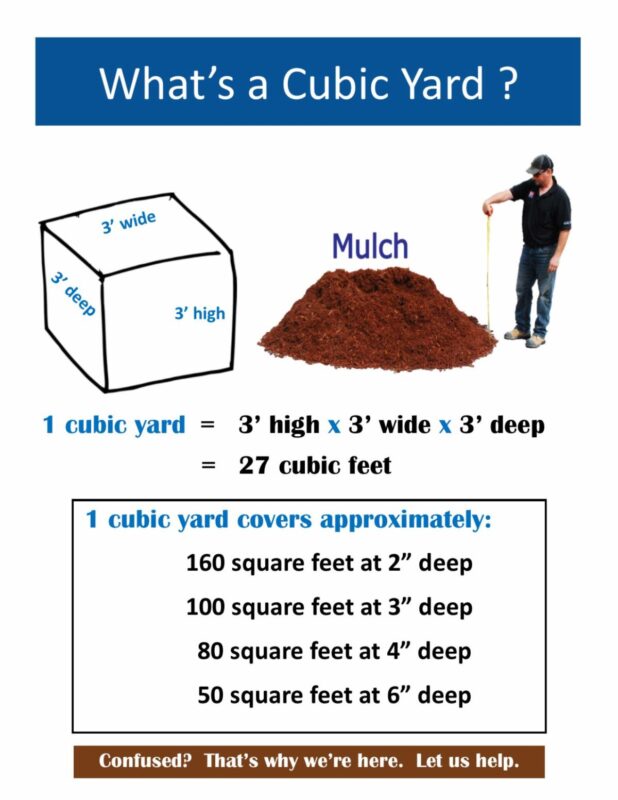
Image Source: stonegarden-nc.com
Deciphering Mulch Coverage: The Cubic Yard Factor
The unit of measure for bulk mulch is the cubic yard. A cubic yard is a volume measurement, representing a cube that is three feet long, three feet wide, and three feet high (3’ x 3’ x 3’). This volume is what we work with when calculating how much ground it can cover. The “yard” in “yard of mulch” refers to this cubic yard.
When you buy mulch in bags, the coverage is usually stated on the bag, often in cubic feet or a rough square footage estimate. However, when buying in bulk from a landscape supply yard, you’ll be dealing with cubic yards. Knowing the conversion and how depth affects coverage is essential for any homeowner or landscaper.
Why Mulch Depth Matters
The depth at which you spread mulch is the most significant factor determining how much square footage one cubic yard will cover. Most gardening experts recommend a mulch depth of 2 to 4 inches.
- Too little mulch: Won’t effectively suppress weeds, retain moisture, or insulate plant roots.
- Too much mulch: Can suffocate plant roots by cutting off air and moisture, and can even lead to fungal diseases or rot. It also means you’ll use your mulch much faster, covering less area.
Therefore, a precise mulch depth calculator or a solid understanding of spread rates is vital.
Calculating Mulch Coverage: The Math Behind It
Let’s break down the calculation to determine how many square feet 1 cubic yard of mulch covers.
The Basic Formula
The core idea is to figure out how much area a specific volume can cover when spread to a certain depth. We know:
- 1 cubic yard = 27 cubic feet (since 1 yard = 3 feet, so 3’ x 3’ x 3’ = 27 cubic feet)
We need to find the area (in square feet) that this volume covers when spread at a specific depth (in feet).
The formula for volume is: Volume = Area × Depth
We want to find the Area, so we rearrange the formula: Area = Volume / Depth
Applying the Formula with Different Depths
Let’s use our standard depth recommendations to see the coverage:
1. Coverage at 2 Inches Depth
First, convert inches to feet: 2 inches / 12 inches/foot = 0.167 feet (approximately)
- Area = 27 cubic feet / 0.167 feet
- Area ≈ 162 square feet
2. Coverage at 3 Inches Depth
Convert inches to feet: 3 inches / 12 inches/foot = 0.25 feet
- Area = 27 cubic feet / 0.25 feet
- Area = 108 square feet
3. Coverage at 4 Inches Depth
Convert inches to feet: 4 inches / 12 inches/foot = 0.333 feet (approximately)
- Area = 27 cubic feet / 0.333 feet
- Area ≈ 81 square feet
These calculations highlight the significant impact of depth on your mulch coverage. This is why knowing your desired mulch depth is the first step in estimating mulch needs.
Visualizing the Coverage
Imagine a pile of mulch. When you spread it out evenly over an area, you’re essentially flattening that pile into a thin layer. The thinner the layer, the larger the area it will cover.
- At 2 inches: The mulch forms a relatively thin layer, stretching across a larger area.
- At 3 inches: The layer is thicker, so it covers a smaller area.
- At 4 inches: The layer is even thicker, covering the smallest area.
This makes it clear why a mulch depth calculator is so valuable. It simplifies these calculations for you.
Practical Application: Estimating Your Mulch Needs
Knowing the theoretical coverage is one thing, but applying it to your specific landscaping project is another. Here’s how to do it effectively:
Step 1: Measure Your Area
Before you can use any mulch coverage calculator, you need to know the size of the areas you want to mulch.
- Rectangular or Square Beds: Measure the length and width in feet. Multiply them to get the square footage (Length × Width = Square Feet).
- Circular Beds: Measure the diameter of the circle in feet. Divide the diameter by 2 to get the radius. Use the formula Area = π × radius² (where π ≈ 3.14).
- Irregular Shapes: Break down the area into simpler shapes (rectangles, squares, triangles, circles) and calculate the area of each. Then, add them together.
Example: You have a rectangular garden bed that is 10 feet long and 5 feet wide.
* Area = 10 ft × 5 ft = 50 square feet.
Step 2: Determine Your Desired Mulch Depth
Decide on the optimal mulch depth for your plants and soil. For most applications, 2-4 inches is recommended. Let’s say you decide on 3 inches.
Step 3: Use a Mulch Calculator or the Formula
Now you can put your measurements to use.
Using our example:
- Area to cover: 50 square feet
- Desired depth: 3 inches
From our earlier calculation, 1 cubic yard covers approximately 108 square feet at a 3-inch depth.
- Cubic Yards Needed = Total Square Footage / Coverage Per Cubic Yard
- Cubic Yards Needed = 50 sq ft / 108 sq ft/cubic yard
- Cubic Yards Needed ≈ 0.46 cubic yards
Step 4: Round Up for Safety
It’s always better to have a little extra mulch than to run short. When calculating, always round up to the nearest whole or half cubic yard, depending on how your supplier sells it. In our example, you would likely buy 0.5 cubic yards or a full cubic yard to be safe, especially if you’re purchasing from a place that sells in full yards. This buffer accounts for slight variations in spreading and ensures you can touch up areas that might be thinner.
Many landscape supply companies offer their own mulch coverage calculator on their websites, which can be very handy. You input your measurements and desired depth, and it tells you how many cubic yards to order. This takes the guesswork out of estimating mulch needs.
Factors Affecting Mulch Coverage
While the calculations provide a good estimate, several real-world factors can influence how much square footage your mulch actually covers:
Type of Mulch
Different mulch materials can have varying densities and particle sizes. For instance:
- Shredded Bark Mulch: Tends to be lighter and fluffier, meaning a cubic yard might spread a bit further.
- Wood Chips or Nuggets: Can be bulkier and may settle more, potentially covering slightly less area than expected at the same depth.
- Compost or Soil Mixes: If you’re using a compost blend that’s very fine, it might compact more and cover a smaller area.
Always check if the supplier provides a specific coverage estimate for their particular mulch product.
Base Condition of the Soil
If the ground beneath the mulch is very soft or uneven, the mulch might sink in or fill in low spots more than anticipated, reducing the visible coverage area.
Compaction
As mulch ages and is exposed to rain and foot traffic, it compacts. A fresh application will appear fuller and cover more area than the same amount of mulch after several months.
Application Technique
The skill of the person spreading the mulch plays a role. Even spreading is crucial. If you have areas that are much thicker than others, you’re essentially using up your mulch faster in those spots. This is where consistent application is vital.
Converting Mulch Bag Coverage to Cubic Yards
Often, homeowners opt for bagged mulch from garden centers. It’s convenient for smaller projects, but it’s important to know how bagged mulch coverage relates to bulk purchases.
Standard Bag Sizes
Mulch bags commonly come in these sizes:
- 2 cubic feet
- 3 cubic feet
- 4 cubic feet
Calculating How Many Bags You Need
Let’s say you need 2 cubic yards of mulch for your project, and you’ve calculated this using a mulch calculator or the formulas above.
- 1 cubic yard = 27 cubic feet
- 2 cubic yards = 2 × 27 cubic feet = 54 cubic feet
If you are buying 2 cubic foot bags:
- Number of Bags = Total Cubic Feet Needed / Cubic Feet Per Bag
- Number of Bags = 54 cubic feet / 2 cubic feet/bag = 27 bags
If you are buying 3 cubic foot bags:
- Number of Bags = 54 cubic feet / 3 cubic feet/bag = 18 bags
If you are buying 4 cubic foot bags:
- Number of Bags = 54 cubic feet / 4 cubic feet/bag = 13.5 bags (round up to 14 bags)
Bag Coverage vs. Bulk Coverage
It’s important to note that mulch bag coverage estimates can sometimes be optimistic. A bag might state it covers “up to X square feet at a depth of Y inches.” This is often based on spreading it as thinly as possible to achieve the maximum square footage. Always verify the cubic feet volume listed on the bag and perform your own calculations to ensure you buy enough.
The convenience of bagged mulch is often offset by the need for many bags for larger projects, and it can sometimes be more expensive per cubic yard than buying in bulk.
Advanced Mulch Calculation: Using a Mulch Depth Calculator
For those who prefer a digital tool, a mulch depth calculator is an excellent resource. These online tools simplify the process significantly.
How to Use a Mulch Depth Calculator
- Enter the dimensions of your area: You’ll typically input the length and width of your garden beds or other areas you’re mulching. Many calculators allow you to enter multiple areas and will sum them up for you.
- Specify the desired depth: Select your preferred mulch depth, usually in inches (e.g., 2, 3, 4 inches).
- Choose the unit of purchase: Indicate whether you are buying mulch in cubic yards (bulk) or cubic feet (bags).
- Get your result: The calculator will instantly provide the total amount of mulch you need to purchase.
These tools effectively perform the calculations we’ve discussed, ensuring you have accurate landscaping mulch quantity estimates.
When to Buy Bulk vs. Bags
The decision between bulk mulch and bagged mulch often comes down to the scale of your project and your personal preferences.
Benefits of Buying in Bulk (Cubic Yards)
- Cost-Effective: Generally cheaper per cubic yard than buying bags, especially for larger areas.
- Less Waste: Fewer plastic bags to dispose of.
- Convenience for Large Jobs: Delivered directly to your home, saving you multiple trips to the store.
Considerations for Buying in Bulk
- Minimum Purchase Requirements: Some suppliers have minimum order quantities.
- Delivery Fees: Factor in delivery costs, which can add up.
- Storage: You need a place to store the bulk mulch once delivered.
- Labor: Spreading bulk mulch can be more physically demanding.
Benefits of Buying in Bags (Cubic Feet)
- Convenience for Small Projects: Easy to transport and handle for small garden beds or tree rings.
- Control: Easier to manage smaller quantities and avoid over-ordering.
- Variety: Garden centers often have a wider selection of specialty mulches in bags.
Considerations for Buying in Bags
- Cost: More expensive per unit of volume than bulk mulch.
- Environmental Impact: More plastic waste.
- Time-Consuming: Multiple trips to the store might be needed for larger projects.
Common Mulch Coverage Scenarios
Let’s look at some typical landscaping scenarios and how much mulch you might need.
Scenario 1: A Standard Flower Bed
- Dimensions: 15 feet long x 3 feet wide
- Area: 15 ft x 3 ft = 45 square feet
- Desired Depth: 3 inches
Using our calculation (1 cubic yard covers 108 sq ft at 3 inches):
- Cubic Yards Needed = 45 sq ft / 108 sq ft/cubic yard ≈ 0.42 cubic yards.
- Recommendation: Buy 0.5 cubic yards or 1 cubic yard to be safe.
If using 2 cubic foot bags:
- Total cubic feet needed = 45 sq ft × (3 inches / 12 inches/ft) = 45 sq ft × 0.25 ft = 11.25 cubic feet
- Number of Bags = 11.25 cubic feet / 2 cubic feet/bag = 5.625 bags.
- Recommendation: Buy 6 bags.
Scenario 2: Around Several Trees
- Project: Mulching around 5 trees with a 4-foot diameter each.
- Area per tree: π × (radius)² = 3.14 × (2 ft)² = 3.14 × 4 sq ft = 12.56 sq ft
- Total Area: 5 trees × 12.56 sq ft/tree ≈ 62.8 sq ft
- Desired Depth: 2 inches
Using our calculation (1 cubic yard covers 162 sq ft at 2 inches):
- Cubic Yards Needed = 62.8 sq ft / 162 sq ft/cubic yard ≈ 0.39 cubic yards.
- Recommendation: Buy 0.5 cubic yards or 1 cubic yard.
If using 3 cubic foot bags:
- Total cubic feet needed = 62.8 sq ft × (2 inches / 12 inches/ft) = 62.8 sq ft × 0.167 ft ≈ 10.49 cubic feet
- Number of Bags = 10.49 cubic feet / 3 cubic feet/bag ≈ 3.5 bags.
- Recommendation: Buy 4 bags.
Scenario 3: A Large Backyard Border
- Dimensions: A border around the backyard, 100 feet long and 4 feet wide on average.
- Area: 100 ft × 4 ft = 400 square feet
- Desired Depth: 4 inches
Using our calculation (1 cubic yard covers 81 sq ft at 4 inches):
- Cubic Yards Needed = 400 sq ft / 81 sq ft/cubic yard ≈ 4.94 cubic yards.
- Recommendation: Buy 5 cubic yards.
If using 2 cubic foot bags:
- Total cubic feet needed = 400 sq ft × (4 inches / 12 inches/ft) = 400 sq ft × 0.333 ft ≈ 133.2 cubic feet
- Number of Bags = 133.2 cubic feet / 2 cubic feet/bag = 66.6 bags.
- Recommendation: Buy 67 bags.
These examples illustrate how the mulch coverage calculator and understanding the spread rate of mulch are essential for efficient purchasing.
Frequently Asked Questions (FAQ)
Here are some common questions people have about mulch coverage:
Q1: How deep should I spread mulch?
A1: For most garden beds and around trees, a depth of 2 to 4 inches is recommended. Too thin won’t be effective, and too thick can harm plants. Always check the specific needs of your plants.
Q2: Can I use a simple online mulch calculator?
A2: Yes, simple online mulch calculators are readily available and are a great way to quickly estimate your needs. They usually ask for your area dimensions and desired depth.
Q3: What if my garden bed is an irregular shape?
A3: Break the irregular shape into smaller, manageable geometric shapes (rectangles, circles, triangles), calculate the area of each, and then add them together for your total square footage.
Q4: Does the type of mulch affect how much square feet 1 yard covers?
A4: Yes, slightly. Denser mulches might compact more and cover a little less area than lighter, fluffier mulches at the same depth. However, for most practical purposes, using the standard coverage estimates is sufficient.
Q5: How much mulch do I need for a vegetable garden?
A5: The same principles apply. Measure your beds, decide on the depth (often 2-3 inches for vegetable gardens to retain moisture), and use a mulch calculator. Common choices for vegetable gardens include straw, shredded leaves, or compost.
Q6: Is there a difference between mulch coverage in cubic feet and square feet?
A6: Yes. Cubic feet is a measure of volume (like the amount in a bag), while square feet is a measure of area (the ground you want to cover). You need to use the depth to convert between them. For example, a 2 cubic foot bag spread at 3 inches deep covers approximately 8 square feet (2 cubic feet / 0.25 feet depth = 8 sq ft).
Q7: What is the mulch bag coverage usually based on?
A7: Mulch bag coverage is typically based on the stated cubic feet of the bag and a specific, often shallower, recommended depth to maximize the advertised square footage. Always verify the actual volume in cubic feet.
By carefully measuring, determining your desired depth, and utilizing a mulch calculator, you can confidently estimate your landscaping mulch quantity and ensure your projects are completed efficiently and effectively.