
Figuring out how many wheelbarrows of mulch you need for your landscaping project might seem tricky, but it’s actually quite simple! Generally, a standard wheelbarrow holds about 2 to 3 cubic feet of mulch, and since a yard of mulch is 27 cubic feet, you’ll need roughly 9 to 14 wheelbarrows to move one cubic yard. This guide will break down the math to help you accurately calculate your mulch needs.
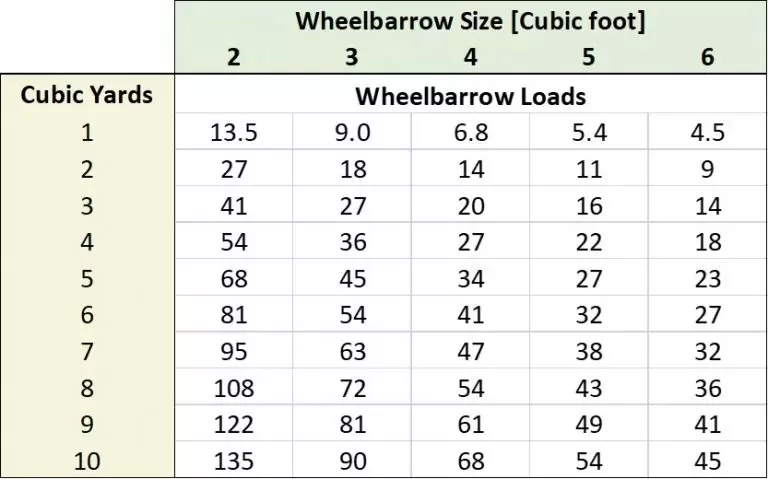
Image Source: www.appletreenursery.net
Why Mulch Calculation Matters
Landscaping can transform your outdoor space, but getting the quantities right is key to success and avoiding waste. Whether you’re a seasoned gardener or just starting, knowing how to measure for materials like mulch prevents overspending and ensures you have enough to complete your project. This guide focuses on a common landscaping material: mulch, and how to quantify it using the familiar tool of a wheelbarrow. We’ll cover everything from what a “yard of mulch” truly means to practical tips for loading and transporting it.
Deciphering “A Yard of Mulch”
The term “yard of mulch” is a bit of a shorthand. In the landscaping world, it refers to a cubic yard. A cubic yard is a unit of volume, specifically 3 feet long by 3 feet wide by 3 feet high. This equals 27 cubic feet. When you order mulch, it’s typically sold by the cubic yard, especially for bulk deliveries.
- Length: 3 feet
- Width: 3 feet
- Height: 3 feet
- Total Volume: 3 x 3 x 3 = 27 cubic feet
So, when you see “1 cubic yard of mulch,” think of a cube measuring 3 feet on every side. This volume is the foundation for all our calculations.
Fathoming Your Wheelbarrow’s Capacity
The most common tool for moving mulch around a yard is the trusty wheelbarrow. However, not all wheelbarrows are created equal. Their wheelbarrow capacity mulch can vary significantly.
Standard Wheelbarrow Sizes
Most homeowners use wheelbarrows with capacities ranging from:
- 4 cubic feet: Smaller, lighter-duty models.
- 6 cubic feet: A very common and versatile size.
- 8 cubic feet: Larger, more robust options.
It’s crucial to know the specific capacity of your wheelbarrow. This information is often stamped on the side of the basin or can be found in the product manual.
How Much Mulch in a Wheelbarrow?
When filling your wheelbarrow with mulch, remember that mulch is usually delivered in a loose, fluffy state. It will compact slightly as you load it. A good rule of thumb is to fill the wheelbarrow about three-quarters full to avoid spills and make it manageable to push.
- For a 6 cubic foot wheelbarrow, filling it three-quarters full means you’re carrying approximately 4.5 cubic feet of mulch.
This is a key factor when converting cubic yards to wheelbarrows. You won’t be able to perfectly fill your wheelbarrow to its stated maximum capacity with every load due to the nature of loose material and safe handling.
The Core Calculation: Converting Cubic Yards to Wheelbarrows
Now, let’s get down to the math. We need to determine how many of your wheelbarrow loads equal one cubic yard (27 cubic feet) of mulch.
The basic formula is:
Total Cubic Feet in a Yard / Cubic Feet Per Wheelbarrow Load = Number of Wheelbarrows
Let’s plug in the numbers using our estimated 4.5 cubic feet per wheelbarrow load:
27 cubic feet / 4.5 cubic feet per wheelbarrow = 6 wheelbarrows
Wait, that seems too low! This is where the “three-quarters full” estimate comes into play. If you are very careful and manage to load closer to the stated capacity, the number of wheelbarrows will be lower.
Let’s consider the range of wheelbarrow capacities and the practical filling:
| Wheelbarrow Capacity (Stated) | Estimated Mulch Load (3/4 Full) | Number of Wheelbarrows per Cubic Yard (27 cu ft) |
|---|---|---|
| 4 cubic feet | 3 cubic feet | 27 / 3 = 9 wheelbarrows |
| 6 cubic feet | 4.5 cubic feet | 27 / 4.5 = 6 wheelbarrows |
| 8 cubic feet | 6 cubic feet | 27 / 6 = 4.5 wheelbarrows |
Important Note: These are estimates! The density of mulch can vary, and how full you pack your wheelbarrow will influence the actual number.
Using a Wheelbarrow Mulch Calculator
For a more precise answer, you can use an online wheelbarrow mulch calculator. These tools are designed to take your specific wheelbarrow size and the desired depth of mulch for your beds, then tell you exactly how much mulch to buy and how many wheelbarrow trips you’ll likely make.
To use a wheelbarrow mulch calculator effectively, you’ll need:
- Your wheelbarrow’s capacity (in cubic feet).
- The area you want to cover (length and width in feet).
- The desired depth of mulch (usually 2-4 inches).
The calculator will then use formulas for mulch volume to wheelbarrow conversions.
Calculating Mulch for Yard Beds: A Deeper Dive
Let’s say you want to mulch a garden bed that is 10 feet long and 4 feet wide, and you want a 3-inch layer of mulch.
-
Calculate the Area:
Area = Length x Width
Area = 10 feet x 4 feet = 40 square feet -
Convert Depth to Feet:
You need a 3-inch layer. Since there are 12 inches in a foot, 3 inches is 3/12 = 0.25 feet. -
Calculate the Volume Needed (in Cubic Feet):
Volume = Area x Depth
Volume = 40 sq ft x 0.25 ft = 10 cubic feet -
Convert Cubic Feet to Cubic Yards:
There are 27 cubic feet in a cubic yard.
Cubic Yards Needed = 10 cubic feet / 27 cubic feet per yard ≈ 0.37 cubic yards
Now, let’s figure out the wheelbarrow trips for this 10 cubic feet of mulch, assuming a standard 6 cubic foot wheelbarrow that holds 4.5 cubic feet per load:
Number of Wheelbarrows = Total Cubic Feet Needed / Cubic Feet Per Wheelbarrow Load
Number of Wheelbarrows = 10 cubic feet / 4.5 cubic feet per wheelbarrow ≈ 2.22 wheelbarrows
So, for this specific garden bed, you’d need about 2 to 3 wheelbarrow loads.
Estimating Mulch Bags Per Yard
Sometimes mulch is sold in bags. Typically, a 2 cubic foot bag of mulch is common. To figure out how many mulch bags per yard you need:
1 Cubic Yard = 27 cubic feet
If bags are 2 cubic feet: 27 cubic feet / 2 cubic feet per bag = 13.5 bags
So, you’d need about 14 bags of mulch for one cubic yard. This is a good alternative if you only need a small amount or can’t get a bulk delivery.
Practical Tips for Wheelbarrow Mulch Delivery
When you arrange for mulch delivery wheelbarrow services or simply plan to move it yourself, a few tips can make the process smoother.
Maximizing Your Wheelbarrow Load
- Don’t Overload: Aim for that three-quarters full mark. It makes pushing and dumping much easier and safer.
- Level the Load: Try to keep the mulch relatively even in the wheelbarrow. This prevents the load from shifting and becoming unbalanced.
- Know Your Terrain: If you have hills or uneven ground, a lighter load is always better.
Efficient Transport
- Plan Your Route: Map out the easiest path from the delivery point (or where you’re scooping from) to the garden beds. Clear any obstacles.
- Use a Shovel: A sturdy shovel is essential for loading the wheelbarrow efficiently.
- Dump Strategically: Place the mulch where you need it most, rather than dumping it all in one spot and having to move it again.
Tools to Help With Your Yard Calculations
Beyond your trusty wheelbarrow, other tools can assist in calculating mulch for yard projects.
The Cubic Yard Mulch Calculator
As mentioned, an online cubic yard mulch calculator is invaluable. You input your dimensions, and it does the heavy lifting. These calculators are designed to help you determine mulch volume to wheelbarrow estimates and total cubic yardage.
Measuring Your Garden Beds
Before you even think about mulch, accurate measurements are critical.
- Measuring Tape: Essential for getting the length and width of your planting areas.
- Marking Stakes and String: Useful for outlining oddly shaped beds.
Depth Gauge
While not a physical tool you buy, a simple ruler or measuring stick can help you check the mulch depth as you spread it. Aim for consistent depth throughout your beds.
Common Mulch Quantities and Their Wheelbarrow Equivalents
Let’s illustrate with a table showing common mulch needs and how many wheelbarrow loads they might translate to, using our 6 cubic foot wheelbarrow filled to 4.5 cubic feet per load as a benchmark.
| Project Size | Mulch Needed (Cubic Yards) | Mulch Needed (Cubic Feet) | Estimated Wheelbarrow Loads (4.5 cu ft/load) |
|---|---|---|---|
| Small Flower Bed (e.g., 5×10 ft, 3″ deep) | 0.46 cubic yards | 12.5 cubic feet | ~3 wheelbarrow loads |
| Medium Garden Bed (e.g., 10×20 ft, 3″ deep) | 1.85 cubic yards | 50 cubic feet | ~11 wheelbarrow loads |
| Large Yard Bed (e.g., 20×30 ft, 3″ deep) | 7.4 cubic yards | 200 cubic feet | ~44 wheelbarrow loads |
| Full Yard Mulching (approx. 1000 sq ft, 3″ deep) | 3.7 cubic yards | 100 cubic feet | ~22 wheelbarrow loads |
Note: These are general estimates. Always calculate based on your specific dimensions and desired mulch depth.
Converting Cubic Yards to Wheelbarrows: The Takeaway
The core of converting cubic yards to wheelbarrows hinges on your wheelbarrow’s capacity and how much you can realistically and safely load into it.
- 1 cubic yard = 27 cubic feet.
- Estimate your wheelbarrow’s practical load: A 6 cu ft wheelbarrow might hold 4-5 cu ft of loose mulch per load.
- Divide total cubic feet by your load size.
Example: If you need 3 cubic yards of mulch and your wheelbarrow holds 4 cubic feet per load:
- Total cubic feet needed: 3 yards * 27 cu ft/yard = 81 cubic feet
- Number of wheelbarrows: 81 cu ft / 4 cu ft/wheelbarrow = 20.25 wheelbarrows
So, you’d be looking at roughly 20 to 21 wheelbarrow loads.
Frequently Asked Questions (FAQ)
Q1: What is the average size of a wheelbarrow?
A typical homeowner wheelbarrow has a basin capacity of around 6 cubic feet. However, capacities can range from 4 to 8 cubic feet.
Q2: How deep should I apply mulch?
A general recommendation for most garden beds is a mulch depth of 2 to 4 inches. For areas around trees, keep mulch a few inches away from the trunk.
Q3: Can I estimate mulch needs by bags?
Yes, if mulch is sold in bags. A common bag size is 2 cubic feet. To find out how many bags you need for a cubic yard, divide 27 cubic feet by the bag’s volume (e.g., 27 / 2 = 13.5 bags).
Q4: How do I calculate the area of a garden bed?
Measure the length and width of your bed in feet. For rectangular beds, multiply length by width. For irregular shapes, you might need to break them down into simpler geometric shapes (rectangles, triangles) and add their areas together.
Q5: Does mulch expand or contract significantly?
Mulch will compress slightly as it settles and gets wet, but its volume doesn’t change dramatically. The primary factor in calculating how much mulch you need is the volume you start with.
Q6: What if I have a large project?
For large projects, bulk mulch delivery is usually more cost-effective and efficient than buying bags. You’ll still need to know your cubic yardage requirement, but you won’t have to do the wheelbarrow math yourself.
By following these guidelines and performing your calculations carefully, you can confidently tackle any mulching project, ensuring you have the right amount of material and can efficiently move it using your trusty wheelbarrow.