
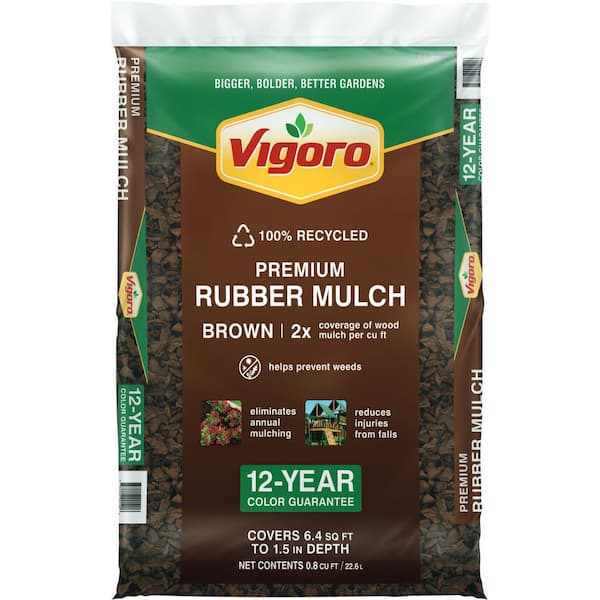
Image Source: images.thdstatic.com
How Much Is Rubber Mulch Per Yard?
The rubber mulch cost typically ranges from $50 to $120 per cubic yard, depending on the type, quality, and vendor. This price can fluctuate based on whether you’re buying for landscaping or playground applications, and whether you purchase it in bags or in bulk.
Rubber mulch, made from recycled tires, offers a durable and low-maintenance alternative to traditional wood mulches. Its unique properties provide excellent drainage, suppress weeds, and retain soil moisture. But before you decide to go green with recycled rubber, it’s crucial to understand the financial aspect. This guide will delve deep into the rubber mulch per cubic yard pricing, helping you make an informed decision for your landscaping or play area needs.
Deciphering the Factors Influencing Rubber Mulch Prices
Several key factors contribute to the overall rubber mulch cost. Grasping these elements will empower you to find the best value for your money.
Quality and Processing
The way rubber mulch is processed significantly impacts its price. High-quality rubber mulch is typically made from shredded tires that have had the steel belts removed. This process ensures a cleaner, safer product with fewer sharp edges. The finer the shred, the more consistent the product, which can also influence pricing.
- Cleanliness: Mulch made with a meticulous cleaning process to remove as much steel and fiber as possible will often command a higher price.
- Shred Size: While most rubber mulch is available in a 3/8-inch to 1/2-inch shred size, variations can affect the look and cost.
- Coloring Process: Rubber mulch is often coated with a non-toxic, UV-resistant colorant to mimic the look of natural mulch. The quality and durability of this coating can impact the price.
Type of Rubber Mulch
The intended use of the rubber mulch often dictates its type and, consequently, its price.
- Playground Rubber Mulch: This type is specifically manufactured to meet safety standards for playgrounds. It’s often processed to be cleaner, with a more uniform shred size, and sometimes with added impact-absorbing qualities. Because of these stringent requirements, playground rubber mulch cost can be higher than for general landscaping mulch. The focus here is on safety and durability for high-traffic areas where children play.
- Landscape Rubber Mulch: This is generally used in garden beds, around trees, and in general landscaping projects. While still durable and beneficial, it might not adhere to the same strict safety certifications as playground mulch, potentially making its landscape rubber mulch cost slightly lower.
Purchase Volume: Bulk vs. Bags
The quantity you purchase plays a substantial role in the rubber mulch per cubic yard price.
- Bulk Rubber Mulch Prices: Buying in bulk, often by the cubic yard or a full truckload, is almost always more economical. This is because it reduces handling and packaging costs for the supplier. If you have a large project, such as covering an entire backyard or a commercial landscape, purchasing in bulk can lead to significant savings. Many suppliers offer wholesale rubber mulch pricing for bulk orders.
- Cost of Rubber Mulch Bags: When you buy rubber mulch in bags, the price per cubic yard will be higher. Bags are convenient for smaller projects but come with a premium. A typical bag might cover around 1-2 cubic feet, and you’ll need many bags to cover a significant area, increasing the overall expense. This is often the price point you’ll see at garden centers or home improvement stores.
Vendor and Location
The supplier you choose and your geographical location can also influence pricing.
- Retail Stores vs. Direct Suppliers: Purchasing directly from a manufacturer or a bulk supplier often results in lower prices compared to buying from a retail garden center or big-box home improvement store.
- Delivery Fees: If you’re not picking up the mulch yourself, delivery fees will be added to the total cost. These fees vary based on distance and the volume of mulch being delivered.
Fathoming the Rubber Mulch Cost: A Detailed Breakdown
Let’s dive deeper into the numbers and explore the typical price ranges you can expect.
Rubber Mulch Per Cubic Yard Pricing
As mentioned, the average rubber mulch per cubic yard can range from $50 to $120. This broad range is due to the factors discussed above.
- Entry-Level: You might find basic, uncolored, or less uniformly processed rubber mulch closer to the $50-$70 per cubic yard mark. This is often for bulk purchases from direct suppliers.
- Mid-Range: Colored rubber mulch, processed for landscaping applications, typically falls between $70 and $100 per cubic yard. This is a common price for good quality, aesthetically pleasing options.
- Premium: High-quality, specifically processed playground rubber mulch cost, can be in the $100-$120+ per cubic yard range. This reflects the enhanced safety features and rigorous processing.
Cost of Rubber Mulch Bags
To illustrate the difference, let’s consider bagged products. A 2-cubic foot bag of rubber mulch might cost anywhere from $8 to $15.
To calculate the cost per cubic yard from bags, remember that one cubic yard equals 27 cubic feet. So, if a bag covers 2 cubic feet:
- You’ll need 27 cubic feet / 2 cubic feet/bag = 13.5 bags per cubic yard.
- At $10 per bag, this would be 13.5 bags * $10/bag = $135 per cubic yard.
This clearly shows that buying in bulk is significantly more cost-effective.
Comparing Rubber Mulch Prices vs. Wood Mulch
When considering the cost of rubber mulch bags or bulk pricing, it’s helpful to compare it to traditional wood mulches.
- Wood Mulch: The price of wood mulch varies widely based on type (cedar, pine, hardwood), quality, and whether it’s dyed. Generally, you can expect to pay $30 to $60 per cubic yard for bulk wood mulch. Bagged wood mulch might range from $4 to $8 per 2-cubic foot bag, translating to roughly $80 to $160 per cubic yard when bagged.
Here’s a table comparing average costs:
| Mulch Type | Bulk Price (per cubic yard) | Bagged Price (per cubic yard equivalent) |
|---|---|---|
| Rubber Mulch | $50 – $120 | $135 – $270+ |
| Wood Mulch | $30 – $60 | $80 – $160 |
Key Takeaways from the Comparison:
- Initial Cost: In terms of initial purchase price, wood mulch is generally cheaper, especially when bought in bulk.
- Longevity & Replenishment: This is where rubber mulch shines. Wood mulch decomposes over time and needs to be replenished every 1-3 years. Rubber mulch, on the other hand, can last for 10-12 years or even longer, significantly reducing the frequency of purchases and labor.
- Long-Term Value: While the upfront rubber mulch cost might be higher, its longevity often makes it a more cost-effective solution over the long term, especially when considering rubber mulch installation cost and replacement labor.
Rubber Mulch Installation Cost Considerations
Beyond the material itself, think about the cost of getting it in place. The rubber mulch installation cost can be a factor, particularly for larger projects or if you’re hiring professionals.
DIY Installation
For smaller areas, installing rubber mulch yourself is quite feasible. The primary “cost” here is your time and effort. You’ll need basic tools like a rake, shovel, and wheelbarrow. The main expense will be the mulch itself and any delivery charges if you’re buying in bulk.
Professional Installation
If you opt for professional installation, expect to add to the overall rubber mulch cost. Professional installers will typically charge based on the area size, the depth of mulch required, and the complexity of the landscape.
- Labor Rates: Professional landscapers might charge anywhere from $50 to $150 per hour or by the project.
- Delivery and Spreading: The cost will include delivery of the mulch and the labor to spread it evenly and correctly, ensuring the appropriate depth is achieved for optimal performance, especially in playground settings.
For a large backyard or a commercial project, getting multiple quotes from reputable landscaping companies is advisable to compare installation costs.
Where to Buy Rubber Mulch Cheap
Finding the best deals on rubber mulch requires a bit of research. If your priority is where to buy rubber mulch cheap, consider these avenues:
- Direct from Manufacturers/Distributors: Many companies that process recycled tires also sell rubber mulch directly to consumers or businesses. These often offer the best bulk rubber mulch prices and wholesale rubber mulch pricing. Searching online for “rubber mulch manufacturers” or “recycled rubber mulch suppliers” can yield results.
- Online Retailers: Websites like Amazon, specialty landscaping supply sites, and some home improvement store websites sell rubber mulch. Compare prices carefully, as they can vary significantly. Pay close attention to shipping costs if ordering online.
- Local Garden Centers and Landscape Supply Yards: While sometimes pricier, local suppliers can be a convenient option. They may also offer bulk discounts or have sales events.
- Timing Your Purchase: Like many landscaping products, you might find better prices at the beginning or end of the traditional landscaping season (spring and fall) as suppliers try to move inventory.
Benefits of Rubber Mulch: Why the Investment Might Be Worth It
Understanding the rubber mulch cost is only half the story. Its unique benefits often justify the price, especially for specific applications.
Durability and Longevity
- Resists Decomposition: Unlike wood mulch, rubber mulch does not rot, decay, or decompose. This means it stays in place longer and doesn’t need frequent replacement.
- Withstands Weather: It holds up well against rain, wind, and sun, remaining visually appealing and functional for many years.
Safety Features (Especially for Playgrounds)
- Impact Absorption: Properly installed rubber mulch (especially engineered wood fiber or shredded rubber designed for playgrounds) provides excellent cushioning, reducing the severity of falls. This is a major reason for the higher playground rubber mulch cost.
- Hypoallergenic: It’s generally considered hypoallergenic, unlike some organic mulches which can trigger allergies.
Maintenance and Weed Control
- Weed Suppression: A thick layer of rubber mulch effectively smothers weeds, reducing the need for manual weeding or herbicides.
- Moisture Retention: It helps retain soil moisture, meaning less frequent watering for your plants.
- No Rotting or Pest Issues: It won’t attract insects or rodents that might be drawn to decaying organic matter.
Environmental Advantages
- Recycling: It’s made from recycled tires, diverting a significant amount of waste from landfills.
- Reduced Water Usage: By retaining soil moisture, it can help conserve water resources.
Potential Downsides and Considerations
While rubber mulch offers many advantages, it’s important to be aware of potential drawbacks:
- Odor: Some freshly manufactured rubber mulch can have a distinct rubber smell, especially on hot days. This usually dissipates over time.
- Heat Absorption: Rubber can absorb and retain heat, which might affect the soil temperature around sensitive plants.
- Leaching Concerns: While generally considered safe, there have been some concerns about chemicals leaching from rubber mulch, particularly in playground settings. Reputable manufacturers use non-toxic coatings and undergo rigorous testing to ensure safety. Always look for products certified for playground use.
- Not Organic: For gardeners seeking to improve soil structure through organic matter, rubber mulch doesn’t contribute in the same way as wood or compost.
Calculating Your Needs: How Much Rubber Mulch Do You Need?
To accurately determine your rubber mulch per cubic yard requirement, you need to measure your area and decide on the desired depth.
- Measure the Area: Calculate the length and width of the area you want to cover. Multiply these measurements to find the square footage.
- Example: A garden bed is 10 feet long and 5 feet wide. Area = 10 ft * 5 ft = 50 sq ft.
- Determine Desired Depth: The typical recommended depth for mulch is 2-4 inches. For weed suppression and aesthetics, 3 inches is common for landscaping. For playground safety, specific depths are recommended based on fall height.
- Example: You want a 3-inch depth. Convert this to feet: 3 inches / 12 inches/foot = 0.25 feet.
- Calculate Cubic Feet: Multiply the area in square feet by the depth in feet.
- Example: 50 sq ft * 0.25 ft = 12.5 cubic feet.
- Convert to Cubic Yards: Since mulch is usually sold by the cubic yard, and there are 27 cubic feet in a cubic yard, divide your cubic feet by 27.
- Example: 12.5 cubic feet / 27 cubic feet/cubic yard ≈ 0.46 cubic yards.
General Rule of Thumb: For a 3-inch depth, 1 cubic yard of mulch will cover approximately 100-120 square feet. Always round up to ensure you have enough material.
Frequently Asked Questions (FAQs)
Q1: Is rubber mulch safe for gardens?
Yes, rubber mulch is generally safe for gardens. It can help suppress weeds and retain moisture. However, some gardeners prefer organic mulches that break down and enrich the soil. If you have concerns about chemicals, look for products specifically tested and certified as safe for landscaping.
Q2: How deep should rubber mulch be installed?
For landscaping, a depth of 2-4 inches is typically recommended. For playground applications, consult specific safety guidelines from manufacturers or organizations like ASTM International, as the required depth depends on the fall height of the equipment.
Q3: Will rubber mulch fade in the sun?
The colored coating on rubber mulch is designed to be UV-resistant. However, like any colored material exposed to sunlight, some fading may occur over many years. The vibrancy of the color is often tied to the quality of the coating used, which can affect the rubber mulch cost.
Q4: Can I mix rubber mulch with wood mulch?
It’s generally not recommended to mix rubber mulch with wood mulch. They have different properties and decomposition rates. Mixing could lead to uneven wear, potential leaching issues, and hinder the benefits of each material.
Q5: Where can I find wholesale rubber mulch pricing?
You can find wholesale rubber mulch pricing by contacting manufacturers or large distributors directly. Many of these suppliers serve commercial clients but also offer discounts for bulk purchases by homeowners. Look for “bulk recycled rubber mulch suppliers” online.
Q6: Is rubber mulch more expensive than wood mulch in the long run?
No, in the long run, rubber mulch is often more cost-effective. While the initial rubber mulch cost might be higher than wood mulch, its durability and lack of decomposition mean it doesn’t need to be replaced as often, saving you money on material and labor over time.
Q7: What are the main advantages of rubber mulch over wood mulch?
The primary advantages include superior longevity, minimal decomposition, excellent weed suppression, better moisture retention, and, importantly for playgrounds, superior impact absorption and safety. It also doesn’t attract pests or rot.
Conclusion
When asking “How Much Is Rubber Mulch Per Yard?”, the answer is a range dependent on quality, type, and quantity. While the upfront rubber mulch cost can be higher than traditional wood mulches, its exceptional durability, low maintenance, and environmental benefits often make it a wise long-term investment. Whether you’re looking for playground rubber mulch cost savings or the best landscape rubber mulch cost, understanding the factors influencing pricing and comparing bulk rubber mulch prices with bagged options will help you make an informed decision. By weighing the pros and cons and calculating your needs carefully, you can determine if rubber mulch is the right choice for your next outdoor project. Remember to research vendors to find the best deals and ensure you’re purchasing a quality product.