
So, how much does a yard of mason sand weigh? A cubic yard of mason sand typically weighs between 2,200 and 2,700 pounds. This weight can vary based on the moisture content and how compacted the sand is.
Planning a landscaping project or a construction job often involves ordering materials by the cubic yard. But when you’re figuring out how much weight your truck can handle or how much material you need for a specific task, the “how much does sand weigh” question becomes crucial. This guide will dive deep into the specifics of mason sand weight, exploring the factors that influence it and providing you with the information you need. We’ll cover sand density, the bulk density of sand, and how to use a sand conversion calculator to get the most accurate estimates for your projects.
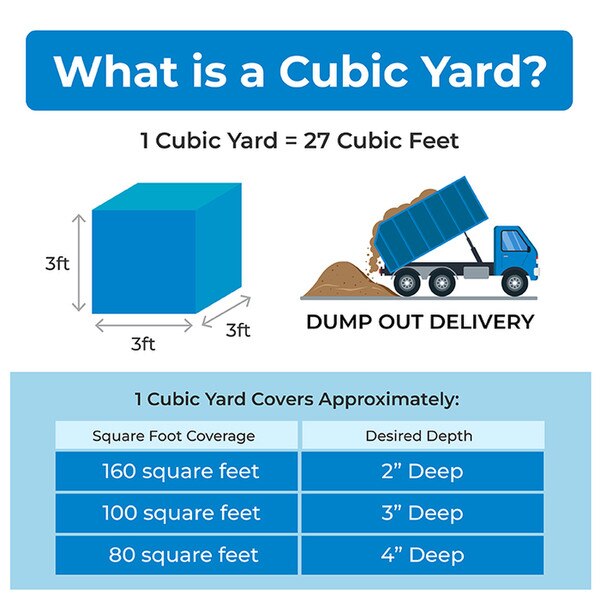
Image Source: www.cumminlandscapesupply.com
Deciphering Sand Density: What Influences Weight?
The weight of sand isn’t a fixed number. Several key factors contribute to the variation in the bulk density of sand. Fathoming these elements is essential for accurate material estimation.
Moisture Content: The Silent Weight Gainer
One of the most significant influences on the weight of sand per cubic yard is its moisture content. Sand, especially mason sand used in construction and masonry, tends to absorb water.
- Dry Sand: When sand is completely dry, it’s at its lightest. The air pockets between the sand grains contribute to a lower overall density.
- Damp Sand: As sand absorbs moisture, the water fills the spaces between the grains and also adheres to the surface of each grain. This adds significant weight.
- Saturated Sand: In very wet conditions, the water can displace some of the air, further increasing the weight.
Think of it like a sponge. A dry sponge is light, but a wet sponge is much heavier. Sand behaves similarly. This is why ordering sand on a dry day versus a rainy day can result in different weights for the same volume.
Compaction: From Loose Piles to Dense Loads
The way sand is handled and transported also plays a vital role in its weight. The difference between loose sand weight and compacted sand weight can be substantial.
- Loose Sand: This is sand as it’s typically scooped or dumped. There are plenty of air pockets between the grains, making it less dense.
- Compacted Sand: When sand is vibrated, tamped down, or subjected to pressure, the air pockets are reduced, and the grains pack closer together. This increases the density and, therefore, the weight per cubic yard.
When ordering materials, the supplier usually delivers sand in a relatively loose state. However, if you are compacting it for a specific application like a paver base, the final weight of that compacted volume will be higher than the initial delivered weight.
Grain Size and Shape: Subtle but Present Factors
While not as impactful as moisture or compaction, the characteristics of the sand grains themselves can subtly affect density.
- Fine Grains: Finer sand particles can sometimes pack more tightly than coarser grains, leading to a slightly higher density.
- Angular vs. Rounded Grains: Angular grains tend to interlock better than rounded grains, potentially leading to a denser packing. Mason sand, by its nature, often has a mix of grain sizes and shapes, contributing to its specific properties.
The Standard Weight of Mason Sand Per Cubic Yard
Mason sand, also known as mortar sand, is a finer-grained sand typically used in mortar mixes for bricklaying, block laying, and other masonry applications. Its specific properties influence its weight. Based on industry standards and general observations, we can establish a typical range for the bulk density of sand used in masonry.
Average Weight Estimates
For a cubic yard of dry, uncompacted mason sand, you can generally expect the weight to fall between 2,200 and 2,500 pounds.
However, as discussed, moisture and compaction can significantly alter this. For damp or wet mason sand, the weight can increase.
Table 1: Estimated Weight of Mason Sand Per Cubic Yard
| Condition | Estimated Weight per Cubic Yard |
|---|---|
| Dry, Loose | 2,200 – 2,500 lbs |
| Slightly Damp | 2,500 – 2,700 lbs |
| Wet, Compacted | 2,700 – 3,000+ lbs |
It’s important to note that these are estimates. Always confirm with your supplier if you need a precise weight for your project.
Comparing Mason Sand to Other Sand Types
The density of masonry sand might differ slightly from other types of sand, such as play sand or coarse construction sand.
- Play Sand: Often rounded and cleaner, play sand might have a slightly lower density due to better particle flow and less interlocking.
- Coarse Construction Sand (e.g., concrete sand): This sand has larger grains and a broader size distribution. While it might seem heavier, the larger air pockets between the coarser grains can sometimes lead to a density similar to or even slightly less than well-graded mason sand when both are dry and loose.
The key takeaway is that mason sand, with its fine, often angular grains, typically packs efficiently, contributing to its substantial weight.
How to Calculate Sand Weight: Tools and Techniques
Knowing the average weights is helpful, but for precise planning, you might need to perform your own calculations or use a reliable sand conversion calculator.
The Role of Sand Density
The core principle behind calculating the aggregate weight per cubic yard is sand density. Density is defined as mass per unit volume. In simpler terms, it’s how much “stuff” is packed into a given space.
- Density = Mass / Volume
In our case, we are interested in the weight (which is closely related to mass) per cubic yard. The sand density values are often expressed in pounds per cubic foot (lb/ft³) or kilograms per cubic meter (kg/m³).
Since a cubic yard is equal to 27 cubic feet (3 ft x 3 ft x 3 ft), you can convert a density given in lb/ft³ to lb/yd³ by multiplying by 27.
Using a Sand Weight Calculator
For convenience, many online tools are available that act as a sand conversion calculator. These tools simplify the process by allowing you to input the type of material (if it’s an option), the volume in cubic yards, and sometimes specific gravity or density figures.
- Input: Cubic Yards
- Output: Estimated Weight (in pounds or kilograms)
These calculators often use pre-programmed density values for common materials like mason sand, gravel, or fill dirt.
Manual Calculation: The Basics
If you need to do a quick manual calculation:
- Find the Sand Density: A common approximate density for dry sand is around 95-100 lb/ft³. For mason sand, especially if slightly damp, you might use a figure closer to 100-110 lb/ft³.
- Convert to Cubic Yards: Multiply the density in lb/ft³ by 27 (since 1 cubic yard = 27 cubic feet).
Example Calculation:
Let’s assume the sand density for our mason sand is 100 lb/ft³ (dry, loose).
- Weight per cubic yard = 100 lb/ft³ × 27 ft³/yd³ = 2,700 lbs/yd³
If the sand is damp, you might use a higher density, say 110 lb/ft³:
- Weight per cubic yard = 110 lb/ft³ × 27 ft³/yd³ = 2,970 lbs/yd³
This highlights why the range can be so broad.
Practical Applications: Why This Matters for Your Projects
Knowing how much does a yard of mason sand weigh isn’t just an academic exercise; it has real-world implications for planning and executing projects.
Vehicle Payload Capacity
Understanding the weight of sand is crucial when loading it into trucks, trailers, or other vehicles. Exceeding a vehicle’s Gross Vehicle Weight Rating (GVWR) can lead to:
- Safety Hazards: Compromised braking, steering, and stability.
- Legal Penalties: Fines for overweight vehicles.
- Vehicle Damage: Stress on axles, tires, and suspension.
Example: If your truck has a payload capacity of 3,000 lbs, and you need 1.5 cubic yards of mason sand, at an average of 2,400 lbs per cubic yard:
- Total weight = 1.5 yd³ × 2,400 lbs/yd³ = 3,600 lbs
In this scenario, 1.5 cubic yards would likely exceed your truck’s capacity. You might need to make multiple trips or use a larger vehicle. Always check your vehicle’s manual or doorjamb sticker for its specific payload capacity.
Material Ordering and Delivery
Suppliers often deliver materials like sand by the cubic yard. If you’re working with a strict budget or have specific weight requirements for a site, knowing the approximate weight helps in ordering the correct quantity.
- Avoiding Under-ordering: You don’t want to run out of material halfway through a job.
- Avoiding Over-ordering: Too much material can be costly and create storage problems.
If a project specifies that a certain layer of sand should not exceed a particular weight per square foot, you’ll need to know the weight of sand per cubic yard to determine the appropriate depth.
Foundation and Base Preparation
Mason sand is often used as a leveling layer or as part of a base for pavers, patios, or even shallow foundations.
- Compacted Sand Weight: In these applications, the sand is often compacted. Understanding compacted sand weight is important for calculating the load-bearing capacity of the base. A denser, compacted base will distribute weight more effectively.
- Layer Thickness: If you need a 4-inch compacted base, you’ll need to account for the fact that the initial loose sand might compact down by 10-20% or more, meaning you’ll need to order more than just the final volume requires.
Drainage and Soil Amendments
While less common for pure mason sand compared to other aggregates, in some contexts, sand is used to improve drainage in soil. Understanding its weight can help in calculating the volume needed for a particular area and ensuring it doesn’t add excessive weight to the underlying soil structure, especially in sensitive areas.
Factors Affecting Mason Sand Weight: A Deeper Dive
Let’s revisit the key factors influencing how much does a yard of mason sand weigh, delving a little deeper.
Granulometry (Particle Size Distribution)
Mason sand is characterized by its fine grain size, typically passing through a No. 16 sieve (1.18 mm opening) and often having a significant portion passing the No. 50 sieve (0.297 mm opening).
- Fines Content: The proportion of very fine particles can influence how well the sand packs. A higher percentage of fines can sometimes lead to a denser packing if the moisture content is right, but too many fines can also create voids if the particles are poorly shaped.
- Uniformity Coefficient: This measures the range of particle sizes. A sand with a wide range of particle sizes (well-graded) can often pack more densely than a sand with a narrow range of sizes (uniformly graded). Mason sand is typically well-graded for optimal workability in mortar.
Specific Gravity of Sand Grains
The specific gravity of the solid sand particles themselves plays a fundamental role in density calculations. For most common sands (quartz-based), the specific gravity of the solids is around 2.65.
- Density of Solids = Specific Gravity × Density of Water
- Density of Solids (approx.) = 2.65 × 62.4 lb/ft³ ≈ 165 lb/ft³
This means the actual mineral particles are quite dense. The bulk density (which includes air voids) is significantly lower. The void ratio (the volume of voids divided by the volume of solids) is what determines the difference between the density of the solids and the bulk density.
Water Absorption
Sand particles, especially porous ones or those with rough surfaces, can absorb a small amount of water within the particles themselves, not just in the voids between them. This internal absorption further contributes to the weight of wet sand.
Tips for Accurate Estimation and Ordering
To ensure you get the right amount of material and avoid surprises, follow these tips:
Communicate with Your Supplier
- Ask About Their Standard Weights: Suppliers often have internal data on the typical weight of the materials they sell per cubic yard, based on their sources and how they handle the sand.
- Specify Dry Weight: If your project requires a precise dry weight, ask if they can provide it or at least account for typical moisture levels.
Measure Your Needs Carefully
- Convert Volume Accurately: If you’re measuring an area and depth, ensure your calculations are correct.
- Area in square feet × Depth in feet = Volume in cubic feet
- Volume in cubic feet / 27 = Volume in cubic yards
- Account for Compaction: If you know the sand will be compacted significantly, order extra. A common rule of thumb is to add 10-20% for compaction.
Use a Reliable Sand Conversion Calculator
When in doubt, use an online sand conversion calculator from a reputable source. These tools can provide quick estimates.
Consider a Test Load
For very large projects, ordering a smaller “test load” first can help you verify the actual weight and volume you receive.
Frequently Asked Questions (FAQ)
Q1: How much does a truckload of sand weigh?
A: A truckload’s weight depends entirely on the size of the truck and how many cubic yards of sand are loaded. A standard ½ ton pickup truck can typically carry around 1 cubic yard of mason sand safely, weighing roughly 2,200-2,700 lbs. Larger dump trucks can carry many cubic yards, and their total weight will be significantly higher, often exceeding 10,000 lbs. Always check your vehicle’s payload capacity.
Q2: Can I use the weight of sand per cubic yard to determine my project needs?
A: Yes, knowing the weight of sand per cubic yard is crucial for many project aspects, especially vehicle capacity and calculating the load on structures. However, for ordering quantities, volume (cubic yards) is the standard unit. You’ll use the weight information to ensure your transport can handle the volume you order.
Q3: Is there a difference between the weight of mason sand and concrete sand?
A: Generally, mason sand is finer than concrete sand. While both can vary in weight due to moisture and compaction, their inherent grain size and shape distribution can lead to slight differences in bulk density of sand. Mason sand, being finer, might pack more densely, potentially weighing slightly more per cubic yard when dry and loose compared to coarser concrete sand, though this can vary.
Q4: How does moisture affect the weight of sand?
A: Moisture significantly increases the weight of sand. Water fills the voids between sand grains and adheres to the surface of each grain, adding considerable mass. Wet sand can weigh 10-20% more than dry sand, and sometimes even more if it’s saturated.
Q5: What is the best way to calculate the amount of sand I need?
A: The best way is to first calculate the required volume in cubic yards based on your project’s dimensions (length × width × depth). Then, use that volume to estimate the weight using the average weight per cubic yard, especially if you need to consider transportation limits. Using a sand conversion calculator can simplify this process. Remember to add extra for compaction if your application requires it.