
Mushrooms popping up in your lawn often signal a healthy soil ecosystem, but can also indicate underlying issues like poor drainage or excessive thatch. While generally harmless, their presence can be unsightly.
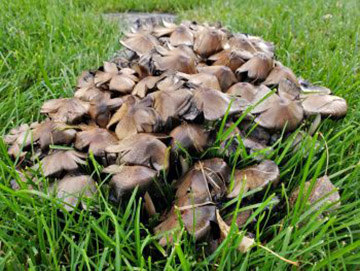
Image Source: organolawn.com
Deciphering the Fungal Presence: What Mushrooms Mean for Your Lawn
The sudden appearance of mushrooms, also known as toadstools, after rain or irrigation is a common phenomenon that can surprise and sometimes concern homeowners. These are the fruiting bodies of fungi, which are an integral part of the soil’s microbial community. Their presence is a visual cue that a vast network of mycelium, the main body of the fungus, exists underground. This mycelial network plays a crucial role in lawn decomposition and nutrient cycling within the soil.
The question on many people’s minds is: “Why are mushrooms growing in my lawn?” The primary reasons revolve around the conditions that favor fungal growth. These conditions typically include:
- Damp conditions: Fungi thrive in moisture. Heavy rainfall, overwatering, or poor drainage can create the consistently moist environment they need to flourish.
- Decaying organic matter: Mushrooms are nature’s recyclers. They feed on dead plant material, such as fallen leaves, grass clippings, and roots. When there’s abundant decaying organic matter in the soil, fungi have a food source, leading to mushroom formation.
- Thatch buildup: A thick layer of thatch, which is a mat of dead and living grass stems, roots, and debris, can retain moisture and provide a perfect habitat for fungi to grow and break down this material.
- Soil aeration: Poorly aerated soil can lead to compacted areas that hold excess moisture, again favoring fungal development.
While most lawn mushrooms are harmless, some can be toxic if ingested, especially by pets or children. It’s also important to consider that their presence might be a symptom of a broader issue affecting your lawn’s health.
The Role of Mycelium: The Hidden Network
Before you see mushrooms, a vast underground network of thread-like structures called mycelium is at work. This mycelium is the true organism. It spreads through the soil, breaking down organic material and absorbing nutrients. The mushrooms are simply the reproductive structures, like the flowers of a plant, that appear when conditions are right for spore dispersal.
Fathoming the Causes of Fungal Bloom
Several factors contribute to the proliferation of mushrooms in your lawn. By pinpointing these causes, you can address the underlying issues and manage the mushroom population effectively.
Environmental Triggers for Fungal Activity
- Moisture Levels: As mentioned, fungi are inherently linked to moisture. Lawns that are frequently overwatered, or that have areas with poor drainage, create ideal conditions. Even a few days of heavy rain can be enough to trigger a mushroom bloom in a lawn that already has a favorable substrate.
- Temperature: While not as critical as moisture, certain temperature ranges can also encourage fungal growth. Many common lawn fungi are most active during the warmer months of spring and fall, when temperatures are moderate and moisture is readily available.
- Sunlight Exposure: Some fungi prefer shady, moist areas, while others can tolerate more sun. The specific type of mushroom might give clues about the localized conditions in your lawn.
The Impact of Organic Matter and Soil Conditions
- Decaying Organic Matter: Your lawn is a dynamic ecosystem. Grass clippings, fallen leaves, dead roots, and even animal droppings are all sources of decaying organic matter. Fungi are essential decomposers, breaking down this material and returning nutrients to the soil. When these materials are abundant and not properly managed, they provide a feast for fungi.
- Thatch Buildup: A healthy lawn naturally produces thatch. However, if the rate of thatch production exceeds the rate of decomposition, a thick layer can accumulate. This layer acts like a sponge, holding moisture and creating a dense, dark environment that is perfect for many types of fungi. Thatch buildup can also smother the grass, making it weaker and more susceptible to other problems.
- Soil Aeration and Compaction: Compacted soil restricts the flow of air and water. This can lead to pockets of excessive moisture where fungi can thrive. When soil is compacted, it also hinders the natural decomposition processes that might otherwise keep fungal populations in check. Proper soil aeration is vital for a healthy lawn and can help prevent these conditions.
- Nutrient Imbalances: While fungi are decomposers, they also interact with nutrient cycles. In some cases, a nutrient deficiency in the soil might indirectly encourage fungal growth as the fungi efficiently break down organic matter to access available nutrients. Conversely, certain nutrient-rich organic materials can also fuel fungal expansion.
Hidden Threats: Lawn Disease and Fungi
While most mushrooms are simply a sign of decomposition, they can sometimes be an indicator of a lawn disease. Certain fungal diseases that affect grass, like fairy rings, manifest with mushrooms appearing in a circular pattern. It’s important to differentiate between general fungal activity and specific disease symptoms.
Addressing the Mushroom Menace: Solutions and Strategies
Dealing with mushrooms in your lawn involves a combination of management practices aimed at improving lawn health and discouraging fungal growth.
Improving Drainage and Moisture Management
- Proper Watering: Avoid overwatering. Water your lawn deeply but infrequently, allowing the soil surface to dry out between waterings. This discourages shallow-rooted weeds and reduces the prolonged dampness that fungi love.
- Drainage Solutions: If your lawn consistently holds water, consider improving drainage. This might involve installing French drains, amending the soil with organic matter to improve its structure, or creating gentle slopes to direct water away from problem areas.
- Aeration: Regular soil aeration is crucial. It helps to break up soil compaction, improving air and water penetration. This makes the soil less hospitable to fungi that prefer anaerobic (low oxygen) conditions.
Managing Organic Matter and Thatch
- Regular Dethatching: If you have a significant thatch buildup, consider dethatching your lawn. This process removes the dense layer of organic material, allowing for better air circulation and moisture evaporation.
- Grasscycling: While leaving grass clippings on the lawn (grasscycling) can return valuable nutrients, it can also contribute to thatch and provide food for fungi if not managed. Ensure your mower mulches clippings finely, and avoid leaving thick layers of clippings on the lawn, especially after heavy growth periods.
- Leaf Removal: Rake fallen leaves promptly, especially in the fall. Leaves can smother the grass and create moist, shaded environments ideal for fungal growth.
Fertilization and Nutrient Management
- Balanced Fertilization: A healthy, well-fed lawn is more resilient. Use a balanced fertilizer according to your grass type’s needs. Avoid over-fertilizing, as excess nitrogen can sometimes stimulate fungal growth. Consider slow-release fertilizers that provide nutrients gradually.
- Soil Testing: Conduct a soil test to identify any nutrient deficiency or pH imbalances. Correcting these issues can lead to a healthier lawn that is less prone to fungal problems.
When to Consider Fungicides
In most cases, fungicides are not necessary or recommended for occasional mushroom outbreaks. They are typically reserved for treating specific lawn diseases that are causing significant damage to the turf. If the mushrooms are accompanied by signs of disease, like brown patches or discolored grass, consulting a lawn care professional for proper mushroom identification and treatment recommendations is advisable.
Fungal Growth Patterns: Spotting the Signs
Recognizing different patterns of fungal growth can help you diagnose the cause and choose the right approach.
Fairy Rings: More Than Just Mushrooms
Fairy rings are circular patterns of mushroom growth, often accompanied by a ring of darker, faster-growing grass or a ring of dead grass. These are caused by specific types of fungi that spread outwards underground.
- How they form: The mycelium grows outwards from a central point, feeding on organic matter in the soil. As the mycelium decomposes this matter, it releases nutrients that can stimulate grass growth, creating the darker ring. In drier conditions, or when the mycelium depletes its food source, the outer edge can die, forming the brown ring.
- Managing fairy rings: Often, the best approach is to improve overall lawn health through proper watering, aeration, and fertilization. In severe cases, core aeration and spiking the affected area can help break up the mycelial mat. Fungicides may be used, but their effectiveness can be limited once the ring is established.
Mushroom Clusters in Specific Areas
Mushrooms appearing in dense clusters can indicate areas where there is a concentrated amount of decaying organic matter, such as where a tree stump was removed or where large amounts of debris have accumulated. Poor drainage in these spots will exacerbate the issue.
Identifying Lawn Mushrooms: A Crucial Step
When you see mushrooms, mushroom identification can be helpful, though it can be challenging without expert knowledge.
Common Lawn Mushroom Types
- Ink Caps (Coprinus spp.): These often appear after rain, and some varieties will dissolve into an inky liquid as they mature. They are generally decomposers of thatch and dead grass.
- Meadow Mushrooms (Agaricus campestris): Similar to the edible button mushrooms, these are often found in grassy areas.
- Puffballs (Lycoperdon spp.): These are round or pear-shaped and release a cloud of spores when mature. Most are harmless and indicate healthy soil.
- Stinkhorns (Phallaceae): These often have a distinctive, unpleasant odor and can appear in various bizarre shapes. They are also decomposers.
When to Seek Expert Advice
If you are unsure about the type of mushroom or suspect it might be associated with a lawn disease, it’s best to consult a local extension office or a professional landscaper for accurate mushroom identification and advice. Never assume a mushroom is safe to touch or consume.
The Broader Ecosystem: Beneficial Fungi
It’s important to remember that not all fungi are detrimental to your lawn. In fact, many are incredibly beneficial fungi.
Mycorrhizal Fungi: The Lawn’s Allies
- Symbiotic Relationships: Mycorrhizal fungi form symbiotic relationships with grass roots. The fungi extend their hyphae far into the soil, increasing the surface area for nutrient and water absorption, which they then share with the grass. In return, the grass provides the fungi with sugars produced during photosynthesis.
- Promoting Lawn Health: Healthy populations of mycorrhizal fungi contribute to a more drought-tolerant, nutrient-efficient, and resilient lawn. The mushrooms you see are often from different types of fungi that are primarily focused on decomposing dead material.
Frequently Asked Questions (FAQs)
Q1: Are mushrooms in my lawn dangerous?
A1: Most lawn mushrooms are harmless to your grass. However, some varieties can be toxic if ingested by pets or children. It’s wise to keep pets and small children away from them and to clean them up if they pose a risk.
Q2: How can I get rid of mushrooms in my lawn?
A2: The most effective way to reduce mushrooms is to address the underlying causes. Improve drainage, manage thatch, avoid overwatering, and ensure proper fertilization. Physically removing mushrooms will not prevent them from returning if the conditions remain favorable.
Q3: Do mushrooms harm my grass?
A3: Generally, the mushrooms themselves do not directly harm your grass. They are a byproduct of fungi that are breaking down organic matter in the soil. However, the conditions that favor mushroom growth (like excessive moisture and thatch) can weaken your lawn and make it more susceptible to other problems, including lawn diseases.
Q4: Can I eat mushrooms growing in my lawn?
A4: It is strongly advised not to eat any mushrooms found growing in your lawn unless you are an expert mycologist and have positively identified them as edible and safe. Many common lawn mushrooms are not edible, and some can be poisonous.
Q5: Why do mushrooms appear after watering?
A5: Watering often provides the moisture that fungi need to produce their fruiting bodies (mushrooms). If your watering practices are leading to consistently damp soil, this will encourage fungal growth.
Q6: What is the difference between a fairy ring and just mushrooms?
A6: Fairy rings are specific patterns of mushroom growth, often circular, that indicate the outward spread of a single fungal organism underground. While mushrooms are the visible part, a fairy ring is the entire phenomenon, including the potential for altered grass growth.
Q7: Is thatch bad for my lawn?
A7: A thin layer of thatch is normal and beneficial, acting as insulation and retaining moisture. However, a thick layer of thatch buildup (more than half an inch) can be detrimental. It can prevent water, air, and nutrients from reaching the soil and roots, and it creates a favorable environment for pests and diseases, including fungal growth.
Q8: What does soil aeration do for my lawn?
A8: Soil aeration is a process that removes small cores of soil from the lawn, creating holes. This alleviates soil compaction, improves air circulation to the roots, enhances water infiltration, and allows nutrients and fertilizers to penetrate more effectively. Better soil structure reduces the conditions that favor unwanted fungal growth.
Q9: How can I tell if my lawn has a nutrient deficiency?
A9: Signs of a nutrient deficiency can include slow growth, yellowing (chlorosis), or browning of the grass. The most accurate way to determine if your lawn has a nutrient deficiency is to perform a soil test through your local agricultural extension office or a reputable soil testing laboratory.
Q10: Are all fungi bad for lawns?
A10: No, not all fungi are bad. As discussed, many are beneficial fungi, such as mycorrhizal fungi, which help grass absorb nutrients and water. Mushrooms are simply the reproductive structures of fungi, and their presence can indicate a healthy decomposition process, even if it points to conditions you might want to modify.