
The Garden of Gethsemane is crucially important as the site where Jesus Christ spent His final hours in prayer before His arrest, grappling with the immense weight of His impending sacrifice. It’s a place of profound spiritual struggle and divine submission, marking a pivotal moment in the narrative of salvation.
Gethsemane, a name derived from Aramaic meaning “olive press,” is intrinsically linked to the Mount of Olives. This area, studded with ancient olive trees, holds a special place in Jerusalem’s landscape and even more so in Christian theology. The olive trees themselves, gnarled and ancient, have witnessed centuries of history, and the very ground they stand on is considered sacred. The events that unfolded here on the night before crucifixion are central to Christian faith, offering deep spiritual significance and illustrating divine obedience.
The Garden of Gethsemane wasn’t just a physical location; it was a crucible where Jesus’ human and divine natures met in intense conflict. It was here that Jesus’ prayer revealed the depth of His human suffering and His ultimate commitment to the Father’s will. The emotional and spiritual weight of His task – to bear the sins of the world – pressed down on Him with an unimaginable force.
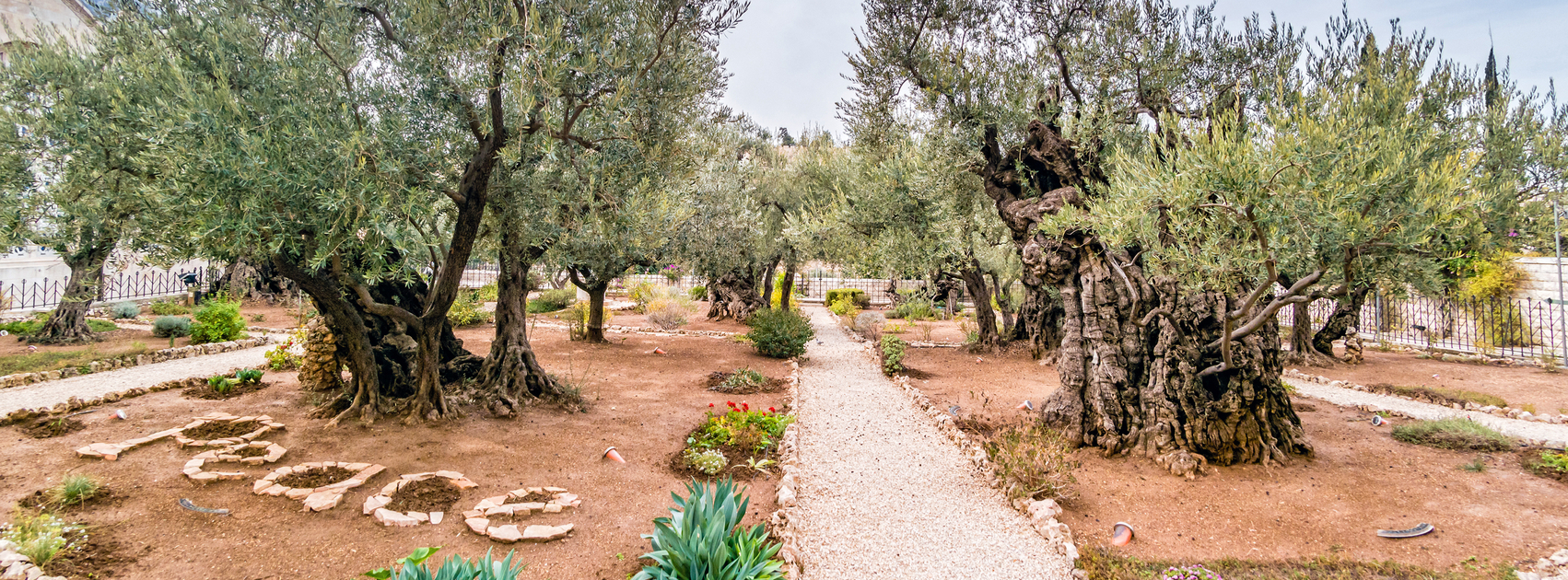
Image Source: www.myolivetree.com
The Setting: Olive Trees and Mount of Olives
The Garden of Gethsemane is located at the foot of the Mount of Olives, just east of the Old City of Jerusalem. This particular location is not accidental; it’s a place steeped in biblical history and prophecy. The Mount of Olives itself is mentioned numerous times in the Old Testament, often associated with periods of worship, lamentation, and prophetic pronouncements.
Ancient Olive Trees: Silent Witnesses
The presence of olive trees in Gethsemane is a powerful visual and symbolic element. These trees are known for their longevity, with some in the garden believed to be over a thousand years old. Their twisted branches and weathered trunks speak of resilience and endurance, mirroring the very qualities Jesus demonstrated in His trial. These ancient olive trees are silent witnesses to the profound events that transpired.
- Symbolism of Olive Trees: The olive tree has long been a symbol of peace, reconciliation, and life in the ancient world and in biblical texts. In Gethsemane, these symbols take on a poignant meaning. Jesus, the Prince of Peace, entered the garden to secure peace between humanity and God, even through the ultimate act of suffering.
- Olive Press: The name “Gethsemane” directly relates to the process of pressing olives for oil. This agricultural reality of the place subtly foreshadows the spiritual “pressing” Jesus endured, where the fruit of His life and sacrifice would be extracted for the world.
The Mount of Olives in Scripture
The Mount of Olives features prominently throughout scripture:
- David’s Flight: King David wept as he fled from his son Absalom, ascending the Mount of Olives (2 Samuel 15:30).
- Solomon’s Idolatry: Solomon built high places for foreign gods on the mount (1 Kings 11:7).
- Zechariah’s Prophecy: The prophet Zechariah foretold that the Lord would stand on the Mount of Olives in the end times (Zechariah 14:4). This connection to future events further amplifies the garden’s significance.
The proximity to the Temple Mount and the Kidron Valley also places Gethsemane at a strategic point in Jerusalem’s religious and geographical heart.
The Agony: Jesus’ Prayer and Spiritual Struggle
The most significant events in the Garden of Gethsemane revolve around Jesus’ prayer. After the Last Supper, Jesus led His disciples to this secluded spot. He asked them to stay awake and pray with Him, but they, despite their intentions, were overcome by exhaustion.
A Prayer of Anguish
The Gospels describe Jesus’ prayer in Gethsemane as one of intense agony in the garden. He withdrew a short distance from His sleeping disciples, falling on His face in prayer. The Greek word used to describe His distress suggests a wrestling, a profound internal battle.
- “My Father, if it is possible, let this cup pass from me; yet not as I will, but as you will.” (Matthew 26:39) This core of Jesus’ prayer reveals the immense burden He felt. The “cup” is understood to represent the suffering, the separation from the Father, and the bearing of sin that His crucifixion entailed.
- Repeated Prayer: Jesus prayed this same prayer three times, each time returning to find His disciples sleeping. This repetition underscores the depth of His anguish and His persistent seeking of His Father’s will.
- Physical Manifestation: Luke’s Gospel notes that “his sweat was like drops of blood falling to the ground” (Luke 22:44). This detail, often interpreted as an angelic strengthening or a physical manifestation of extreme stress, highlights the profound suffering He was experiencing.
The Disciples’ Failure
While Jesus wrestled in prayer, His closest followers, the disciples sleeping, were unable to offer Him the comfort and support He needed. This failure, though human, serves to emphasize Jesus’ isolation in His suffering and His reliance on divine communion.
- Vulnerability: The disciples’ sleepiness demonstrates their human weakness and their inability to grasp the spiritual magnitude of the moment. They could not stay awake with Him for even an hour.
- Fulfillment of Prophecy: Jesus had previously told them, “Watch and pray so that you will not fall into temptation. The spirit is willing, but the flesh is weak” (Matthew 26:41). Their failure to do so foreshadowed their later scattering after His arrest.
The Betrayal and Arrest
Gethsemane is also the site of one of Christianity’s most poignant betrayals, culminating in the arrest of Jesus.
Betrayal by Judas
Judas Iscariot, one of the twelve disciples, arrived with a crowd armed with swords and clubs. He identified Jesus with a kiss, a sign of affection that became a symbol of ultimate treachery.
- The Kiss of Betrayal: The kiss was a prearranged signal to the arresting party. “Greetings, Rabbi!” Judas said, and then kissed him. (Matthew 26:49). This act is a stark reminder of how close relationships can be twisted for devastating purposes.
- Fulfilment of Prophecy: Jesus had predicted His betrayal by one of His own (John 13:21). The betrayal by Judas was not a surprise to Jesus but a foreseen element of His path.
The Arrest of Jesus
Immediately after the betrayal, the soldiers apprehended Jesus.
- Peter’s Defense: In a moment of misguided loyalty, Peter drew his sword and cut off the ear of the high priest’s servant. Jesus rebuked him, saying, “Put your sword back in its place… Do you think that I cannot appeal to my Father, and He will at once send me more than twelve legions of angels? But how then would the Scriptures be fulfilled that it must happen in this way?” (Matthew 26:52-54).
- Submission to God’s Will: Jesus’ instruction to Peter and His submission to the arrest reaffirmed His commitment to God’s plan, demonstrating that His arrest was voluntary in obedience to the Father. The arrest of Jesus marked the beginning of His passion.
Biblical Significance: Prophecy and Fulfillment
The events in Gethsemane are deeply significant as they fulfill numerous biblical prophecy and theological themes.
Fulfillment of Old Testament Prophecies
- The Suffering Servant: Isaiah 53, the prophecy of the Suffering Servant, finds a profound resonance in Jesus’ experience in Gethsemane and His subsequent suffering. He was “despised and rejected by mankind, a man of suffering, and familiar with pain” (Isaiah 53:3).
- The Shepherd Scattered: Zechariah 13:7 foretold, “Strike the shepherd, and the sheep will be scattered.” Jesus Himself alluded to this prophecy when His disciples fled after His arrest, indicating the disciples’ scattering would be a fulfillment of scripture.
Theological Importance
- Obedience unto Death: Gethsemane is the ultimate demonstration of Jesus’ obedience to the Father’s will, even unto death. His willingness to embrace the “cup” He prayed to avoid shows the depth of His love for humanity.
- Victory in Submission: While an apparent defeat, Jesus’ submission in Gethsemane was, paradoxically, His greatest victory. He chose to enter the suffering required to reconcile humanity to God, thereby overcoming sin and death.
- Empathy and Understanding: The agony in the garden allows believers to connect with Jesus on a human level. His struggle shows that He truly experienced temptation and suffering, making Him a compassionate High Priest who can sympathize with our weaknesses (Hebrews 4:15).
Spiritual Insights: Lessons from Gethsemane
The Garden of Gethsemane offers timeless lessons for every believer.
The Importance of Prayer in Times of Trouble
- Seeking God’s Will: Jesus’ example teaches us to bring our deepest fears and desires to God in prayer, seeking His will above our own. Even when the path is difficult, His presence offers strength.
- Perseverance in Prayer: The repeated nature of Jesus’ prayer highlights the need for persistence and earnestness in our conversations with God, especially during trials.
The Reality of Spiritual Warfare
- Invisible Battles: Gethsemane reveals that spiritual battles are often fought in the unseen realm, through prayer and submission. The agony in the garden was as much a spiritual struggle as a physical one.
- Vigilance: The disciples’ failure to stay awake serves as a stark warning against spiritual complacency. We are called to be vigilant in our faith, prepared for spiritual opposition.
Trusting God Through Suffering
- Acceptance of God’s Plan: Jesus’ acceptance of the Father’s will, despite His suffering, is the ultimate model of trust. When faced with difficult circumstances, we are encouraged to trust that God’s plan is perfect, even if it is not immediately clear.
- The Purpose in Pain: The sacrifice that began in Gethsemane ultimately led to redemption. This suggests that even in our suffering, there can be a divine purpose.
The Garden’s Legacy Today
Today, the Garden of Gethsemane remains a pilgrimage site for Christians worldwide. The ancient olive trees continue to stand, a tangible link to the momentous events of the night before crucifixion. Visiting Gethsemane allows believers to connect with Jesus’ humanity, His suffering, and His ultimate victory.
The garden serves as a constant reminder of:
- The profound love Jesus demonstrated for humanity.
- The power of prayer and submission to God’s will.
- The reality of spiritual struggle and the need for vigilance.
- The hope that even in the darkest hours, God’s plan will prevail.
The spiritual significance of Gethsemane is not merely historical; it is a living testament to the core of the Christian faith, a place where divine love met human suffering, and where the path to redemption was irrevocably set. The betrayal by Judas, the disciples sleeping, and Jesus’ prayer all contribute to the profound narrative of this sacred space. The arrest of Jesus here marked the beginning of His journey to the cross, a journey undertaken out of love for all people, fulfilling ancient biblical prophecy.
Frequently Asked Questions (FAQ)
Q1: What is the primary reason the Garden of Gethsemane is important?
A1: The Garden of Gethsemane is important primarily because it is the place where Jesus Christ experienced His profound spiritual agony and prayed before His arrest and crucifixion, demonstrating His complete submission to God’s will.
Q2: Who betrayed Jesus in the Garden of Gethsemane?
A2: Jesus was betrayed by Judas Iscariot, one of His twelve disciples, who identified Him to the arresting crowd with a kiss.
Q3: Why were the disciples sleeping in Gethsemane?
A3: The disciples were sleeping in Gethsemane because they were exhausted, and perhaps also because they did not grasp the spiritual gravity of the moment and were unable to stay awake and pray with Jesus as He had asked.
Q4: What does the name “Gethsemane” mean?
A4: The name “Gethsemane” is derived from Aramaic and means “olive press,” referring to the oil-producing presses that were likely located in the area among the olive trees.
Q5: Can the ancient olive trees in Gethsemane be traced back to Jesus’ time?
A5: While the exact age of the olive trees in Gethsemane is debated, some are believed to be very ancient, possibly over a thousand years old, and are often considered to be descendants or survivors from the time of Jesus.
Q6: What was Jesus praying for in the Garden of Gethsemane?
A6: In Gethsemane, Jesus prayed to His Father, expressing His human distress over the coming suffering (“let this cup pass from me”) but ultimately submitting to God’s will (“not as I will, but as you will”). This prayer is central to His agony in the garden.