
The sudden appearance of mushrooms in your lawn can be puzzling. Mushrooms in your lawn are primarily a sign of decomposing organic matter in the soil, and their presence usually indicates that your soil is rich and moist. While they might seem unwelcome, their appearance isn’t necessarily a sign of an unhealthy lawn, but rather a natural part of the ecosystem. This article will delve into the common causes of mushroom growth in grass, help you with lawn mushroom identification, explain the various types of lawn mushrooms you might encounter, discuss mushroom growth conditions, and provide effective lawn care for mushrooms, including methods for removing lawn mushrooms. We’ll also touch on the intriguing phenomenon of mushroom circles in grass and compare a healthy lawn versus mushrooms.
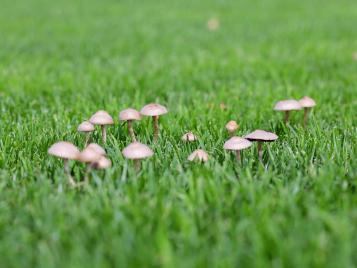
Image Source: www.lovethegarden.com
Deciphering the Cause of Mushrooms in Lawn
What is the main reason for mushrooms in my lawn? The primary cause of mushrooms in your lawn is the presence of decomposing organic matter beneath the surface. These fungi are nature’s recyclers, breaking down dead plant material like thatch, fallen leaves, wood chips, and even buried roots. When these materials break down, they provide a food source for the fungi, and under the right conditions, mushrooms emerge as the fruiting bodies of these underground fungal networks.
Here are the key factors contributing to mushroom growth:
- Abundant Organic Matter: Your lawn is essentially a buffet for fungi when there’s plenty of dead material to consume. This includes thatch (a layer of dead and living grass shoots, stems, and roots that accumulates between the green grass and the soil surface), fallen leaves, grass clippings left on the lawn, old mulch, and even buried roots from previous landscaping.
- Moisture: Fungi thrive in damp conditions. Excessive rain, overwatering, or poor drainage can create the ideal moist environment for mushrooms to sprout.
- Shade: Many types of fungi prefer shady, humid environments. Areas of your lawn that receive less direct sunlight are more prone to mushroom growth.
- Temperature: Mushrooms typically appear during warmer months, especially after rain when the soil temperature is conducive to fungal activity.
- Compacted Soil: Compacted soil can trap moisture and hinder air circulation, creating a more favorable environment for fungi.
- Nutrient-Rich Soil: While seemingly contradictory to a “problem,” a lawn with rich soil that supports healthy grass growth also provides ample food for fungi.
Lawn Mushroom Identification: Know What You’re Seeing
When you spot fungi on grass, it’s helpful to try and identify the type of mushroom. Lawn mushroom identification can assist in understanding their potential impact. While many common lawn mushrooms are harmless, knowing their characteristics is beneficial. It’s important to note that many fungi look similar, and accurate identification can be tricky. If you’re unsure, it’s best to err on the side of caution.
Here are some common types of lawn mushrooms and their general characteristics:
Common Types of Lawn Mushrooms
| Mushroom Type | Appearance | Habitat | Notes |
|---|---|---|---|
| Common Field Mushroom (Agaricus campestris) | White to brownish cap, gills underneath that start pink and turn brown, has a ring on the stem. | Open grassy areas, pastures, lawns. | Edible, but easily confused with poisonous varieties. |
| Inky Caps (Coprinellus spp. / Coprinus spp.) | Cap starts white or grey, then turns black and dissolves into an inky liquid. Gills also liquefy. | Often found in clusters, especially on decaying wood or lawns with a lot of organic matter. | Most species are not poisonous, but eating them with alcohol can cause severe reactions. |
| Puffballs (Lycoperdon spp.) | Round or pear-shaped, no distinct stem or cap. White when young, turning yellowish or brown and powdery inside as they mature. | Lawns, fields, often in fairy rings. | Edible when young and firm and white inside. Do not eat if the inside is yellow or brown. |
| Little Brown Mushrooms (LBMs) | A broad category; small, brown or tan caps and stems, often with gills. Many species fall into this group. | Various lawn conditions, often associated with thatch or decaying matter. | Many LBMs are difficult to identify and some can be poisonous. Avoid consuming. |
| Shaggy Manes (Coprinus comatus) | Tall, cylindrical, white cap covered in shaggy, scale-like hairs. Gills turn inky black from the bottom up. | Lawns, disturbed soil, often near trees. | Edible and delicious when young, but must be cooked immediately after picking due to rapid liquefaction. |
| Lepiota spp. | Small to medium size, often with a distinct cap and stem, some have scales on the cap. | Lawns, particularly those with sandy soil or organic matter. | Many species are poisonous, some seriously. Exercise extreme caution. |
Important Note: Never eat mushrooms from your lawn unless you are an expert mycologist or have had them positively identified by one. Many edible mushrooms have poisonous look-alikes.
Mushroom Growth Conditions: What They Need to Thrive
What are the ideal mushroom growth conditions? Mushrooms, being fungi, have specific requirements to flourish. These conditions are often present in lawns that are well-watered, have rich soil, and are not overly manicured.
- Moisture: This is perhaps the most crucial element. Mushrooms need consistent moisture to develop. Rainfall, dew, and overwatering can all provide the necessary hydration.
- Food Source: As mentioned, decaying organic matter is their primary food. This includes thatch, dead leaves, grass clippings, and woody debris. The more of this material present, the more food is available.
- Temperature: While some fungi are more tolerant of cooler temperatures, most common lawn mushrooms prefer warm, humid weather. This is why they often appear in late spring, summer, and early autumn, especially after periods of rain.
- Aeration (or lack thereof): While a healthy lawn benefits from good aeration, compacted soil can create pockets of moisture and reduced air flow, which can be favorable for certain types of fungi.
- Shade: Many fungi prefer the cooler, more humid conditions that shady areas provide. This can make mushroom growth more prevalent under trees or in areas of the lawn that don’t receive direct sunlight for extended periods.
The Intriguing Phenomenon of Mushroom Circles in Grass
Have you noticed mushrooms growing in a circular pattern? This is often referred to as a “fairy ring.” Mushroom circles in grass, or fairy rings, are a fascinating natural occurrence. They are caused by the outward growth of a single fungal organism in the soil.
Here’s how they form:
- Initial Spore Landing: A mushroom spore lands in a suitable spot in the soil.
- Mycelial Growth: The spore germinates and begins to grow as a network of thread-like structures called mycelium, spreading outwards in all directions from the initial point. This underground network is the main body of the fungus.
- Nutrient Depletion: As the mycelium grows, it consumes the available nutrients in the soil. This can sometimes lead to a zone of increased grass growth or, conversely, a dead or weakened patch of grass where the fungus is actively feeding.
- Fruiting Bodies Emerge: Once the mycelium has expanded to a certain diameter and conditions are right (moisture, temperature), it produces mushrooms – the reproductive structures – around the outer edge of its growth. This is why you see a ring of mushrooms.
Fairy rings can be quite old, sometimes spanning many years. The grass in the center might appear darker and healthier due to the nutrients released by the fungus, while the outer edge of the ring might show a band of darker green grass or, in some cases, a ring of dead or stressed grass.
Healthy Lawn vs. Mushrooms: Interpreting the Signs
Is the presence of mushrooms a sign of a sick lawn? Not necessarily. In fact, a healthy lawn versus mushrooms is a nuanced comparison. Mushrooms are a sign of decomposing organic matter and suitable moisture levels. This can occur even in a lawn that is otherwise healthy.
However, their presence can also indicate:
- Excess Thatch: A thick layer of thatch can hold moisture and provide ample food for fungi. While some thatch is normal, excessive thatch can smother grass and create problems.
- Overwatering: If your lawn is consistently wet due to overwatering, it creates ideal conditions for mushroom growth.
- Compacted Soil: Poor soil aeration can exacerbate moisture retention and fungal activity.
- Underlying Issues: In some cases, extensive mushroom growth, especially if accompanied by dying grass, could point to more significant soil health issues or diseases.
Think of it this way: A healthy lawn can still have mushrooms if the environmental conditions are right. However, if the mushrooms are accompanied by other signs of stress in the grass, it’s a signal to investigate further.
Lawn Care for Mushrooms: Practical Solutions
How can I manage mushrooms in my lawn? The best approach to lawn care for mushrooms is to address the underlying conditions that encourage their growth. Since mushrooms are a symptom, not the disease itself, focusing on the root cause is key.
Here are effective lawn care for mushrooms strategies:
Cultural Practices
- Thatch Management: Regularly dethatch your lawn. This involves removing the accumulated layer of dead grass and debris. Aim to keep thatch no thicker than ½ inch. You can do this with a power dethatcher or a stiff rake.
- Proper Watering: Water your lawn deeply but infrequently. This encourages deeper root growth and prevents the surface from staying constantly wet. Avoid overwatering. Water in the morning so that any surface moisture can evaporate during the day.
- Aeration: Aerate your lawn annually or biannually, especially if you have compacted soil. This improves air circulation, water penetration, and reduces moisture retention.
- Fertilization: Fertilize your lawn appropriately based on soil test results. Avoid over-fertilizing, which can lead to excessive thatch buildup.
- Sunlight: If possible, trim back overhanging branches of trees or shrubs that cast excessive shade on your lawn. More sunlight can help dry out the soil surface and reduce fungal growth.
- Grass Clipping Management: While leaving grass clippings can be beneficial for the soil, if you have excessive clippings after mowing, consider mulching them with a mulching mower or raking them up to prevent them from contributing to the thatch layer and organic matter buildup.
Removing Lawn Mushrooms
How do I get rid of mushrooms in my lawn? While it’s often not necessary to remove every mushroom you see, here are methods for removal if you prefer a tidier appearance or are concerned about potential toxicity:
- Manual Removal: The simplest way to remove mushrooms is to pick them by hand. Wear gloves if you are concerned about touching them. Dispose of them in a bag and put them in the trash, not your compost bin, to prevent spores from spreading.
- Raking: For clusters of mushrooms, a stiff rake can help dislodge them.
- Lawn Mowing: Mowing your lawn can chop up mushrooms. However, this doesn’t eliminate the underlying fungal problem and can spread spores. It’s more of a cosmetic solution.
Important Consideration: Removing the visible mushrooms does not eliminate the fungal network in the soil. The mushrooms will likely reappear if the conditions remain favorable. The goal of lawn care for mushrooms is to make the environment less hospitable to their growth.
Dealing with Fairy Rings
What to do about mushroom circles in grass? Managing fairy rings can be more challenging as it involves the entire underground mycelial network.
- Acceptance: For many homeowners, the best approach is to accept fairy rings, especially if they are not causing significant damage to the grass. The visual impact might be minimal, and they are a natural sign of a healthy soil ecosystem.
- Aeration and Dethatching: Regularly aerating and dethatching can help break up the mycelial network and reduce the severity of fairy rings over time.
- Watering and Fertilization: Maintain a consistent watering and fertilization schedule to promote vigorous grass growth, which can help the grass outcompete the fungus in some cases.
- Soil Amendment: In severe cases, topdressing with compost and overseeding can help fill in bare patches and encourage healthier grass growth within the ring.
- Fungicides: While chemical fungicides can be used, they are often a temporary solution and can be harmful to beneficial soil organisms. They are generally not recommended for the average homeowner unless the fairy ring is causing severe damage. If you consider fungicides, always follow label instructions precisely.
Frequently Asked Questions (FAQ)
Are mushrooms in my lawn dangerous to pets or children?
Can I have mushrooms in my lawn if I have pets or children? Yes, you can, but you must be extremely cautious. While many common lawn mushrooms are not poisonous, some can be. If you have pets or young children who might ingest mushrooms, it’s best to remove any you find and try to prevent their growth by managing the underlying causes (thatch, moisture). If you suspect ingestion of a poisonous mushroom, contact your veterinarian or a poison control center immediately.
Do mushrooms mean my lawn is unhealthy?
Does having mushrooms in my lawn mean it’s unhealthy? Not necessarily. Mushrooms are a natural part of the soil ecosystem, indicating decomposing organic matter and favorable moisture conditions. They can appear in even otherwise healthy lawns. However, if mushrooms are accompanied by dead patches of grass, wilting, or other signs of distress, it could indicate an underlying problem like disease or excessive thatch.
Can I eat mushrooms that grow in my lawn?
Can I eat mushrooms from my lawn? It is strongly advised not to eat any mushrooms found in your lawn. Accurate identification is critical, and many edible mushrooms have poisonous look-alikes. Without expert knowledge, consuming lawn mushrooms poses a significant health risk.
How quickly do mushrooms grow?
How fast do mushrooms grow? Mushrooms can grow surprisingly quickly, often appearing overnight after a rain. Their rapid growth is due to favorable moisture and temperature conditions, allowing the fungal mycelium to produce fruiting bodies.
Will removing mushrooms permanently stop them from growing?
Will removing lawn mushrooms stop them from growing? Simply removing the visible mushrooms will not permanently stop them. The fungal network (mycelium) is still present in the soil. To reduce future growth, you need to address the conditions that encourage them, such as excess thatch, overwatering, and poor drainage.
Are mushroom circles (fairy rings) harmful to my grass?
Can mushroom circles harm my grass? Fairy rings themselves aren’t always harmful. Sometimes, the grass within the ring can appear greener and more vigorous due to the nutrients released by the fungus. However, in some cases, the outer edge of the ring can cause a band of dead or stressed grass as the fungus consumes nutrients and damages grass roots.
By implementing proper lawn care practices, you can manage the conditions that promote mushroom growth and maintain a healthy, aesthetically pleasing lawn. Remember, these fungi are natural decomposers, and their presence often signals a soil rich in organic material.