
Does your lawn mower fire up, run for a few moments, and then sputter out and die? This is a common and frustrating problem for many homeowners. Fortunately, most of the reasons behind this issue are relatively simple to diagnose and fix.
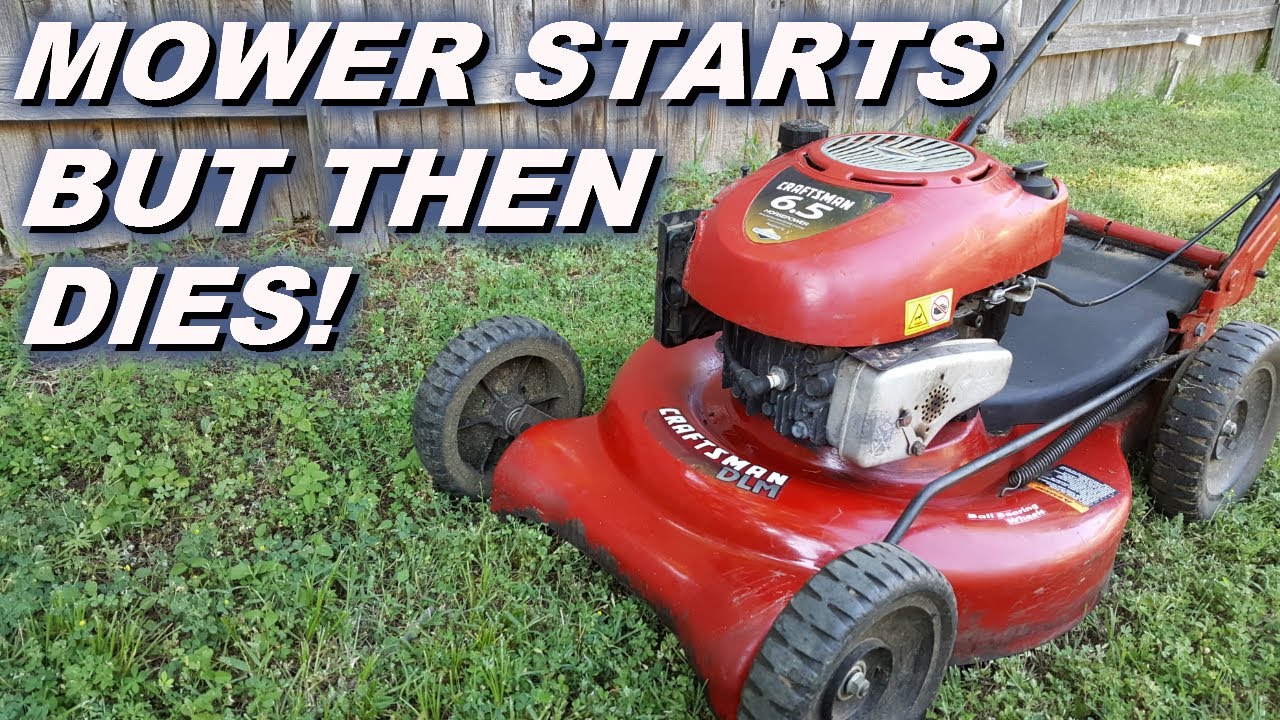
Image Source: i.ytimg.com
Common Causes of a Lawn Mower Starting and Dying
Several factors can lead to your lawn mower starting then dying. These often revolve around the engine’s ability to get the right mix of fuel, air, and spark.
- Fuel system issues: Problems with how fuel gets to the engine are frequent culprits.
- Carburetor problems: The carburetor is vital for mixing fuel and air.
- Clogged fuel filter: A blocked filter stops fuel flow.
- Spark plug failure: A weak or dirty spark plug can’t ignite the fuel.
- Air filter blockage: Too little air hinders combustion.
- Engine overheating: Excessive heat can cause shutdowns.
- Low oil level: Insufficient oil can damage the engine and cause it to stop.
- Governor setting: Incorrect governor adjustments can affect engine speed.
- Dirty gas: Old or contaminated fuel burns poorly.
- Ignition coil failure: A faulty coil prevents a strong spark.
Let’s dive into each of these potential problems and how to address them.
Fathoming Fuel System Issues
The fuel system is a mower’s lifeline. If it falters, the engine won’t run. This encompasses everything from the fuel tank to the carburetor.
Deciphering Carburetor Problems
The carburetor’s job is to mix air and fuel in the correct ratio for combustion. If it’s dirty, damaged, or misadjusted, the engine won’t get the right mixture.
- Dirty Carburetor: Over time, fuel can leave behind varnish and deposits. These can clog tiny passages within the carburetor, disrupting fuel flow.
- Float Bowl Issues: The float in the carburetor’s bowl controls the fuel level. If the float is stuck or the needle valve is worn, it can lead to either too much or too little fuel entering the combustion chamber.
- Choke Malfunction: The choke enriches the fuel-air mixture for starting. If the choke is stuck open, the engine may get too much air once it starts, causing it to die.
Troubleshooting Steps for Carburetor Issues:
-
Clean the Carburetor:
- Preparation: Disconnect the spark plug wire for safety.
- Removal: Carefully remove the carburetor from the engine. Note how lines and linkages are connected.
- Disassembly: Gently take apart the carburetor, paying attention to the order of parts.
- Cleaning: Use a specialized carburetor cleaner spray. Spray into all jets, passages, and openings. You might need a soft brush or compressed air to clear stubborn blockages.
- Reassembly: Put the carburetor back together, ensuring all gaskets and O-rings are seated correctly.
- Reinstallation: Reattach the carburetor to the engine.
-
Check the Float: Inspect the float for damage or if it’s sinking. Ensure the needle valve it operates moves freely.
-
Inspect the Choke: Make sure the choke plate moves freely and returns to its open position when the choke lever is moved to the “run” position.
The Role of a Clogged Fuel Filter
Your mower has a fuel filter, usually located between the fuel tank and the carburetor. Its purpose is to catch debris before it enters the carburetor. A clogged fuel filter restricts fuel flow.
- Symptoms: The mower starts, runs for a bit, and then dies because it’s not getting enough fuel to keep running. It might also run rough or sputter before quitting.
Troubleshooting Steps for a Clogged Fuel Filter:
- Locate the Filter: Find the fuel filter in the fuel line.
- Inspect: Remove the filter (usually by loosening clamps on the fuel line). Look for any visible debris or discoloration.
- Replace: If the filter looks dirty or you suspect it’s the cause, it’s best to replace it. Fuel filters are inexpensive and easy to swap out. Make sure to use the correct type of filter for your mower.
Dealing with Dirty Gas
Gasoline can degrade over time, especially if it’s been sitting in the tank for months or if it was contaminated when you bought it.
- Consequences: Old gas can lose its volatility and contain water or gummed-up deposits. This makes it burn inefficiently or not at all.
- Symptoms: The mower may start but run poorly, hesitate, or die quickly.
Troubleshooting Steps for Dirty Gas:
- Drain the Tank: Empty all old gasoline from the fuel tank. You can use a siphon pump.
- Dispose Properly: Dispose of old gas safely and responsibly according to local regulations.
- Clean the Tank (if necessary): If you see sediment or water in the tank, you might need to clean it out.
- Refill with Fresh Gas: Use fresh, high-quality gasoline. For most modern mowers, this means unleaded gasoline with an octane rating of 87 or higher. Avoid using gas that has ethanol if your mower manual advises against it, as ethanol can damage fuel system components over time.
- Add Fuel Stabilizer: If you plan to store your mower for an extended period, add a fuel stabilizer to the fresh gas.
Examining Spark Plug Failure
The spark plug is critical for igniting the fuel-air mixture. If it’s faulty, the engine won’t run properly, if at all.
- Common Issues: A spark plug can become fouled with oil or carbon, have a damaged electrode, or have an incorrect gap.
Troubleshooting Steps for Spark Plug Issues:
- Locate the Spark Plug: It’s usually a ceramic-insulated component with a thick wire attached.
- Remove the Plug: Use a spark plug wrench to carefully unscrew it.
- Inspect:
- Color: A healthy plug will have a light tan or grayish-brown color. Black, sooty deposits indicate a rich fuel mixture or oil burning. Oily deposits suggest oil is getting into the combustion chamber. White or blistered deposits mean it’s running too hot or lean.
- Electrode: Check the electrode for wear, damage, or excessive carbon buildup.
- Gap: Ensure the gap between the electrodes is set to the manufacturer’s specification. You can use a feeler gauge for this.
- Clean or Replace: If the plug is fouled or damaged, you can try cleaning it gently with a wire brush and carburetor cleaner. However, spark plugs are inexpensive, and replacing an old or suspect plug is often the easiest and most effective solution.
- Reconnect: Screw the new or cleaned spark plug back in, ensuring it’s snug but not overtightened. Reconnect the spark plug wire firmly.
Interpreting Air Filter Blockage
An air filter prevents dirt and debris from entering the engine. If it becomes clogged, the engine can’t get enough air to run.
- Impact: This leads to a rich fuel mixture (too much fuel, not enough air), causing the engine to run poorly and eventually die.
Troubleshooting Steps for Air Filter Blockage:
- Locate the Air Filter: It’s typically housed in a plastic or metal casing on the side of the engine.
- Remove the Filter: Open the housing and carefully take out the air filter.
- Inspect: Hold the filter up to a light. If you can’t see light through it, or if it’s heavily coated in dirt and debris, it needs cleaning or replacing.
- Clean or Replace:
- Paper Filters: Most paper filters cannot be effectively cleaned and must be replaced.
- Foam Filters: Foam filters can often be washed with mild soap and water, dried completely, and then lightly re-oiled with a specific foam filter oil.
- Reinstall: Once clean or replaced, put the air filter back into its housing and secure the cover.
Fathoming Engine Overheating
An engine that overheats can shut down as a protective measure. This can happen for several reasons, most of which are related to cooling.
- Causes:
- Blocked Cooling Fins: Lawn mower engines are air-cooled. They have fins on the engine block to dissipate heat. If these fins are packed with grass clippings, dirt, or debris, air cannot flow effectively, and the engine will overheat.
- Low Oil Level: As mentioned earlier, oil lubricates and cools the engine. A low oil level reduces its ability to manage heat.
- Overworking the Mower: Trying to mow very tall, thick grass in high temperatures can push the engine too hard.
Troubleshooting Steps for Engine Overheating:
- Clean Cooling Fins:
- Safety First: Ensure the engine is completely cool before you start. Disconnect the spark plug wire.
- Clean Thoroughly: Use a brush, compressed air, or a leaf blower to remove all grass clippings, dirt, and debris from the engine’s cooling fins. Pay attention to the areas around the cylinder head and flywheel.
- Check Oil Level: See the “Low Oil Level” section below for details.
- Mow Appropriately: Avoid mowing in the hottest part of the day if possible. Don’t try to cut off more than one-third of the grass blade height at a time.
Addressing Low Oil Level
Engine oil serves multiple critical functions: lubrication, cooling, and cleaning. Running an engine with insufficient oil is dangerous and can lead to immediate shutdown.
- Why it Matters: The oil lubricates moving parts, preventing friction and wear. It also absorbs and dissipates heat. Without enough oil, metal parts grind against each other, generating excessive heat and causing component seizure or rapid wear. Modern engines may have a low-oil sensor that automatically shuts off the engine to prevent damage.
Troubleshooting Steps for Low Oil Level:
- Locate the Oil Dipstick: It’s usually a yellow or orange cap or a metal rod with a loop handle, often near the bottom of the engine.
- Check the Oil Level:
- Engine Cool: It’s best to check the oil when the engine is cool and on a level surface.
- Remove and Wipe: Pull out the dipstick, wipe it clean with a cloth.
- Reinsert: Fully reinsert the dipstick, then pull it out again.
- Read Level: Check the oil level against the markings on the dipstick. There are typically “Add” and “Full” or minimum/maximum marks.
- Add Oil if Low: If the oil level is below the “Add” or minimum mark, add the correct type and weight of oil specified in your mower’s owner’s manual. Add it slowly, checking the level frequently until it reaches the “Full” or maximum mark. Do not overfill.
Fathoming Governor Setting
The governor is a mechanism that controls the engine’s speed, preventing it from over-revving and ensuring a consistent operating speed for optimal blade performance.
- How it Works: It senses engine speed and adjusts the throttle linkage to maintain a set RPM. If the governor is out of adjustment or its linkage is binding, it can cause the engine to run erratically or die when it tries to increase speed.
Troubleshooting Steps for Governor Setting:
This is a more advanced troubleshooting step and might require referring to your mower’s service manual.
- Inspect Linkages: Check the throttle linkage connected to the carburetor and the governor arm. Ensure it’s moving freely without any binding or obstructions.
- Check Springs: Ensure governor springs are intact and properly attached.
- Adjust (with caution): If you suspect the governor is misadjusted, consult your owner’s manual or a service manual for the correct adjustment procedure. Incorrect adjustments can damage the engine. Often, the issue isn’t the governor setting itself, but rather the linkage becoming sticky or the spring becoming weak.
The Impact of Ignition Coil Failure
The ignition coil is responsible for producing the high voltage needed to create a spark at the spark plug. If it fails, there will be no spark, or a very weak one.
- Symptoms: The mower might start briefly if there’s residual heat or a tiny bit of spark left, but it won’t sustain combustion. It will likely die very quickly.
Troubleshooting Steps for Ignition Coil Failure:
- Test the Spark: This requires removing the spark plug wire from the spark plug. Insert a known good spark plug into the wire boot. Hold the metal body of the spark plug firmly against a clean, unpainted metal part of the engine block (like a cylinder head bolt). Have someone pull the starter rope. You should see a strong, blue spark jump across the spark plug gap.
- No Spark: If there’s no spark or a very weak, yellow spark, the ignition coil is a likely suspect.
- Weak Spark: This can also indicate an issue with the flywheel key (causing incorrect ignition timing) or a faulty ignition module.
- Replace the Coil: If you confirm a lack of spark, the ignition coil will likely need to be replaced. This is a moderately complex repair and usually involves removing the engine’s flywheel and shrouds to access the coil.
Additional Checks and Considerations
Beyond the primary systems, a few other things can cause your mower to start and die.
Engine Over-Choking
If you engage the choke too aggressively or leave it on for too long, the engine will receive too much fuel and not enough air.
- Fix: Ensure the choke is set correctly for starting and gradually disengaged as the engine warms up.
Loose or Damaged Wiring
While less common, loose or damaged wires, particularly those connected to the ignition system or safety shut-offs, can cause intermittent problems.
- Check: Inspect all wiring for damage, corrosion, or loose connections.
Maintenance Schedule for Prevention
Regular maintenance is the best way to prevent your lawn mower from starting and dying.
| Maintenance Task | Frequency | Why It Helps |
|---|---|---|
| Check Oil Level | Before each use | Prevents engine damage and overheating. |
| Clean Air Filter | As needed, or every 25 hours of use | Ensures proper air-fuel mixture. |
| Inspect/Replace Spark Plug | Annually, or every 100 hours of use | Ensures reliable ignition. |
| Replace Fuel Filter | Annually, or as recommended | Prevents fuel flow restrictions. |
| Change Oil | Annually, or every 50 hours of use | Lubricates, cools, and cleans the engine. |
| Clean Carburetor | As needed, or annually for storage | Prevents fuel delivery issues. |
| Inspect Fuel Lines | Annually | Checks for cracks, leaks, or blockages. |
| Clean Engine Cooling Fins | As needed, especially after heavy use | Prevents overheating. |
Frequently Asked Questions (FAQ)
Q1: My mower starts and dies immediately. What’s the most likely cause?
A1: The most common reasons for a mower dying immediately after starting are a lack of fuel, a bad spark plug, or a problem with the choke. Check your fuel level, ensure fresh gas is in the tank, and inspect the spark plug and its connection.
Q2: Can dirty gas cause my mower to start then die?
A2: Yes, dirty or old gas can cause combustion issues. It may allow the engine to start briefly but won’t sustain it, leading to it dying. Draining the tank and refilling with fresh gas is a good first step.
Q3: I just replaced the spark plug, and my mower still starts and dies. What else could it be?
A3: If a new spark plug doesn’t solve the problem, focus on the fuel system. Check the fuel filter for clogs, ensure the fuel lines aren’t kinked or blocked, and inspect the carburetor for blockages or an improperly functioning float or choke.
Q4: How often should I replace my lawn mower’s fuel filter?
A4: It’s generally recommended to replace the fuel filter annually or at the beginning of each mowing season. If you experience problems, replacing it is a simple and inexpensive diagnostic step.
Q5: My mower only dies when it gets hot. What’s wrong?
A5: If the mower starts fine when cold but dies as it heats up, this often points to an engine overheating issue or a fuel delivery problem that worsens with heat. Check for clogged cooling fins, ensure the oil level is correct, and make sure the fuel is flowing freely to the carburetor. A faulty ignition coil can also sometimes fail intermittently when hot.
By systematically checking these common culprits, you can diagnose why your lawn mower starts then dies and get back to enjoying a well-manicured lawn. Regular maintenance is key to preventing these frustrating issues.