
A lawn mower that starts and then immediately dies is a frustrating problem. This usually happens due to a problem with the fuel system, a dirty or faulty spark plug, an issue with the air intake, or engine overheating. Let’s explore the common culprits behind this troublesome behavior and how to fix them.
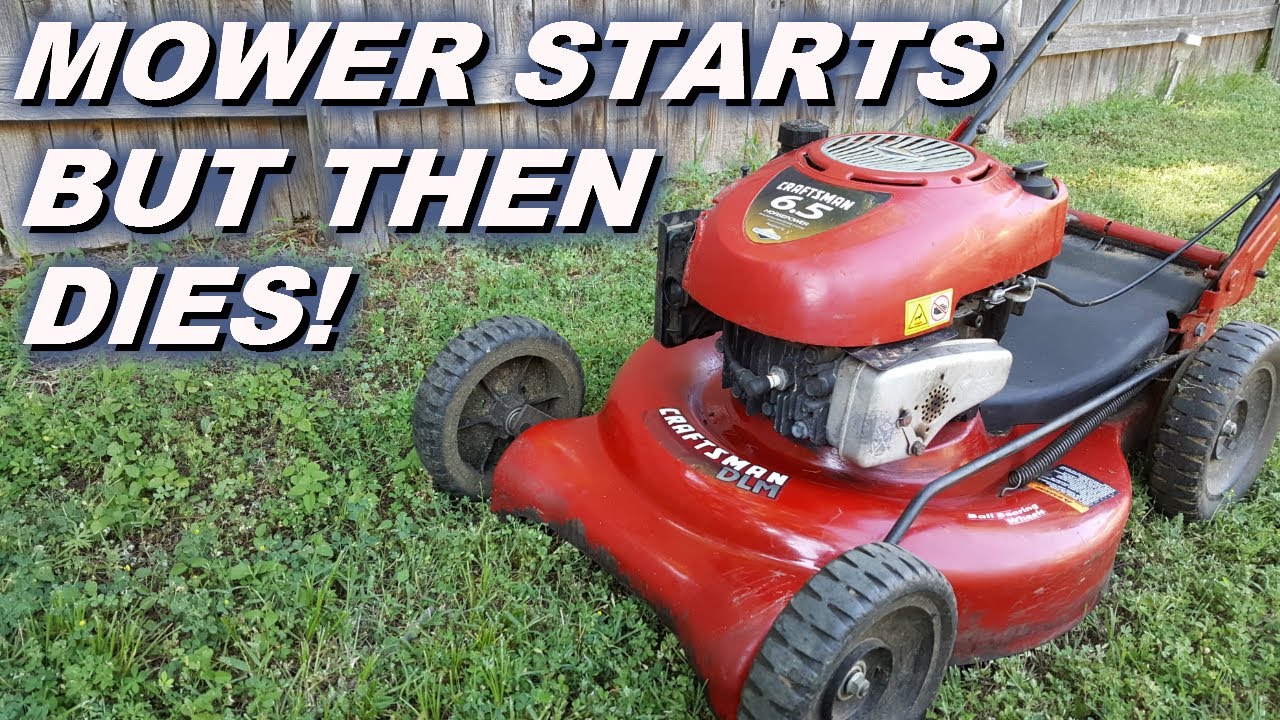
Image Source: i.ytimg.com
Fuel System Woes: The Heart of the Problem
The fuel system is the most frequent offender when your lawn mower starts and then dies. It’s responsible for delivering the right mix of gasoline and air to the engine’s combustion chamber. If anything disrupts this flow, the engine won’t receive the fuel it needs to keep running.
Fuel System Issues: A Deep Dive
Several components within the fuel system can cause your mower to stall shortly after starting. These issues often stem from simple maintenance oversights or component wear.
- Old or Contaminated Fuel: Gasoline degrades over time, especially if it contains ethanol. Ethanol attracts moisture, which can lead to water contamination in your fuel tank. Old fuel can also form gum and varnish deposits, clogging vital parts of the fuel system. If your mower has been sitting for a long time, this is often the first thing to check.
- Clogged Fuel Filter: The fuel filter’s job is to trap dirt, debris, and other contaminants before they reach the carburetor. When the filter gets clogged, it restricts fuel flow, starving the engine. This can cause the mower to start, run for a short while, and then die as the fuel supply dwindles.
- Fuel Line Blockage: Similar to a clogged filter, a blockage in the fuel line—the hose carrying fuel from the tank to the engine—can also starve the engine. This blockage could be caused by debris, kinks in the line, or even algae growth in the fuel.
- Loose Fuel Cap: It might sound too simple, but a loose or improperly sealed fuel cap can cause problems. The fuel system relies on a small amount of pressure to operate correctly. If the fuel cap isn’t sealed tightly, air can enter the tank, disrupting fuel flow and causing the engine to stall. This is sometimes referred to as a loose fuel cap symptom.
Carburetor Problems: The Fuel-Air Mixer
The carburetor is a critical component that precisely mixes fuel and air before sending it to the engine’s cylinders. When the carburetor isn’t working correctly, the engine won’t receive the proper fuel-air ratio, leading to stalling.
Common Carburetor Issues:
- Clogged Carburetor Jets: The carburetor has tiny openings called jets that control fuel flow. If these jets become clogged with gum, varnish, or debris from old fuel, the fuel-air mixture will be incorrect. This often causes the engine to run roughly or die shortly after starting.
- Dirty Air Filter: While not strictly a carburetor issue, a dirty air filter directly impacts the fuel-air mixture. If the air filter is severely clogged, it restricts the amount of air entering the carburetor. The engine then runs too rich (too much fuel, not enough air), which can cause it to stall, especially under load or after starting.
- Adjustments Gone Awry: Carburetors have adjustment screws for idle speed and fuel mixture. If these have been bumped or improperly adjusted, they can lead to an incorrect fuel-air mix, causing the engine to die.
The Carburetor Cleaning Process
Cleaning a carburetor might seem intimidating, but it’s often a straightforward process that can revive a sputtering engine.
Steps for Carburetor Cleaning:
- Safety First: Disconnect the spark plug wire to prevent accidental starting.
- Access the Carburetor: Locate the carburetor, usually a metal or plastic component attached to the engine. You might need to remove an air filter housing or a cover to get to it.
- Remove the Carburetor: Carefully unbolt the carburetor from the engine. Be mindful of gaskets and linkages.
- Disassemble: Gently take apart the carburetor, paying attention to the order of parts. Remove the float bowl, jets, and any other removable components.
- Clean Components: Use a carburetor cleaner spray and a soft brush or compressed air to thoroughly clean all passages, jets, and internal parts. Ensure all old fuel residue is removed.
- Reassemble: Put the carburetor back together, ensuring all parts are in their correct places and gaskets are seated properly.
- Reinstall and Test: Reattach the carburetor to the engine, reconnect the fuel line, and reconnect the spark plug wire. Try starting the mower.
Note: If you’re uncomfortable with this process, it’s best to take your mower to a qualified mechanic.
Ignition System Problems: The Spark of Life
Even with a perfect fuel-air mixture, the engine needs a strong spark to ignite the fuel. Issues with the ignition system can prevent the engine from sustaining combustion.
Spark Plug Fouling: A Common Culprit
The spark plug is responsible for creating the spark that ignites the fuel-air mixture. Over time, it can become fouled with carbon deposits, oil, or unburnt fuel.
Signs of a Fouled Spark Plug:
- Misfiring: The engine runs unevenly or “hunts.”
- Difficulty Starting: It takes longer to get the engine to fire up.
- Stalling After Starting: The engine starts but dies after a few seconds.
What Causes Spark Plug Fouling?
- Rich Fuel-Air Mixture: Too much fuel and not enough air can lead to incomplete combustion and carbon buildup on the spark plug.
- Oil Contamination: If oil leaks into the combustion chamber (due to worn piston rings or valve seals), it can foul the spark plug.
- Worn Spark Plug: Older spark plugs can lose their effectiveness and become fouled more easily.
Replacing a Spark Plug
Replacing a spark plug is a simple and inexpensive maintenance task that can often solve starting and stalling issues.
Steps for Spark Plug Replacement:
- Locate the Spark Plug: It’s usually a ceramic-coated cylinder with a wire attached to it.
- Disconnect the Wire: Gently pull the spark plug wire off the top of the plug.
- Remove the Old Plug: Use a spark plug socket wrench to unscrew the old spark plug.
- Check the New Plug: Ensure the new spark plug is the correct type for your mower. Check the gap on the new plug with a feeler gauge and adjust if necessary according to your mower’s manual.
- Install the New Plug: Screw the new spark plug in by hand until it’s snug, then use the socket wrench to tighten it a little more (don’t overtighten).
- Reconnect the Wire: Push the spark plug wire firmly back onto the new plug.
Air Intake and Engine Health: Keeping Things Cool and Breathing
Beyond fuel and spark, the engine needs unrestricted airflow and proper operating temperatures to run smoothly.
Air Filter Obstructions: The Breath of Life
A clean air filter is crucial for delivering the right amount of air to the engine. A clogged air filter chokes the engine, leading to a rich fuel-air mixture and potential stalling.
Symptoms of a Clogged Air Filter:
- Reduced engine power.
- Black smoke from the exhaust.
- Engine sputtering or dying after starting.
Cleaning or Replacing the Air Filter:
Most air filters are either washable foam or disposable paper.
- Foam Filters: Rinse them with warm, soapy water, allow them to dry completely, and then lightly re-oil them with clean engine oil (squeeze out excess).
- Paper Filters: Tap them gently to remove loose debris. If they are heavily soiled, they should be replaced.
Low Oil Shutdown: A Protective Measure
Many modern lawn mowers are equipped with a low oil shutdown sensor. This safety feature automatically stops the engine if the oil level drops too low, preventing catastrophic engine damage. If your mower has this feature and the oil level is indeed low, it will start, detect the low oil, and shut itself off to protect the engine.
Checking and Adding Oil:
- Refer to your owner’s manual for the correct type and amount of oil.
- Ensure the mower is on a level surface.
- Remove the dipstick, wipe it clean, reinsert it, and remove it again to check the oil level.
- Add oil if the level is below the “add” or “low” mark. Do not overfill.
Overheating Engine: Too Much of a Good Thing
An engine that starts and then dies could also be a sign of overheating engine. This can happen if the cooling fins on the engine block are caked with grass clippings and debris, preventing proper heat dissipation. It can also occur if the engine is running too lean (too much air, not enough fuel), which can cause it to run hotter.
Preventing Overheating:
- Clean Cooling Fins: Regularly clear grass and debris from the engine’s cooling fins.
- Proper Ventilation: Ensure the mower is used in an area with good airflow.
- Correct Fuel Mixture: Ensure the carburetor is properly adjusted for the correct fuel-air mixture.
Vacuum Leak: Air Where It Shouldn’t Be
A vacuum leak occurs when unmetered air enters the engine after the carburetor but before it enters the combustion chamber. This typically happens through a crack in a hose, a loose intake manifold gasket, or a worn carburetor mounting gasket. A vacuum leak disrupts the precise fuel-air mixture, causing the engine to run lean, surge, or stall.
Identifying Vacuum Leaks:
- Listen for hissing sounds around the carburetor and intake manifold.
- Carefully spray a small amount of starting fluid or carb cleaner around suspected leak points while the engine is running (be cautious, as these are flammable). If the engine speed changes, you’ve found a leak.
Other Potential Causes
While fuel and ignition are the most common culprits, other less frequent issues can also lead to your mower starting and then dying.
Governor Setting: The Engine’s Regulator
The governor is a mechanical or electronic device that regulates the engine’s speed, ensuring it doesn’t over-rev or bog down. If the governor mechanism is out of adjustment or has failed, it can cause the engine to behave erratically, including stalling shortly after starting. This is a more complex issue usually requiring professional attention.
Safety Features Engaged: Protecting You
Modern lawn mowers have several safety features designed to prevent injury. If a safety switch isn’t properly engaged or is malfunctioning, it can prevent the engine from running continuously.
Common Safety Features:
- Operator Presence Control (OPC) / Deadman’s Handle: Most mowers have a lever or bar that must be held down for the engine to run. If you release it, the engine stops. Ensure this mechanism is functioning correctly and not sticking.
- Seat Safety Switch (Riding Mowers): On riding mowers, there’s usually a switch under the seat that stops the engine if the operator leaves the seat. Make sure this switch is functioning as intended.
- Blade Brake Clutch: Some mowers have a system that stops the blade quickly when the engine is shut off or the OPC is released. A fault here could potentially cause issues.
Troubleshooting Steps: A Systematic Approach
When your lawn mower starts and then dies, a systematic troubleshooting approach is key.
Troubleshooting Checklist:
- Check the Fuel:
- Is there fresh gasoline in the tank?
- Is the fuel cap loose? Tighten it.
- Is the fuel fresh (less than 30 days old)? If not, drain and refill with fresh fuel.
- Inspect the Fuel System:
- Clogged Fuel Filter: Locate and inspect the fuel filter. If it looks dirty or clogged, replace it.
- Fuel Line: Ensure the fuel line isn’t kinked or blocked. You can disconnect it at the carburetor and see if fuel flows freely from the tank.
- Examine the Ignition System:
- Spark Plug: Remove the spark plug and inspect it. Is it dirty, wet, or damaged? Clean it or replace it. Check the gap.
- Spark Plug Wire: Ensure the spark plug wire is securely connected at both ends and is not damaged.
- Assess Air Intake:
- Air Filter: Check the air filter. Clean or replace it if it’s dirty.
- Check Oil Level:
- Low Oil Shutdown: Verify the engine oil level using the dipstick. Add oil if necessary.
- Look for Leaks:
- Vacuum Leak: Listen for hissing sounds around the carburetor and intake.
- Consider Overheating:
- Cooling Fins: Ensure the engine’s cooling fins are clean.
- Test Safety Features:
- Ensure all safety levers and switches are functioning correctly.
When to Call a Professional
If you’ve gone through these steps and your lawn mower still starts and dies, or if you’re uncomfortable performing any of these checks, it’s time to seek professional help. A qualified small engine mechanic will have the specialized tools and knowledge to diagnose and repair more complex issues, such as internal engine problems or governor malfunctions.
Frequently Asked Questions (FAQ)
Q1: My mower starts, runs for a few seconds, then dies. What’s the most likely cause?
A1: The most common causes are a clogged fuel filter, a dirty carburetor, or a fouled spark plug. Old fuel is also a frequent culprit.
Q2: Can I use old gasoline in my mower?
A2: It’s not recommended. Gasoline degrades over time and can cause significant issues in your fuel system and engine. It’s best to use fresh fuel.
Q3: How often should I change my lawn mower’s spark plug?
A3: It’s generally recommended to change the spark plug annually, or according to your owner’s manual’s recommendations. However, you may need to replace it sooner if you notice signs of fouling or damage.
Q4: My mower started fine last year but now it won’t stay running. What changed?
A4: The most likely reason is that the fuel has gone stale and potentially absorbed moisture. Also, dirt and debris may have accumulated in the fuel system or carburetor over the off-season.
Q5: Is it safe to spray carb cleaner into the engine without removing the carburetor?
A5: Some carburetor cleaners are designed for in-use cleaning, but it’s crucial to follow the product’s instructions precisely. Spraying into the wrong part of the engine or in excessive amounts can cause damage. For serious issues, a full carburetor clean is usually more effective.