
Mushrooms pop up in lawns for a variety of reasons, primarily due to the presence of fungi in grass. These lawn mushrooms, also known as toadstools in yard, appear when mushroom growth conditions are just right, often indicating a healthy ecosystem with decaying organic matter and sufficient moisture. Can I eat them? Generally, it’s best not to eat wild mushrooms found in your lawn unless you are an expert mycologist with perfect mushroom identification lawn skills, as many species are poisonous.
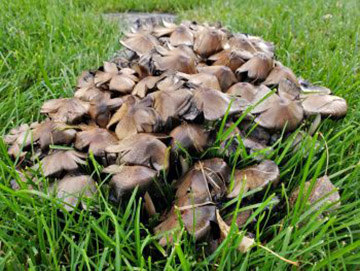
Image Source: organolawn.com
Deciphering the Presence of Fungi in Grass
The sight of mushrooms dotting your otherwise perfect green expanse can be both fascinating and perplexing. Why do these ephemeral structures, the fruiting bodies of a vast underground network, choose your lawn as their stage? The answer lies in the fundamental life cycle of fungi in grass and the specific environmental factors that encourage their growth.
The Hidden Network: Mycelium
Beneath the surface of your lawn, a complex network of fungal threads, called mycelium, thrives. This mycelium is the true organism. Mushrooms are simply the reproductive structures that emerge when conditions are favorable, much like an apple is to an apple tree. The causes of mushrooms in lawn are directly linked to the health and activity of this underground mycelium.
Reasons for Lawn Fungi: A Multifaceted Explanation
Several factors contribute to the appearance of lawn mushrooms. These reasons for lawn fungi are interconnected and often point to a healthy, albeit sometimes overly rich, soil environment.
1. Abundant Organic Matter
Grass clippings, fallen leaves, thatch (dead grass at the base of the plant), buried wood chips, or even animal waste provide a feast for fungi. The mycelium breaks down this organic material, returning nutrients to the soil. This decomposition process is essential for a healthy lawn ecosystem, and the mushrooms are a visible sign of this crucial work.
- Grass Clippings: Leaving grass clippings on the lawn, especially if they are long and dense, creates a readily available food source.
- Thatch Buildup: A thick layer of thatch can trap moisture and provide a perfect substrate for fungal growth.
- Buried Debris: Old roots, branches, or even construction debris buried beneath the soil can serve as long-term food sources for certain types of fungi.
2. Moisture Availability
Fungi, like most living organisms, require water to survive and reproduce. Periods of heavy rain, overwatering, or even dew can create the moist conditions necessary for mushrooms to emerge.
- Seasonal Rainfall: Spring and fall are common times for mushroom sightings due to increased precipitation.
- Irrigation Practices: Frequent or excessive watering can saturate the soil, promoting fungal activity.
- Shady, Damp Areas: Spots in the lawn that receive less sunlight and retain moisture longer are prime locations for mushrooms.
3. Soil Type and pH
Certain soil types and pH levels can be more conducive to fungal growth. While fungi can adapt to a wide range of conditions, some species prefer more acidic or alkaline environments.
- Compacted Soil: Compacted soil can hinder drainage, leading to increased moisture retention, which benefits many fungi.
- Soil Imbalances: While less direct, significant imbalances in soil nutrients can sometimes indirectly favor fungal proliferation.
4. Temperature Fluctuations
While moisture is key, temperature also plays a role. Many fungi thrive in moderate temperatures, making early spring and autumn prime seasons for mushroom appearances.
Common Lawn Fungi and Their Roles
Several types of common lawn fungi are responsible for the mushrooms we see. It’s important to remember that most of these fungi are beneficial, playing a vital role in the decomposition cycle.
Fairy Rings
Perhaps the most striking manifestation of fungi in grass is the fairy ring. These are circular patterns of mushrooms that appear in the lawn. The mycelium grows outwards from a central point, and the mushrooms mark the edge of this expanding colony.
- How They Form: The mycelium consumes nutrients at the leading edge of the ring, often depleting the soil and causing the grass within the ring to turn brown or grow more vigorously due to the released nutrients.
- Types of Fungi: Many different fungi can cause fairy rings, including Marasmius oreades (the “Marasmius mushroom”) and Agaricus campestris (the field mushroom).
Saprophytic Fungi
The majority of lawn mushrooms are saprophytic, meaning they feed on dead organic matter. They are nature’s recyclers, breaking down complex organic compounds into simpler substances that plants can use.
- Decomposers: They are essential for nutrient cycling in the soil.
- Examples: Many common mushroom species, like the small brown mushrooms often found in clusters, fall into this category.
Mycorrhizal Fungi
Less commonly seen as distinct mushrooms, mycorrhizal fungi form symbiotic relationships with grass roots. They extend the plant’s root system, helping it absorb water and nutrients, while the fungi receive sugars from the plant. Sometimes, when conditions are right, they will also produce mushrooms.
- Beneficial Association: These are beneficial lawn fungi that contribute to the overall health and resilience of the turf.
The Lawn Health and Fungi Connection
The presence of lawn mushrooms can sometimes be an indicator of lawn health and fungi. While mushrooms themselves are not typically harmful to the grass, their appearance can signal underlying issues or highlight beneficial processes.
What Mushrooms Indicate About Your Lawn
- Healthy Soil Ecosystem: Often, mushrooms are a sign of a healthy soil teeming with microbial life, including beneficial fungi. The decomposition of organic matter is a positive sign for soil health.
- Thatch and Debris: A persistent or widespread mushroom problem might suggest excessive thatch buildup or the presence of buried organic debris that needs addressing.
- Moisture Imbalances: Frequent mushroom outbreaks could indicate overwatering or poor drainage, which can stress the grass.
Managing Lawn Fungi
While many fungi are beneficial, if you find the mushrooms unsightly or suspect underlying issues, there are management strategies.
Dealing with Mushroom Growth
- Remove Mushrooms: The simplest approach is to manually remove the mushrooms as they appear. This doesn’t harm the mycelium but prevents spore dispersal and improves aesthetics.
- Reduce Thatch: Aerating your lawn and dethatching can help reduce the organic matter that fungi feed on.
- Improve Drainage: Address any areas of poor drainage. Aeration can help here too.
- Adjust Watering: Ensure you are watering deeply but infrequently, allowing the soil surface to dry out between waterings.
- Remove Organic Debris: Rake up excess grass clippings and leaves. Consider removing any buried woody debris if possible.
When to Seek Expert Advice
If you have a recurring or widespread mushroom problem, or if you suspect the presence of highly toxic species, consulting a lawn care professional or a mycologist for mushroom identification lawn is advisable.
Mushroom Identification Lawn: A Cautionary Note
Attempting mushroom identification lawn can be a dangerous game. Many mushrooms look alike, and even experts can struggle with precise identification.
Dangers of Edibility
- Toxicity: Some toadstools in yard are highly poisonous and can cause severe illness or even death if ingested.
- Misidentification: Even if a mushroom appears edible, a slight misidentification can have dire consequences.
- Recommendation: Unless you are a trained mycologist, never consume mushrooms found in your lawn.
Characteristics to Observe (For Informational Purposes Only)
If you are curious about the common lawn fungi, observing their characteristics can be educational, but remember this is not for consumption purposes.
| Feature | Description |
|---|---|
| Cap Shape | Bell-shaped, convex, flat, funnel-shaped |
| Cap Color | White, brown, red, yellow, grey, cream, olive |
| Cap Texture | Smooth, scaly, sticky, dry, velvety |
| Gills/Pores | Gills (blade-like), pores (tube-like), teeth |
| Gill Attachment | Attached to stem, free from stem, decurrent |
| Stem (Stipe) | Presence or absence, shape, texture, color |
| Ring (Annulus) | Presence or absence on the stem |
| Volva (Cup) | Presence or absence at the base of the stem |
| Spore Print | Color of spores when dusted on a surface (complex to obtain) |
| Habitat | Growing on wood, in grass, in soil |
Disclaimer: This table is for observational purposes only and should not be used for consumption decisions.
Are Lawn Mushrooms Harmful?
For the most part, lawn mushrooms are not directly harmful to your grass. In fact, their presence often signifies a healthy soil biome. The mycelium, the organism that produces the mushroom, is actively decomposing organic matter, which is a natural and beneficial process.
- Mycelium’s Role: The underground network of mycelium plays a vital role in breaking down dead plant material and returning nutrients to the soil, which can benefit your lawn’s overall health.
- Grass Growth: In some cases, the nutrients released by fungi can even lead to lusher grass growth in the immediate vicinity of the mycelium.
However, there are some indirect considerations:
- Aesthetic Concerns: Many homeowners find mushrooms unsightly and prefer to maintain a perfectly manicured lawn.
- Fairy Rings: While a natural phenomenon, fairy rings can sometimes create dead or overly green patches in the lawn, which can be aesthetically displeasing.
- Toxicity: The primary concern with mushrooms is their potential toxicity if ingested. This is why caution is paramount.
Maximizing Lawn Health and Minimizing Unwanted Fungi
The goal is often to foster a healthy lawn that is less reliant on fungal decomposition of excessive organic matter or that can better tolerate the presence of beneficial lawn fungi.
Proper Lawn Care Practices
Implementing good lawn care practices is the best way to manage the conditions that encourage mushroom growth.
- Aeration: Regularly aerating your lawn helps to relieve soil compaction, improving air circulation and water drainage. This makes the soil less hospitable to fungi that thrive in damp, compacted conditions.
- Dethatching: Thatch is a layer of dead and living grass stems and roots that accumulates at the soil surface. A thick thatch layer traps moisture and provides a food source for fungi. Dethatching removes this layer.
- Watering Wisely: Water your lawn deeply but infrequently. This encourages deeper root growth in your grass and allows the soil surface to dry out between waterings, which is less favorable for mushroom development.
- Fertilizing Appropriately: Avoid over-fertilizing, which can lead to excessive grass growth and thatch buildup. Follow recommended fertilization schedules for your grass type.
- Clean Up Debris: Regularly rake leaves and grass clippings. While leaving some clippings can be beneficial for nutrient cycling, excessive accumulation can fuel fungal growth.
- Sunlight: Ensure your lawn receives adequate sunlight. Shady, damp areas are more prone to mushroom growth. Consider trimming overhanging branches if possible.
Introducing Beneficial Lawn Fungi
It’s a paradox, but sometimes, encouraging the right kind of beneficial lawn fungi, like mycorrhizal fungi, can actually help create a more resilient turf that is less susceptible to problems caused by less desirable fungi. These beneficial fungi work in partnership with grass roots to improve nutrient and water uptake. While you can’t directly “introduce” them in the same way you might introduce beneficial insects, maintaining a healthy soil environment with good organic matter and minimal chemical intervention will support these natural allies.
Frequently Asked Questions (FAQ)
Q1: What are the small white mushrooms growing in my yard?
Small white mushrooms are common lawn fungi, often saprophytic, meaning they feed on decaying organic matter in the soil. They are usually harmless to your grass.
Q2: Can I eat the mushrooms from my lawn?
It is strongly advised not to eat any mushrooms found in your lawn. Many toadstools in yard are poisonous, and accurate mushroom identification lawn is crucial and requires expert knowledge.
Q3: Why do mushrooms appear after rain?
Rain provides the necessary moisture that fungi need to reproduce. The water allows the mycelium to develop the mushrooms, which are the reproductive structures that release spores.
Q4: How can I get rid of mushrooms in my lawn?
The most effective way to manage mushrooms is by addressing the underlying causes of mushrooms in lawn. This includes reducing thatch, improving drainage, watering properly, and removing excess organic debris. You can also manually remove the mushrooms as they appear.
Q5: Are mushrooms a sign of a bad lawn?
Not necessarily. Mushrooms are often a sign of a healthy soil ecosystem with plenty of organic matter for fungi in grass to decompose. However, a large number of mushrooms or persistent fairy rings can indicate issues like excessive thatch or poor drainage that should be addressed for optimal lawn health and fungi balance.
Q6: What are fairy rings?
Fairy rings are circular patterns of mushrooms that form in lawns. They are caused by the outward growth of underground fungal mycelium, which consumes nutrients as it spreads.
Q7: Are fairy rings bad for my grass?
Fairy rings themselves are not inherently bad, but the mycelium can sometimes deplete nutrients or moisture in the soil, leading to brown or darker green rings of grass. Proper lawn care can help manage their appearance.
Q8: What is thatch and how does it relate to mushrooms?
Thatch is a layer of dead and living grass material that accumulates at the base of grass plants. It traps moisture and provides a food source for many common lawn fungi, thus promoting mushroom growth.
Q9: What should I do if I find mushrooms after fertilizing?
Fertilizing can sometimes stimulate grass growth and lead to more organic matter. If you see mushrooms after fertilizing, it might indicate that the fertilizer has provided a food source for the fungi. Continue with good lawn maintenance practices, and the mushrooms should dissipate as the lawn balances out.
Q10: Are there any beneficial lawn fungi?
Yes, mycorrhizal fungi are beneficial lawn fungi that form symbiotic relationships with grass roots, helping them absorb nutrients and water. The presence of other saprophytic fungi is also a natural part of a healthy soil ecosystem, as they break down organic matter.