
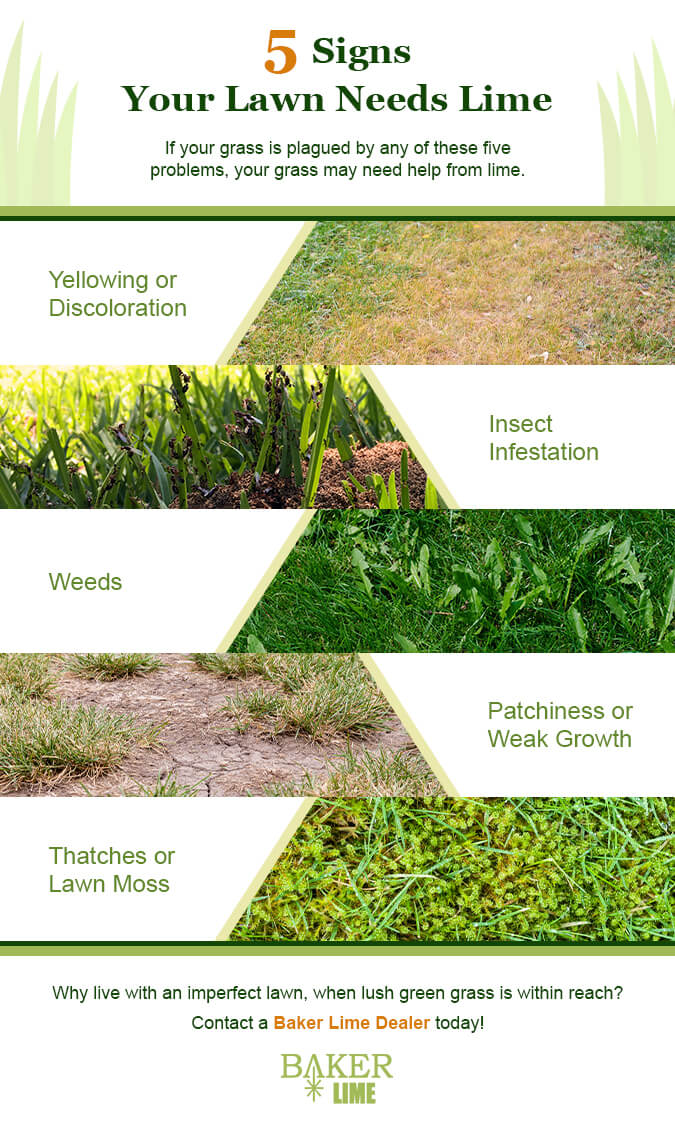
Image Source: www.bakerlime.com
How Much Lime Should I Put On My Lawn?
Determining the correct amount of lime for your lawn is crucial for healthy grass, and the answer depends on your soil’s pH and the type of lime you use. Generally, you’ll apply between 2.5 and 5 pounds of granular lime per 100 square feet, but a soil test is the most accurate way to know for sure.
The Quest for a Greener, Healthier Lawn
Many homeowners dream of a lush, vibrant lawn that’s the envy of the neighborhood. While regular mowing, watering, and fertilizing are key components, there’s another crucial element that often gets overlooked: soil health. Your soil’s pH level plays a significant role in how well your grass can absorb nutrients and thrive. When soil becomes too acidic, it can hinder grass growth, leading to a weaker, less appealing lawn. This is where lime comes in.
What is Lime and Why Does Your Lawn Need It?
Lime, in the context of lawn care, refers to finely ground limestone, typically calcium carbonate or a mixture of calcium and magnesium carbonates (dolomitic lime). Its primary function is to raise the pH of acidic soil, making it more alkaline. This process, known as liming, creates a more favorable environment for turfgrass to grow and flourish.
The Science Behind Soil pH
Soil pH is a measure of how acidic or alkaline your soil is. It’s measured on a scale of 0 to 14, with 7 being neutral. Below 7 is acidic, and above 7 is alkaline. Most turfgrass species prefer a slightly acidic to neutral pH range, typically between 6.0 and 7.0.
When soil becomes too acidic (a low pH), several things happen that negatively impact your lawn:
- Nutrient Availability: Essential nutrients like phosphorus, potassium, and calcium become less available to grass roots. While these nutrients might be present in the soil, the acidic conditions prevent the grass from absorbing them effectively.
- Aluminum Toxicity: In highly acidic soils, aluminum can become more soluble, reaching toxic levels for grass roots. This can stunt growth and cause yellowing.
- Microbial Activity: Beneficial soil microbes, crucial for nutrient cycling and soil structure, thrive in a more neutral pH range. Acidic conditions can reduce their populations, further impacting nutrient availability.
- Weed and Moss Proliferation: Many common lawn weeds and moss species tolerate and even prefer acidic conditions. A healthy lawn in the right pH range is better equipped to outcompete these unwanted guests.
Benefits of Liming Your Lawn
Applying lime to your lawn can offer a multitude of benefits, transforming a struggling patch of grass into a robust and healthy one.
- Improved Nutrient Uptake: By raising the soil pH to the optimal range, lime unlocks essential nutrients, allowing your grass to absorb them more efficiently. This leads to greener, denser growth.
- Enhanced Root Development: A more favorable soil pH promotes stronger, deeper root systems. This makes your lawn more drought-tolerant and resilient to stress.
- Reduced Aluminum Toxicity: Liming neutralizes soluble aluminum, preventing it from damaging grass roots and hindering growth.
- Suppressed Weed and Moss Growth: As grass becomes healthier and more vigorous in the corrected pH, it naturally outcompetes many common weeds and mosses.
- Increased Soil Microbial Activity: A balanced pH supports a healthy population of beneficial soil microorganisms, which contribute to a vibrant and fertile soil ecosystem.
- Better Fertilizer Efficiency: When your soil pH is optimal, the fertilizers you apply will be more effectively utilized by your grass, meaning you get more bang for your buck and your lawn gets the nutrients it needs.
When to Apply Lime to Your Lawn
The timing of your lawn lime application is as important as the amount. Ideally, the best times to apply lime are:
- Fall: This is often considered the prime time to apply lime. The cooler temperatures and increased moisture of fall allow the lime to gradually dissolve and begin adjusting the soil pH without stressing the grass during hot summer months. It also gives the lime time to work its magic before the next growing season.
- Early Spring: While fall is preferred, early spring can also be a good time, provided the ground isn’t frozen and there are no immediate plans for overseeding with cool-season grasses. The lime will have time to react before the heat of summer.
Avoid applying lime during:
- Peak Summer Heat: Applying lime during hot, dry weather can stress your lawn and potentially burn the grass.
- Dormant Periods: While not as detrimental as summer, applying lime when the grass is completely dormant and not actively growing may lead to slower results.
- When Overseeding (Immediately Before/After): If you are planning to overseed your lawn, it’s generally best to apply lime a few weeks before or after the seeding process to avoid interfering with seed germination.
How Much Lime Should I Put On My Lawn? Deciphering Your Soil Needs
This is the golden question, and the most accurate answer lies with a soil test. Without a soil test, you’re essentially guessing, which can lead to over-liming (which can cause other problems) or under-liming (which won’t solve your pH issue).
The Importance of a Soil Test
A soil test from your local cooperative extension office or a reputable garden center will provide a detailed analysis of your soil’s pH, nutrient levels, and organic matter content. This information is vital for determining the precise amount of lime required. The test results will typically come with specific recommendations for liming based on your soil type and desired pH.
What to Look for in a Soil Test Report:
- pH Level: This is the most critical piece of information for determining liming needs.
- Lime Recommendation: The report will usually state the recommended rate of lime per 1000 square feet.
- Nutrient Levels: While not directly related to liming amounts, understanding your soil’s nutrient status helps in creating a comprehensive lawn care plan.
Estimating Lime Needs Without a Soil Test
If you absolutely cannot get a soil test, you can make an educated guess based on common lawn needs, but proceed with caution. Most lawns in areas with sufficient rainfall and naturally acidic soil may benefit from liming.
General Guidelines (Use with Caution):
- For slightly acidic soil (pH 5.5 – 6.0): Apply approximately 2.5 to 3 pounds of granular lime per 100 square feet.
- For moderately acidic soil (pH 5.0 – 5.5): Apply approximately 3 to 4 pounds of granular lime per 100 square feet.
- For very acidic soil (pH below 5.0): Apply approximately 4 to 5 pounds of granular lime per 100 square feet.
Important Considerations for Estimation:
- Type of Lime: The form of lime you use affects how quickly it works and the application rate.
- Soil Type: Clay soils are more resistant to pH changes than sandy soils, so they may require slightly more lime over time.
- Previous Liming: If you’ve limed your lawn recently, you’ll need to factor that in.
Types of Lime for Your Lawn
When you head to the garden center, you’ll notice different types of lime available. Understanding their differences will help you make the best choice for your lawn.
Granular Lime for Lawn
This is the most common and user-friendly type of lime for homeowners. Granular lime is processed and formed into small pellets, making it easier to spread evenly and reducing dust.
- Pros: Easy to spread, less dusty, generally safe for most lawns when applied correctly.
- Cons: Can be slightly slower to react and work into the soil compared to powdered forms.
Powdered Lime (Agricultural Lime)
This is a finely ground form of limestone. While it can be very effective, it’s also much dustier and can be harder to spread evenly without specialized equipment.
- Pros: Reacts quickly with soil, can be very effective.
- Cons: Very dusty, difficult to spread evenly, can be irritating to skin and eyes.
Other Lime-Based Products
You might also encounter products like:
- Hydrated Lime (Calcium Hydroxide): This is a more caustic form of lime that reacts very quickly. It is generally not recommended for lawn use as it can easily burn grass if over-applied.
- Quicklime (Calcium Oxide): This is the most reactive and potentially dangerous form of lime. It generates heat when mixed with water and can cause severe burns. Never use quicklime on your lawn.
Recommendation: Stick to granular lime for ease of use and safety. If you choose powdered lime, be prepared for a dustier application and ensure you wear appropriate protective gear.
How Often to Lime Lawn
The frequency of liming depends on your soil’s pH and how quickly it tends to drift back towards acidity.
- Soil Test Driven: The most reliable approach is to re-test your soil every 2-3 years. Your soil test report will guide you on when to reapply lime.
- General Maintenance: For most lawns in areas that naturally develop acidic soil, liming once every 1 to 2 years is usually sufficient.
- Observation: Keep an eye on your lawn’s health. If you notice signs of stress, poor growth, or increased moss and weed presence, it might be time for a soil test and potential liming.
Avoid Over-Liming: Applying lime too frequently or in excessive amounts can raise the soil pH too high, making it difficult for your grass to absorb certain nutrients, particularly micronutrients like iron. This can lead to yellowing of the grass (chlorosis).
Calculating Lime Coverage Rate
Understanding lime coverage rate is essential for proper application. Lime products will typically state their recommended application rate on the packaging, usually in pounds per 1000 square feet.
Example Calculation:
Let’s say your soil test recommends applying 4 pounds of granular lime per 1000 square feet, and your lawn is 5000 square feet.
- Total lime needed = (Recommended rate per 1000 sq ft) × (Your lawn size in 1000 sq ft units)
- Total lime needed = 4 lbs/1000 sq ft × 5 (since 5000 sq ft is 5 units of 1000 sq ft)
- Total lime needed = 20 pounds
Important: Always read and follow the specific instructions on the lime product packaging. Different products have different densities and reactivities, leading to varying recommended application rates.
Applying Lime to Your Lawn: Tools and Techniques
Once you know how much lime to apply, the next step is to spread it correctly.
Lime Spreaders for Lawns
The most efficient and even way to apply granular lime is by using a spreader. There are two main types:
- Broadcast Spreaders: These have a rotating disc that casts the material outwards in a wide arc. They are good for covering large areas quickly and evenly. Many lawn mowers also have attachments that function as broadcast spreaders.
- Drop Spreaders: These have a hopper and a mechanism that drops the material directly beneath the spreader as you walk. They are excellent for precise application, especially in smaller or irregularly shaped areas, and help avoid overlapping or missing spots.
Tips for Using a Spreader:
- Calibrate Your Spreader: Most spreaders have settings for different products. Refer to the lime packaging and the spreader’s manual to set the correct rate.
- Overlap Passes Slightly: For broadcast spreaders, overlap your passes by a few inches to ensure complete coverage and avoid striping.
- Walk at a Consistent Pace: This helps ensure an even application rate.
- Sweep or Wash Off Sidewalks and Driveways: Lime can be unsightly and corrosive on hard surfaces. Sweep or rinse any spills immediately.
Manual Application (for Small Areas)
For very small lawns or specific problem areas, you might be able to apply lime by hand.
- Use a Garden Fork: Make small holes in the soil before applying lime to help it penetrate.
- Spread Evenly: Distribute the lime as uniformly as possible over the surface.
- Water In: Lightly water the area after application to help the lime start dissolving.
What is Lime Fertilizer for Lawns?
It’s important to clarify that lime is not a fertilizer in the traditional sense. Fertilizers provide nutrients like nitrogen, phosphorus, and potassium that grass needs for growth. Lime, on the other hand, is a soil amendment that improves the soil’s chemical properties by adjusting its pH.
However, lime does contain essential plant nutrients, primarily calcium and sometimes magnesium (in dolomitic lime). These are vital for plant health, contributing to cell wall structure and chlorophyll production. So, while not a fertilizer that provides macronutrients for rapid growth, lime does contribute beneficial minerals to the soil.
Factors Influencing Lime Requirements
Several factors contribute to how much lime your lawn might need:
- Rainfall: Areas with high rainfall tend to leach calcium and magnesium from the soil, making it more acidic over time.
- Fertilizer Use: Some nitrogen fertilizers, particularly ammonium-based ones, can contribute to soil acidification as they are used by the grass.
- Underlying Geology: The natural composition of the soil and bedrock in your region can influence its inherent pH.
- Type of Grass: While most turfgrasses prefer similar pH ranges, some species are more tolerant of slightly acidic conditions than others.
Troubleshooting Common Liming Issues
Even with careful application, you might encounter problems.
Yellowing Grass After Liming
If your lawn turns yellow after applying lime, it’s often a sign of over-liming or nutrient lockout.
- Cause: Excessively high pH can prevent the grass from absorbing iron and other micronutrients.
- Solution: Stop liming. Conduct a soil test to confirm the pH. If it’s too high, you may need to apply elemental sulfur to gradually lower the pH. In the meantime, a foliar application of chelated iron can help green up the grass.
No Improvement After Liming
If you’ve applied lime and don’t see any improvement in your lawn’s health, consider these possibilities:
- Not Enough Lime: You may not have applied enough to significantly alter the soil pH.
- Incorrect Timing: Applying lime at the wrong time of year can slow down its effectiveness.
- Other Soil Issues: The problem might not be pH-related. Your lawn could be suffering from compaction, poor drainage, nutrient deficiencies, or disease. A soil test is crucial here.
Frequently Asked Questions (FAQ)
Q1: Can I mix lime with fertilizer?
A1: It is generally not recommended to mix lime and most fertilizers, especially ammonium-based ones, in the spreader or in storage. The reaction between lime and certain fertilizers can cause them to lose effectiveness or create a dust that is irritating and difficult to handle. Apply them separately. If applying on the same day, apply one product, then use the spreader to apply the other.
Q2: How long does it take for lime to work?
A2: The speed at which lime works depends on several factors, including the type of lime, its fineness, soil moisture, temperature, and soil type. Granular lime typically takes several weeks to months to fully react and begin significantly changing the soil pH. The best results are seen over a period of 6 months to a year.
Q3: What if my soil is alkaline (high pH)?
A3: If your soil test indicates an alkaline pH, you do not need to apply lime. Instead, you might consider applying elemental sulfur or other acidifying amendments to lower the pH, but this should be done cautiously and based on soil test recommendations.
Q4: How much lime should I put on my lawn if I have pets or children?
A4: Lime itself is generally safe for pets and children once it’s been applied and watered in. However, it’s always a good practice to keep them off the lawn for a few hours after application until the lime has settled and is no longer dusty. Always follow the product’s safety instructions.
Q5: What is the difference between calcitic lime and dolomitic lime?
A5: Calcitic lime is primarily calcium carbonate, while dolomitic lime contains both calcium and magnesium carbonate. If your soil test indicates a deficiency in magnesium, dolomitic lime is a good choice. If magnesium levels are adequate, calcitic lime is perfectly fine. Both will raise soil pH.
Conclusion: The Path to a Healthier Lawn Starts with the Soil
Achieving a truly beautiful and healthy lawn goes beyond surface-level treatments. It involves nurturing the very foundation of your turf: the soil. By understanding your soil’s pH and applying lime judiciously when needed, you create an environment where grass can thrive, absorb nutrients effectively, and resist disease and stress. Always prioritize a soil test for precise recommendations, and remember that consistent, informed care is the key to a lush, green carpet of grass that you can be proud of.