
One yard of mulch can cover approximately 100 square feet at a depth of 3 inches. This guide will help you figure out exactly how much mulch you need for your garden and landscape projects.
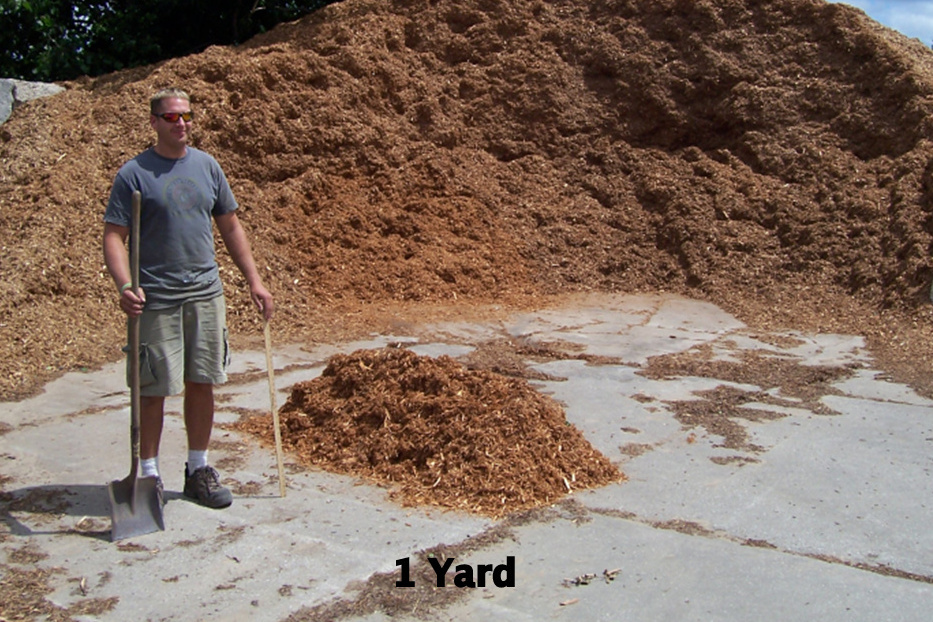
Image Source: klsupplies.com
Fathoming Your Mulch Needs
Planning your garden or landscape projects often starts with buying mulch. It’s a fantastic way to make your yard look great, keep weeds down, and help your plants thrive. But a common question for many gardeners is: how much mulch do I actually need? This isn’t just about how many bags to grab from the store; it’s about getting the right amount for your space.
When you’re buying mulch by the yard, you’re purchasing a bulk material. This is often more cost-effective than buying bags, especially for larger areas. However, it can be a bit tricky to visualize how much a “yard” of mulch really is and how far it will stretch. This guide is here to help you master the art of calculating mulch needs.
The key to knowing how much mulch to buy lies in understanding mulch coverage. This involves a few simple calculations based on the area you want to cover and the desired depth of the mulch layer. We’ll break down the math so it’s easy to follow, even if numbers aren’t your favorite thing.
The Basics of Mulch Coverage
Before we dive into calculations, let’s clarify what a “yard” of mulch means in this context. When you buy mulch by the yard, it refers to a cubic yard of mulch. This is a measure of volume, not weight. Think of it like this: a cubic yard is a cube that is 3 feet wide, 3 feet long, and 3 feet high.
The amount of area one cubic yard covers depends directly on the depth you spread it. A general rule of thumb for good landscape mulch coverage and garden mulch calculations is to aim for a depth of 2 to 4 inches.
- 2 inches: Good for areas with less weed pressure or for a lighter aesthetic.
- 3 inches: The most common and recommended depth for a good balance of weed suppression, moisture retention, and temperature regulation.
- 4 inches: Ideal for areas with significant weed problems or to provide extra moisture retention during dry spells.
We will focus on the most common recommendation of 3 inches for our examples.
Deconstructing Mulch Coverage: The Math Made Simple
So, how far does one cubic yard of mulch actually spread? Let’s break down the conversion.
A cubic yard is equal to 27 cubic feet (3 ft x 3 ft x 3 ft = 27 cu ft).
To calculate how much area a cubic yard covers, we need to consider the depth you plan to spread it.
Calculating Mulch Needs: Area and Depth
The formula to determine your mulch needs is straightforward:
Area to Cover (sq ft) x Desired Depth (inches) / 12 (inches per foot) = Cubic Feet Needed
Then, to convert cubic feet to cubic yards:
Cubic Feet Needed / 27 (cubic feet per yard) = Cubic Yards Needed
Let’s simplify this with a direct calculation for common depths:
- At 2 inches deep: One cubic yard of mulch covers approximately 162 square feet.
- (27 cubic feet / (2 inches / 12 inches/foot)) = 27 / (1/6) = 27 * 6 = 162 sq ft
- At 3 inches deep: One cubic yard of mulch covers approximately 108 square feet.
- (27 cubic feet / (3 inches / 12 inches/foot)) = 27 / (1/4) = 27 * 4 = 108 sq ft
- At 4 inches deep: One cubic yard of mulch covers approximately 81 square feet.
- (27 cubic feet / (4 inches / 12 inches/foot)) = 27 / (1/3) = 27 * 3 = 81 sq ft
The Mulch Coverage Calculator in Action
Many people find it easier to use a mulch coverage calculator. These online tools do the math for you. You typically input the length and width of the area you want to mulch, and the desired depth. The calculator then tells you how many cubic yards or bags you need.
If you prefer to do it yourself, you can simply measure the length and width of your garden bed or landscaped area.
Example:
Let’s say you have a garden bed that is 10 feet long and 5 feet wide.
- Calculate the area: 10 ft x 5 ft = 50 square feet.
- Decide on your depth: You want to spread mulch at 3 inches deep.
- Use the coverage chart or formula:
- Using the 3-inch depth coverage: 50 sq ft / 108 sq ft per cubic yard = 0.46 cubic yards.
You would need just under half a cubic yard for this small bed. Since mulch is often sold in full or half-yard increments, you would likely buy 0.5 cubic yards.
Converting Bags to Yards: How Many Bags of Mulch Per Yard?
For smaller projects, you might be looking at buying mulch in bags rather than by the yard. This is where it’s helpful to know how many bags of mulch per yard you’re essentially getting.
Bagged mulch sizes can vary, but a common size is 2 cubic feet per bag.
To figure out how many bags of mulch per yard, we do this calculation:
- Cubic feet in a cubic yard: 27 cubic feet.
- Number of 2 cu ft bags: 27 cubic feet / 2 cubic feet per bag = 13.5 bags.
So, one cubic yard of mulch is roughly equivalent to 13 to 14 standard 2-cubic-foot bags. If the bags you find are a different size, simply divide 27 by the cubic foot volume of the bag.
Example:
If you have a small flower bed that is 4 feet by 8 feet and you want 3 inches of mulch:
- Area: 4 ft x 8 ft = 32 sq ft.
- Depth: 3 inches.
- Cubic yards needed: 32 sq ft / 108 sq ft per cubic yard = 0.3 cubic yards.
- Using bags: If you buy 2 cu ft bags:
- You need 32 sq ft of coverage at 3 inches deep. The volume needed is: (32 sq ft * 3 inches) / 12 inches/foot = 8 cubic feet.
- Number of bags: 8 cubic feet / 2 cubic feet per bag = 4 bags.
It’s always a good idea to buy a little extra, especially if you’re covering a large area or if the mulch is likely to settle or decompose over time.
Factors Influencing Mulch Coverage
While our calculations provide a solid baseline, a few factors can affect your actual mulch spread rate:
Terrain and Shape of the Area
Irregularly shaped beds, slopes, and winding paths can be harder to cover uniformly. You might use slightly more mulch to ensure even coverage, especially on slopes where mulch can wash away.
Type of Mulch
Different types of mulch have varying densities and particle sizes.
- Wood chips and bark mulches: These tend to be lighter and bulkier, and might spread a bit further.
- Shredded mulches: These can pack down more tightly.
- Compost or soil amendments: These are denser and may require more volume to achieve the same visual coverage as lighter mulches.
Your mulch depth coverage is the most critical factor. Whether you choose 2, 3, or 4 inches will significantly impact how far one cubic yard goes.
Compaction and Settling
Mulch, especially organic types like wood chips and shredded bark, will settle and compact over time as it decomposes and moisture is absorbed. If you spread it at 3 inches, it might settle to 2 inches faster than you expect. Spreading slightly thicker initially (e.g., 3.5 inches if aiming for a settled 3 inches) can be a good strategy for longer-lasting coverage.
Waste and Spillage
When buying in bulk, there’s always a chance of some spillage during delivery or when transferring from a truck or trailer to your wheelbarrow. Factor in a small buffer for this.
Using a Mulch Coverage Chart
A mulch coverage chart is a quick visual reference. It typically lists common area sizes and the amount of mulch needed for different depths.
Here’s a simplified example of a mulch coverage chart based on square footage and a 3-inch depth:
| Area (sq ft) | Cubic Yards Needed (3-inch depth) | Cubic Feet Needed (3-inch depth) | Approx. 2 cu ft Bags Needed |
|---|---|---|---|
| 50 | 0.46 | 12.5 | 7 |
| 100 | 0.93 | 25 | 13 |
| 150 | 1.39 | 37.5 | 19 |
| 200 | 1.85 | 50 | 25 |
| 250 | 2.31 | 62.5 | 32 |
| 300 | 2.78 | 75 | 38 |
| 400 | 3.70 | 100 | 50 |
| 500 | 4.63 | 125 | 63 |
| 600 | 5.56 | 150 | 75 |
| 700 | 6.48 | 175 | 88 |
| 800 | 7.41 | 200 | 100 |
| 900 | 8.33 | 225 | 113 |
| 1000 | 9.26 | 250 | 125 |
Note: This chart is for approximation. Always round up to the nearest practical quantity when purchasing.
Practical Application: Measuring Your Space
To use this chart or a mulch coverage calculator effectively, you first need to measure your garden beds.
For Rectangular or Square Beds:
Measure the length and the width. Multiply them together to get the square footage.
* Example: A bed that is 15 feet long and 6 feet wide has an area of 15 x 6 = 90 square feet.
For Irregularly Shaped Beds:
This can be a bit trickier. You can break the irregular shape into smaller, more manageable geometric shapes (rectangles, squares, triangles, circles). Calculate the area of each section and add them up.
- Circles: Area = π * radius² (where radius is half the diameter)
- Triangles: Area = 0.5 * base * height
Alternatively, you can use string to outline the area and then measure the length of the string if it were laid out in a straight line, and then estimate the average width. This is less precise but can work for rough estimates.
Planning Your Mulch Purchase: Buying Mulch by the Yard
When you are ready to buy, you’ll often have the option of buying mulch by the yard. This is usually done through landscape supply companies, garden centers, or local nurseries.
Benefits of Buying by the Yard
- Cost-Effective: For larger areas, buying in bulk (by the cubic yard) is almost always cheaper per cubic foot than buying bags.
- Less Waste: Fewer bags mean less plastic to dispose of.
- Convenience for Large Jobs: Delivery services can bring a cubic yard or more directly to your home, saving you multiple trips to the store and the hassle of loading and unloading many bags.
What to Expect When Buying Mulch by the Yard
- Delivery: Many suppliers offer delivery, often for a fee. They typically dump the mulch in a designated spot on your driveway or lawn.
- Wheelbarrowing: You’ll need a wheelbarrow to move the mulch from the delivery spot to your garden beds. This can be a workout!
- Spreading: Use a rake or shovel to spread the mulch evenly to your desired depth.
Achieving Proper Mulch Depth Coverage
The mulch depth coverage you choose is crucial for its effectiveness. Too little mulch and it won’t do its job well. Too much can sometimes hinder plants or create problems.
Recommended Depths Recap:
- 2 inches: Provides a light layer of weed suppression and moisture retention. Suitable for areas with minimal weed pressure or where you want to avoid covering the crowns of small plants.
- 3 inches: The “sweet spot.” Offers excellent weed control, conserves soil moisture, helps regulate soil temperature, and can improve soil health as it breaks down. This is the standard for most landscape mulch coverage.
- 4 inches: Offers maximum weed suppression and moisture retention. Be cautious not to pile mulch against the stems or trunks of plants, as this can encourage rot and disease. Ensure good air circulation around plant bases.
How to Measure Mulch Depth
The easiest way to ensure you’re achieving the correct mulch depth coverage is to use a ruler or a tape measure as you spread.
- Spread a section of mulch.
- Gently push the ruler down into the mulch until it hits the soil.
- Read the measurement on the ruler.
- Add or remove mulch as needed to reach your target depth.
Avoiding Common Mulching Mistakes
- Mulch Volcanoes: Piling mulch high around tree trunks or the base of shrubs. This suffocates roots, traps moisture, and can lead to disease and pest problems. Keep mulch a few inches away from stems and trunks.
- Too Thin: Spreading mulch too thinly (less than 2 inches) won’t effectively suppress weeds or retain moisture.
- Too Thick: While beneficial in some ways, excessively thick layers (over 4-5 inches) can prevent water and air from reaching the soil and roots. It can also create a barrier that inhibits natural seed germination for beneficial groundcovers.
- Applying to Wet Soil: Mulch is best applied after rain when the soil is moist but not waterlogged.
Frequently Asked Questions (FAQ)
Q1: How much area does 1 cubic yard of mulch cover at 2 inches deep?
A1: One cubic yard of mulch covers approximately 162 square feet when spread 2 inches deep.
Q2: What is the average coverage for 1 cubic yard of mulch?
A2: The average coverage for 1 cubic yard of mulch is about 108 square feet when spread at the recommended depth of 3 inches.
Q3: Can I use a mulch coverage calculator if I have a circular garden bed?
A3: Yes, most mulch calculators can handle different shapes, or you can calculate the area of a circle (Area = π * radius²) and input that measurement.
Q4: How do I calculate how many bags of mulch per yard I need?
A4: If bags are 2 cubic feet, then one cubic yard (27 cubic feet) is about 13 to 14 bags. Divide 27 by the cubic foot volume of your specific bag size.
Q5: Is buying mulch by the yard always cheaper?
A5: Generally, yes, for larger projects. The cost per cubic foot is typically lower when buying in bulk compared to individual bags.
Q6: What is the ideal mulch depth for most gardens?
A6: The ideal mulch depth for most gardens is 3 inches, as it balances weed suppression, moisture retention, and soil health.
Q7: How do I estimate the mulch needs for an oddly shaped flower bed?
A7: Break the oddly shaped bed into smaller, regular shapes (rectangles, squares, triangles). Calculate the area of each section and add them together for your total square footage.
By using these guidelines and tools, you can confidently determine exactly how much mulch you need, ensuring your garden looks beautiful and stays healthy. Happy mulching!