
So, how much does one cubic yard of sand weigh? The weight of one cubic yard of sand typically ranges from 2,000 to 3,000 pounds. This significant variation is primarily due to the type of sand and its moisture content.
Fathoming the exact weight of sand involves delving into its properties. It’s not a simple one-size-fits-all answer. The sand density by volume is what dictates how heavy it will be. Whether you’re planning a landscaping project, a construction job, or simply curious about materials, knowing the weight of cubic yard of sand is crucial for budgeting, transportation, and structural calculations. This guide will break down the factors influencing sand’s weight and provide you with the information you need.
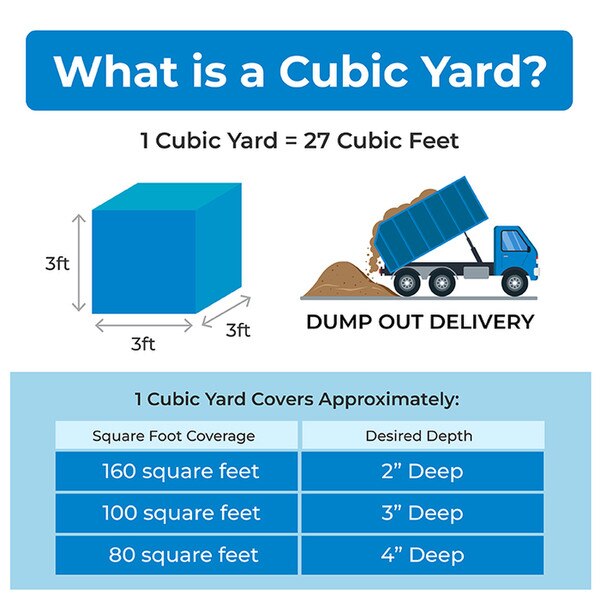
Image Source: www.cumminlandscapesupply.com
The Nuances of Sand’s Weight
When you ask how much does sand weigh per yard, it’s important to remember that “sand” isn’t a singular entity. It’s a term that encompasses a vast array of granular materials. The composition of sand, meaning the minerals and particles that make it up, plays a significant role in its density and, consequently, its weight.
Factors Influencing Sand Weight
Several key elements contribute to the variability in sand’s weight:
- Type of Sand: Different mineral compositions lead to different densities. For example, silica sand (quartz) is generally denser than volcanic or shell-based sands.
- Moisture Content: Wet sand is always heavier than dry sand. Water adds significant weight.
- Particle Size and Shape: Finer, rounded grains can pack more tightly than coarser, angular grains, affecting the overall density.
- Compaction: How the sand is packed (loose versus compressed) also influences its weight per cubic yard.
Typical Sand Weight Per Yard
For general purposes, when people inquire about how much does sand weigh per yard, they are often thinking of common construction or landscaping sands. These typically fall into the range mentioned earlier.
- Dry Sand: A cubic yard of dry sand can weigh around 2,000 to 2,500 pounds.
- Wet Sand: As moisture content increases, so does the weight. Wet sand can easily reach 2,800 to 3,000 pounds or even more per cubic yard.
Deciphering Sand Density by Volume
The concept of sand density by volume is central to grasping its weight. Density is defined as mass per unit volume. For sand, this means how much a certain amount of space filled with sand will weigh.
The Role of Bulk Density
The term most often used in this context is bulk density. Bulk density considers the material itself plus the pore spaces between the grains. This is different from the density of the solid mineral particles alone.
- Loose Sand: In a loose state, there are more air pockets, resulting in a lower bulk density.
- Compacted Sand: When sand is compacted, the air pockets are reduced, leading to a higher bulk density and thus a greater weight per cubic yard.
Comparing Different Sand Types
Let’s look at some common sand types and their approximate densities:
| Sand Type | Typical Bulk Density (lbs/ft³) | Approximate Weight per Cubic Yard (lbs) | Notes |
|---|---|---|---|
| Play Sand | 95 – 105 | 2,565 – 2,835 | Typically silica-based, fine-grained. |
| Concrete Sand | 100 – 110 | 2,700 – 2,970 | Coarser than play sand, used in concrete mixes. |
| Fill Sand | 90 – 100 | 2,430 – 2,700 | Often a mix of particle sizes, used for leveling and backfilling. |
| Mason Sand | 98 – 108 | 2,646 – 2,916 | Fine-grained, used for mortar and plaster. |
| River Sand | 95 – 105 | 2,565 – 2,835 | Can vary greatly depending on origin and composition. |
| Washed Sand | 100 – 110 | 2,700 – 2,970 | Washed to remove clay and silt, often for specific applications. |
| Dry Silica Sand | 90 – 100 | 2,430 – 2,700 | Pure quartz, can be lighter if very fine. |
| Wet Sand | 110 – 125+ | 2,970 – 3,375+ | Moisture content significantly increases weight. |
Note: These are approximate values. Actual weights can vary.
Grasping the Weight of Cubic Yard of Sand in Practice
When ordering sand for a project, knowing the weight of cubic yard of sand is essential for several reasons:
Project Planning and Budgeting
- Material Costs: Sand is often sold by the cubic yard or by the ton. If you need a specific tonnage, you’ll need to convert cubic yards to tons (1 ton = 2,000 pounds).
- Delivery Costs: Delivery trucks have weight limits. Knowing the weight of your sand helps ensure you don’t exceed these limits or pay for unnecessary trips.
- Excavation Needs: If you’re backfilling an area, you need to know how much sand it will take to fill it both by volume and by weight.
Transportation and Handling
- Vehicle Capacity: If you’re transporting sand yourself, you need to know the weight capacity of your truck or trailer. A standard half-ton pickup truck, for example, can typically carry about 1,000-1,500 pounds of material safely, which is less than a full cubic yard of sand.
- Equipment Requirements: For large projects, you might need heavy machinery like loaders or dump trucks. Their load capacities are based on weight.
How to Calculate Sand Weight
If you need a precise calculation, you can use a sand weight calculator or perform the calculation yourself if you know the sand density by volume. The basic formula for converting volume to weight is:
Weight = Volume × Density
Steps for Calculation
- Determine the Volume: You know you are dealing with 1 cubic yard.
- Find the Density: Obtain the bulk density of sand for the specific type you are using. This is usually provided by the supplier. It will likely be in pounds per cubic foot (lbs/ft³).
- Convert Units: Since you have cubic yards but density is often in cubic feet, you need to convert. There are 27 cubic feet in 1 cubic yard (3 ft × 3 ft × 3 ft = 27 ft³).
- Calculate:
- Multiply the bulk density of sand (in lbs/ft³) by 27 to get the weight of sand in pounds per cubic yard.
- If your density is already given in pounds per cubic yard, you can use that directly.
Example:
Let’s say you have concrete sand with a bulk density of sand of 105 lbs/ft³.
- Density per cubic yard: 105 lbs/ft³ × 27 ft³/yd³ = 2,835 lbs/yd³
So, one cubic yard of this particular concrete sand weighs approximately 2,835 pounds.
Understanding Loose Sand Weight Per Cubic Yard
The term loose sand weight per cubic yard refers to the weight of sand that hasn’t been compacted. This is how sand typically arrives when delivered in a truck or piled in a yard.
- Air Pockets: Loose sand contains more air pockets between the grains. This reduces the overall density.
- Variability: The degree of “looseness” can vary, impacting the weight. Very fine, uniform sand might pack more loosely than a coarser, angular mix when in a free-flowing state.
For many landscaping and basic construction tasks, you’ll be working with loose sand weight per cubic yard. It’s a good starting point for most estimations.
Weight of Fill Sand Per Cubic Yard
When discussing the weight of fill sand per cubic yard, it’s important to note that “fill sand” is a broad category. It’s often used to level out areas, build berms, or backfill trenches.
- Composition: Fill sand can be a blend of sand, gravel, and sometimes small amounts of soil or fines. This variation means its density can differ.
- Typical Range: As seen in the table, fill sand often falls in the lower to mid-range of sand densities, typically weighing between 2,430 and 2,700 pounds per cubic yard when dry and loose.
- Compaction Factor: If you are compacting fill sand, its weight per cubic yard will increase significantly. This is a critical consideration for foundations and structural fills.
Sand Volume to Weight Conversion Made Simple
The sand volume to weight conversion is a common need for anyone working with sand. The core principle is understanding the density.
Conversion Tools
- Online Calculators: Many websites offer sand weight calculator tools. You input the type of sand and the volume (e.g., cubic yards), and it provides the estimated weight.
- Supplier Information: Always ask your sand supplier for their specific product’s density or typical weight per cubic yard. This is the most accurate source.
Manual Conversion Steps (Recap)
- Identify the sand type.
- Find its dry bulk density (lbs/ft³).
- Multiply density by 27 (the number of cubic feet in a cubic yard).
Example: If a supplier tells you their mason sand weighs 2,700 lbs per cubic yard when dry.
- Weight per cubic foot: 2,700 lbs / 27 ft³ = 100 lbs/ft³ (This is the density).
The Weight of Cubic Yard of Sand in Different States
The state of the sand—dry, damp, or saturated—has a profound effect on its weight.
Dry Sand
Dry sand has the lowest weight per cubic yard. The air within the pore spaces contributes to its volume but not its weight.
Damp Sand
As sand becomes damp, a small amount of water adheres to the grains. This water adds weight without significantly changing the volume. So, damp sand will weigh more than dry sand.
Wet Sand
When sand is thoroughly wet, the pore spaces can fill with water. Water has a density of about 62.4 pounds per cubic foot. This added water can increase the weight of a cubic yard of sand by several hundred pounds.
- A cubic yard is 27 cubic feet.
- If the pore space is filled with water, this adds approximately 27 ft³ × 62.4 lbs/ft³ = 1,684.8 pounds of water to the weight of the sand solids.
While not all pore space will be filled, even a moderate amount of moisture can increase the weight considerably. This is why the weight of cubic yard of sand can vary so dramatically.
How to Calculate Sand Weight for Your Project
To accurately calculate the sand weight needed for your project, follow these steps:
1. Define Your Project Needs
- What is the purpose of the sand? (e.g., filling a trench, creating a sandbox, concrete mix).
- What is the volume required? Measure the dimensions of the area to be filled and calculate the volume in cubic yards.
2. Determine the Sand Type
- Consult project specifications: If it’s a professional project, specifications will likely dictate the sand type.
- Common sense for DIY: For a sandbox, play sand is ideal. For general leveling, fill sand is suitable.
3. Obtain Density Information
- Contact your supplier: This is the most reliable method. Ask for the approximate weight per cubic yard or bulk density (lbs/ft³).
- Use general estimates: If supplier information isn’t available, use the typical ranges provided earlier, understanding these are estimates.
4. Perform the Calculation
- Volume (yd³) × Weight per Cubic Yard (lbs/yd³) = Total Weight (lbs)
- Or, if you have density in lbs/ft³:
- Volume (yd³) × 27 ft³/yd³ × Density (lbs/ft³) = Total Weight (lbs)
Example Calculation for a Sandbox
You need to fill a sandbox that is 8 feet long, 4 feet wide, and 1 foot deep.
- Volume in cubic feet: 8 ft × 4 ft × 1 ft = 32 cubic feet
- Volume in cubic yards: 32 cubic feet / 27 cubic feet/yd³ = 1.185 cubic yards
- Assume play sand density: Let’s use a typical dry density of 100 lbs/ft³.
- Calculate weight: 1.185 yd³ × 100 lbs/ft³ × 27 ft³/yd³ = 3,199.5 pounds
So, you would need approximately 3,200 pounds of dry play sand for your sandbox. This is roughly 1.6 tons.
Frequently Asked Questions (FAQ)
Q1: What is the difference between weight and volume when buying sand?
A1: Volume (cubic yards) refers to the space the sand occupies, while weight (tons or pounds) refers to how heavy it is. Sand is often sold by volume, but for large projects or transportation, knowing the weight is crucial.
Q2: Can I just assume sand weighs a certain amount?
A2: It’s best not to guess. While general estimates exist, the sand density by volume and moisture content can vary significantly. Always try to get information from your supplier for the most accurate weight.
Q3: How does compaction affect the weight of sand?
A3: Compacting sand reduces the air pockets between grains, making it denser. This means that a cubic yard of compacted sand will weigh more than a cubic yard of loose sand.
Q4: What is the typical weight of a cubic yard of gravel compared to sand?
A4: Gravel is generally denser than sand due to the larger, more solid particles and less void space when compacted. A cubic yard of gravel can weigh anywhere from 2,500 to 3,500 pounds or more, depending on the type and size of the aggregate.
Q5: How do I convert cubic yards of sand to tons?
A5: To convert pounds to tons, divide the total weight in pounds by 2,000 (since 1 ton = 2,000 pounds). For example, if a cubic yard of sand weighs 2,700 pounds, it is equal to 2,700 / 2,000 = 1.35 tons.
Q6: Does the color of sand affect its weight?
A6: Generally, the color of sand itself doesn’t significantly impact its weight. The weight is determined by the mineral composition and density of the particles, not their surface color. Variations in color often indicate different mineral types, which do affect density.
Q7: What is the sand volume to weight conversion for wet sand?
A7: Wet sand is heavier. If dry sand weighs 2,500 lbs/yd³, wet sand of the same type could easily weigh 2,800-3,000 lbs/yd³ or more, depending on how saturated it is.
In conclusion, while a general answer to how much does one cubic yard of sand weigh is between 2,000 and 3,000 pounds, the precise figure depends heavily on the sand’s type, moisture content, and compaction. By considering these factors and utilizing tools like a sand weight calculator, you can confidently estimate the weight of sand for any project, ensuring accurate planning and execution.