
A cubic yard of rock can weigh anywhere from 1,200 to 2,000 pounds. The exact weight depends on the type of rock, its density, and how tightly it’s packed. For example, a cubic yard of loose gravel will weigh less than a cubic yard of densely packed granite.
When planning landscaping projects, construction, or even just filling a planter box, knowing the weight of the materials you’re using is crucial. This information helps with ordering the correct amount, planning for delivery, and ensuring you have the right equipment to move it. Rocks, gravel, and crushed stone are common landscaping and construction materials, and their weight can vary significantly. This guide will delve into the factors that influence the weight of a cubic yard of rock and provide you with the information you need.
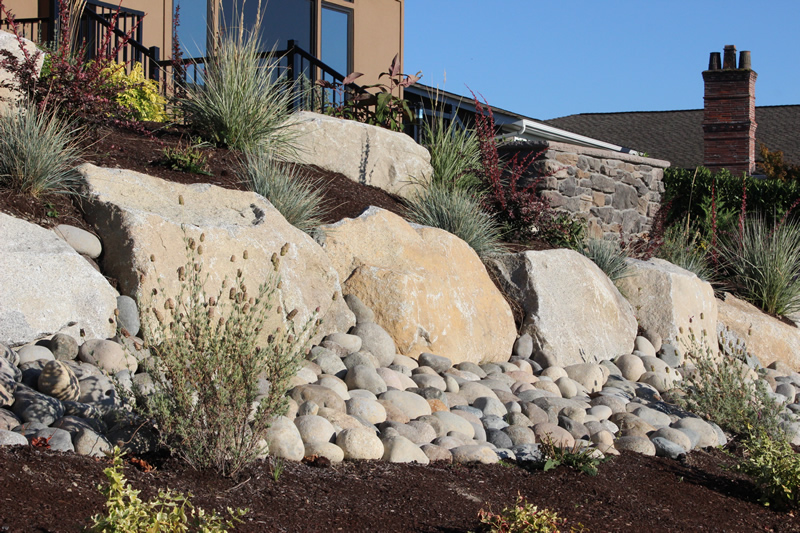
Image Source: www.earthhaulers.com
Fathoming the Factors: What Determines Rock Weight?
Several key elements contribute to how much a cubic yard of rock weighs. It’s not a simple one-size-fits-all answer.
Rock Density: The Foundation of Weight
The most significant factor determining the weight of a cubic yard of rock is its rock density. Density is a measure of mass per unit of volume. In simpler terms, it tells you how much “stuff” is packed into a given space. Rocks are made of minerals, and different minerals have different densities.
- Minerals: Minerals like quartz, feldspar, and mica have varying atomic structures and compositions, leading to different densities.
- Porosity: Some rocks have tiny holes or pores within them. These pores trap air, which is much lighter than rock. Therefore, a porous rock will weigh less than a non-porous rock of the same type.
- Moisture Content: Wet rocks will always weigh more than dry rocks. Water adds mass to the overall volume.
Gravel Weight Per Cubic Yard: A Common Concern
When people ask about the weight of a cubic yard of rock, they are often thinking about gravel weight per cubic yard. Gravel is a common landscaping and construction aggregate, and its weight is a frequent question.
- Size and Shape of Gravel: Smaller, angular gravel pieces tend to pack more tightly than larger, rounded stones. Tighter packing means less air space and therefore more weight in a cubic yard.
- Composition of Gravel: Gravel is often a mix of different rock types. If your gravel contains denser rocks like basalt or granite, it will weigh more than gravel composed primarily of lighter rocks like sandstone or shale.
Stone Weight Calculator: Your Digital Assistant
For those needing precise calculations, a stone weight calculator can be an invaluable tool. These online calculators typically ask for the type of stone and its density, and then provide an estimated weight per cubic yard or ton. It’s a quick way to get a ballpark figure for your project needs.
Landscape Rock Weight: Aesthetics and Engineering
Landscape rock weight is important not just for ordering but also for practical application. You need to know if your truck can handle the load, if your retaining wall can support the weight of decorative boulders, or if your garden bed liner can withstand the pressure.
- Decorative Boulders: These can be incredibly heavy due to their size and the natural density of the stone they are made from.
- Crushed Rock for Paths: The weight of this material is crucial for calculating how much you need to create a stable walking surface.
Crushed Stone Weight: Versatility and Volume
Crushed stone weight is another area where density plays a significant role. Crushed stone is produced by breaking down larger rocks into smaller, angular pieces.
- Angular vs. Rounded: The sharp edges of crushed stone allow it to interlock and pack more tightly than rounded gravel, often resulting in a higher weight per cubic yard for similar rock types.
- Screening: The process of crushing stone often involves screening to remove dust and fines. The presence or absence of these smaller particles can slightly affect the overall density and weight.
Average Rock Density: A Useful Benchmark
While specific weights vary, knowing the average rock density for common stone types can give you a good starting point. This helps in estimating quantities for large projects.
Stone Density Chart: Your Reference Guide
A stone density chart is an excellent resource for comparing the weights of different types of rocks. Such a chart will typically list various stone types and their approximate densities, often in pounds per cubic foot (pcf) or kilograms per cubic meter (kg/m³).
How Much Does Gravel Weigh? A Deeper Dive
So, how much does gravel weigh? As discussed, it depends. For a general idea:
- Clean, dry gravel: Typically weighs around 2,500 to 2,700 pounds per cubic yard.
- Gravel with fines (small particles and dust): Can weigh slightly more, around 2,700 to 3,000 pounds per cubic yard, as these finer materials fill in the gaps.
- Wet gravel: Can add an additional 10-15% to the weight.
Weight of Rocks: Beyond Gravel
When we talk about the weight of rocks, it encompasses more than just gravel. This includes everything from small pebbles to massive boulders. The fundamental principle of bulk density of stone remains constant – denser stones will always weigh more per volume.
Deciphering the Numbers: Weight Ranges for Common Rocks
To give you a clearer picture, let’s look at the estimated weight of a cubic yard for various common rocks and aggregates. These are approximate figures and can vary based on the factors mentioned above.
Table: Estimated Weight of Rocks Per Cubic Yard
| Rock Type | Typical Density (lbs/ft³) | Estimated Weight Per Cubic Yard (lbs) | Notes |
|---|---|---|---|
| Gravel (typical) | 95 – 105 | 2,565 – 2,835 | Varies with size, shape, and fines. |
| Crushed Stone | 100 – 110 | 2,700 – 2,970 | Denser due to angularity and tighter packing. |
| Sandstone | 130 – 150 | 3,510 – 4,050 | Varies significantly with porosity. |
| Limestone | 145 – 165 | 3,915 – 4,455 | Common in construction. |
| Granite | 160 – 180 | 4,320 – 4,860 | Very dense and durable. |
| Basalt | 170 – 190 | 4,590 – 5,130 | One of the densest common rocks. |
| River Rock (smooth) | 90 – 100 | 2,430 – 2,700 | Rounded shape can lead to more air pockets. |
| Lava Rock | 45 – 55 | 1,215 – 1,485 | Highly porous, making it much lighter. |
| Pea Gravel | 95 – 105 | 2,565 – 2,835 | Similar to general gravel but smaller. |
| Rip Rap (large) | 100 – 110 | 2,700 – 2,970 | Large, irregular stones; weight depends on size range. |
Note: Density values are approximate and can vary. These weights are for dry, unpacked material.
Interpreting the Stone Density Chart and Factors
When you look at a stone density chart, you’ll notice a pattern: igneous and metamorphic rocks (like granite, basalt, and quartzite) tend to be denser than sedimentary rocks (like sandstone and limestone) due to their formation processes.
- Igneous Rocks: Formed from cooled lava or magma. Often crystalline and tightly packed.
- Metamorphic Rocks: Formed when existing rocks are changed by heat, pressure, or chemical reactions. Can be very dense.
- Sedimentary Rocks: Formed from accumulated sediments. Can be porous and less dense, especially if they contain organic material or are formed from sand grains.
Calculating Your Needs: Beyond the Cubic Yard
Often, materials are sold by the ton rather than by the cubic yard, especially in bulk. This is where knowing the weight per cubic yard becomes essential. If you need to order 5 tons of gravel, and gravel weighs approximately 2,700 pounds per cubic yard, you can estimate how many cubic yards you need:
- Conversion: 1 ton = 2,000 pounds
- Pounds per cubic yard: Let’s use an average of 2,700 lbs/yd³ for gravel.
- Cubic yards needed: (5 tons * 2,000 lbs/ton) / 2,700 lbs/yd³ = 10,000 lbs / 2,700 lbs/yd³ ≈ 3.7 cubic yards.
It’s always wise to round up to ensure you have enough material for your project.
Practical Considerations for Project Planning
Knowing the weight of your chosen rock or gravel impacts several aspects of your project.
Delivery and Transportation
- Vehicle Capacity: Do you have a truck capable of hauling a ton or more of gravel? Even a small amount of rock can be surprisingly heavy. A standard half-ton pickup truck bed might hold around 0.5 to 0.75 cubic yards of dense gravel, but exceeding its payload capacity is dangerous.
- Delivery Services: Landscaping supply companies often deliver in bulk. Knowing the weight helps you order the right quantity and understand potential delivery fees. Some services have weight limits per truckload.
Site Preparation and Installation
- Load-Bearing Capacity: If you are placing rocks on a structure, like a patio or a rooftop garden, you must consider the structural integrity. Heavy boulders can add significant stress.
- Excavation: For pathways or base layers, you’ll need to excavate a certain depth. Knowing the density helps calculate the total weight of the material you’ll be removing and replacing.
Cost Estimation
- Material Cost: Rocks are often priced per cubic yard or per ton. Understanding the weight-to-volume ratio allows you to compare prices effectively.
- Delivery Cost: Delivery fees can sometimes be based on weight or volume.
Common Scenarios and Their Weight Implications
Let’s explore some typical uses for rocks and gravel and how their weight plays a role.
Driveway Installation
For a driveway base, you might use several inches of crushed stone or gravel.
- Depth: If you have a 4-inch (0.33 cubic foot) layer of gravel over a 10×20 foot driveway, that’s 200 sq ft * 0.33 cu ft/sq ft = 66 cubic feet.
- Weight: 66 cubic feet / 27 cubic feet/yd³ = 2.44 cubic yards.
- Estimated Weight: 2.44 yd³ * 2,700 lbs/yd³ (using our gravel average) ≈ 6,588 pounds.
Backyard Landscaping
Creating decorative beds with decorative gravel or river rock.
- Volume: A garden bed that is 10×10 feet and 3 inches deep (0.25 cubic feet) requires 100 sq ft * 0.25 cu ft/sq ft = 25 cubic feet.
- Cubic Yards: 25 cubic feet / 27 cubic feet/yd³ ≈ 0.93 cubic yards.
- Estimated Weight: 0.93 yd³ * 2,600 lbs/yd³ (for pea gravel) ≈ 2,418 pounds.
Retaining Walls
Large boulders used in a retaining wall can be extremely heavy. A single large boulder might weigh hundreds or even thousands of pounds, significantly impacting the wall’s stability and construction method.
FAQs About Rock Weight
Here are some common questions people have when trying to determine the weight of rocks.
-
Q: How much does a cubic yard of decorative landscape rock weigh?
A: The weight of decorative landscape rock varies widely. Light, porous rocks like lava rock might weigh as little as 1,200-1,500 pounds per cubic yard, while denser options like granite or quartzite can weigh 3,000-4,500 pounds per cubic yard or more. Always check the specific type of rock. -
Q: Is there a simple way to estimate rock weight without a calculator?
A: Yes, a common rule of thumb for many types of gravel and crushed stone is that a cubic yard weighs approximately 1 ton (2,000 pounds). However, this is a rough estimate, and for precise calculations, it’s better to refer to density charts or use a calculator. -
Q: Does the shape of the rock affect its weight?
A: Yes, the shape can influence how tightly the rocks pack together, which affects the overall bulk density of stone. Angular crushed stone tends to pack tighter, meaning more weight per cubic yard than rounded river rocks of the same material, as there’s less air space between the pieces. -
Q: How does moisture affect the weight of gravel?
A: Moisture significantly increases the weight. Wet gravel will weigh considerably more than dry gravel because the water adds mass to the volume. The difference can be as much as 10-15%. -
Q: Where can I find a reliable stone density chart?
A: You can find reliable stone density chart information from landscaping suppliers, geological surveys, construction material websites, and even in engineering or landscaping textbooks. Many online resources provide comparative data. -
Q: If I order “a ton of gravel,” how much volume do I get?
A: If gravel weighs about 2,700 pounds per cubic yard, a ton (2,000 pounds) would be roughly 0.74 cubic yards (2000 / 2700). This varies based on the gravel’s composition and moisture.
Conclusion: Weight Matters for Your Projects
Accurately determining how much does a cubic yard of rock weigh is essential for efficient and safe project planning. By considering the rock density, the specific type of stone or gravel, its moisture content, and how it’s packed, you can make informed decisions. Whether you’re building a driveway, designing a landscape, or undertaking a construction project, having this knowledge prevents costly mistakes and ensures your project is built on a solid foundation – quite literally! Use the information and resources like a stone weight calculator or a stone density chart to confidently estimate your material needs.