
So, how many wheelbarrows fit into a yard of dirt? Generally, it takes about 10 to 15 standard wheelbarrow loads to equal one cubic yard of dirt. This number can change based on the size of your wheelbarrow and how full you load it.
When you’re planning a project, knowing how much dirt you need is super important. Whether you’re building a garden bed, leveling a backyard, or working on a construction site, you’ll likely deal with hauling dirt. A common question that pops up is about measuring dirt by the wheelbarrow. It’s a practical way to think about moving materials, especially for smaller jobs.
Let’s dive into the details and figure this out.
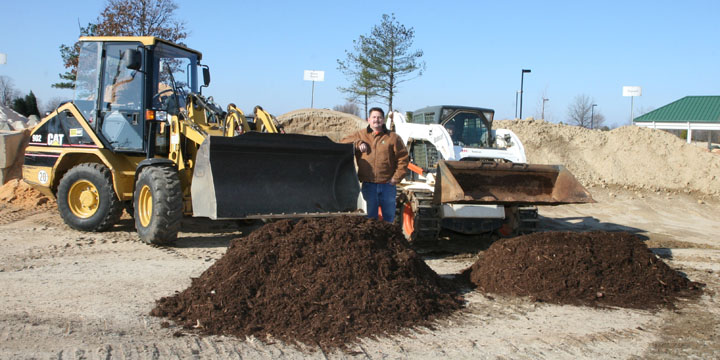
Image Source: www.southernmulch.com
Understanding Volume: Cubic Feet and Cubic Yards
First, we need to talk about volume. What does “a yard of dirt” actually mean? In the world of materials like soil, gravel, and sand, a “yard” usually refers to a cubic yard.
A cubic yard is a measure of volume. It’s the amount of space something takes up. Imagine a cube that is 3 feet long, 3 feet wide, and 3 feet tall. That cube would contain one cubic yard of material.
To help visualize this, let’s break down the measurements:
- 1 yard = 3 feet
Now, let’s think about the dimensions of our cubic yard:
- Length: 3 feet
- Width: 3 feet
- Height: 3 feet
To find the volume, we multiply these together:
- Volume = Length × Width × Height
- Volume = 3 ft × 3 ft × 3 ft
- Volume = 27 cubic feet
So, 27 cubic feet equals one cubic yard. This is a key piece of information for our calculation.
Knowing this helps when you’re ordering dirt delivery. Suppliers typically sell soil and other landscaping materials by the cubic yard. If you only have a wheelbarrow to move it, knowing the equivalent in wheelbarrow loads makes planning much easier.
Wheelbarrow Capacity: The Crucial Factor
The biggest variable in our wheelbarrow count is the wheelbarrow capacity. Wheelbarrows aren’t all the same size. They come in different shapes and can hold varying amounts of material.
Wheelbarrow capacity is usually measured in cubic feet or quarts. For moving dirt, we’ll focus on cubic feet.
- Common Wheelbarrow Sizes:
- Small Wheelbarrows: Often hold around 4 to 6 cubic feet. These are great for lighter tasks and smaller gardens.
- Medium/Standard Wheelbarrows: Typically range from 6 to 8 cubic feet. This is the most common size for homeowners and general use.
- Large/Heavy-Duty Wheelbarrows: Can hold 8 to 10 cubic feet or even more. These are often found on construction sites or used for more demanding projects.
It’s important to check the stated capacity of your wheelbarrow. Many have it printed on the side or listed in the product manual. If you can’t find it, you can estimate it.
Estimating Wheelbarrow Capacity
If your wheelbarrow doesn’t have a clear capacity listed, you can make a good estimate.
- Measure the inside dimensions: Measure the length, width, and average depth of the basin.
- Calculate the volume: Multiply these three dimensions together. For example, if your wheelbarrow basin is 3 feet long, 2 feet wide, and 1.5 feet deep, its volume is 3 x 2 x 1.5 = 9 cubic feet.
- Adjust for shape: Wheelbarrows are not perfect boxes. The bottom is usually narrower than the top. This means the actual usable volume might be slightly less than a simple box calculation. However, for practical purposes, this estimate is usually good enough.
Wheelbarrow Load Size: How Much Can You Really Carry?
Beyond the total wheelbarrow capacity, consider the wheelbarrow load size you can comfortably and safely handle. It’s one thing for a wheelbarrow to hold 8 cubic feet, but another to push 8 cubic feet of dense dirt.
- Weight Matters: Dirt is heavy! A cubic foot of compacted soil can weigh around 100 pounds. An 8-cubic-foot wheelbarrow filled with dirt could weigh 800 pounds – that’s more than a small car!
- Comfort and Safety: You need to be able to move the wheelbarrow without straining yourself. For most people, a manageable load is much less than the maximum capacity.
- Terrain: If you’re moving dirt over uneven ground, up hills, or through tight spaces, you’ll want to carry less weight.
For calculations, it’s safer to assume you’ll be carrying a wheelbarrow load size that is about 75-80% of the total capacity. This ensures you can move it safely and efficiently.
Calculating the Number of Wheelbarrow Loads
Now, let’s put it all together to answer the main question: How many wheelbarrows in a yard of dirt?
We know:
- 1 cubic yard = 27 cubic feet
- Wheelbarrow capacity varies (let’s use a standard 6 cubic foot capacity for an example)
To find out how many wheelbarrow loads equal one cubic yard, we divide the total volume of a cubic yard by the volume of one wheelbarrow load.
Formula:
Number of Wheelbarrow Loads = Total Volume (cubic feet) / Wheelbarrow Capacity (cubic feet per load)
Let’s use our example of a standard 6 cubic foot wheelbarrow.
Number of Wheelbarrow Loads = 27 cubic feet / 6 cubic feet per load
Number of Wheelbarrow Loads = 4.5 loads
This means a 6 cubic foot wheelbarrow would need about 4.5 loads to equal one cubic yard. Since you can’t have half a load in this practical sense, you’d round up to 5 loads.
However, we need to account for the wheelbarrow load size we can actually manage. If we only fill our 6 cubic foot wheelbarrow to 80% capacity:
- Usable load size = 6 cubic feet * 0.80 = 4.8 cubic feet
Now, recalculate:
Number of Wheelbarrow Loads = 27 cubic feet / 4.8 cubic feet per load
Number of Wheelbarrow Loads = 5.625 loads
Again, rounding up, this means about 6 loads.
Example Calculations for Different Wheelbarrow Capacities
Let’s look at a few more examples using a full cubic yard (27 cubic feet) and varying wheelbarrow capacities, assuming we fill them about 80% full.
| Wheelbarrow Capacity (Cubic Feet) | Usable Load Size (80% of Capacity) | Number of Loads per Cubic Yard |
|---|---|---|
| 4 cubic feet | 3.2 cubic feet | 27 / 3.2 = 8.4 –> 9 loads |
| 5 cubic feet | 4.0 cubic feet | 27 / 4.0 = 6.75 –> 7 loads |
| 6 cubic feet | 4.8 cubic feet | 27 / 4.8 = 5.625 –> 6 loads |
| 7 cubic feet | 5.6 cubic feet | 27 / 5.6 = 4.82 –> 5 loads |
| 8 cubic feet | 6.4 cubic feet | 27 / 6.4 = 4.22 –> 5 loads |
| 10 cubic feet | 8.0 cubic feet | 27 / 8.0 = 3.375 –> 4 loads |
Note: These numbers are estimates. The density of the dirt, how wet it is, and how carefully you load the wheelbarrow all play a role.
Using a Dirt Volume Calculator
For more precise planning, especially for larger projects, you might want to use a dirt volume calculator. These tools are available online and can help you figure out total volumes based on dimensions (length, width, depth) and then convert that into different units, including estimated wheelbarrow loads.
If you have a specific area to fill or excavate, you’d measure its dimensions and input them into the calculator. For example, if you need to fill a garden bed that is 10 feet long, 5 feet wide, and 1 foot deep:
- Volume = 10 ft × 5 ft × 1 ft = 50 cubic feet
To convert this to cubic yards:
- Volume in Cubic Yards = 50 cubic feet / 27 cubic feet per yard
- Volume in Cubic Yards = 1.85 cubic yards
Now, using our 6 cubic foot wheelbarrow that can hold about 4.8 cubic feet per load:
- Number of Wheelbarrow Loads = 50 cubic feet / 4.8 cubic feet per load
- Number of Wheelbarrow Loads = 10.42 loads –> 11 loads
This shows that for a 50 cubic foot project, you’d need about 11 wheelbarrow loads.
Factors Affecting Your Count
Beyond just the capacity, several other factors influence how many wheelbarrow loads you’ll make.
Dirt Density and Moisture Content
The weight and volume of dirt change based on its type and how wet it is.
- Loam: A good mix of sand, silt, and clay. It’s generally easy to work with.
- Clay: Can be very dense and sticky, especially when wet. This means fewer cubic feet but more weight per load.
- Sand: Can be looser and lighter but might also shift and spill easily.
- Moisture: Wet dirt is significantly heavier than dry dirt. This can impact how much you can comfortably lift and push. A load of wet sand will be much heavier than a load of dry, fluffy topsoil.
Loading Technique
How you load the wheelbarrow matters.
- Topping off: Filling the wheelbarrow to the brim might exceed its practical capacity and lead to spills.
- Compaction: If you’re moving already compacted soil, it might not fill the wheelbarrow as much as loose soil.
- Consistency: Try to load each wheelbarrow as consistently as possible for easier tracking.
Your Physical Ability and Terrain
As mentioned, your strength and the ground you’re working on are crucial.
- Pushing Power: A strong person can push a heavier load.
- Obstacles: Pushing a wheelbarrow up a slope, over rocks, or through mud will require smaller loads.
- Fatigue: Pushing heavy loads repeatedly can lead to exhaustion, making smaller, more frequent loads a better option.
Type of Wheelbarrow
While we’ve focused on capacity, the design of the wheelbarrow also matters.
- Basin Shape: A deeper basin might hold more but can be harder to load and unload. A wider, shallower basin might be easier to manage.
- Number of Wheels: Single-wheeled wheelbarrows are more maneuverable in tight spaces. Double-wheeled ones are often more stable and can handle heavier loads.
- Materials: A lighter wheelbarrow (like plastic) is easier to push than a heavier steel one, even if they have the same capacity. A garden cart might offer a different balance of capacity and ease of use.
Planning Your Dirt Hauling Project
When you’re tackling a project that involves moving dirt, good planning saves time and effort.
Step 1: Determine Your Dirt Needs
- Measure: Calculate the volume of soil you need for your project. This could be for filling raised beds, grading a yard, or preparing a foundation.
- Use a Calculator: Employ a dirt volume calculator if needed for accuracy.
Step 2: Know Your Wheelbarrow
- Check Capacity: Find out the cubic foot capacity of your wheelbarrow.
- Estimate Usable Load: Decide on a comfortable and realistic wheelbarrow load size (e.g., 75-80% of capacity).
Step 3: Calculate the Number of Loads
- Divide: Divide your total dirt volume (in cubic feet) by your usable wheelbarrow load size (in cubic feet).
- Round Up: Always round up to the nearest whole number for the number of loads.
Step 4: Consider the Logistics
- Distance: How far do you have to push each load?
- Path: Is the path clear and level, or are there obstacles?
- Time: Estimate how long each load will take, including loading and dumping. This helps you gauge the total time commitment.
- Dirt Delivery: If you’re ordering a large amount of dirt (e.g., 5 or 10 cubic yards), it will likely be delivered by a truck. Your wheelbarrow will then be used to move it from the delivery point to its final location.
Step 5: Execute and Adjust
- Start Moving: Begin hauling the dirt.
- Keep Track: Make a note of each load to stay organized.
- Be Flexible: If you find your estimated loads are too heavy or too light, adjust your loading technique accordingly.
Common Scenarios and Estimates
Let’s look at some practical scenarios:
Scenario 1: Creating a Raised Garden Bed
- Dimensions: 8 ft long x 4 ft wide x 1 ft deep
- Volume: 8 x 4 x 1 = 32 cubic feet
- Volume in Cubic Yards: 32 / 27 = 1.18 cubic yards
- Wheelbarrow: Standard 6 cubic foot capacity, usable load of 4.8 cubic feet.
- Estimated Loads: 32 cubic feet / 4.8 cubic feet per load = 6.67 loads –> 7 loads
Scenario 2: Filling a Small Hole in the Yard
- Dimensions: 5 ft long x 3 ft wide x 2 ft deep
- Volume: 5 x 3 x 2 = 30 cubic feet
- Volume in Cubic Yards: 30 / 27 = 1.11 cubic yards
- Wheelbarrow: Large 8 cubic foot capacity, usable load of 6.4 cubic feet.
- Estimated Loads: 30 cubic feet / 6.4 cubic feet per load = 4.69 loads –> 5 loads
Scenario 3: General Landscaping Material Hauling
Imagine you’ve ordered 3 cubic yards of topsoil for general landscaping.
- Total Volume: 3 cubic yards = 3 x 27 = 81 cubic feet
- Wheelbarrow: Medium 5 cubic foot capacity, usable load of 4 cubic feet.
- Estimated Loads: 81 cubic feet / 4 cubic feet per load = 20.25 loads –> 21 loads
These examples show how the wheelbarrow capacity directly impacts the total number of trips.
Frequently Asked Questions (FAQ)
Here are some common questions people have about wheelbarrows and moving dirt:
Q1: What is the average capacity of a wheelbarrow?
A1: The average capacity of a standard wheelbarrow is typically between 6 and 8 cubic feet. However, capacities can range from 4 cubic feet for smaller models to 10 cubic feet or more for heavy-duty ones.
Q2: How much does a cubic yard of dirt weigh?
A2: The weight of a cubic yard of dirt can vary greatly depending on its composition and moisture content. Generally, it can weigh anywhere from 1,400 to 1,700 pounds (0.7 to 0.85 tons). Wet clay or soil will be heavier than dry sand or gravel.
Q3: Can I use a wheelbarrow to move a full cubic yard of dirt at once?
A3: No, you cannot move a full cubic yard of dirt in a single wheelbarrow load. Since one cubic yard is 27 cubic feet, and most wheelbarrows hold between 4 and 10 cubic feet, it will take multiple wheelbarrow loads to move one cubic yard.
Q4: How many wheelbarrow loads does it take to move 5 cubic yards of dirt?
A4: Using a standard 6 cubic foot wheelbarrow (with a usable load of 4.8 cubic feet), it would take approximately 57 loads (5 cubic yards * 27 cubic feet/yard / 4.8 cubic feet/load = 28.125 loads per cubic yard, so 5 * 28.125 = 140.625 loads). If you use a larger 8 cubic foot wheelbarrow (usable load of 6.4 cubic feet), it would take about 43 loads (5 * 27 / 6.4 = 21.09 loads per cubic yard).
Q5: What is the best way to estimate how many wheelbarrow loads I’ll need for my project?
A5: First, calculate the total volume of dirt you need in cubic yards or cubic feet. Then, determine the usable capacity of your wheelbarrow (usually about 80% of its total capacity). Divide the total volume needed by your wheelbarrow’s usable capacity to get the estimated number of loads. Always round up.
Q6: Is a garden cart better than a wheelbarrow for moving dirt?
A6: A garden cart can be a good alternative, especially if it has a larger capacity or more stability. However, wheelbarrows are generally designed for heavier loads and rougher terrain. The choice depends on the specific task, the terrain, and the weight of the material you’re moving.
Conclusion
When you’re asking “How many wheelbarrows in a yard of dirt?”, remember that the answer isn’t a single, fixed number. It’s a calculation based on two main factors: the size of a cubic yard (27 cubic feet) and the wheelbarrow capacity.
For a typical homeowner with a standard 6-cubic-foot wheelbarrow, you’re looking at around 5 to 7 loads to move one cubic yard of dirt, assuming you’re not overloading it. Larger wheelbarrows will reduce the number of trips, while smaller ones will increase them.
By knowing the basics of yardage conversion, the capacity of your tools, and being mindful of your own capabilities and the conditions, you can efficiently plan and execute your dirt-moving tasks, whether it’s for a small gardening project or a larger endeavor on a construction site. Happy hauling!