
A yard of mulch typically covers approximately 100 square feet at a depth of 3 inches. But how much mulch do I need for my garden beds? This is a common question for any gardener or landscaper. The answer isn’t always straightforward and depends on several factors, most importantly the desired mulch depth and coverage. This guide will help you decipher mulch calculations for garden beds and master estimating mulch needs. We’ll break down the science behind mulch coverage per cubic yard and provide you with practical tools to ensure you purchase the right amount, avoiding both waste and under-application. Whether you’re dealing with a small flower bed or a large landscaping project, knowing your yard of mulch coverage is key to achieving beautiful and healthy results.
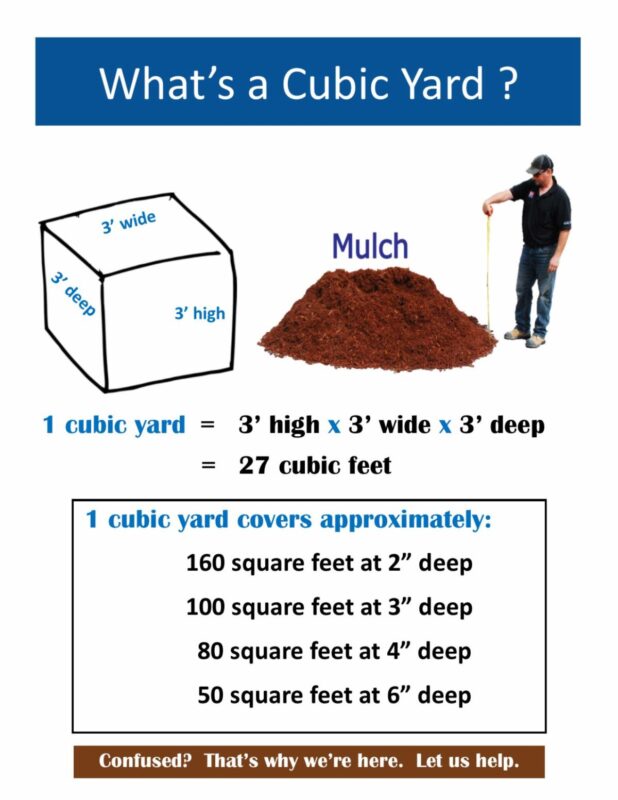
Image Source: stonegarden-nc.com
Fathoming Mulch Coverage: The Core Concepts
At its heart, mulch coverage is about volume. A “yard of mulch” refers to a cubic yard, a measurement of volume. When you purchase mulch by the cubic yard, you’re buying a certain amount of material. The area it covers and the depth you spread it will dictate how much surface area that volume can transform.
Why Mulch Depth Matters
The depth at which you spread your mulch is arguably the most critical factor in determining your mulch coverage. Different depths serve different purposes:
- 1-2 inches: This depth is generally sufficient for weed suppression in established areas and can provide a light aesthetic finish. It’s also a good depth for areas where you might want to replant frequently, like annual flower beds.
- 2-3 inches: This is the sweet spot for most landscaping applications. It offers excellent weed suppression, helps retain soil moisture, moderates soil temperature, and contributes to a polished look. This is the depth most mulch coverage calculators assume for standard landscaping mulch coverage.
- 4 inches or more: Deeper mulching can be beneficial for very aggressive weed areas or for plants that benefit from significant root zone insulation. However, excessively deep mulching can sometimes restrict air circulation to the soil and even suffocate plant roots, so caution is advised.
The Cubic Yard: A Standard Measurement
A cubic yard is a unit of volume. It represents a cube that is 3 feet long, 3 feet wide, and 3 feet high. This equates to 27 cubic feet. When you buy a “yard of mulch,” you are buying 27 cubic feet of the material.
Calculating Mulch Coverage: The Basic Formula
To determine yard of mulch coverage, we use a simple formula derived from volume calculations:
Area (in square feet) = Volume (in cubic feet) / Depth (in feet)
Since mulch is typically sold by the cubic yard, we need to convert this volume to cubic feet first.
- 1 cubic yard = 27 cubic feet
Let’s say you want to spread your mulch at a depth of 3 inches. First, convert this depth to feet:
- 3 inches / 12 inches/foot = 0.25 feet
Now, using the formula with the volume of one cubic yard (27 cubic feet):
- Area = 27 cubic feet / 0.25 feet
- Area = 108 square feet
This calculation confirms our initial statement: one cubic yard of mulch, spread at a consistent depth of 3 inches, will cover approximately 108 square feet. Many online tools, often referred to as a mulch coverage calculator, will use this principle to give you an estimate.
Deciphering Yard of Mulch Coverage: Practical Applications
Knowing the theoretical coverage is one thing, but applying it to real-world gardening scenarios requires a bit more thought. The shape and layout of your garden beds, as well as the type of mulch, can influence how efficiently you use your material.
Mulch Calculations for Garden Beds: Step-by-Step
To accurately calculate how much mulch do I need, follow these steps:
- Measure Your Area: Determine the length and width of each garden bed you intend to mulch.
- Calculate Square Footage: Multiply the length by the width for each bed to get its square footage. If your beds are irregular shapes, break them down into simpler geometric shapes (rectangles, squares, triangles) and sum their areas.
- Determine Desired Depth: Decide on the ideal mulch depth for your needs (usually 2-3 inches).
- Convert Depth to Feet: Divide your desired depth in inches by 12.
- Calculate Cubic Feet Needed: For each bed, multiply its square footage by the depth in feet. This gives you the cubic feet of mulch needed for that specific bed.
- Total Cubic Feet: Add up the cubic feet needed for all your beds.
- Convert to Cubic Yards: Divide the total cubic feet by 27 to get the total cubic yards of mulch required.
Example:
Let’s say you have a rectangular garden bed that is 10 feet long and 4 feet wide. You want to spread mulch to a depth of 3 inches.
- Measure: Length = 10 ft, Width = 4 ft.
- Square Footage: 10 ft * 4 ft = 40 sq ft.
- Desired Depth: 3 inches.
- Depth in Feet: 3 inches / 12 inches/ft = 0.25 ft.
- Cubic Feet Needed: 40 sq ft * 0.25 ft = 10 cubic feet.
If this were your only bed, you would need:
- Convert to Cubic Yards: 10 cubic feet / 27 cubic feet/yard ≈ 0.37 cubic yards.
It’s generally advisable to round up to the nearest half or full yard when purchasing to account for settling and any slight inaccuracies in application. For this single bed, you’d likely buy 1/2 cubic yard.
Using a Yard of Mulch Coverage Chart
A yard of mulch coverage chart can be a very helpful visual aid. These charts typically display different depths and the corresponding square footage covered by one cubic yard.
| Mulch Depth (Inches) | Mulch Depth (Feet) | Square Feet Covered per Cubic Yard |
|---|---|---|
| 1 | 0.083 | 324 |
| 2 | 0.167 | 162 |
| 3 | 0.25 | 108 |
| 4 | 0.333 | 81 |
| 5 | 0.417 | 65 |
| 6 | 0.5 | 54 |
As you can see from the chart, the deeper you spread the mulch, the less area one cubic yard will cover.
When Bags of Mulch Are More Practical
Sometimes, you might purchase mulch in bags rather than bulk. Understanding the square feet per bag of mulch is crucial in these situations. Bagged mulch usually comes in volumes of 2 or 3 cubic feet.
To calculate the coverage per bag:
- For a 2 cubic foot bag:
- Volume in cubic yards = 2 cubic feet / 27 cubic feet/yard ≈ 0.074 cubic yards.
- At a 3-inch depth (0.25 ft), coverage = 2 cubic feet / 0.25 ft = 8 sq ft.
- For a 3 cubic foot bag:
- Volume in cubic yards = 3 cubic feet / 27 cubic feet/yard ≈ 0.111 cubic yards.
- At a 3-inch depth (0.25 ft), coverage = 3 cubic feet / 0.25 ft = 12 sq ft.
So, a common 2 cubic foot bag will cover about 8 square feet at a 3-inch depth, and a 3 cubic foot bag will cover about 12 square feet at the same depth. Always check the bag for specific coverage estimates, as these can vary slightly by manufacturer.
Optimizing Your Mulch Calculations
Beyond the basic math, several factors can influence your mulch calculations for garden beds and the overall success of your mulching project.
Factors Affecting Mulch Coverage
- Type of Mulch: Different types of mulch have varying densities and particle sizes. Shredded bark or wood chips tend to compact less than finer materials like compost or shredded leaves. This means you might need slightly more of a looser material to achieve the same visual coverage and depth.
- Settling and Compaction: Mulch will settle over time due to rain, foot traffic, and natural decomposition. It’s good practice to aim for a slightly deeper application initially to ensure you maintain your desired depth for longer.
- Existing Ground Cover: If you are mulching over existing grass or weeds, you might need a thicker layer to effectively smother them. A 3-inch layer is generally good for weed suppression, but for very persistent weeds, 4 inches might be better.
- Irregular Shapes: As mentioned, irregularly shaped beds require more careful measurement. It’s often easier to measure the longest and widest points and add a small percentage (5-10%) to account for the curves and imperfections.
- Blowing Wind: In very windy areas, finer mulches can be blown away, especially during initial application. A slightly thicker layer or choosing a denser mulch can help mitigate this.
Utilizing a Mulch Coverage Calculator
For ease of use, many homeowners and professionals rely on a mulch coverage calculator. These online tools are designed to simplify the calculating mulch volume process. You typically input the dimensions of your garden beds (length, width, and sometimes shape) and your desired mulch depth, and the calculator instantly provides the total cubic yards needed. Some advanced calculators even allow you to input the dimensions of bagged mulch to help you compare bulk versus bagged options. These are invaluable for accurate estimating mulch needs and ensuring you don’t over or under-buy.
The Importance of Proper Depth for Plant Health
While it’s tempting to spread mulch thinly to save money, the benefits of proper mulch depth and coverage are significant for your plants:
- Weed Suppression: A consistent 2-3 inch layer creates a barrier that significantly reduces sunlight reaching weed seeds, inhibiting their germination.
- Moisture Retention: Mulch acts like a sponge, reducing evaporation from the soil surface. This means less frequent watering for your plants, saving water and time.
- Temperature Regulation: Mulch insulates the soil, keeping it cooler in the summer heat and warmer during winter frosts. This protects plant roots from extreme temperature fluctuations.
- Soil Improvement: As organic mulches decompose, they add valuable nutrients and organic matter to the soil, improving its structure and fertility over time.
- Erosion Control: Mulch helps prevent soil from being washed away by rain or blown away by wind.
Key takeaway: While the yard of mulch coverage chart provides guidance, always prioritize the health of your plants by applying the recommended depth.
Advanced Mulching Considerations
When tackling larger landscaping projects, or when dealing with specific plant requirements, more nuanced calculations and considerations come into play.
Estimating Mulch Needs for Large Projects
For extensive landscaping, it’s wise to:
- Map Your Areas: Create a simple map or sketch of the areas needing mulch, noting dimensions.
- Calculate Each Area Separately: Perform the area calculation for each distinct zone (e.g., front border, backyard beds, tree rings).
- Use Bulk Delivery: For larger quantities, purchasing mulch in bulk (by the cubic yard) from a local supplier is almost always more economical than buying bags. Most suppliers will deliver directly to your home.
- Account for Waste: Always add a buffer of 5-10% to your total estimate to account for uneven spreading, compaction, and potential spillage during delivery or application.
Mulch Coverage Per Cubic Yard: A Deeper Dive
Let’s revisit mulch coverage per cubic yard with a slightly different perspective. Imagine you’re filling a kiddie pool that’s 5 feet in diameter and has a depth of 3 inches (0.25 feet).
- Radius: 5 ft diameter / 2 = 2.5 ft radius
- Area of the pool: π * r² = 3.14159 * (2.5 ft)² ≈ 19.63 sq ft
- Volume of mulch needed for the pool: Area * Depth = 19.63 sq ft * 0.25 ft ≈ 4.91 cubic feet.
Since 1 cubic yard is 27 cubic feet, you’d need approximately 4.91 / 27 ≈ 0.18 cubic yards of mulch to fill that pool. This example illustrates how specific shapes and volumes are calculated.
Landscaping Mulch Coverage in Practice
When applying landscaping mulch coverage, remember that consistency is key. Using a rake or shovel to spread the mulch evenly, and a tape measure to periodically check the depth, will ensure you achieve the desired results and get the most out of your purchased material. If you’re mulching around trees, be sure to keep the mulch a few inches away from the trunk to prevent rot and pest issues.
Frequently Asked Questions About Mulch Coverage
Q1: How many square feet does a cubic yard of mulch cover?
A1: A cubic yard of mulch typically covers about 108 square feet when spread at a depth of 3 inches. This can vary depending on the desired depth.
Q2: How deep should I spread mulch?
A2: For most general landscaping purposes, a depth of 2-3 inches is recommended to effectively suppress weeds, retain moisture, and regulate soil temperature.
Q3: Can I use a mulch coverage calculator?
A3: Yes, a mulch coverage calculator is a very helpful tool to estimate how much mulch you need. You input your garden bed dimensions and desired depth, and it tells you the total volume required.
Q4: How much square feet does a bag of mulch cover?
A4: The coverage of a bag of mulch depends on its volume. A common 2 cubic foot bag will cover approximately 8 square feet at a 3-inch depth, while a 3 cubic foot bag covers about 12 square feet at the same depth. Always check the bag for specific coverage estimates.
Q5: What is the formula for calculating mulch volume?
A5: The basic formula for calculating mulch volume is Area (in square feet) multiplied by Depth (in feet). To find coverage, you divide the total volume of mulch (in cubic feet) by the desired depth (in feet).
Q6: How do I calculate mulch for irregular garden beds?
A6: For irregular shapes, break them down into simpler geometric shapes (rectangles, squares, triangles), calculate the area of each, and sum them up. For curves, measure the longest and widest points and add a small percentage (5-10%) for accuracy.
Q7: What if I spread the mulch too thin or too thick?
A7: Spreading too thin may not provide adequate weed suppression or moisture retention. Spreading too thick can lead to poor air circulation to the soil and may even harm plant roots. Aim for the recommended 2-3 inch depth.
Q8: Does the type of mulch affect coverage?
A8: Yes, different mulch types have varying densities and particle sizes, which can affect how they compact and how much area they cover to achieve a specific depth. Coarser mulches may require slightly more volume than finer ones.
By following these guidelines and utilizing the provided information, you can confidently tackle any mulching project, ensuring your garden beds are both beautiful and healthy.