
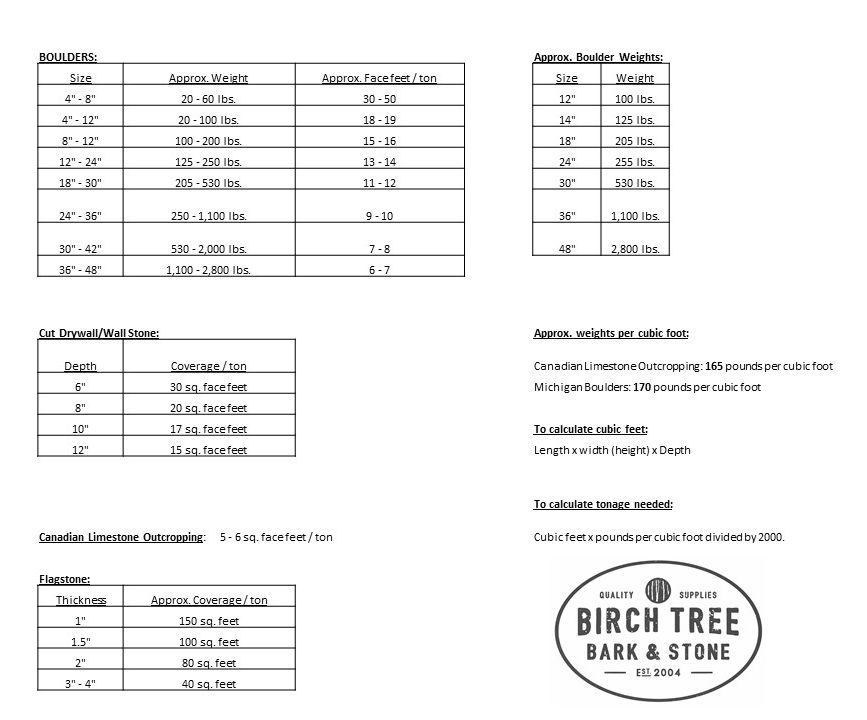
Image Source: www.birchtreebarkandstone.com
How Many Sq Ft Does 1 Yard of Mulch Cover?
A general rule of thumb is that one cubic yard of mulch, spread at a depth of 3 inches, will cover approximately 100 square feet. However, this can vary depending on the desired mulch depth and the specific product you are using.
Mulching is a fantastic way to improve your garden’s look and health. It helps keep moisture in the soil, which is great for your plants. It also stops weeds from growing, making your gardening tasks easier. Plus, it gives your flower beds and garden paths a neat, finished appearance. But the big question for many gardeners is: how much mulch do I actually need? Getting this right saves you time and money.
This guide will help you figure out exactly that, breaking down how to calculate your mulch needs and what factors influence mulch coverage per bag versus 1 cubic yard mulch coverage. We’ll cover everything from understanding mulch depth to using tools like a mulch coverage calculator or a mulch square footage calculator.
Fathoming Mulch Coverage: The Key Factors
Several things determine how far a yard of mulch will stretch. Knowing these will help you get an accurate answer when you ask, “How many sq ft does 1 yard of mulch cover?”
- Mulch Depth: This is the most crucial factor. The deeper you spread the mulch, the less area one yard will cover.
- Type of Mulch: Some mulches are lighter and fluffier, while others are denser. This can slightly affect how much ground they cover.
- Area Shape: Oddly shaped beds might require a bit more mulch due to cuts and turns where you might spread it a little thinner.
The Impact of Mulch Depth
The ideal depth for most mulches is between 2 to 3 inches.
- 2 Inches: This depth is good for suppressing small weeds and retaining some moisture. It’s a good option if you want your mulch to last longer or if you have a large area to cover. At 2 inches, one cubic yard will cover more area.
- 3 Inches: This is generally considered the sweet spot. It effectively smothers weeds, retains significant moisture, and helps regulate soil temperature. This is the standard depth most mulch estimators are based on.
- 4 Inches or More: While a deeper layer can be beneficial in some situations (like on slopes to prevent erosion), it’s often unnecessary for general mulching. Spreading too thick can actually harm plants by preventing air and water from reaching the roots.
Let’s look at the numbers for typical mulch coverage based on depth.
Calculating Coverage: 1 Cubic Yard of Mulch
A cubic yard is a unit of volume. One cubic yard is equal to 27 cubic feet. To figure out how many square feet it covers, we need to consider the depth.
The Standard Calculation (3-inch Depth)
When people ask, “How many sq ft does 1 yard of mulch cover?”, they are usually thinking about the most common application: a 3-inch depth.
Here’s how the math works:
- Convert inches to feet: 3 inches is equal to 3/12 feet, or 0.25 feet.
- Calculate cubic feet per square foot: If you have a 1-foot by 1-foot area (1 sq ft) and you want to cover it with 0.25 feet of mulch, the volume of mulch needed for that square foot is 1 sq ft * 0.25 ft = 0.25 cubic feet.
- Divide total cubic feet by cubic feet per square foot: You have 27 cubic feet in a yard. So, 27 cubic feet / 0.25 cubic feet per sq ft = 108 square feet.
So, at a 3-inch depth, 1 cubic yard of mulch covers approximately 108 square feet. Many resources round this down to 100 sq ft for a safer estimate, which is why you often hear that number.
Coverage at Different Depths
Let’s see how the coverage changes with different depths, always remembering our starting point of 1 cubic yard (27 cubic feet):
| Mulch Depth | Depth in Feet | Square Feet Covered (approx.) |
|---|---|---|
| 1 inch | 1/12 ft (0.083) | 324 sq ft |
| 2 inches | 2/12 ft (0.167) | 162 sq ft |
| 3 inches | 3/12 ft (0.25) | 108 sq ft |
| 4 inches | 4/12 ft (0.333) | 81 sq ft |
| 5 inches | 5/12 ft (0.417) | 65 sq ft |
| 6 inches | 6/12 ft (0.5) | 54 sq ft |
Note: These are theoretical calculations. Actual coverage may vary slightly.
As you can see, if you decide to go for a 2-inch depth, your cubic yard of mulch will stretch almost twice as far as it would at a 4-inch depth. This is why it’s so important to decide on your desired landscaping mulch coverage depth before you buy.
Using a Mulch Coverage Calculator
Manually calculating mulch needs can be a bit tricky, especially for oddly shaped garden beds. Fortunately, there are tools to help. Many garden centers and landscaping supply websites offer a mulch coverage calculator or a mulch square footage calculator.
These tools are incredibly useful for a quick estimate. You typically input:
- The length of your garden bed.
- The width of your garden bed.
- The desired depth of the mulch (often in inches).
The calculator then instantly provides the total cubic feet or cubic yards of mulch you’ll need. Some calculators even let you input multiple areas to get a total for your entire project.
How to Measure Your Garden Beds for Calculation
Before you use any mulch estimator, you need accurate measurements.
- Measure Length and Width: For rectangular beds, simply measure the length and width in feet.
- Measure Irregular Shapes: For curved beds or beds with odd shapes, you can break them down into simpler geometric shapes (rectangles, squares, triangles) and calculate the area of each, then add them together.
- Rectangles/Squares: Area = Length × Width
- Circles: Area = π × radius² (where radius is half the diameter)
- Triangles: Area = 0.5 × base × height
- Consider Existing Mulch: If you’re topping up an existing mulched area, measure the depth of the current mulch and only add enough to bring it back to your desired depth. This can save you from buying too much.
Once you have your total square footage, you can use the coverage charts above or a mulch coverage calculator to determine how many yards you need.
Mulch Coverage Per Bag vs. Per Yard
Mulch is often sold in bags, and knowing the mulch coverage per bag is just as important as understanding 1 cubic yard mulch coverage. Bags come in different sizes, commonly 2 cubic feet or 3 cubic feet.
Let’s break down bag coverage:
- 2 Cubic Foot Bag:
- At a 3-inch depth (0.25 ft), one 2 cubic foot bag covers: 2 cubic feet / 0.25 cubic feet per sq ft = 8 square feet.
- 3 Cubic Foot Bag:
- At a 3-inch depth (0.25 ft), one 3 cubic foot bag covers: 3 cubic feet / 0.25 cubic feet per sq ft = 12 square feet.
So, if you need to cover 100 square feet at a 3-inch depth:
- You would need approximately 100 sq ft / 8 sq ft per bag = 12.5 bags (round up to 13 bags) if using 2 cubic foot bags.
- You would need approximately 100 sq ft / 12 sq ft per bag = 8.3 bags (round up to 9 bags) if using 3 cubic foot bags.
This is where a mulch estimator can be very helpful, as it often allows you to specify whether you’re buying by the yard or by the bag.
Why Bagged Mulch Might Be More Expensive Per Yard
While convenient for smaller jobs, buying mulch by the bag can be more expensive per cubic yard than buying in bulk. This is because the cost of the bag, packaging, and individual handling is factored into the price. If you have a large project, purchasing mulch by the cubic yard from a landscape supplier is usually more cost-effective.
Deciphering Your Mulch Needs: A Step-by-Step Guide
Here’s a structured way to figure out how much mulch do I need:
- Plan Your Area: Identify all the garden beds, trees, and pathways you want to mulch.
- Measure Accurately: Measure the length and width of each area you intend to mulch in feet. For irregular shapes, break them down into geometric sections.
- Calculate Total Square Footage: Add up the areas of all your sections to get your total square footage.
- Determine Desired Depth: Decide on the mulch depth you want, typically 2 to 3 inches. For most plants, 3 inches is ideal for weed suppression and moisture retention.
- Use a Mulch Estimator or Calculator:
- Online Mulch Coverage Calculator: Input your total square footage and desired depth. The tool will tell you how many cubic yards you need.
- Manual Calculation:
- Convert your desired depth from inches to feet (divide by 12).
- Multiply your total square footage by the depth in feet to get the total cubic feet needed.
- Divide the total cubic feet by 27 to get the total cubic yards needed.
- Example: 100 sq ft area, 3-inch depth.
- Depth in feet = 3 / 12 = 0.25 ft.
- Total cubic feet = 100 sq ft * 0.25 ft = 25 cubic feet.
- Total cubic yards = 25 cubic feet / 27 cubic feet per yard ≈ 0.93 cubic yards. (You’d likely round up to 1 yard).
- Add a Buffer: It’s always a good idea to add about 10% extra to your order. This accounts for settling, uneven spreading, and any mistakes you might make during application. This is a smart part of effective mulch needs calculation.
Factors Affecting Actual Coverage in Landscaping
While the math is straightforward, real-world application can introduce slight variations.
- Compaction: As mulch settles over time, especially after rain or foot traffic, its effective depth can decrease, requiring more to maintain the desired layer.
- Uneven Spreading: It’s human nature to spread mulch slightly thinner in some spots and thicker in others. A good mulch depth calculator helps visualize this, but careful application is key.
- Mulch Type and Size: Fine-textured mulches can sometimes compact more readily than chunkier varieties. Very large chunks might leave more air pockets, affecting coverage density.
- Existing Soil Condition: If your soil is uneven or has depressions, you might use a bit more mulch to achieve a uniform look.
Optimizing Your Mulch Purchase
To make the most efficient purchase, consider these tips:
- Buy in Bulk: For larger areas, buying mulch by the cubic yard from a local supplier is almost always cheaper than buying bags.
- Check for Sales: Many garden centers and hardware stores have seasonal sales on mulch.
- Consider Delivery: If you’re buying a lot of mulch, check if delivery is available and what the cost is. It can save you a lot of hauling.
- Match Mulch Type to Need: Different mulches have different properties. Wood chips are durable and good for paths. Bark mulch is attractive for flower beds. Shredded bark is excellent for retaining moisture. Choose based on aesthetics and function.
Frequently Asked Questions (FAQ)
Q1: How many square feet does one cubic yard of mulch cover at a 2-inch depth?
A1: One cubic yard of mulch covers approximately 162 square feet when spread at a 2-inch depth.
Q2: Can I use a mulch coverage calculator if I don’t know the exact dimensions?
A2: While exact measurements are best, you can estimate dimensions for a rough calculation. However, for accurate purchasing, precise measurements are highly recommended.
Q3: What happens if I spread mulch too deeply?
A3: Spreading mulch too deeply (more than 4 inches) can suffocate plant roots by preventing air and water from reaching them. It can also lead to fungal diseases and encourage shallow root growth.
Q4: Is it better to buy mulch in bags or by the yard?
A4: For small areas or small projects, bags are convenient. For larger landscaping projects, buying mulch by the cubic yard is generally more cost-effective and environmentally friendly (less packaging).
Q5: How often should I reapply mulch?
A5: Most mulches need to be replenished every 6 to 12 months, depending on the type of mulch, the climate, and how thickly you initially applied it. You’ll notice it breaking down or thinning out.
Q6: How do I convert square feet to square yards for mulch calculation?
A6: There are 9 square feet in 1 square yard. To convert square feet to square yards, divide the square footage by 9. However, mulch is typically sold by the cubic yard, so you’ll still need to factor in depth to get the cubic yard measurement.
By carefully measuring your garden and using the guidelines provided, you can confidently determine how many sq ft does 1 yard of mulch cover for your specific landscaping needs. This ensures you buy the right amount, saving you time, money, and effort in your gardening endeavors.