
A yard of fabric yields four fat quarters. This is a fundamental piece of information for anyone engaging in quilting, sewing, or other fabric crafts. Understanding this conversion is crucial for accurate quilt fabric calculations and efficient use of your materials. Whether you’re planning a large quilt or a small project, knowing your fat quarter yardage will save you time and fabric.
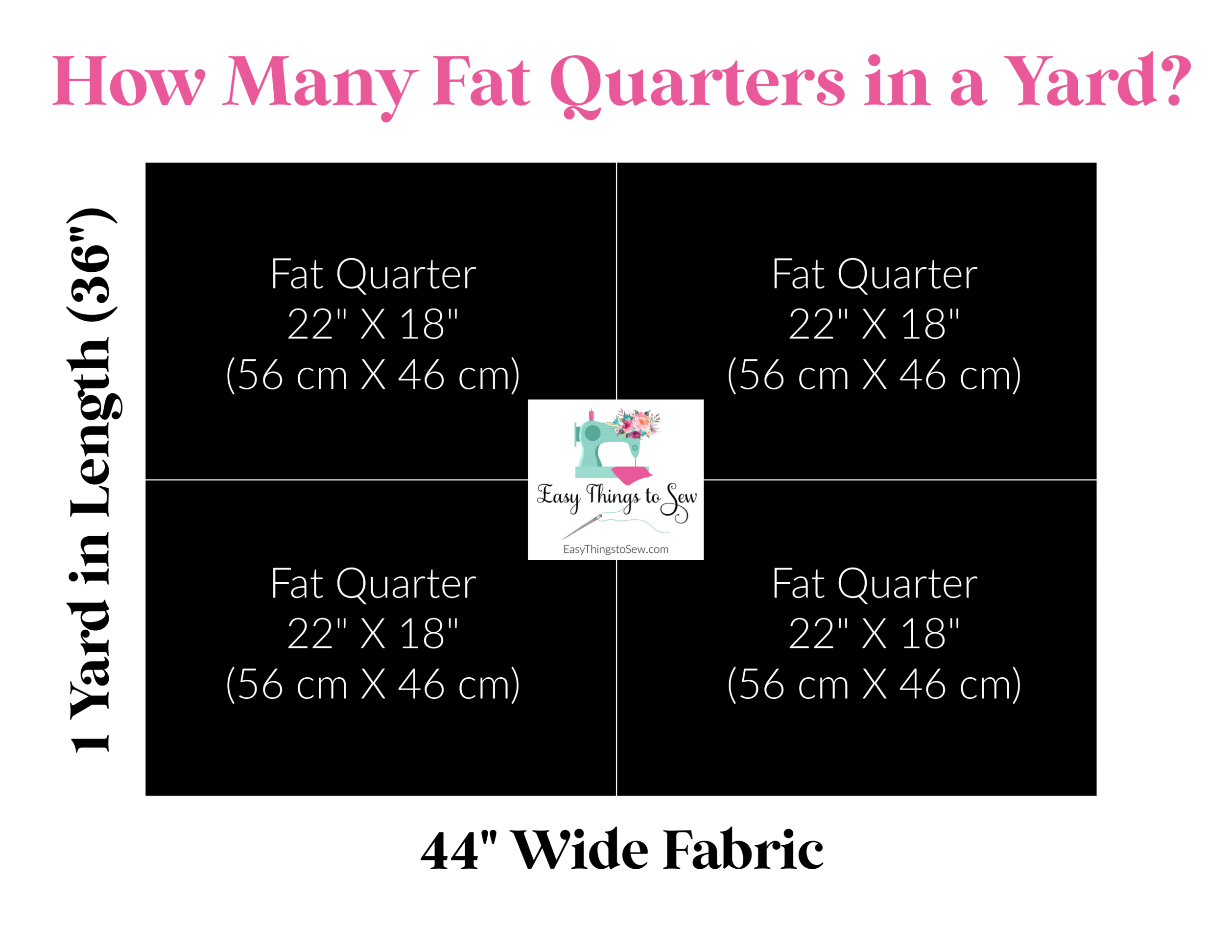
Image Source: easythingstosew.com
Deciphering Fabric Measurements for Quilters
The world of fabric can sometimes feel like a secret code. For quilters, precise measurements are everything. From the initial purchase of quilting fabric yardage to the final assembly of a project, every inch counts. This guide aims to demystify common fabric terms and conversions, focusing on the ever-popular fat quarter.
The Humble Yard: A Foundation of Fabric
A standard yard of fabric, when purchased from a bolt, typically measures 36 inches in length. The width of the fabric, however, can vary. Most quilting cottons come in widths of 40/42 inches or 44/45 inches. It’s important to note this width when planning projects, as it directly impacts how many pieces you can cut from a single purchase.
- Standard Yard Length: 36 inches
- Common Fabric Widths: 40/42 inches or 44/45 inches
When we talk about fabric per yard quilting, we are usually referring to the length. The width is a secondary, but still important, consideration.
Introducing the Fat Quarter: A Quilter’s Best Friend
A fat quarter is a popular cut of fabric, especially for quilters. It’s designed to provide a generous piece of fabric that is more usable for a wider variety of quilting blocks than a traditional “long quarter.”
A traditional long quarter is cut by taking a full yard (36 inches) and cutting it in half lengthwise, resulting in a piece that is 36 inches by approximately 21/22 inches (half the bolt width).
A fat quarter, on the other hand, is created by taking a full yard and cutting it in half widthwise, and then cutting that half in half lengthwise. This results in a piece that is approximately 18 inches by 22 inches (half of the 36-inch length, and half of the bolt width).
The key difference is the shape:
* Long Quarter: 36 inches x ~21/22 inches (Long and narrow)
* Fat Quarter: 18 inches x ~22 inches (More square-ish)
This “fatter” shape makes fat quarters much more versatile for cutting larger quilt blocks and motifs without distortion.
The Core Conversion: Yardage to Fat Quarters
Now, let’s get to the heart of the matter: How many fat quarters in a yard?
Imagine you have a standard yard of fabric, measuring 36 inches long and, let’s say, 44 inches wide.
To create fat quarters from this yard, you would first cut the yard in half lengthwise. This would give you two pieces, each measuring 36 inches long and approximately 22 inches wide.
Now, take one of those 36-inch by 22-inch pieces. You then cut this piece in half across its length. This means cutting it at the 18-inch mark along the 36-inch side.
This process results in two pieces, each measuring 18 inches by 22 inches. These are your fat quarters!
Since you started with one full yard and made these cuts from the two 36-inch by 22-inch halves, you will get four fat quarters from one yard of fabric.
Here’s a visual breakdown of the fat quarter conversion:
- Start with: 1 yard of fabric (36″ x 44″)
- Step 1 (Lengthwise Cut): Cut the 1 yard piece in half across the width.
- You get two pieces: 36″ x 22″ each.
- Step 2 (Widthwise Cut): Take each of those 36″ x 22″ pieces and cut them in half across their 36″ length.
- From the first 36″ x 22″ piece, you get two 18″ x 22″ pieces (Fat Quarters).
- From the second 36″ x 22″ piece, you get another two 18″ x 22″ pieces (Fat Quarters).
- Result: A total of 4 fat quarters, each measuring approximately 18″ x 22″.
This fat quarter yardage calculation is fundamental for many quilting projects where you need a variety of small fabric pieces.
The Mathematics Behind the Cuts
Let’s look at the area:
- Area of 1 yard (36″ x 44″): 36 * 44 = 1584 square inches
- Area of 1 fat quarter (18″ x 22″): 18 * 22 = 396 square inches
- Total area of 4 fat quarters: 4 * 396 = 1584 square inches
As you can see, the total area of the four fat quarters precisely matches the area of the original yard of fabric, assuming a 44-inch width. This confirms our fat quarter conversion is accurate.
Standard Fat Quarter Size: Consistency is Key
The standard fat quarter size is generally accepted as 18 inches by 22 inches. This size is derived from cutting a yard of fabric (36 inches long) in half lengthwise (creating two 36-inch by ~22-inch pieces) and then cutting each of those pieces in half across the 36-inch length.
However, it’s important to remember that fabric widths can vary slightly. If you purchase fabric that is 40 inches wide, your fat quarters will be 18 inches by 20 inches. If you buy fabric that is 45 inches wide, you’ll get 18 inches by 22.5 inches. While these are slight variations, they are generally considered within the “fat quarter” category.
For most fabric measurements quilting, the 18″ x 22″ dimension is the benchmark. When planning your quilt fabric calculations, it’s always a good idea to check the specific width of the fabric you are using.
Why Fat Quarters are So Popular
Fat quarters offer a distinct advantage for quilters:
- Better Motifs: The wider dimension allows for centering and showcasing specific motifs or parts of a print, which is often difficult with long quarters.
- Variety: For scrap quilts or projects requiring many different fabrics, buying fat quarters is an economical way to get a good variety of prints.
- Ease of Use: The square-ish shape is easier to handle and store than long, narrow strips.
- Project Planning: Many quilt patterns are designed specifically with fat quarters in mind, simplifying the fabric per yard quilting planning process.
How to Cut Fat Quarters Efficiently
Knowing how to cut fat quarters correctly ensures you maximize your fabric and get the desired dimensions. Here’s a step-by-step guide:
- Start with a Full Yard: Lay your yard of fabric out smoothly on a large cutting surface. Ensure there are no wrinkles.
- First Cut (Lengthwise): Locate the center of the fabric’s width. Using a rotary cutter and a long ruler, cut the fabric precisely in half along its entire length. You will now have two long pieces, each half the original width and the full 36-inch yard length.
- Example: If your fabric is 44 inches wide, you’ll have two pieces that are 36 inches long by 22 inches wide.
- Second Cut (Widthwise): Take one of the long pieces. Locate the center of its 36-inch length (at the 18-inch mark). Using your ruler and rotary cutter, cut this piece in half across its length.
- Example: You’ll cut the 36″ x 22″ piece at the 18″ mark, creating two 18″ x 22″ pieces. These are your fat quarters.
- Repeat: Repeat step 3 with the second long piece to get two more fat quarters.
You will now have four identical fat quarters, each approximately 18 inches by 22 inches.
Tips for Precise Cutting:
- Sharp Rotary Blade: A sharp blade is crucial for clean cuts and preventing fraying.
- Accurate Ruler: Use a quilting ruler with clear markings.
- Cutting Mat: A self-healing cutting mat is essential for protecting your surfaces and blades.
- Smooth Fabric: Always ensure your fabric is flat and free of wrinkles before cutting.
- Measure Twice, Cut Once: Double-check your measurements before making any cuts.
Calculating Fabric Needs: From Yards to Fat Quarters
When you’re planning a quilt, you often see fabric requirements listed in yards or as a specific number of fat quarters. Being able to convert between these is a key skill in sewing fabric yardage management.
Scenario 1: Pattern calls for yards, you want to buy fat quarters.
If a pattern needs 2 yards of a specific fabric, and you prefer to buy it in fat quarters, you know that 1 yard equals 4 fat quarters. Therefore, 2 yards would equal 8 fat quarters.
Scenario 2: Pattern calls for fat quarters, you want to buy by the yard.
If a pattern needs 12 fat quarters, and you want to buy fabric by the yard, you can calculate:
12 fat quarters / 4 fat quarters per yard = 3 yards.
This yardage to fat quarters calculation is straightforward and vital for budgeting and purchasing.
Example: Calculating for a Quilt
Let’s say you’re making a quilt that requires 3 yards of a specific print.
- Method 1: Buying by the yard: You would purchase 3 yards of that print. The shop would cut you a single piece of fabric measuring 3 yards (108 inches) long and the full width of the bolt (e.g., 44 inches).
- Method 2: Buying fat quarters: You need 3 yards * 4 fat quarters/yard = 12 fat quarters of that print. You would likely buy 3 yards and then cut it yourself into 12 fat quarters, or if the store offers it, buy 12 pre-cut fat quarters of that fabric.
The choice between buying by the yard or in fat quarters often depends on your project’s needs and how you prefer to work with fabric. If you need large pieces, buying by the yard is usually more efficient. If you need a variety of smaller pieces or want to showcase motifs, fat quarters are ideal.
Beyond the Basic Yard: Other Fabric Measurements in Quilting
While the yard is a primary unit, other fabric measurements quilting are important to know.
The Fat Eighth
A fat eighth is similar to a fat quarter but is cut from a half yard. A half yard is 18 inches long.
- Traditional Half Yard: 18 inches x 44 inches (wide)
- Fat Eighth: 9 inches x 22 inches (cut by dividing the 18″ length in half)
So, from one yard of fabric, you can get:
- 4 Fat Quarters (18″ x 22″ each)
- OR
- 8 Fat Eighths (9″ x 22″ each)
The fat quarter conversion to fat eighths is a simple halving of both dimensions if you were to cut a fat quarter further. However, fat eighths are typically cut from a half-yard piece from the start.
The Jelly Roll
A Jelly Roll is a pre-cut bundle of fabric strips, usually 42 strips, each measuring 2.5 inches wide by the full width of the fabric (approx. 44 inches). A Jelly Roll uses a full yard of fabric, but it’s cut into many long, thin strips.
The Layer Cake
A Layer Cake is a pre-cut bundle of squares, typically 42 squares, each measuring 10 inches by 10 inches. This also uses a full yard of fabric, but cut into squares.
These pre-cut bundles are popular for their convenience and are designed to work with specific patterns, streamlining sewing fabric yardage management for these particular items.
Frequently Asked Questions (FAQ)
Q1: Can I get more than four fat quarters from a yard of fabric?
No, the standard fat quarter conversion is four fat quarters per yard of fabric. This is based on the specific way fat quarters are cut to provide a more usable shape than traditional long quarters.
Q2: Does the width of the fabric affect the number of fat quarters I get from a yard?
The number of fat quarters (four) remains the same regardless of the fabric width. However, the exact dimensions of each fat quarter will vary slightly. A standard yard is 36 inches long. If the fabric is 40 inches wide, your fat quarters will be 18 inches x 20 inches. If it’s 44 inches wide, they will be 18 inches x 22 inches. The standard fat quarter size is based on the 18-inch dimension of the length.
Q3: What is the most efficient way to cut fat quarters?
Using a rotary cutter, quilting ruler, and a self-healing cutting mat is the most efficient and accurate method for how to cut fat quarters. Always ensure your fabric is laid flat and smooth before cutting.
Q4: Why are fat quarters called “fat”?
They are called “fat” quarters because they contain more usable fabric area compared to a “long” quarter. A long quarter is 36 inches by roughly half the bolt width (around 21-22 inches), making it long and narrow. A fat quarter is roughly 18 inches by 22 inches, giving it a more squarish shape that is better for cutting larger motifs or blocks. This difference is crucial for many fabric measurements quilting.
Q5: When should I buy fabric by the yard versus in fat quarters?
- Buy by the yard when you need large, continuous pieces for backing a quilt, making borders, or when a pattern specifically calls for a large amount of a single fabric. It’s also generally more economical if you need a lot of one fabric.
- Buy fat quarters when you need a variety of fabrics for a quilt or project, want to showcase specific prints or motifs, or when a pattern is designed to use fat quarters. They are excellent for “stash building” and for smaller projects where variety is key. This is a common practice when managing quilting fabric yardage.
Q6: How do I calculate how many yards of fabric I need if I want to use fat quarters?
Divide the total number of fat quarters needed by four (since there are four fat quarters in a yard) to determine the equivalent yardage. For example, if a pattern needs 20 fat quarters, you would need 20 / 4 = 5 yards of fabric. This is a key yardage to fat quarters calculation.
Q7: What are the dimensions of a standard fat quarter?
The standard fat quarter size is approximately 18 inches by 22 inches. The exact width can vary slightly depending on the original bolt width of the fabric.
Q8: Is fat quarter yardage always the same?
Yes, the conversion of fat quarter yardage is consistent: one yard of fabric yields four fat quarters. This is a standard quilting convention.
By familiarizing yourself with these fabric facts, you can confidently navigate your quilting projects, making informed decisions about your fabric purchases and ensuring you have precisely what you need. Happy quilting!