
So, how many fat quarters are in a yard of fabric? You can get four fat quarters from one yard of fabric. This is a common question for quilters and sewists, and knowing the answer is key to managing your fabric stash and planning projects.
Fabric is often sold by the yard, but many sewing and quilting projects call for smaller cuts of fabric, like fat quarters. A fat quarter is a popular quilting cut that offers a different shape and more usability than a traditional “long” quarter. Let’s dive into the specifics of fabric measurement and how to convert yardage to fat quarters.
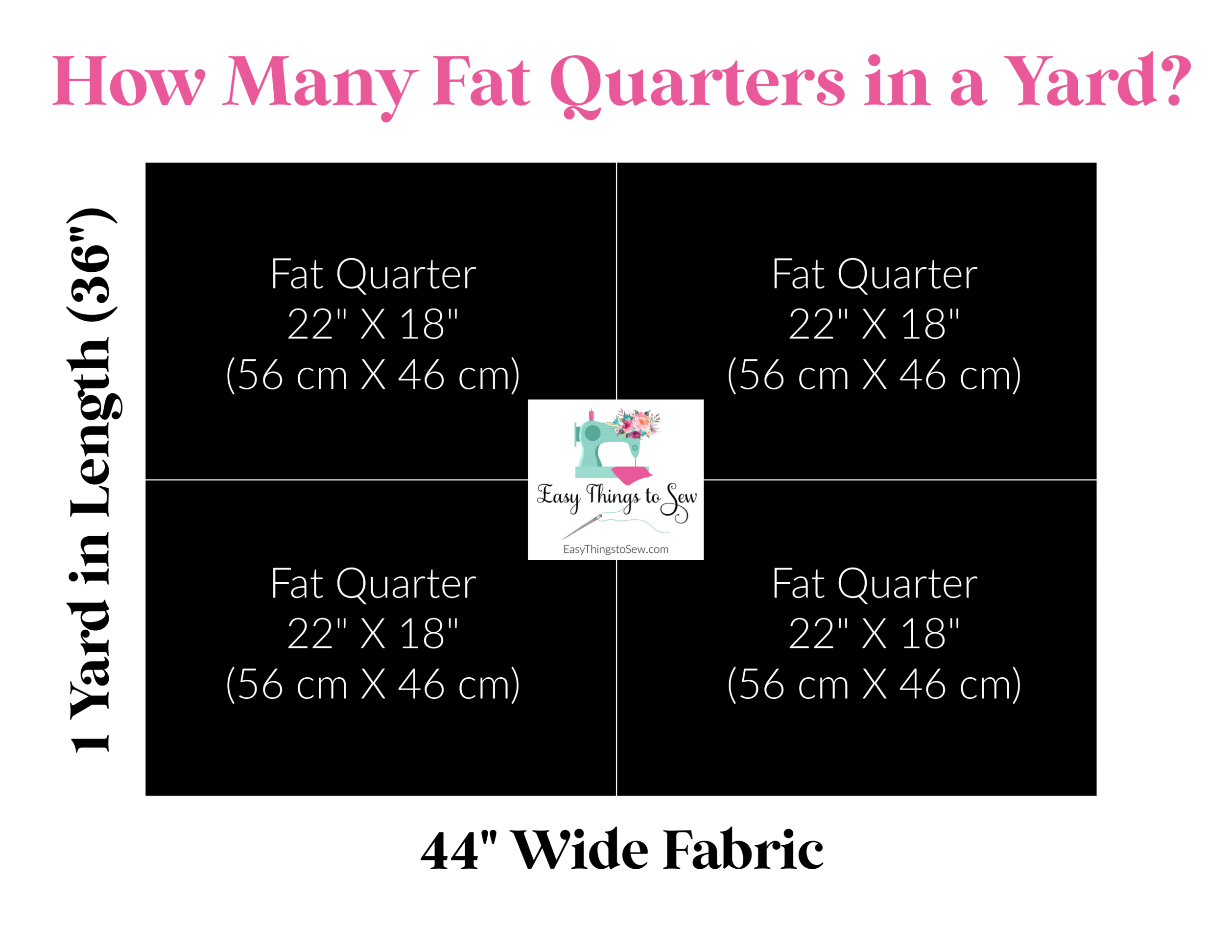
Image Source: easythingstosew.com
Decoding Fabric Measurements: Yards and Beyond
When you step into a fabric store or browse online, you’ll primarily encounter fabric yardage. This refers to the length of fabric rolled onto a bolt. A standard bolt of fabric is typically 44-45 inches wide, though some can be wider (like home decor or apparel fabrics) or narrower. The “yard” in fabric yardage is a unit of length, specifically 36 inches.
What is a Yard of Fabric?
A yard of fabric is simply a length of 36 inches. When you buy “one yard” of fabric, you are purchasing a piece that is 36 inches long and the full width of the bolt (usually 44-45 inches). This is the most basic unit of fabric measurement in many parts of the world.
The Wide World of Fabric Widths
While we often think of fabric width as standard, it’s important to remember that widths can vary. Quilting cottons are most commonly 44-45 inches wide. However, you might find:
- Apparel fabrics: Can range from 40 inches to 60 inches or more.
- Home decor fabrics: Often wider, sometimes 54 inches, 60 inches, or even 108 inches for widebacks.
- Specialty fabrics: Like flannel or knit fabrics, may also have different standard widths.
For the purpose of calculating fat quarters, we are primarily concerned with the standard 44-45 inch width of quilting fabric.
Introducing the Fat Quarter: A Quilter’s Delight
A fat quarter is a rectangular piece of fabric that is half a yard in length but cut differently than a standard “long” quarter.
What is a Standard Fat Quarter Size?
A standard fat quarter size is achieved by taking a half-yard cut of fabric (which is 18 inches long by the full width of the bolt) and cutting it in half lengthwise. So, if your fabric is 44 inches wide, a half-yard is 18 inches x 44 inches. When you cut that in half lengthwise, you get two pieces:
- Piece 1: 18 inches x 22 inches
- Piece 2: 18 inches x 22 inches
These two pieces are your fat quarters. Each fat quarter measures 18 inches by 22 inches. This shape is more versatile for quilting than a traditional “long” quarter, which would be 9 inches x 44 inches (half the length, full width).
Why the “Fat” in Fat Quarter?
The “fat” in fat quarter refers to the fact that it’s a “fatter” piece of fabric compared to a standard “long” quarter. The longer width (22 inches vs. 9 inches) makes it easier to cut larger quilt blocks and shapes without having to piece together multiple smaller scraps.
The Great Conversion: Yardage to Fat Quarters
Now, let’s get to the core of our question: how many fat quarters can you cut from a yard of fabric?
The Math Behind the Magic
A yard of fabric is 36 inches long. The width of the fabric is typically 44-45 inches.
-
One yard of fabric is 36 inches x 44/45 inches.
-
To make fat quarters, you first cut the yard in half lengthwise. This gives you two pieces, each 18 inches long (half of 36 inches) and the full width of the fabric (44-45 inches).
-
Each of these 18-inch x 44/45-inch pieces is then cut in half widthwise. This means you cut the 44/45-inch width in half, resulting in two pieces that are each approximately 22 inches wide.
So, from one yard of fabric (36 inches x 44/45 inches), you get:
- Two pieces of 18 inches x 44/45 inches.
- When you cut each of those in half widthwise, you get four pieces, each measuring 18 inches x 22 inches.
Therefore, there are four fat quarters in one yard of fabric. This is the fundamental fat quarter conversion.
Visualizing the Cut
Imagine a standard bolt of fabric, 44 inches wide. You buy a yard, which is 36 inches long.
+————————————–+ (44 inches wide) | | | | | | | ONE YARD | (36 inches long) | (44″ wide) | | | | | | | +————————————–+
First, cut the yard in half along the length. You’ll have two pieces, each 18 inches long.
Piece A (First Half-Yard)
+————————-+ (22 inches wide) | | | | | | | 18″ x 44″ | (18 inches long) | | | | | | +————————-+
Piece B (Second Half-Yard)
+————————-+ (22 inches wide) | | | | | | | 18″ x 44″ | (18 inches long) | | | | | | +————————-+
Now, cut each of these pieces in half widthwise, down the middle.
From Piece A:
+————+————+ (22 inches wide each) | | | | | | | | | | 18″ x 22″ | 18″ x 22″ | (18 inches long) | (Fat Qtr 1)| (Fat Qtr 2)| | | | | | | | | | +————+————+
From Piece B:
+————+————+ (22 inches wide each) | | | | | | | | | | 18″ x 22″ | 18″ x 22″ | (18 inches long) | (Fat Qtr 3)| (Fat Qtr 4)| | | | | | | | | | +————+————+
As you can see, you end up with four fat quarters. This is the standard fabric calculation for this conversion.
The Importance of Fabric Width in Yardage to Fat Quarters
While we’ve established that four fat quarters come from a yard of standard quilting fabric, it’s crucial to re-emphasize the role of fabric width. If you are working with fabric that is narrower or wider than the standard 44-45 inches, your fat quarter dimensions will change, even if you still get four pieces from a yard.
For example, if you have fabric that is 60 inches wide:
- A yard is 36 inches long x 60 inches wide.
- Cutting it in half gives you two pieces of 18 inches x 60 inches.
- Cutting those in half widthwise gives you four pieces of 18 inches x 30 inches.
These would still be considered “fat quarters” by some quilters due to the method of cutting, but their dimensions (18″ x 30″) differ from the standard (18″ x 22″). Always check your fabric width to know the exact dimensions of your fat quarters.
Practical Applications for Fat Quarters
Knowing that you get four fat quarters per yard is incredibly useful for:
Project Planning and Fabric Estimation
Many quilt patterns and sewing fabric projects are designed with fat quarters in mind. When a pattern calls for, say, 20 fat quarters, you know you need to purchase 5 yards of fabric (20 fat quarters / 4 fat quarters per yard = 5 yards). This simplifies fabric yardage calculations significantly.
Maximizing Fabric Usage
The fat quarter cut is popular because it’s more economical for cutting smaller pieces than buying a full yard and then cutting it into many small strips. It provides a good balance of length and width for a variety of quilting blocks and other sewing projects.
Stash Building and Organization
Fat quarters are a favorite for building a fabric stash. They are manageable in size, making them easier to store and organize than larger cuts. Many fabric lines are also released in “charm packs” (pre-cut squares) or “layer cakes” (pre-cut larger squares), which are often derived from fat quarters or similar cuts, further streamlining the process of using coordinated fabrics.
Working with Different Fabric Types
While fat quarters are most common in quilting fabric, particularly cotton, the concept can be applied to other fabric types as well. However, the handling and cutting may differ. For instance, delicate silks or slippery satins might be more challenging to cut into precise fat quarters without shifting. Stretchy knits would also require different handling.
Calculating Fat Quarters from Other Yardage Amounts
Once you have the basic conversion down, calculating fat quarters from any amount of fabric yardage is straightforward.
Simple Calculation Formula
The formula is:
Number of Fat Quarters = Total Yards of Fabric × 4
Let’s look at some examples:
- 2 yards of fabric: 2 yards × 4 fat quarters/yard = 8 fat quarters
- 3.5 yards of fabric: 3.5 yards × 4 fat quarters/yard = 14 fat quarters
- 0.75 yards of fabric (3/4 yard): 0.75 yards × 4 fat quarters/yard = 3 fat quarters
This simple fabric calculation is a lifesaver when planning projects.
Beyond the Fat Quarter: Other Fabric Cuts and Notions
While fat quarters are king for many quilters, it’s good to be aware of other fabric cuts and related quilting notions that can affect your projects.
Traditional Quarter Yards vs. Fat Quarters
- Traditional Quarter Yard: 9 inches x width of the fabric (e.g., 9″ x 44″).
- Fat Quarter: 18 inches x half the width of the fabric (e.g., 18″ x 22″ for a 44″ wide fabric).
As you can see, a fat quarter gives you more “usable” fabric for many patterns because it’s wider.
Pre-cut Fabric Packs
Many fabric manufacturers offer pre-cut fabric packs that are extremely popular and convenient:
- Charm Packs: Usually contain 42 squares of fabric, typically 5 inches x 5 inches. These are cut from larger pieces, often derived from yardage or fat quarters.
- Layer Cakes: Contain 42 squares of fabric, typically 10 inches x 10 inches.
- Jelly Rolls: Contain 40 strips of fabric, typically 2.5 inches x width of the fabric. These are usually cut from a bolt and then rolled.
- Honeycombs: Pre-cut hexagons.
These pre-cuts save a lot of time in cutting, especially for projects where you need many small, uniform pieces. However, they are often more expensive per yard than buying fabric by the bolt.
Essential Quilting Notions for Cutting
To accurately cut your fabric into fat quarters, you’ll need a few essential quilting notions:
- Rotary Cutter: A sharp rotary cutter is essential for clean, precise cuts.
- Self-Healing Cutting Mat: Protects your work surface and your rotary cutter.
- Quilting Rulers: Clear acrylic rulers with grid lines are vital for measuring and guiding your rotary cutter. Look for rulers with both inch and half-inch markings, and ideally, diagonal lines for squaring up.
- Fabric Shears (Optional but Recommended): For trimming selvages or making initial rough cuts.
The Selvage Edge: What It Is and Why It Matters
When you cut your fabric, you’ll notice a finished edge on one or both sides of the width. This is the selvage. It’s woven tighter than the rest of the fabric to prevent fraying. Selvages are often printed with the manufacturer’s name, fabric line, and colorway.
- When cutting fat quarters: It’s generally recommended to trim off the selvage edges before cutting your fat quarters. This ensures that all your pieces are made from the main, consistent part of the fabric and avoids any puckering or unevenness that might occur from the denser weave of the selvage.
Tips for Cutting Fat Quarters Accurately
Precision is key in quilting. Here are some tips to ensure your fat quarters are cut correctly and consistently:
Measure Twice, Cut Once
This old adage is especially true in quilting. Double-check your measurements before you cut.
Straighten Fabric Edges
Before you begin, ensure the end of your yardage is cut straight across the width. If it’s a factory cut, it should be good, but sometimes a slight angle can occur.
Use Your Cutting Mat and Ruler Effectively
- Align your quilting ruler along the edge of the fabric.
- Use the grid lines on the ruler to measure precisely.
- For the first cut (dividing the yard into two half-yards), measure 18 inches from the cut end of the fabric along the selvage edge. Place your ruler, and cut along the 18-inch mark across the entire width.
- For the second cut (dividing the half-yard into two fat quarters), you’ll have a piece that is 18 inches long and 44-45 inches wide. You need to cut this in half widthwise. Measure 22 inches from the selvage edge and place your ruler. Cut down the 22-inch mark. Repeat for the other half-yard piece.
Consider the Fabric Grain
When cutting fat quarters, you are essentially cutting the fabric along the grain (lengthwise) and then across the grain (widthwise). The 18-inch dimension will be parallel to the selvage (along the grain), and the 22-inch dimension will be across the grain. This is important for how the fabric will behave when you sew with it.
Dealing with Wider Fabrics
As mentioned, if your fabric is wider than 44-45 inches, you will still get four pieces from a yard, but the width of each fat quarter will be larger than 22 inches. If you need standard 18″ x 22″ fat quarters from wider fabric, you’ll need to adjust your cutting. For example, from a 60-inch wide fabric, you’d cut two 18″ x 30″ pieces, and then you would need to trim those down to 18″ x 22″ to get standard-sized fat quarters. This will result in some leftover fabric.
Frequently Asked Questions (FAQ)
Q: What is the standard width of quilting fabric?
A: The standard width for quilting fabric is typically 44 to 45 inches.
Q: Can I get fat quarters from any fabric yardage?
A: Yes, you can cut fat quarters from any fabric yardage using the method described, but the resulting dimensions will vary if the fabric width is not standard. For true “fat quarters” with standard dimensions (18″ x 22″), you’ll get them from standard width fabric.
Q: How much fabric do I need for a quilt that uses 30 fat quarters?
A: You will need 30 fat quarters / 4 fat quarters per yard = 7.5 yards of fabric.
Q: Are fat quarters better than long quarters?
A: Neither is definitively “better.” It depends on your project. Fat quarters are more versatile for cutting larger blocks and shapes, while long quarters are better if your pattern requires long, narrow strips of fabric.
Q: What if my fabric is only 40 inches wide?
A: If your fabric is 40 inches wide, a yard is 36 inches x 40 inches. Cutting this into four fat quarters would result in pieces that are 18 inches x 20 inches.
Q: Do I need to account for shrinkage when cutting fat quarters?
A: It’s always a good idea to pre-wash your fabric before cutting, as it may shrink. If you pre-wash your yardage, ensure you measure it accurately after washing to determine the actual dimensions before cutting your fat quarters.
By familiarizing yourself with these measurements and calculations, you’ll be well-equipped to tackle any quilting or sewing project that calls for fat quarters, making your fabric management more efficient and enjoyable. Happy sewing!