
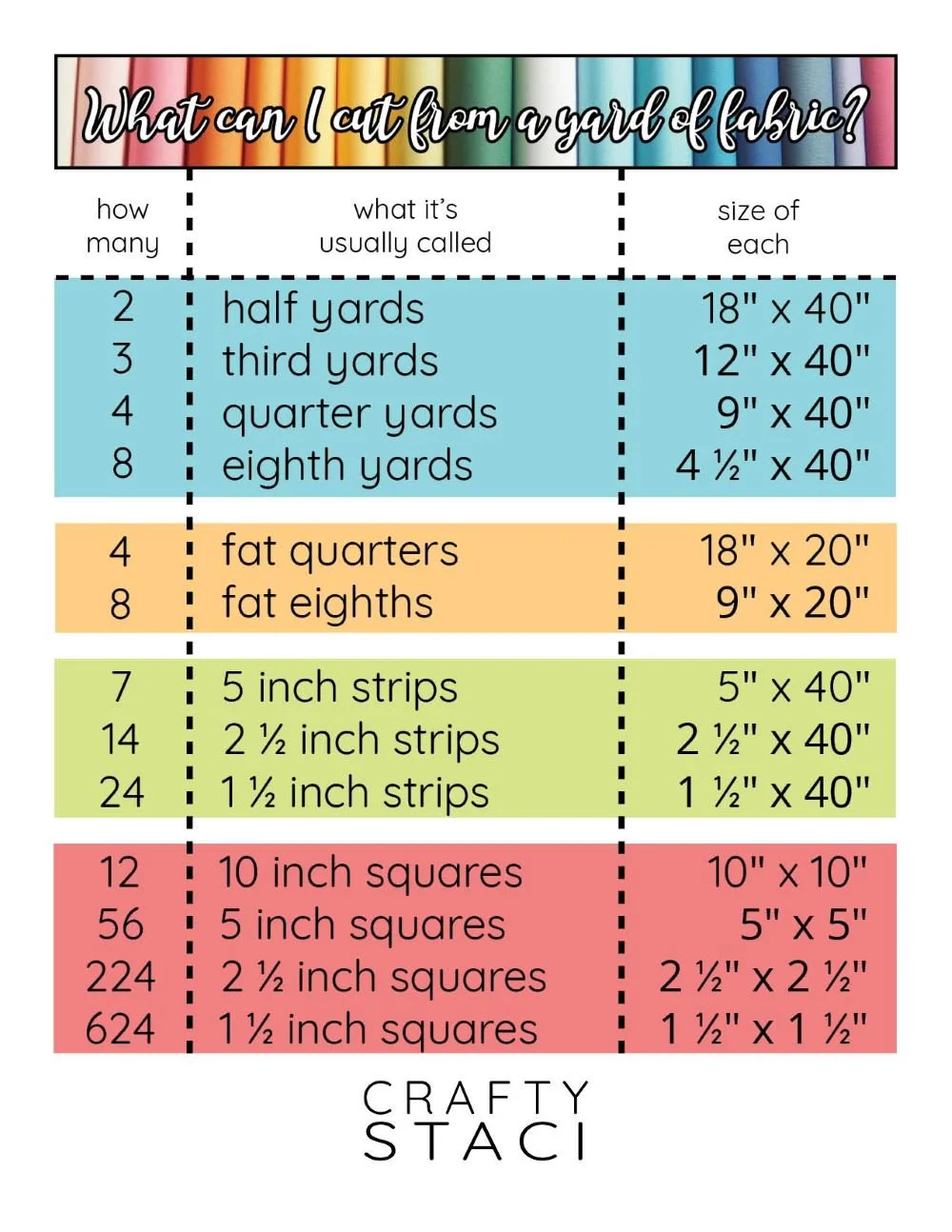
Image Source: images.squarespace-cdn.com
How Many 10×10 Squares In A Yard Of Fabric?
To figure out how many 10×10 inch squares you can get from a yard of fabric, you need to know that a standard yard of fabric is 36 inches long and typically comes in a width of 44 or 60 inches. A yard of fabric is 3 feet long, which equals 36 inches. When considering fabric measurements, especially for sewing projects, it’s important to know the dimensions you’re working with.
Deciphering Fabric Measurements
Fabric is sold by the yard, but this refers to its length. The width of the fabric, known as the selvedge to selvedge width, can vary. This is a crucial detail when calculating fabric quantity for any project. For example, if you buy a yard of fabric that is 44 inches wide, you have a piece that is 36 inches long and 44 inches wide.
Calculating Fabric Squares
The goal is to determine how many 10×10 inch squares fit into this piece of fabric. This is a common task for quilters and crafters who often need specific sized pieces for their sewing projects. Calculating fabric squares involves simple division based on the dimensions of your fabric and the desired square size.
Working with Square Feet in a Yard
While fabric is often measured in yards and inches, you might also think about the area in square feet in a yard. A standard yard is 3 feet by 3 feet, so a square yard of fabric contains 9 square feet. However, since fabric width varies, a square yard is not a fixed 3ft x 3ft piece in terms of fabric width. It’s more helpful to stick to inches for precise calculations.
Fabric Yardage Explained
Fabric yardage is the amount of fabric you purchase, measured in yards. When you buy, say, one yard of fabric, you’re buying a length of 36 inches. The width is an independent factor. So, when we talk about fabric calculations, we always need to consider both length and width.
The Dimensions of Our Fabric
Let’s assume we have a typical quilting cotton. These fabrics often come in a width of 44 inches. So, our square yard of fabric (in terms of length) is 36 inches long and 44 inches wide.
Creating 10×10 Inch Squares
We want to cut 10×10 inch squares. This means each square has a side length of 10 inches.
How Many Squares Fit Along the Length?
- Fabric Length: 36 inches
- Square Side Length: 10 inches
To find out how many squares fit along the length, we divide the fabric length by the square side length:
36 inches / 10 inches = 3.6
This means we can fit 3 full 10-inch squares along the 36-inch length, with 6 inches of fabric left over.
How Many Squares Fit Along the Width?
Now, let’s consider the width. We’ll use a common fabric width of 44 inches.
- Fabric Width: 44 inches
- Square Side Length: 10 inches
To find out how many squares fit along the width, we divide the fabric width by the square side length:
44 inches / 10 inches = 4.4
This means we can fit 4 full 10-inch squares along the 44-inch width, with 4 inches of fabric left over.
Total Number of 10×10 Squares
To get the total number of full 10×10 inch squares, we multiply the number of squares that fit along the length by the number that fit along the width:
Number of squares along length (full squares) = 3
Number of squares along width (full squares) = 4
Total 10×10 squares = 3 * 4 = 12
So, from a yard of fabric that is 36 inches long and 44 inches wide, you can cut 12 full 10×10 inch squares.
Visualizing the Layout
Imagine your fabric piece as a rectangle. You’re essentially trying to tile this rectangle with 10×10 inch squares.
^ +——————————+ | | S | S | S | S | | 10 inches | +——————————+ | | S | S | S | S | | 10 inches 36 +——————————+ inches | S | S | S | S | | 10 inches | +——————————+ v | | 6 inches +——————————+
- S represents a 10×10 inch square.
As you can see, we have 3 rows of 4 squares each, totaling 12 squares. There will be leftover strips of fabric.
What About Different Fabric Widths?
Fabric widths can vary. Common widths for quilting cotton include 44 inches and 60 inches. Let’s see how a wider fabric changes our calculation.
Fabric Width: 60 Inches
If our yard of fabric is 36 inches long and 60 inches wide:
- Fabric Length: 36 inches
- Fabric Width: 60 inches
- Desired Square Size: 10×10 inches
Squares along the length:
36 inches / 10 inches = 3.6 (So, 3 full squares)
Squares along the width:
60 inches / 10 inches = 6 (So, 6 full squares)
Total 10×10 squares:
3 squares * 6 squares = 18 squares
From a yard of fabric that is 36 inches long and 60 inches wide, you can cut 18 full 10×10 inch squares.
Table Comparison of Fabric Widths
Let’s summarize the number of 10×10 inch squares from one yard of fabric with different widths.
| Fabric Width (inches) | Length (inches) | Squares along Length (10-inch side) | Squares along Width (10-inch side) | Total 10×10 Squares |
|---|---|---|---|---|
| 44 | 36 | 3 | 4 | 12 |
| 60 | 36 | 3 | 6 | 18 |
Considering Fabric Shrinkage
It’s a common practice in sewing and quilting to pre-wash fabric. Fabric can shrink when washed, and this shrinkage can affect your fabric calculations. The amount of shrinkage varies by fabric type and washing method.
- Pre-washing: Always pre-wash your fabric if you intend to wash the finished item.
- Shrinkage Factor: If you expect 5% shrinkage, a 36-inch length might become 34.2 inches. You would then recalculate based on the new dimensions. For instance, with 34.2 inches of length:
- 34.2 inches / 10 inches = 3.42 (Still 3 full squares)
This is why experienced sewers often add a little extra fabric to their projects or ensure their cutting is precise after pre-washing. When planning sewing projects, always factor in potential shrinkage.
Optimizing Fabric Usage for Sewing Projects
When you’re cutting squares for sewing projects, efficient layout is key. Sometimes, you can rotate the squares or cut them in different orientations to maximize your yield, especially if you have odd-shaped leftovers. However, for uniform 10×10 inch squares, a grid layout is usually the most straightforward and efficient.
Leftover Fabric Considerations
After cutting the 10×10 squares, you’ll have some fabric left over.
- For 44-inch wide fabric: You’ll have a 6-inch strip along the length (36 inches – 3*10 inches = 6 inches) and a 4-inch strip along the width (44 inches – 4*10 inches = 4 inches). These smaller pieces can sometimes be used for smaller sewing projects or decorative elements.
- For 60-inch wide fabric: You’ll have a 6-inch strip along the length, but no leftover strip along the width as 60 inches is perfectly divisible by 10 inches (after accounting for the cuts).
Advanced Fabric Calculations
For more complex fabric calculations or if you need a very precise fabric quantity, you might use software or specialized cutting mats. However, for basic tasks like cutting 10×10 inch squares, manual calculation is usually sufficient.
Let’s break down the calculation steps clearly:
- Identify Fabric Dimensions: Get the exact length and width of your fabric. A standard yard is 36 inches long. The width can vary (e.g., 44″, 60″).
- Determine Desired Square Size: In this case, it’s 10 inches by 10 inches.
- Calculate Squares Along Length: Divide the fabric length by the side length of the square. Take the whole number result.
- Formula:
Floor(Fabric Length / Square Side Length)
- Formula:
- Calculate Squares Along Width: Divide the fabric width by the side length of the square. Take the whole number result.
- Formula:
Floor(Fabric Width / Square Side Length)
- Formula:
- Total Squares: Multiply the number of squares from step 3 by the number from step 4.
- Formula:
(Squares along Length) * (Squares along Width)
- Formula:
Example with Fabric Calculations for a Quilt
Imagine you’re making a quilt that requires 50 10×10 inch squares. You decide to buy fabric that is 60 inches wide.
- Fabric width: 60 inches
- Fabric length needed per row of squares across the width: 10 inches (since 60 / 10 = 6, you can get 6 squares across the width).
- Number of squares per yard (36″ length): 18 squares (as calculated earlier).
To get 50 squares:
* You need 50 / 18 = approximately 2.78 yards.
* You would buy 3 yards of fabric to be safe. This gives you 3 yards * 18 squares/yard = 54 squares, which is more than enough.
This shows how understanding fabric yardage and calculating fabric squares directly impacts how much material you need to buy for your sewing projects.
Dealing with Odd Dimensions and Waste
Sometimes, your fabric dimensions or the size of your desired squares might not divide evenly. For instance, if you needed 9×9 inch squares from 44-inch wide fabric:
- Length (36 inches): 36 / 9 = 4 squares
- Width (44 inches): 44 / 9 = 4.88 (So, 4 squares)
- Total: 4 * 4 = 16 squares
In this case, you have less waste along the width (44 – 4*9 = 44 – 36 = 8 inches of waste). This is where efficient cutting patterns can come into play.
The Importance of Accurate Measurements
When working with sewing fabric, accuracy is paramount. Even a small error in measuring or cutting can lead to a significant difference in the number of usable pieces. Always use a sharp rotary cutter and a self-healing mat for precise cuts, especially for multiple identical pieces. This ensures your fabric calculations translate correctly to your finished project.
Frequently Asked Questions (FAQ)
Q1: How many 10×10 squares can I get from half a yard of fabric?
A1: A half yard of fabric is 18 inches long.
* For 44-inch wide fabric:
* Length (18 inches): 18 / 10 = 1.8 (1 full square)
* Width (44 inches): 44 / 10 = 4.4 (4 full squares)
* Total: 1 * 4 = 4 squares.
* For 60-inch wide fabric:
* Length (18 inches): 18 / 10 = 1.8 (1 full square)
* Width (60 inches): 60 / 10 = 6 (6 full squares)
* Total: 1 * 6 = 6 squares.
Q2: Does fabric shrinkage affect how many 10×10 squares I can cut?
A2: Yes, it can. If you pre-wash your fabric, it may shrink. You should always measure your fabric after pre-washing and use those dimensions for your fabric calculations. It’s often safer to buy a little extra fabric than you think you need.
Q3: What if my fabric width isn’t a standard size?
A3: You simply use the actual width of your fabric in your calculations. If your fabric is, say, 50 inches wide, then for the width calculation: 50 inches / 10 inches = 5 squares.
Q4: Can I use the leftover fabric from cutting 10×10 squares?
A4: Yes! The leftover strips can be used for smaller sewing projects, such as patchwork for smaller items, making bias tape, or creating fabric scraps for stuffing or decorative purposes. It’s always good to keep usable scraps.
Q5: What is a square yard of fabric in terms of total area?
A5: While a yard is 36 inches, a square yard in a geometric sense is 3 feet x 3 feet, which is 36 inches x 36 inches. This is 1296 square inches. However, fabric is sold by length and width, so a “yard of fabric” refers to a 36-inch length of whatever width it is. A square yard of fabric doesn’t have a fixed width, so its total area varies.
Q6: How can I make my fabric calculations more precise?
A6: Use a clear ruler and a sharp rotary cutter. Ensure your cutting surface is flat and stable. Double-check your measurements before cutting. For critical projects, consider marking your cutting lines lightly with a fabric marker or chalk.
Q7: Where can I find information about different fabric widths?
A7: Fabric descriptions on online stores or product tags in physical stores will usually specify the width of the fabric. Common quilting cottons are often 44 inches or 60 inches wide. Upholstery fabrics can be much wider.
Q8: How do fabric measurements relate to square feet in a yard?
A8: A yard is 3 feet. So a square yard (geometrically) is 9 square feet. However, fabric comes in rolls with varying widths. If you have a yard of fabric that’s 44 inches (3.67 feet) wide, the area of that yard of fabric is 3 feet * 3.67 feet = 11.01 square feet. This helps visualize the total material, but for cutting specific pieces like 10×10 inch squares, using inch measurements is more practical.
Q9: What are some common uses for 10×10 inch squares in sewing projects?
A9: 10×10 inch squares are often used as pre-cut squares for quilting, especially for “stitch and flip” techniques or block assembly. They are also suitable for making cushion covers, placemats, or as components in larger fabric creations.
Q10: If I buy fabric by the half-yard, how does that affect fabric calculations?
A10: Buying fabric by the half-yard means you are purchasing a 18-inch length of fabric. You would use 18 inches as your length dimension in all your fabric calculations instead of 36 inches. This is useful for smaller sewing projects or when you only need a limited amount of fabric.