
A quarter of a yard is 9 inches, or 0.75 feet, or 0.2286 meters. This guide will help you figure out how much space a quarter yard takes up, especially when you’re working with materials like soil, gravel, or concrete.
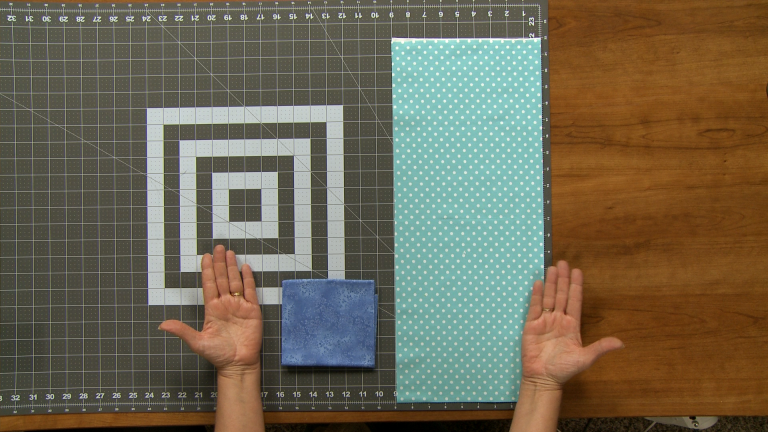
Image Source: d2culxnxbccemt.cloudfront.net
Deciphering 1/4 Yard Measurements
When you hear “a quarter yard,” it typically refers to a linear measurement. This means it’s a measurement of length or distance. Imagine a standard yardstick, which is 3 feet long. A quarter of that yardstick would be 9 inches. This simple measurement is crucial for many tasks, from sewing and crafting to more substantial projects like landscaping and construction.
Linear Quarter Yard
- In Inches: 1/4 yard = 9 inches
- In Feet: 1/4 yard = 0.75 feet (3 feet / 4)
- In Meters: 1/4 yard = 0.2286 meters
This linear measurement is the foundation for understanding larger quantities, especially when dealing with volume. For example, when you buy fabric, you might need 1/4 yard of a specific material. This tells you the length of fabric you’ll receive.
From Linear to Volume: The Cubic Yard
Where things get a bit more complex, and often more practical for bulk materials, is when we talk about cubic yards. A cubic yard is a unit of volume, meaning it measures three-dimensional space – length, width, and height.
What is a Cubic Yard?
A cubic yard is a cube that is 1 yard long, 1 yard wide, and 1 yard high. To visualize this, think of a cube the size of a large trash bin.
The Cubic Yard Conversion Explained
To move from a linear measurement (like a yard) to a volume measurement (like a cubic yard), we need to consider all three dimensions.
- Length: 1 yard = 3 feet
- Width: 1 yard = 3 feet
- Height: 1 yard = 3 feet
So, the volume of one cubic yard is:
1 yard × 1 yard × 1 yard = 1 cubic yard
or
3 feet × 3 feet × 3 feet = 27 cubic feet
Cubic Yard to Cubic Feet Conversion
This conversion is vital. Since 1 cubic yard equals 27 cubic feet, knowing this relationship helps immensely when calculating how much material you need.
Table: Cubic Yard to Cubic Feet Conversion
| Cubic Yards | Cubic Feet |
|---|---|
| 1 | 27 |
| 0.5 | 13.5 |
| 0.25 | 6.75 |
| 0.1 | 2.7 |
Fathoming 1/4 Cubic Yard
Now, let’s apply the concept of volume to our “quarter yard” question. When people ask “how big is 1/4 yard” in the context of materials, they usually mean 1/4 of a cubic yard.
1/4 Cubic Yard in Cubic Feet
Using our conversion:
1/4 cubic yard = 1/4 × 27 cubic feet = 6.75 cubic feet
So, 1/4 of a cubic yard is equivalent to 6.75 cubic feet. This might still be a bit abstract. Let’s break it down further.
Visualizing 1/4 Cubic Yard
Imagine a space that is:
- Length: 3 feet
- Width: 3 feet
- Height: 0.75 feet (or 9 inches)
Or, alternatively:
- Length: 4.5 feet
- Width: 3 feet
- Height: 1.5 feet
The shape can vary, but the total volume remains 6.75 cubic feet.
Table: Dimensions for 1/4 Cubic Yard (6.75 Cubic Feet)
| Length (ft) | Width (ft) | Height (ft) | Volume (cu ft) |
|---|---|---|---|
| 3 | 3 | 0.75 | 6.75 |
| 4.5 | 3 | 1.5 | 6.75 |
| 6 | 3 | 0.375 | 6.75 |
| 4 | 4 | 0.421875 | ~6.75 |
These examples help to picture the actual space that 1/4 cubic yard occupies.
Measuring Soil and Dirt Volume
One of the most common uses for 1/4 yard measurements is when measuring soil, dirt, mulch, sand, or gravel. Landscaping and gardening projects often require these materials in specific volumes.
Calculating Dirt Volume for Your Garden
Let’s say you want to add a 3-inch layer of topsoil to a garden bed that is 6 feet by 10 feet.
-
Convert all measurements to feet:
- Length = 10 feet
- Width = 6 feet
- Height (depth of soil) = 3 inches = 0.25 feet (3 inches / 12 inches per foot)
-
Calculate the volume in cubic feet:
Volume = Length × Width × Height
Volume = 10 ft × 6 ft × 0.25 ft = 15 cubic feet -
Convert cubic feet to cubic yards:
Since 1 cubic yard = 27 cubic feet, we divide our cubic feet by 27:
15 cubic feet / 27 cubic feet/cubic yard ≈ 0.56 cubic yards
So, for this garden bed, you would need a little over half a cubic yard of soil. If you were ordering materials, you might round up to the nearest convenient amount, perhaps 0.75 cubic yards or even 1 cubic yard if smaller increments aren’t available or if you want extra.
How Much is 1/4 Yard of Soil in Practical Terms?
If you order 1/4 cubic yard of soil (which is 6.75 cubic feet), how much area can you cover with a typical depth? Let’s assume you want to add 3 inches (0.25 feet) of soil.
Area = Volume / Height
Area = 6.75 cubic feet / 0.25 feet = 27 square feet
This means 1/4 cubic yard of soil can cover a rectangular area of 27 square feet with a depth of 3 inches. For example, it could cover a 3 ft by 9 ft area, or a 4.5 ft by 6 ft area, to a depth of 3 inches.
Landscaping Materials: Gravel and Mulch
Landscaping materials like gravel and mulch are also commonly sold by the cubic yard. Knowing 1/4 yard measurements is crucial for material quantity estimation.
Gravel Quantity for a Pathway
Suppose you’re building a small garden pathway that is 4 feet wide and 20 feet long, and you want a gravel depth of 4 inches.
-
Convert to feet:
- Width = 4 feet
- Length = 20 feet
- Height (depth) = 4 inches = 4/12 feet = 1/3 feet ≈ 0.333 feet
-
Calculate volume in cubic feet:
Volume = 4 ft × 20 ft × (1/3) ft = 80/3 cubic feet ≈ 26.67 cubic feet -
Convert to cubic yards:
26.67 cubic feet / 27 cubic feet/cubic yard ≈ 0.99 cubic yards
In this case, you would need very close to 1 full cubic yard of gravel. If you only needed about half of that, you’d be looking at approximately 0.5 cubic yards, which is roughly twice the amount of 1/4 cubic yard.
Mulch Application
For mulch, a common application depth is 3 to 4 inches. If you need to cover a 50 square foot area with 3 inches of mulch:
-
Convert depth to feet: 3 inches = 0.25 feet
-
Calculate volume in cubic feet:
Volume = 50 sq ft × 0.25 ft = 12.5 cubic feet -
Convert to cubic yards:
12.5 cubic feet / 27 cubic feet/cubic yard ≈ 0.46 cubic yards
This is slightly more than 1/4 cubic yard. So, 1/4 cubic yard of mulch would cover approximately 27 square feet to a depth of 3 inches.
Construction Materials and Concrete Volume
In construction, precise material quantity estimation is paramount. When dealing with concrete volume or other construction materials, understanding cubic yard measurements is essential.
Calculating Concrete Needs
Let’s say you’re pouring a small concrete patio slab that is 10 feet by 12 feet, and it needs to be 4 inches thick.
-
Convert thickness to feet: 4 inches = 4/12 feet = 1/3 feet
-
Calculate volume in cubic feet:
Volume = 10 ft × 12 ft × (1/3) ft = 120/3 cubic feet = 40 cubic feet -
Convert to cubic yards:
40 cubic feet / 27 cubic feet/cubic yard ≈ 1.48 cubic yards
For this project, you would need approximately 1.5 cubic yards of concrete. If you needed roughly half of that, you would be looking at about 0.75 cubic yards, which is three times the amount of 1/4 cubic yard.
Understanding Small Concrete Orders
If you only need a very small amount of concrete, say for a small footing or a repair, you might order it by the bag. Concrete bags are often sold in 60 lb or 80 lb sizes. These bags yield a certain volume of concrete.
- An 80 lb bag of concrete mix typically yields about 0.6 cubic feet of concrete.
- A 60 lb bag of concrete mix typically yields about 0.45 cubic feet of concrete.
To get 1/4 cubic yard (6.75 cubic feet), you would need:
- Using 80 lb bags: 6.75 cu ft / 0.6 cu ft/bag ≈ 11.25 bags. So, you’d need about 12 bags.
- Using 60 lb bags: 6.75 cu ft / 0.45 cu ft/bag = 15 bags.
This shows how even small projects can accumulate into larger volumes.
Practical Tools for Measuring
When working with bulk materials, you often receive them in piles. Accurately estimating these piles can be challenging.
Estimating Pile Volumes
A common way to estimate the volume of a conical or pyramidal pile of material is to approximate its shape.
- Conical Pile: The volume of a cone is (1/3) * π * r² * h, where ‘r’ is the radius and ‘h’ is the height.
- Pyramidal Pile: The volume of a square pyramid is (1/3) * base_area * h.
However, for practical purposes, especially when estimating from a supplier’s description, they often simplify. A common rule of thumb for estimating the volume of loose materials like gravel or mulch in a pile is:
- Measure the diameter of the base of the pile (across the widest part).
- Measure the height of the pile at its tallest point.
- Use an online calculator or a formula that approximates the volume.
For example, if you have a pile of mulch that is roughly a cone with a base diameter of 6 feet and a height of 3 feet:
- Radius (r) = Diameter / 2 = 6 ft / 2 = 3 ft
- Height (h) = 3 ft
- Volume (approximate cone) = (1/3) * π * (3 ft)² * 3 ft
- Volume = (1/3) * π * 9 sq ft * 3 ft = 9π cubic feet ≈ 28.27 cubic feet
Converting to cubic yards: 28.27 cubic feet / 27 cubic feet/cubic yard ≈ 1.05 cubic yards.
This means a pile of that size holds roughly 1 cubic yard of material. 1/4 yard measurements would be about a quarter of that volume.
Tools for Measuring Volume
- Measuring Tape: Essential for getting linear dimensions.
- Shovel and Wheelbarrow: Useful for moving and measuring smaller quantities. If your wheelbarrow has a known capacity (e.g., 3 cubic feet), you can count the number of wheelbarrow loads to approximate volume.
- Calculators (Online or Manual): Crucial for converting measurements and calculating volumes.
- Buckets: For very small, precise amounts, though less common for bulk materials.
When you order materials, especially for smaller jobs, you might be able to specify amounts like 1/2 cubic yard or even smaller fractions if the supplier offers them. However, typically, materials like soil and gravel are sold in full cubic yard increments or half cubic yards.
When Does 1/4 Yard Matter Most?
The precision of 1/4 yard measurements becomes important in several scenarios:
- Small Projects: For garden beds, small retaining walls, or decorative gravel areas, exact measurements prevent over or under-ordering.
- Budgeting: Knowing precise quantities helps in accurately budgeting for projects.
- Material Efficiency: Ordering the right amount of material means less waste and a more efficient use of resources.
- Specific Landscaping Needs: Some plants or garden features might require a very specific depth of soil or mulch, making precise measurement valuable.
- DIY Calculations: When you’re doing the work yourself, accurate material quantity estimation can save you trips to the store and money.
Common Pitfalls to Avoid
- Confusing Linear Yards with Cubic Yards: This is the most common mistake. A yardstick is 1 linear yard. A cubic yard is a 3ft x 3ft x 3ft cube.
- Not Accounting for Compaction: Loose materials like soil and mulch can compact significantly after installation. It’s often advisable to order slightly more than your calculated amount, especially for mulch, which can compress by 20-30%.
- Inaccurate Measurements: Ensure your measurements are as precise as possible. Measure in multiple spots and take an average if the area isn’t perfectly rectangular.
- Ignoring Material Form: Dry sand will take up more volume than wet sand. Loose gravel will take up more volume than compacted gravel. The supplier’s stated volume is usually for the material in its delivered, uncompacted state.
Frequently Asked Questions (FAQ)
What is 1/4 yard in inches?
1/4 yard is equal to 9 inches.
How much space does 1/4 cubic yard of soil cover?
1/4 cubic yard of soil (6.75 cubic feet) can cover an area of approximately 27 square feet to a depth of 3 inches.
Is 1/4 yard a lot of gravel?
It depends on the project. For a small path or a decorative border, 1/4 yard of gravel can be a significant amount. For larger projects like driveway fill, it’s a relatively small quantity.
Can I order exactly 1/4 cubic yard of concrete?
Most concrete suppliers deal in minimum orders of 1 cubic yard or 0.5 cubic yards. For smaller quantities, you’d typically buy bags of concrete mix.
How do I calculate the amount of mulch I need?
Measure the length and width of the area you want to cover and decide on the desired depth (usually 3-4 inches). Convert all measurements to feet, multiply them together to get cubic feet, and then divide by 27 to convert to cubic yards. Remember to account for compaction.
By grasping the difference between linear and cubic measurements, and by using the conversion factor of 27 cubic feet per cubic yard, you can confidently tackle any project requiring materials measured in yards. Whether it’s measuring soil for your garden, calculating gravel quantity for a driveway, or estimating concrete volume for a patio, these 1/4 yard measurements and their larger cubic yard equivalents are your essential guides.