
The weight of a cubic yard of rocks can vary significantly, typically ranging from 2,000 to 3,000 pounds, depending on the type of rock, its size, and its density.
When you’re planning a landscaping project, construction job, or any other task that involves using bulk materials like rocks or gravel, knowing the weight of these materials is crucial. This knowledge helps you estimate quantities, plan for transportation, and budget effectively. A common unit of measurement for these materials is the cubic yard. But how much does a cubic yard of rocks actually weigh? The answer isn’t a single number; it depends on several factors. Let’s dive deep into the world of rock weight and explore what influences it.
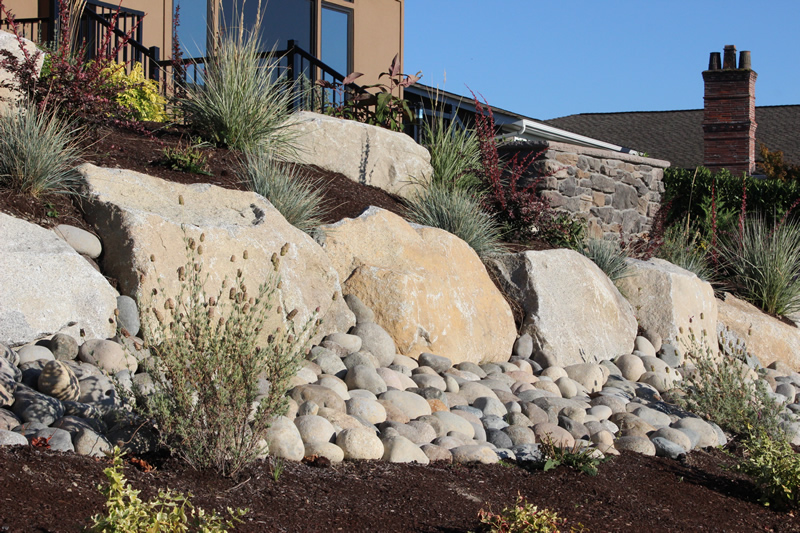
Image Source: www.earthhaulers.com
Deciphering Rock Density and Its Impact on Weight
The primary factor that determines how much a cubic yard of rocks weighs is rock density. Density is a measure of how much mass is contained in a given volume. In simpler terms, it’s how tightly packed the material is. Rocks are made of minerals, and different minerals have different densities. For instance, granite is denser than sandstone, meaning a cubic yard of granite will weigh more than a cubic yard of sandstone.
What is Rock Density?
Rock density is calculated by dividing the mass of a rock sample by its volume. It’s usually expressed in grams per cubic centimeter (g/cm³) or pounds per cubic foot (lb/ft³). Generally, the denser the rock, the heavier it will be for a given volume.
Factors Affecting Rock Density
- Mineral Composition: As mentioned, the types of minerals that make up the rock play a significant role. Rocks rich in heavy elements will have higher densities.
- Porosity: Some rocks have tiny pores or air spaces within them. These spaces reduce the overall density of the rock material.
- Moisture Content: Rocks can absorb water, which adds to their weight. A wet rock will weigh more than a dry rock of the same type.
The Weight of Gravel Per Cubic Yard: A Closer Look
When people talk about “rocks” for landscaping or construction, they often mean gravel. Gravel is a collection of small, loose rock fragments. The weight of gravel per cubic yard can vary even more widely than solid rock because of the spaces between the individual pieces.
Gravel Density Chart: What to Expect
A gravel density chart can give you a good idea of typical weights. These charts usually provide ranges because, as we’ve established, not all gravel is created equal.
Here’s a general idea of how the weight of gravel per cubic yard can vary:
| Type of Gravel | Typical Weight Per Cubic Yard (pounds) |
|---|---|
| Pea Gravel | 2,200 – 2,500 |
| Crushed Gravel (3/4″) | 2,400 – 2,700 |
| River Rock (various) | 2,300 – 2,600 |
| Decomposed Granite | 2,000 – 2,400 |
| Limestone Gravel | 2,500 – 2,800 |
| Granite Gravel | 2,600 – 2,900 |
| Recycled Concrete | 2,500 – 2,800 |
It’s important to remember these are estimates. The exact weight can be influenced by the size of the gravel pieces, how tightly they are packed, and their moisture content.
Cubic Yard of Crushed Stone Weight: Specifics for Construction
Crushed stone is a common aggregate used in construction for everything from road bases to concrete mixes. The cubic yard of crushed stone weight is a critical figure for contractors. Crushed stone typically consists of angular pieces of rock, which can affect how they pack together and, consequently, their weight.
Factors Influencing Crushed Stone Weight
- Size of Crushed Stone: Different grades of crushed stone (e.g., 1-inch, 2-inch, crusher run) will have slightly different densities due to the varying particle sizes and the amount of fine material (dust) present.
- Type of Rock Used: If the crushed stone is made from granite, it will likely be heavier than crushed limestone or sandstone.
- Compaction: How tightly the crushed stone is compacted can also influence the weight per cubic yard.
Generally, a cubic yard of crushed stone can weigh between 2,500 and 3,000 pounds. For example, a cubic yard of 3/4-inch crushed granite might be on the higher end of this range.
Landscape Rock Weight: Beautifying Your Yard
When selecting landscape rock weight, you’re often looking for decorative stones, boulders, or specialized gravels. These can vary dramatically in type and size.
Common Landscape Rocks and Their Weights
- Decorative Gravels: These are similar to the gravels discussed earlier but are often selected for their color and texture. Their weight will generally fall within the 2,000 to 2,800 pounds per cubic yard range.
- River Rocks: Smooth, rounded stones found in riverbeds. Their weight is typically in the 2,300 to 2,600 pounds per cubic yard range, depending on the specific rock type.
- Boulders: These are much larger, single pieces of rock. Their weight is calculated individually based on their volume and the rock’s density, rather than a per-cubic-yard measurement. A large boulder can weigh several tons!
Stone Material Density: The Scientific Basis
To truly grasp how much rocks weigh, we need to look at stone material density. This is the inherent property of the rock itself.
What is Stone Material Density?
Stone material density refers to the mass of a specific type of rock per unit volume, excluding any air spaces or voids within the rock itself. It’s the density of the solid mineral matter.
Here’s a look at the densities of common rock types:
| Rock Type | Typical Density (lb/ft³) | Typical Density (g/cm³) |
|---|---|---|
| Granite | 160 – 170 | 2.6 – 2.7 |
| Limestone | 155 – 165 | 2.5 – 2.6 |
| Sandstone | 145 – 155 | 2.3 – 2.5 |
| Basalt | 170 – 185 | 2.7 – 3.0 |
| Marble | 160 – 170 | 2.6 – 2.7 |
| Slate | 170 – 180 | 2.7 – 2.9 |
| Quartzite | 165 – 175 | 2.6 – 2.8 |
Note: These are approximate values. Actual densities can vary based on specific composition and porosity.
How to Calculate Rock Weight: Your DIY Guide
If you need a precise answer for your project, you might need to know how to calculate rock weight. This involves a few steps, but it’s quite manageable.
Step 1: Determine the Volume
You already know you’re working with a cubic yard (3 ft x 3 ft x 3 ft = 27 cubic feet). If you’re measuring a pile of rocks, you can approximate the volume using geometric shapes. For irregular piles, dividing the pile into smaller, measurable sections (like cones or rectangular prisms) and summing their volumes is a good approach.
Step 2: Find the Rock’s Density
This is the trickiest part.
* Research: If you know the specific type of rock, you can often find its typical density online or from material suppliers.
* Supplier Information: Reputable aggregate suppliers often have charts or data that list the approximate weight per cubic yard for their products.
* Experimentation (for precision): For exact figures, you could weigh a known volume of the material. However, this is usually impractical for large quantities.
Step 3: Calculate the Weight
Once you have the volume (in cubic feet) and the density (in pounds per cubic foot), the calculation is straightforward:
Weight (pounds) = Volume (cubic feet) × Density (pounds per cubic foot)
Remember that a cubic yard is 27 cubic feet. So, if you know the density in pounds per cubic foot, you can multiply it by 27 to get the approximate weight of a cubic yard.
Example:
Let’s say you have granite gravel with a density of 165 pounds per cubic foot.
Weight of 1 cubic yard = 165 lb/ft³ × 27 ft³ = 4,455 pounds.
This calculation gives you the weight of solid granite. However, gravel has air pockets. The supplier-provided weight per cubic yard (around 2,600-2,900 lbs for granite gravel) already accounts for these air spaces and the specific size grading of the gravel.
Aggregate Weight Per Cubic Yard: A Crucial Metric
The term aggregate weight per cubic yard is frequently used in construction and landscaping. Aggregates are materials like sand, gravel, and crushed stone. Their weight is critical for calculating the load-bearing capacity of structures and the amount of material needed.
Why Aggregate Weight Matters
- Transportation: Knowing the weight helps determine how much can be legally and safely hauled in a truck or trailer.
- Structural Calculations: Engineers use aggregate weight to calculate the strength and stability of concrete mixes, road bases, and foundations.
- Material Ordering: Accurate weight estimates prevent ordering too much or too little material, saving time and money.
Typical Aggregate Weights
Here’s a general table for common aggregates:
| Aggregate Type | Typical Weight Per Cubic Yard (pounds) |
|---|---|
| Sand (dry) | 2,700 – 3,000 |
| Gravel (3/4″ clean) | 2,600 – 2,900 |
| Crushed Stone (3/4″) | 2,500 – 2,800 |
| Topsoil (loose) | 1,000 – 1,500 |
| Mulch (wood chips) | 500 – 800 |
Note: These weights can fluctuate based on moisture content and specific material composition.
Stone Weight Calculator: Simplifying the Process
For those who need a quick estimate without deep diving into densities, a stone weight calculator can be invaluable. Many online resources and landscaping supply websites offer these tools. You typically input the type of stone and the volume (in cubic yards or even bags), and the calculator provides an estimated weight.
How Stone Weight Calculators Work
These calculators are pre-programmed with average densities for various types of rocks and aggregates. They use formulas similar to the one we discussed earlier to give you a handy estimate. While convenient, always remember they are approximations and the actual weight might vary.
Bulk Rock Prices: Cost Considerations
When purchasing rocks or gravel in bulk, the price is often quoted per cubic yard or per ton. Knowing the weight per cubic yard helps you compare prices and understand the value you’re getting.
Factors Influencing Bulk Rock Prices
- Type of Rock: Some rocks are rarer or more difficult to quarry and process, leading to higher prices.
- Processing: Crushed stone or specially screened gravel will generally cost more than raw, unprocessed rock.
- Delivery Costs: The distance from the quarry to your location significantly impacts the final price.
- Location: Regional market conditions and availability also play a role.
Price vs. Weight Comparison
If one supplier offers granite gravel at $40 per cubic yard and another offers it at $45 per ton, you’ll need to know the weight per cubic yard to compare fairly. If a cubic yard of that granite gravel weighs approximately 2,700 pounds (1.35 tons), the first supplier’s price is equivalent to $30 per ton ($40 / 1.35 tons), making it the more economical choice if the material is comparable.
How to Calculate Rock Weight: A Practical Approach
Let’s consolidate the practical steps for calculating rock weight for a project.
Your Project Planning Checklist:
- Identify the Material: Be specific about the type of rock or gravel you need (e.g., 3/4″ crushed granite, pea gravel, decorative river rock).
- Determine Required Volume: Calculate how many cubic yards you need based on your project’s dimensions (length x width x depth in feet, then divide by 27 to get cubic yards).
- Consult Supplier Data: The best source for weight estimates is your local aggregate supplier. They can provide specific weights per cubic yard for their products, which account for typical grading and moisture.
- Use a Reliable Online Calculator: If direct supplier data isn’t available, use a reputable stone weight calculator. Input the correct rock type and volume.
- Account for Compaction: Remember that if you’re ordering crushed stone or gravel that will be compacted (like for a driveway base), you might need slightly more volume initially to account for settling. A good rule of thumb is to add 10-15% extra.
- Factor in Moisture: If you’re working in wet conditions, expect the material to be heavier.
Final Thoughts on Rock Weight
The weight of gravel per cubic yard and the cubic yard of crushed stone weight are vital pieces of information for anyone undertaking a project that involves these materials. While the general range for rocks is wide, understanding rock density and the specific type of material you’re using will allow for accurate estimations. Whether you’re using a stone weight calculator or consulting a gravel density chart, always aim for the most specific information available for your chosen material. This will ensure efficient budgeting, successful transportation, and ultimately, a well-executed project.
Frequently Asked Questions (FAQ)
Q1: How much does a cubic yard of gravel weigh?
A cubic yard of gravel typically weighs between 2,000 and 3,000 pounds, depending on the type of gravel and its density.
Q2: Is a cubic yard of rocks always 2,000 pounds?
No, a cubic yard of rocks is not always 2,000 pounds. The weight varies greatly based on the rock’s type, density, size, and moisture content.
Q3: How can I calculate the weight of rocks for my project?
You can estimate rock weight by finding the rock density for your specific material and multiplying it by the volume (27 cubic feet for a cubic yard). Online stone weight calculators and supplier charts are also helpful.
Q4: What is the heaviest type of rock per cubic yard?
Denser rocks like basalt or some types of granite can be among the heaviest, often reaching towards the upper end of the 2,500-3,000+ pounds per cubic yard range when used as aggregate.
Q5: Does moisture affect the weight of rocks?
Yes, rocks can absorb water, making them heavier. A cubic yard of wet gravel will weigh more than a cubic yard of dry gravel of the same type.
Q6: How do I compare prices when buying rocks in bulk?
When comparing bulk rock prices, check if they are quoted per cubic yard or per ton. Use the typical weight per cubic yard for that rock type to convert prices and determine the most economical option.
Q7: What is the typical aggregate weight per cubic yard for sand?
Dry sand typically weighs between 2,700 and 3,000 pounds per cubic yard.