
So, how many wheelbarrows is a yard? The answer depends on the size of your wheelbarrow and the material you are moving, but typically, a standard wheelbarrow holds about 1/10th to 1/6th of a cubic yard. This means it will take between 6 to 10 full wheelbarrows to equal one cubic yard.
Moving materials like soil, gravel, or mulch is a common task in landscaping and construction. Often, you’ll hear quantities measured in “yards,” specifically cubic yards. This can leave many people wondering how to translate that into the more tangible, hands-on measurement of a wheelbarrow. This guide will help you figure out exactly how many wheelbarrow loads it takes to get the job done.
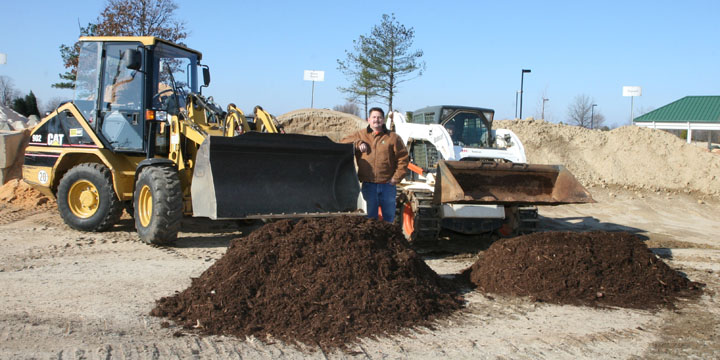
Image Source: www.southernmulch.com
Deciphering “A Yard”
When people talk about a “yard” in the context of landscaping or construction materials, they almost always mean a cubic yard. A cubic yard is a unit of volume. Imagine a perfect cube, three feet long, three feet wide, and three feet high. That entire cube of material is one cubic yard.
- Dimensions: 3 feet x 3 feet x 3 feet
- Total Volume: 27 cubic feet
This is crucial because wheelbarrow capacity is also measured in volume. Understanding this fundamental cubic yard conversion is the first step in our calculation.
Why Cubic Yards Matter
- Standard Measurement: It’s the industry standard for selling bulk materials like soil, mulch, sand, gravel, and even concrete.
- Accurate Ordering: Knowing how many cubic yards you need prevents over- or under-ordering, saving you time and money.
- Project Planning: It helps you estimate the labor and time required for your project.
Gauging Your Wheelbarrow’s Volume
The most important factor in answering “how many wheelbarrows fill a yard” is the wheelbarrow volume. Not all wheelbarrows are created equal. They come in various shapes and sizes, designed for different tasks.
Common Wheelbarrow Capacities
Wheelbarrows are often advertised by their capacity in cubic feet or gallons. While gallons can be converted to cubic feet, cubic feet is more directly comparable to cubic yards.
Here’s a general idea of common wheelbarrow capacity:
- Small/Household Wheelbarrows: Often around 2 to 4 cubic feet.
- Medium/Contractor Grade Wheelbarrows: Typically range from 4 to 6 cubic feet.
- Large/Heavy-Duty Wheelbarrows: Can hold 6 to 8 cubic feet or even more.
It’s essential to know the specific capacity of your wheelbarrow. Look for markings on the barrow itself, or check the manufacturer’s specifications.
How Much Does a Wheelbarrow Hold?
To get a precise measurement, you can:
- Fill your wheelbarrow with water: Use a measuring cup or bucket of known volume to fill it, then count how many times you fill the measuring tool. This is more accurate but can be impractical.
-
Measure the interior dimensions: If you have the exact length, width, and depth of the usable space in your wheelbarrow, you can calculate its volume.
- Formula for a Rectangular Prism (approximated): Volume = Length x Width x Depth
- Formula for a Trapezoidal Prism (more accurate for most wheelbarrows): Volume = (Top Width + Bottom Width) / 2 x Depth x Length
Remember to convert all measurements to feet if you’re aiming for cubic feet.
Material Volume Estimation
The material volume estimation isn’t always straightforward. Materials can settle, compact, or expand.
- Loose Materials: Sand, gravel, and mulch are typically measured loosely. A full, heaped wheelbarrow of loose material will contain more than a perfectly level one.
- Compacted Materials: Soil, especially when dug up and then loaded, can be compacted. This means a cubic yard of compacted soil might take more wheelbarrow loads than a cubic yard of fluffy mulch.
- Wet vs. Dry: Wet materials are heavier and can behave differently.
The “Heaped” vs. “Level” Load
This is where the guesswork often comes in.
- Level Load: Filling the wheelbarrow to the brim, but not mounding it over the top.
- Heaped Load: Mounding the material significantly above the rim.
For material volume estimation, it’s generally safer to assume you’ll be carrying level loads or slightly heaped loads when calculating how many wheelbarrows fill a yard. Overestimating the wheelbarrow’s capacity leads to more trips than necessary.
The Calculation: Wheelbarrows to Cubic Yards
Now, let’s put it all together. The core of the question, “how many wheelbarrows is a yard,” boils down to a simple division:
Number of Wheelbarrows = Volume of One Cubic Yard (in cubic feet) / Volume of Your Wheelbarrow (in cubic feet)
We know that one cubic yard is 27 cubic feet.
Example Calculations
Let’s consider a few common wheelbarrow capacity scenarios:
Scenario 1: A 5 Cubic Foot Wheelbarrow
- Wheelbarrow Volume: 5 cubic feet
- Cubic Yard Volume: 27 cubic feet
Number of Wheelbarrows = 27 cubic feet / 5 cubic feet/wheelbarrow = 5.4 wheelbarrows
In this case, you’d need about 5.5 level wheelbarrows to equal one cubic yard. It’s often rounded up to 6 wheelbarrows to account for slight variations or less-than-perfectly-full loads.
Scenario 2: A 4 Cubic Foot Wheelbarrow
- Wheelbarrow Volume: 4 cubic feet
- Cubic Yard Volume: 27 cubic feet
Number of Wheelbarrows = 27 cubic feet / 4 cubic feet/wheelbarrow = 6.75 wheelbarrows
For a 4 cubic foot wheelbarrow, you’re looking at about 6.75 loads. Rounding up to 7 loads is practical.
Scenario 3: A 6 Cubic Foot Wheelbarrow
- Wheelbarrow Volume: 6 cubic feet
- Cubic Yard Volume: 27 cubic feet
Number of Wheelbarrows = 27 cubic feet / 6 cubic feet/wheelbarrow = 4.5 wheelbarrows
With a larger 6 cubic foot wheelbarrow, you’d need around 4.5 loads. This means 5 full loads would likely cover one cubic yard.
Table: Wheelbarrow Loads Per Cubic Yard
Here’s a quick reference table based on common wheelbarrow sizes:
| Wheelbarrow Capacity (Cubic Feet) | Approx. Loads per Cubic Yard (27 cu ft) |
|---|---|
| 3 | 9 |
| 4 | 7 |
| 5 | 5.5 (round up to 6) |
| 6 | 4.5 (round up to 5) |
| 7 | 3.8 (round up to 4) |
| 8 | 3.4 (round up to 4) |
Important Note: These figures assume level or slightly heaped loads of material that doesn’t compact significantly.
Practical Applications: What Kind of Materials?
The type of landscaping materials you are moving will affect how precisely these calculations work.
Yard of Soil
When dealing with a yard of soil, remember that soil can vary greatly.
- Topsoil: Often measured when loose or slightly compacted.
- Garden Soil: May include compost and other organic matter, affecting its density.
- Clay Soil: Can be very dense and heavy when dry, and sticky and heavy when wet.
If you’re moving dirt measurement from a dug-out area, it might be looser than when it’s in the ground. It’s always a good idea to have a slightly larger wheelbarrow capacity or add an extra load or two if you’re unsure.
Gravel and Aggregate Calculation
For aggregate calculation, such as gravel or crushed stone, the size and shape of the pieces matter.
- Gravel: Generally flows and fills a wheelbarrow well.
- Crushed Stone: Can have sharp edges that might not pack as tightly.
- Sand: Tends to be dense and can be heavy, especially when wet.
When calculating for aggregate calculation, consider that a cubic yard of gravel might fill your wheelbarrow more consistently than a cubic yard of soil.
Concrete Volume
For concrete volume, the calculation is slightly different. While you might use a wheelbarrow to mix and move small batches of concrete, professional jobs use larger concrete mixers. If you’re moving mixed concrete in a wheelbarrow, it’s typically measured in bags that correspond to a certain wet concrete volume. A common DIY concrete mix bag (e.g., 60lb) yields about 0.5 cubic feet.
To get one cubic yard (27 cubic feet) of concrete from 0.5 cubic foot bags:
27 cubic feet / 0.5 cubic feet/bag = 54 bags
A wheelbarrow holding 4 cubic feet would therefore take:
27 cubic feet / 4 cubic feet/wheelbarrow = 6.75 wheelbarrows of mixed concrete.
This highlights that a wheelbarrow is a tool for small concrete jobs or for moving the dry ingredients.
Factors Affecting Wheelbarrow Loads
Beyond the basic wheelbarrow capacity, several factors influence the actual number of trips:
1. Material Density
Different materials have different densities. A cubic yard of feathers weighs far less than a cubic yard of lead. In landscaping, think about:
- Mulch: Lightweight, airy.
- Topsoil: Moderately dense.
- Gravel/Sand: Dense and heavy.
Heavier materials will fill the wheelbarrow’s volume capacity more quickly, meaning you might reach its weight limit before its volume limit, or vice versa, depending on the material.
2. Compaction and Settling
When you load a wheelbarrow, the material might settle. If you’re shoveling material that was previously compacted in the ground, it will likely be looser when you shovel it into the wheelbarrow. Conversely, if you are trying to move material that needs to be compacted, like base for a patio, you might want to load your wheelbarrow a little fuller to account for settling.
3. The Human Element (Shoveling Technique)
How efficiently you shovel makes a difference.
- Gentle Filling: If you carefully scoop material, you’ll get consistent loads.
- Aggressive Shoveling: Can lead to air pockets and less material in the barrow than you think.
- Heaping: Deliberately piling material high will increase the volume per load.
4. Wheelbarrow Type and Condition
- Single vs. Double Wheel: A single-wheelbarrow is more maneuverable but can be harder to balance with heavy loads. A double-wheelbarrow offers more stability.
- Tire Pressure: Properly inflated tires make it easier to push, allowing you to carry more effectively.
- Structural Integrity: A sturdy wheelbarrow can handle heavier loads without flexing.
Maximizing Efficiency: Tips for Moving Materials
To make your wheelbarrow work more effectively and accurately measure your material:
- Know Your Wheelbarrow: Measure its internal dimensions or find its listed capacity.
- Use a Template: If you’re moving a specific material repeatedly, you can create a simple cardboard template that matches the shape and height of your desired level load. Use this to ensure consistency.
- Level Your Loads: For the most accurate material volume estimation, aim for level loads. This makes the cubic yard conversion calculation more reliable.
- Factor in Spillage: Some materials, especially small gravel or dry soil, can spill easily. Try to avoid overfilling too much.
- Break Down Large Jobs: If you have many cubic yards to move, break the task into smaller, manageable chunks.
- Consider the Weight: While we’re focused on volume, remember that weight is also a factor. Don’t overload your wheelbarrow to the point where it’s unmanageable or damages the barrow.
Frequently Asked Questions (FAQ)
Q1: How many wheelbarrow loads of mulch to a cubic yard?
A standard 5 cubic foot wheelbarrow will hold about 5.4 loads to equal one cubic yard (27 cubic feet). So, plan for 5-6 full wheelbarrow loads of mulch. Mulch is generally lightweight.
Q2: How many wheelbarrows of gravel is a cubic yard?
Similar to mulch, a 5 cubic foot wheelbarrow needs about 5.4 loads. Gravel is denser than mulch, so your loads might feel heavier, but the volume calculation remains the same.
Q3: How many wheelbarrow loads of topsoil make a cubic yard?
For a 5 cubic foot wheelbarrow, you’ll need roughly 5.4 loads of topsoil. Topsoil’s density can vary; if it’s very compacted, you might need slightly more loads or smaller loads.
Q4: Can I use a smaller wheelbarrow for a cubic yard?
Yes, but it will take more trips. For instance, a 3 cubic foot wheelbarrow will require approximately 9 loads to equal one cubic yard.
Q5: Is there a standard wheelbarrow size?
While there isn’t one single “standard,” the 5 to 6 cubic foot capacity range is very common for contractor-grade wheelbarrows.
Q6: What is a cubic yard in square feet?
A cubic yard is a measure of volume, while a square foot is a measure of area. You cannot directly convert cubic yards to square feet. A cubic yard is 3ft x 3ft x 3ft = 27 cubic feet. A square foot is 1ft x 1ft.
Q7: How do I calculate the volume of my wheelbarrow if it’s not a perfect shape?
For irregularly shaped wheelbarrows, it’s best to use an approximation method like filling it with known volumes of water or sand and measuring. Alternatively, break the shape down into simpler geometric forms (like cylinders and trapezoids) and calculate each part.
By now, you should have a solid grasp on how many wheelbarrows it takes to make a yard. It’s a practical calculation that can save you a lot of effort and guesswork on your next project!