
A cubic yard of pea gravel typically weighs between 1.4 and 1.7 tons. This range can fluctuate based on the specific type of stone, its moisture content, and how densely it’s compacted.
Planning a landscaping project or a construction job often involves ordering materials like pea gravel. A common question that arises is, “How many tons in a yard of pea gravel?” This isn’t a simple one-size-fits-all answer because several factors influence the weight. Let’s dive deep into what determines the pea gravel weight per cubic yard and how to accurately estimate your needs.
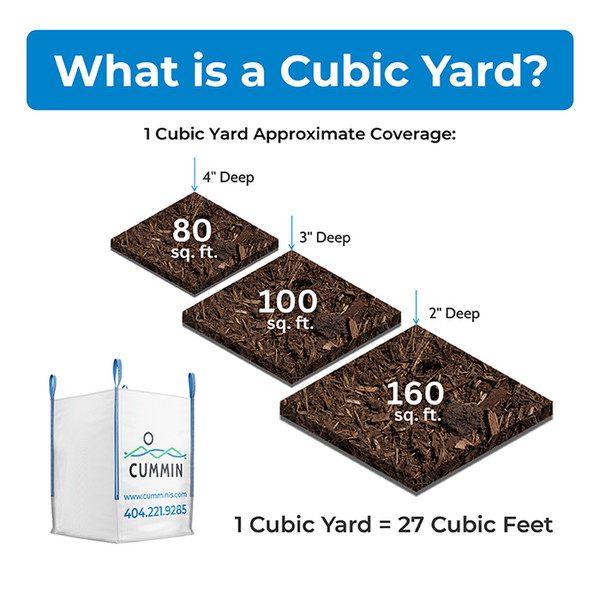
Image Source: www.cumminlandscapesupply.com
Deciphering Gravel Volume to Weight Conversions
When you order gravel, it’s often sold by the cubic yard. However, many contractors and transportation services charge by weight, usually in tons. This means you need to know the tons of gravel per yard to accurately budget and order your materials. This conversion is crucial for everything from calculating delivery costs to ensuring you have enough material without over-ordering and wasting money.
Factors Influencing Pea Gravel Weight
Several key elements play a role in how much a cubic yard of pea gravel will weigh. It’s not just about the volume; the material itself and its condition matter significantly.
Pea Gravel Density: The Core Factor
The fundamental reason for the weight variation is pea gravel density. Density is a measure of how much mass is contained in a given volume. For gravel, this means how tightly packed the stones are and the density of the stone material itself.
- Stone Type: Pea gravel is typically made from rounded river stones. However, the specific geological composition of these stones can vary. Stones like granite, quartzite, or limestone have different inherent densities. Denser stones will naturally contribute more weight per cubic yard.
- Moisture Content: This is a significant variable. Dry pea gravel will be lighter than wet pea gravel. When gravel absorbs water, the water adds mass. A cubic yard of gravel that has been sitting out in the rain can weigh considerably more than the same volume of dry gravel.
- Size and Shape of Stones: While “pea gravel” implies a certain size range (typically 1/4 inch to 3/8 inch), there can be slight variations. Smaller, more uniformly sized stones can sometimes pack more densely, potentially increasing the weight per cubic yard. Rounded stones, like pea gravel, tend to pack more loosely than angular crushed stone, which can affect the overall density.
- Compaction: How the gravel is handled and transported can impact its density. Gravel that is heavily compacted during loading or transport will have less air space between the stones, leading to a higher weight per cubic yard compared to loosely piled gravel.
The Average Weight: A Practical Guideline
Based on industry standards and common estimations, the weight of crushed stone per cubic yard (which applies to pea gravel as well) generally falls between 2,500 to 3,000 pounds.
To convert this to tons (knowing that 1 ton = 2,000 pounds):
- 2,500 pounds / 2,000 pounds/ton = 1.25 tons
- 3,000 pounds / 2,000 pounds/ton = 1.5 tons
So, a common estimate for how much does a yard of pea gravel weigh is between 1.25 and 1.5 tons. However, as we’ve seen, some sources and real-world conditions can push this higher.
Let’s refine this with more specific data for pea gravel bulk density. The bulk density, which includes the air space between the stones, is what’s most relevant for ordering. For pea gravel, this can range from about 100 to 125 pounds per cubic foot.
To convert pounds per cubic foot to tons per cubic yard:
- There are 27 cubic feet in 1 cubic yard (3 ft x 3 ft x 3 ft).
- If the density is 100 lbs/cu ft: 100 lbs/cu ft * 27 cu ft/cu yd = 2700 lbs/cu yd.
- 2700 lbs / 2000 lbs/ton = 1.35 tons/cu yd.
- If the density is 125 lbs/cu ft: 125 lbs/cu ft * 27 cu ft/cu yd = 3375 lbs/cu yd.
- 3375 lbs / 2000 lbs/ton = 1.6875 tons/cu yd.
This brings us back to our initial estimate of 1.4 to 1.7 tons per cubic yard being a reliable range for pea gravel.
Calculating Your Gravel Needs: The Cubic Yard to Ton Conversion
The cubic yard to ton conversion is essential for accurate ordering. The formula is straightforward:
Weight in Tons = (Volume in Cubic Yards) × (Weight per Cubic Yard in Tons)
Example: If you need 5 cubic yards of pea gravel and you estimate each yard weighs 1.5 tons:
5 cubic yards × 1.5 tons/cubic yard = 7.5 tons
Using a Gravel Weight Calculator
To simplify this process, many online gravel weight calculator tools are available. These calculators typically ask for the type of gravel (e.g., pea gravel), the volume needed in cubic yards or square feet (if you specify depth), and they will provide an estimated weight in tons. Some might even allow you to input a specific density if you have that information. These pea gravel tons calculator tools are invaluable for project planning.
Practical Applications and Examples
Understanding these weight conversions is crucial for various landscaping and construction tasks.
Driveways and Paths
For driveways, you might need a thicker layer of gravel for stability. If a project requires a 4-inch (0.33 feet) layer of pea gravel over an area of 100 square feet:
- Volume in Cubic Feet = Area (sq ft) × Depth (ft)
- Volume = 100 sq ft × 0.33 ft = 33 cubic feet
Now, convert cubic feet to cubic yards:
- Volume in Cubic Yards = Volume (cu ft) / 27 cu ft/cu yd
- Volume = 33 cu ft / 27 cu ft/cu yd ≈ 1.22 cubic yards
Using our average weight of 1.5 tons per cubic yard:
- Total Weight = 1.22 cubic yards × 1.5 tons/cubic yard ≈ 1.83 tons
Garden Beds and Walkways
For lighter applications like garden beds or decorative walkways, a shallower depth might be sufficient. If you need a 2-inch (0.167 feet) layer over 50 square feet:
- Volume = 50 sq ft × 0.167 ft = 8.35 cubic feet
-
Volume in Cubic Yards = 8.35 cu ft / 27 cu ft/cu yd ≈ 0.31 cubic yards
-
Total Weight = 0.31 cubic yards × 1.5 tons/cubic yard ≈ 0.465 tons
These calculations demonstrate the importance of accurate volume measurement and density estimations.
Frequently Asked Questions (FAQ)
Here are some common questions related to pea gravel weight:
Q1: Will the weight of pea gravel change if it’s wet?
A1: Yes, wet pea gravel will be heavier than dry pea gravel because the water adds significant mass.
Q2: Can I get an exact weight per cubic yard for pea gravel?
A2: It’s difficult to get an exact number without knowing the specific density and moisture content of the gravel you are purchasing. However, using the average range of 1.4 to 1.7 tons per cubic yard is usually sufficient for most planning purposes.
Q3: How does pea gravel weight compare to crushed stone weight?
A3: Crushed stone, due to its angularity, often packs more densely than rounded pea gravel. This means that a cubic yard of crushed stone might weigh slightly more than a cubic yard of pea gravel, assuming similar stone types. The weight of crushed stone per cubic yard can sometimes reach up to 1.8 tons or more for very dense materials.
Q4: What is the best way to estimate the amount of pea gravel I need?
A4: Measure the length, width, and desired depth of the area you want to cover. Convert these measurements into cubic feet, then divide by 27 to get cubic yards. Use a reliable average weight per cubic yard for pea gravel (1.4-1.7 tons) to calculate the total tonnage.
Q5: Where can I find a reliable gravel weight calculator?
A5: Many landscaping supply companies and construction material websites offer free online gravel calculators. Searching for “gravel weight calculator” or “pea gravel tons calculator” will provide several options.
Conclusion: Accurate Estimation for Successful Projects
In summary, while a precise answer can vary, a good rule of thumb is that one cubic yard of pea gravel weighs between 1.4 and 1.7 tons. This cubic yard to ton conversion is vital for anyone undertaking projects that require ordering gravel by weight. By considering factors like stone density, moisture content, and compaction, and by utilizing resources like a gravel weight calculator, you can confidently estimate your material needs, budget effectively, and ensure your project is a success. Always consult with your material supplier if you need the most accurate weight information for their specific products.