
A yard of fabric, when cut into fat quarters, yields four fat quarters. This is a fundamental concept in quilting and sewing, often referred to as a fat quarter to yard conversion.
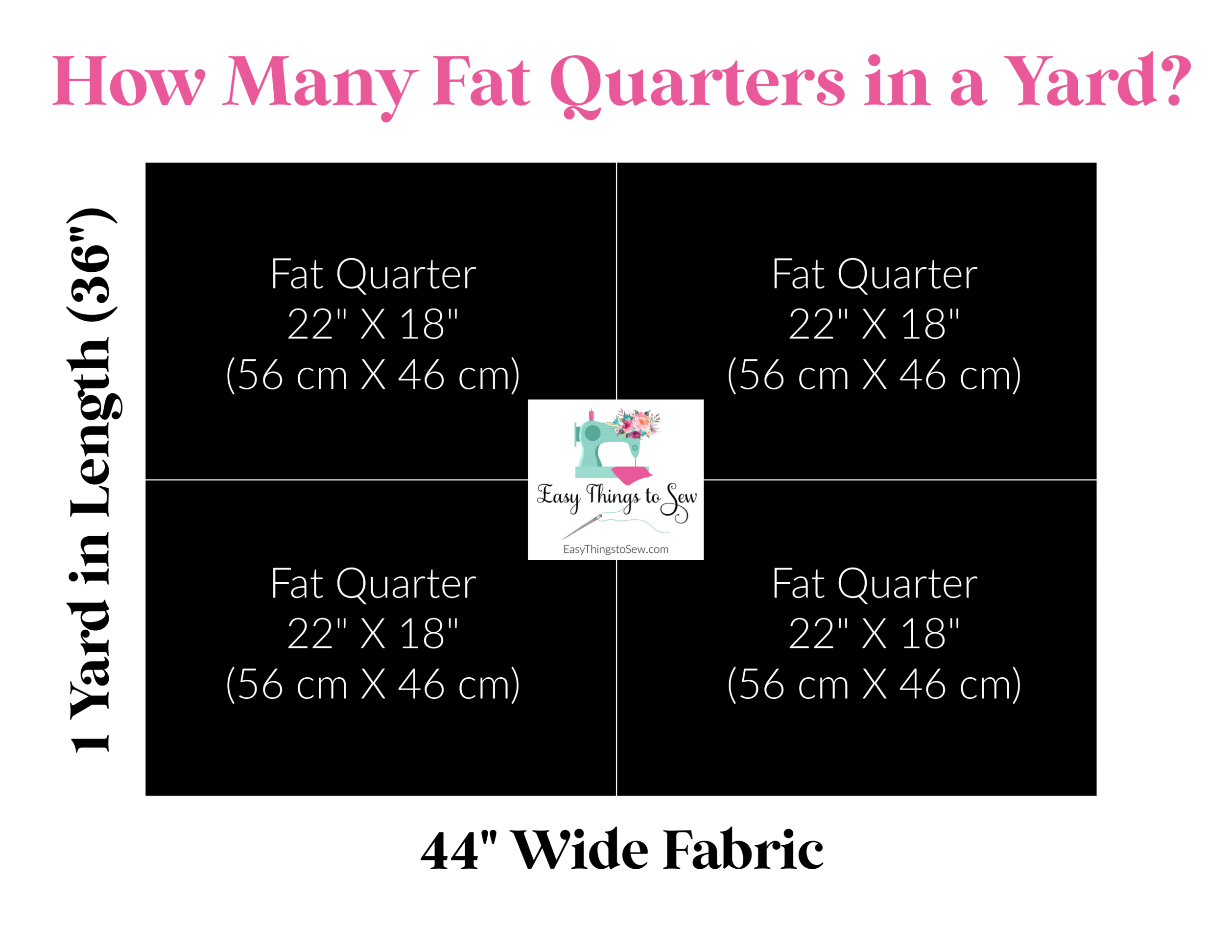
Image Source: easythingstosew.com
Deciphering the Yardage Conversion: From Inches to Quilts
For quilters and sewists, understanding fabric yardage is crucial. You’ve likely heard the term “fat quarter” tossed around in crafting circles. But what exactly is a fat quarter, and how does it relate to the yardage you buy from the bolt? This article will unravel the mystery of how many fat quarters in a yard of fabric, explore the practicalities of buying fabric by the yard, and equip you with the knowledge to manage your quilting fabric yardage and sewing fabric yardage effectively.
What Exactly is a Fat Quarter?
A fat quarter is a specific cut of fabric that is popular among quilters. Unlike a traditional “long” quarter, which is a quarter of a yard cut lengthwise (typically 9 inches by the full width of the bolt, usually 40-44 inches), a fat quarter is a quarter of a yard cut with different proportions.
Fat Quarter Dimensions:
- Standard Cut: A fat quarter is typically cut from a yard of fabric (36 inches long) by dividing the width of the fabric in half and then cutting the fabric in half widthwise. This results in a piece that is 18 inches by 22 inches.
- Why it’s “Fat”: The “fat” designation comes from its wider, shorter shape compared to a traditional long quarter. This shape provides a more usable surface area for piecing quilt blocks, making it a favorite for projects that require smaller, varied fabric pieces.
- Visualizing the Cut: Imagine a yard of fabric laid out flat. The total width might be 44 inches. To get two “half-widths,” you’d cut it lengthwise at 22 inches. Then, you take that 36-inch length and cut it in half widthwise at the 18-inch mark. You end up with two 18″ x 22″ pieces. Each of these is a fat quarter.
The Math Behind the Cut: One Yard to Four Fat Quarters
The fat quarter to yard conversion is straightforward. A yard of fabric is 36 inches long. When you purchase a yard of fabric, you are buying a piece that is 36 inches long and the full width of the bolt (typically 40-44 inches).
To create fat quarters from this yardage, you perform the following cuts:
- Cut the yardage in half lengthwise: This divides the 36-inch length into two 18-inch lengths, each still the full width of the bolt.
- Cut each of these halves in half widthwise: This divides the bolt width (let’s assume 44 inches for this example) into two 22-inch sections.
This process results in four pieces of fabric, each measuring 18 inches by 22 inches. Therefore, one yard of fabric yields four fat quarters.
Why Fat Quarters are a Quilter’s Best Friend
The popularity of fat quarters in quilting stems from their versatility and convenience.
- Ideal for Small Pieces: Many quilt patterns, especially those featuring intricate designs or many different fabrics, call for small cuts of fabric. The 18″ x 22″ dimensions of a fat quarter are perfect for cutting multiple smaller squares, rectangles, or triangles needed for various quilt blocks.
- Fabric Variety: When buying fabric by the yard, you get a large amount of a single print. However, quilters often want to incorporate a wide variety of colors and patterns into their quilts. Purchasing fabric in fat quarter bundles allows for this variety without committing to a full yard of every print.
- Efficient Cutting: The fabric cutting guide for fat quarters is designed for maximum usability. The wider width means you can often cut two of the same-sized smaller pieces from one fat quarter, whereas a long quarter might only yield one. This efficiency is key when you have many pieces to cut for a quilt.
- Space Saving: For quilters with limited space, fat quarters are much easier to store and manage than large bolts or even multiple yards of fabric.
Calculating Your Fabric Needs: Beyond the Basic Conversion
While knowing that one yard equals four fat quarters is useful, you’ll often need more precise calculations for your projects. This is where a fabric yardage calculator becomes an invaluable tool.
Using a Fabric Yardage Calculator
A fabric yardage calculator helps you determine how much fabric you need based on the dimensions of your project and the size of the pieces you need to cut. Most calculators will ask for:
- The size of the fabric piece you need to cut (e.g., 4-inch squares).
- The width of the fabric bolt (usually 40-44 inches).
- The total number of pieces you need.
The calculator then figures out how many yards of fabric you’ll require. It accounts for the grainline of the fabric and the most efficient way to lay out your cutting pieces to minimize waste.
Quilting Fabric Requirements: Planning for Success
When planning a quilt, accurately estimating your quilting fabric requirements is vital. Here’s a general approach:
- Break Down the Pattern: Analyze your quilt pattern. Identify all the different fabric pieces and how many of each you need.
- Determine Piece Size: Note the finished size of each piece. You’ll need to account for seam allowances when cutting (typically ¼ inch for quilting).
- Consider Fabric Width: Most quilting fabric comes in 40-44 inches wide. This width affects how many of your required pieces you can get from a single strip cut from the bolt.
- Layout and Waste: Visualize or draw out how your pieces will be cut from the fabric. This is where a fabric cutting guide becomes helpful. Professional quilters often use specialized software or charts to optimize their fabric usage and minimize waste.
- Fat Quarters vs. Yardage: Decide if you’re buying by the yard or in fat quarters. If you need a specific number of smaller pieces, buying fat quarters might be more economical and provide more variety. If you need large background pieces or border fabric, buying by the yard is usually more efficient.
Example Scenario: Cutting 4-inch Squares for a Quilt
Let’s say you need to cut 50 squares that finish at 4 inches x 4 inches. This means you need to cut squares that are 4.5 inches x 4.5 inches to allow for a ¼ inch seam allowance on all sides.
- Fabric Width: Assume 44 inches.
- Cutting: From a 44-inch width, you can cut approximately 9 squares that are 4.5 inches wide (44 inches / 4.5 inches ≈ 9.77). You can get two rows of these squares from the 36-inch length of fabric if you place them strategically. So, from a 36″ x 44″ piece (one yard), you can cut roughly 18 squares (9 squares per row x 2 rows).
- Yardage Needed: To get 50 squares, you’d need 50 / 18 ≈ 2.78 yards. So, you would need to buy 3 yards of fabric.
Now, consider if you were using fat quarters (18″ x 22″).
- Cutting from a Fat Quarter: From an 18″ x 22″ piece:
- Along the 22-inch side, you can cut 4 squares (22 inches / 4.5 inches ≈ 4.88).
- Along the 18-inch side, you can cut 4 squares (18 inches / 4.5 inches ≈ 4).
- This means one fat quarter yields approximately 16 squares (4 x 4).
- Fat Quarters Needed: To get 50 squares, you would need 50 / 16 ≈ 3.125 fat quarters. This means you’d need to buy 4 fat quarters.
In this example, buying 4 fat quarters (which is equivalent to 1 yard) is more efficient than buying 3 yards if you are aiming for variety. If you need a lot of this specific fabric, buying by the yard would be the way to go.
Buying Fabric by the Yard: Navigating the Bolt
Buying fabric by the yard is the most common way to purchase fabric for larger projects or when you need a substantial amount of a particular print.
- The Bolt: Fabric is typically sold off a bolt, which is a large cardboard cylinder around which the fabric is rolled. The width of the fabric is consistent from the bolt.
- The Cut: When you ask for fabric by the yard, the shop owner or assistant will unroll a length of the fabric and cut it from the bolt at the 36-inch mark. They will cut across the entire width of the fabric.
- “Cutting to the Measure”: Some shops may offer “cutting to the measure,” where they can cut custom lengths if you need, for example, 1.5 yards.
- Understanding Widths: Be aware of different fabric widths.
- Standard Quilting Cotton: Typically 40-44 inches.
- Widebacks: Can be 90 inches, 108 inches, or even wider, used for backing large quilts without piecing.
- Apparel Fabrics: Can vary widely.
Mastering Fabric Cutting: Precision is Key
Proper how to cut fabric techniques are essential for successful sewing and quilting.
Basic Cutting Techniques
- Rotary Cutter and Mat: This is the preferred method for quilters.
- Self-Healing Mat: Protects your work surface and your rotary blade.
- Rotary Cutter: A sharp blade that allows for precise, clean cuts. Always use a ruler with your rotary cutter.
- Quilting Rulers: Clear acrylic rulers with grids marked in inches and often degrees, perfect for measuring and guiding your cuts.
- Scissors: Sharp fabric shears are also effective for cutting fabric, especially for projects that don’t require extreme precision or when a rotary cutter isn’t feasible.
- Grainline: Always pay attention to the grainline of the fabric.
- Warp Threads: Run parallel to the selvages (the finished edges of the fabric).
- Weft Threads: Run perpendicular to the selvages.
- Bias: Any cut made at a 45-degree angle to the warp and weft threads. Fabric cut on the bias has more stretch. For most quilting, you’ll cut with the grain to ensure pieces don’t stretch out of shape.
Fabric Cutting Guide: Optimizing Your Cuts
A good fabric cutting guide involves planning your cuts to minimize waste and maximize the number of usable pieces you get from your fabric.
- Cutting Strips: To cut strips, ensure your fabric is square. Fold the fabric selvedge to selvedge. Align the folded edge with the edge of your ruler. Cut along the ruler’s edge. Then, measure and cut the desired width strips.
- Cutting Squares/Rectangles: For squares, you’ll cut strips of the required width and then cut those strips into shorter lengths. For example, to cut 4.5-inch squares from a 44-inch wide fabric, cut 4.5-inch wide strips first. Then, cut these strips into 4.5-inch segments.
- Cutting Fat Quarters: As described earlier, this involves a specific lengthwise and widthwise cut.
When to Choose Fat Quarters vs. Full Yards
The decision between buying fat quarters or full yards depends on your project and your preferences.
Advantages of Fat Quarters:
- Variety for Smaller Projects: Excellent for scrappy quilts, patchwork projects, or when you want to try out many different fabrics.
- Convenience: Pre-cut, ready to use for many common quilting units.
- Reduced Waste for Small Cuts: If your pattern calls for many small pieces, fat quarters can sometimes be more efficient than buying yardage and cutting it down.
Advantages of Full Yards:
- Large Pieces: Necessary for borders, sashing, backing, and any project requiring large, unbroken fabric pieces.
- Cost-Effectiveness for Bulk: If you need a lot of one fabric, buying by the yard is usually cheaper per yard than buying multiple fat quarters of the same fabric.
- Flexibility: You have the full yard to cut as needed, whether for strips, larger squares, or custom shapes.
Common Sewing Fabric Yardage Scenarios
- Apparel Projects: Patterns for clothing will specify the sewing fabric yardage needed. This usually takes into account the width of the fabric and the layout of pattern pieces to minimize waste. Always check the pattern envelope for these requirements.
- Home Decor: Projects like curtains, cushions, or table runners will also have specific yardage requirements. The width of the fabric and the desired finished size will dictate how much you need.
FAQs
Q1: Can I get fat quarters from any fabric?
A1: Yes, you can cut fat quarters from any fabric, but they are most commonly associated with quilting cottons. The process of dividing a yard in half lengthwise and then widthwise can be applied to most fabric types.
Q2: What is the difference between a fat quarter and a long quarter?
A2: A fat quarter is a quarter of a yard cut into a 18″ x 22″ piece. A long quarter is a quarter of a yard cut lengthwise, resulting in a piece that is 9″ x 40-44″ (the full width of the bolt).
Q3: Do all fat quarters measure exactly 18″ x 22″?
A3: While 18″ x 22″ is the standard, slight variations can occur depending on the manufacturer and how the fabric is cut. It’s always good to measure if precision is critical for your project.
Q4: How do I calculate how many fat quarters I need for a quilt?
A4: First, determine the total yardage needed for your quilt. Then, divide that total yardage by the amount of fabric a fat quarter represents (which is ¼ yard). However, this is a simplified calculation. For more accuracy, calculate the number of pieces you need and how many of those pieces can be cut from a single fat quarter. Using a fabric yardage calculator specifically designed for quilting can be very helpful.
Q5: Is it cheaper to buy fabric by the yard or in fat quarter bundles?
A5: Generally, buying fabric by the yard is cheaper per yard than buying individual fat quarters. However, if you need a variety of many different fabrics in small quantities, buying fat quarter bundles can be more cost-effective than buying a yard of each fabric. It depends on your project’s specific needs.
Conclusion
The question of how many fat quarters in a yard of fabric is a fundamental one, answered by the simple fact that one yard yields four fat quarters. But this basic conversion is just the starting point. By understanding fat quarter dimensions, practicing how to cut fabric efficiently, utilizing a fabric yardage calculator, and being mindful of quilting fabric requirements, you can confidently navigate the world of buying fabric by the yard and build a beautiful stash for all your sewing and quilting adventures. Whether you’re a seasoned quilter or just starting, this knowledge empowers you to make informed decisions about your fabric purchases and execute your projects with precision and creativity.