
Watering your lawn in Florida can be tricky. How long should you water? For most Florida lawns, aim for 1 inch of water per week, applied in one or two deep watering sessions. This guide will help you figure out the best way to water your lawn in the Sunshine State.
Florida’s climate presents unique challenges for lawn care. High temperatures, sandy soil, and ever-present regulations mean that watering your lawn correctly is crucial for its health and for conserving water. This guide offers comprehensive advice on how long and how often to water your Florida lawn, taking into account local conditions and restrictions. We’ll delve into the specifics of Florida lawn watering schedules, Florida watering restrictions, the benefits of deep watering lawn Florida, and how watering frequency lawn Florida impacts your grass.
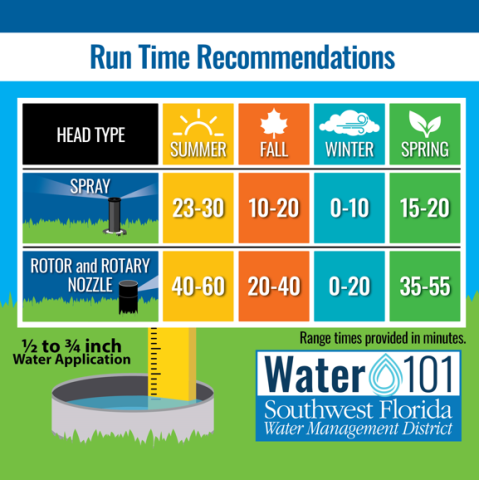
Image Source: www.swfwmd.state.fl.us
Fathoming Florida’s Watering Needs
Florida lawns need consistent moisture, but overwatering can lead to shallow roots, fungal diseases, and wasted water. The key is to water deeply and less frequently. This encourages grass roots to grow deeper into the soil, making the lawn more resilient to drought and heat.
Why Deep Watering is Key
Deep watering lawn Florida means applying enough water to moisten the soil to a depth of 4 to 6 inches. This is significantly deeper than shallow, frequent watering.
- Encourages Deeper Roots: When water is applied deeply, roots are forced to grow downwards in search of moisture. This creates a stronger, healthier root system.
- Reduces Weed Growth: A well-watered, deeply rooted lawn can better compete with weeds. Shallow watering often creates ideal conditions for weed seeds to germinate near the surface.
- Improves Drought Tolerance: Lawns with deep roots are more resistant to wilting and stress during dry periods. They can access moisture lower in the soil profile.
- Minimizes Fungal Diseases: Overwatering, especially at the surface, can create damp conditions that promote fungal growth. Deep, infrequent watering allows the soil surface to dry out between sessions, which is less conducive to disease.
Understanding Evaporation Rates in Florida
Florida’s climate means evaporation rates Florida lawn are quite high. The hot sun and often breezy conditions can cause a significant amount of water to evaporate from the soil surface and grass blades before it can be absorbed by the roots. This is why watering during cooler parts of the day and ensuring efficient application are vital.
Your Florida Lawn Watering Schedule
Establishing a Florida lawn watering schedule involves more than just turning on the sprinklers. It’s about understanding your lawn’s needs and the local climate.
How Much Water Does Your Lawn Need?
Most established lawns in Florida need about 1 to 1.5 inches of water per week. This can come from rainfall or irrigation.
- Rainfall: Keep track of how much rain you receive. Many areas have rain gauges, or you can use a simple can or container.
- Irrigation: When you irrigate, the goal is to deliver that 1 to 1.5 inches over one or two watering sessions.
Determining Watering Duration
The time it takes to deliver 1 inch of water depends on your sprinkler system.
- Tuna Can Test: Place several empty tuna cans (or similar straight-sided containers) around your lawn. Run your sprinklers for a set amount of time (e.g., 15 or 30 minutes). Measure the depth of water in each can. Average the measurements. This will tell you how long it takes your system to deliver a specific amount of water.
- Example: If you collect an average of 0.5 inches of water in 30 minutes, you’ll need to run your sprinklers for 60 minutes to deliver 1 inch.
- Sprinkler Type: Different sprinkler heads have different application rates. Rotor sprinklers generally apply water more slowly than spray sprinklers.
Watering Frequency Lawn Florida
The general recommendation for watering frequency lawn Florida is to water deeply once or twice a week. This is especially true for most common Florida turfgrasses like St. Augustine, Bahia, and Centipede grass.
- Once a Week: In many cases, a single deep watering session of 1 to 1.5 inches is sufficient.
- Twice a Week: If your soil drains very quickly (common with sandy soil lawn watering Florida) or during periods of extreme heat and drought, you might need to water twice a week. However, aim for the deepest watering possible each time.
Timing is Everything: Best Time to Water Lawn Florida
The best time to water lawn Florida is early in the morning, between 4 AM and 10 AM.
Why Morning is Ideal
- Minimizes Evaporation: Temperatures are cooler, and winds are typically calmer, significantly reducing water loss through evaporation.
- Allows for Drying: Watering in the morning allows the grass blades to dry off during the day. Wet grass overnight can promote fungal diseases.
- Avoids Wind: Afternoon winds can blow water spray off target, leading to uneven watering and more evaporation.
- Water Pressure: Water pressure is generally higher in the early morning hours.
What About Watering in the Evening?
While not ideal, watering in the evening is better than watering in the heat of the afternoon.
- Potential Issues: Watering too late in the evening (after sunset) can leave the grass wet all night, increasing the risk of fungal diseases. If you must water in the evening, try to do so earlier to allow some drying time before nightfall.
Watering During Heat Florida
Watering lawn during heat Florida requires extra care.
- Avoid Midday: Never water during the hottest part of the day (10 AM to 4 PM). The majority of the water will evaporate before reaching the roots.
- Early Morning is Critical: Stick to the early morning window for the most effective watering.
- Consider Soil Moisture: If your lawn shows signs of drought stress (wilting, browning, footprints remaining after walking on it) during a heatwave, you might need to adjust your watering, but still prioritize the early morning.
Navigating Florida Watering Restrictions
Florida is subject to various Florida watering restrictions aimed at conserving water, especially during dry seasons. These restrictions can vary by county and municipality.
Common Restrictions
- Day Restrictions: Many areas limit watering to specific days of the week based on your address (e.g., odd-numbered addresses water on Wednesdays and Saturdays, even-numbered addresses water on Thursdays and Sundays).
- Time Restrictions: Watering is often prohibited during certain hours, typically between 10 AM and 4 PM to prevent evaporation.
- Quantity Limits: Some restrictions may limit the total amount of water you can use for irrigation per week.
Staying Informed
It is your responsibility to know the specific Florida watering restrictions in your area.
- Check Your Local Water Authority: Visit the website of your city or county water department, or your homeowner’s association (HOA) if applicable.
- Look for Signs: Water restrictions are often posted in public areas.
- Smart Watering: By implementing deep, infrequent watering in the early morning, you are generally adhering to the spirit of these restrictions and conserving water effectively.
Adapting to Florida’s Soil Types
Sandy soil lawn watering Florida requires a slightly different approach due to its excellent drainage.
Characteristics of Sandy Soil
- Fast Drainage: Water passes through sandy soil very quickly.
- Low Water Retention: It doesn’t hold much moisture.
- Nutrient Leaching: Nutrients can also be washed away with excessive watering.
Watering Sandy Soil
- Frequent, Lighter Waterings: While deep watering is generally best, with very sandy soil, you might need to water slightly more frequently but still ensure each watering is deep enough to reach the root zone.
- Shorter Duration, More Often: Instead of one long watering session that might drain away too quickly, you might opt for two shorter sessions closer together, still adhering to the overall weekly water goal. For example, if your system applies 1 inch in 60 minutes, you might water for 30 minutes on Wednesday and another 30 minutes on Saturday, rather than one 60-minute session.
- Monitor Closely: Pay close attention to how quickly your soil dries out. You may need to adjust your schedule more often than someone with heavier soil.
Drought Tolerant Lawn Florida & Low Water Landscaping
Embracing a drought tolerant lawn Florida and low water landscaping Florida can significantly reduce your watering needs and reliance on irrigation.
Choosing Drought-Tolerant Grasses
Some turfgrasses are naturally better suited to Florida’s climate and require less water.
- Bahia Grass: Known for its deep root system and drought resistance once established.
- Centipede Grass: Has a shallower root system but is quite drought tolerant and requires less fertilizer.
- Zoysia Grass: Offers good drought tolerance and a dense, attractive turf.
- Bermuda Grass: While it can be thirsty, some varieties are more drought tolerant than others and it recovers well from stress.
Xeriscaping and Native Plants
Consider incorporating low water landscaping Florida principles:
- Xeriscaping: This is a method of landscaping that reduces or eliminates the need for supplemental water from irrigation. It involves grouping plants with similar water needs, using mulch, and selecting drought-resistant species.
- Native Plants: Florida native plants are adapted to the local climate and soil conditions, requiring minimal supplemental watering once established.
- Mulching: A layer of mulch around plants and in garden beds helps retain soil moisture, suppress weeds, and regulate soil temperature.
How to Tell if Your Lawn Needs Water
Your lawn will give you signs when it’s thirsty. Learning to read these signals helps you water only when necessary.
Visual Cues
- Color Change: Grass may turn a bluish-gray or dull green before it wilts.
- Wilting: The blades may start to curl or fold inward.
- Footprint Test: Walk across your lawn. If your footprints remain visible for a long time and the grass blades don’t spring back, the soil is likely dry. Healthy, well-hydrated grass springs back quickly.
- Leaf Roll: Grass blades will start to roll or fold lengthwise, a natural way to conserve moisture.
Soil Moisture Check
- Screwdriver Test: Try to push a long screwdriver or a soil probe into the ground. If it’s difficult to push in, the soil is dry. If it goes in easily, there’s likely enough moisture.
- Dig a Small Hole: Use a trowel to dig a small hole near the root zone. Feel the soil a few inches down. If it feels dry, it’s time to water.
Troubleshooting Common Watering Issues
Even with the best intentions, watering problems can arise.
Problem: Water Not Reaching Deep Enough
- Cause: Sprinkler heads clogged or misaligned; watering duration too short.
- Solution: Clean and adjust sprinkler heads. Increase watering duration based on your tuna can test results.
Problem: Water Running Off the Lawn
- Cause: Soil is already saturated; watering too fast for the soil to absorb.
- Solution: Water in cycles. Water for a shorter period, let it soak in for an hour, then water again. This is called “cycle and soak.” Ensure your sprinklers are not applying water faster than the soil can absorb it.
Problem: Uneven Watering
- Cause: Sprinkler heads are not properly spaced or are clogged/damaged. Wind can also cause uneven watering.
- Solution: Inspect your sprinkler system regularly. Ensure heads are clean, undamaged, and spaced appropriately for head-to-head coverage. Water during calmer periods.
Seasonal Adjustments for Florida Lawn Watering
Your watering needs will change throughout the year in Florida.
Spring (March – May)
- Transition: As temperatures rise, begin to increase watering if rainfall is insufficient.
- Focus: Establish a routine of deep, infrequent watering.
Summer (June – August)
- Peak Demand: This is when watering lawn during heat Florida is most critical. High temperatures and frequent thunderstorms can be deceiving.
- Rainfall: While you may get rain, it often comes in short, intense bursts that don’t penetrate deeply. The heat means evaporation rates Florida lawn are very high.
- Adjustments: You might need to water twice a week if rainfall is consistently low, but still prioritize deep watering. Monitor your lawn closely for signs of stress. Be aware of Florida watering restrictions, which are often most stringent in summer.
Fall (September – November)
- Cooling Down: As temperatures decrease, your lawn’s water needs will reduce.
- Observation: Watch rainfall patterns and reduce irrigation accordingly. You can likely reduce watering frequency.
Winter (December – February)
- Dormancy: Many Florida turfgrasses enter a period of dormancy or reduced growth in winter.
- Minimal Watering: Water only when the lawn shows signs of drought stress, typically no more than once every two to three weeks, and only if there hasn’t been sufficient rainfall. This is a crucial time for water conservation.
Frequently Asked Questions About Florida Lawn Watering
Here are answers to common questions about watering your lawn in Florida:
Q1: Can I water my lawn every day in Florida?
A1: It is generally not recommended to water your lawn every day in Florida. Daily watering leads to shallow root development, making your lawn more susceptible to drought, disease, and pests. The best practice is to water deeply and infrequently, typically once or twice a week, depending on weather conditions and soil type.
Q2: What is the best type of sprinkler for Florida lawns?
A2: For most Florida lawns, rotor sprinklers or high-efficiency spray sprinklers are recommended. Rotors apply water more slowly and evenly, which is beneficial for sandy soils and helps minimize runoff. High-efficiency sprays can also be effective if properly adjusted and spaced to ensure even coverage. Avoid older, high-volume spray heads that can lead to rapid runoff.
Q3: My lawn is on a new development with very sandy soil. How should I water it?
A3: For new lawns on sandy soil, you’ll need to water more frequently initially to help the grass establish. However, as the grass matures, transition to deep watering. You might find that watering slightly more often (perhaps every 3-4 days) but for shorter durations, allowing the water to penetrate, is more effective than a single long watering session that can drain too quickly. Always check for signs of dryness between waterings.
Q4: Are there specific recommendations for watering St. Augustine grass in Florida?
A4: St. Augustine grass generally prefers consistent moisture but can tolerate short periods of dryness. Aim for 1 inch of water per week, applied in one or two deep watering sessions. Water in the early morning. Be mindful of fungal diseases, which can be an issue with St. Augustine grass, so avoid leaving it wet overnight.
Q5: How do I adjust my watering if I have a lot of trees and shrubs around my lawn?
A5: Trees and shrubs compete with your lawn for water and nutrients. Areas under large trees may stay shaded and cooler, requiring less water than exposed areas. Conversely, if your trees have shallow root systems, they may draw moisture from the lawn’s root zone. Observe these areas closely and adjust watering zones accordingly. Consider grouping plants with similar water needs when planning low water landscaping Florida.
By following these guidelines, you can maintain a healthy, vibrant lawn while respecting Florida’s climate and water conservation efforts. Remember to always observe your lawn and adjust your watering practices as needed.