
The number of volts in a lawn mower battery varies depending on the lawn mower battery type. Most electric lawn mowers and many gas mowers with electric start use a 12 volt lawn mower battery, though some specialized or older models might differ.
Lawn mowers are essential tools for keeping our yards neat and tidy. Whether you’re pushing a compact mower or commanding a powerful riding mower, the battery is often the unsung hero that makes it all happen. But when it comes to the electrical heart of your mower, a common question arises: How many volts in a lawn mower battery? This isn’t a simple one-size-fits-all answer, as the lawn mower battery voltage depends heavily on the specific lawn mower battery type and its intended use. We’ll dive deep into the world of mower batteries, exploring the different voltages you’ll encounter, what they mean for your mower’s performance, and how to choose the right replacement.
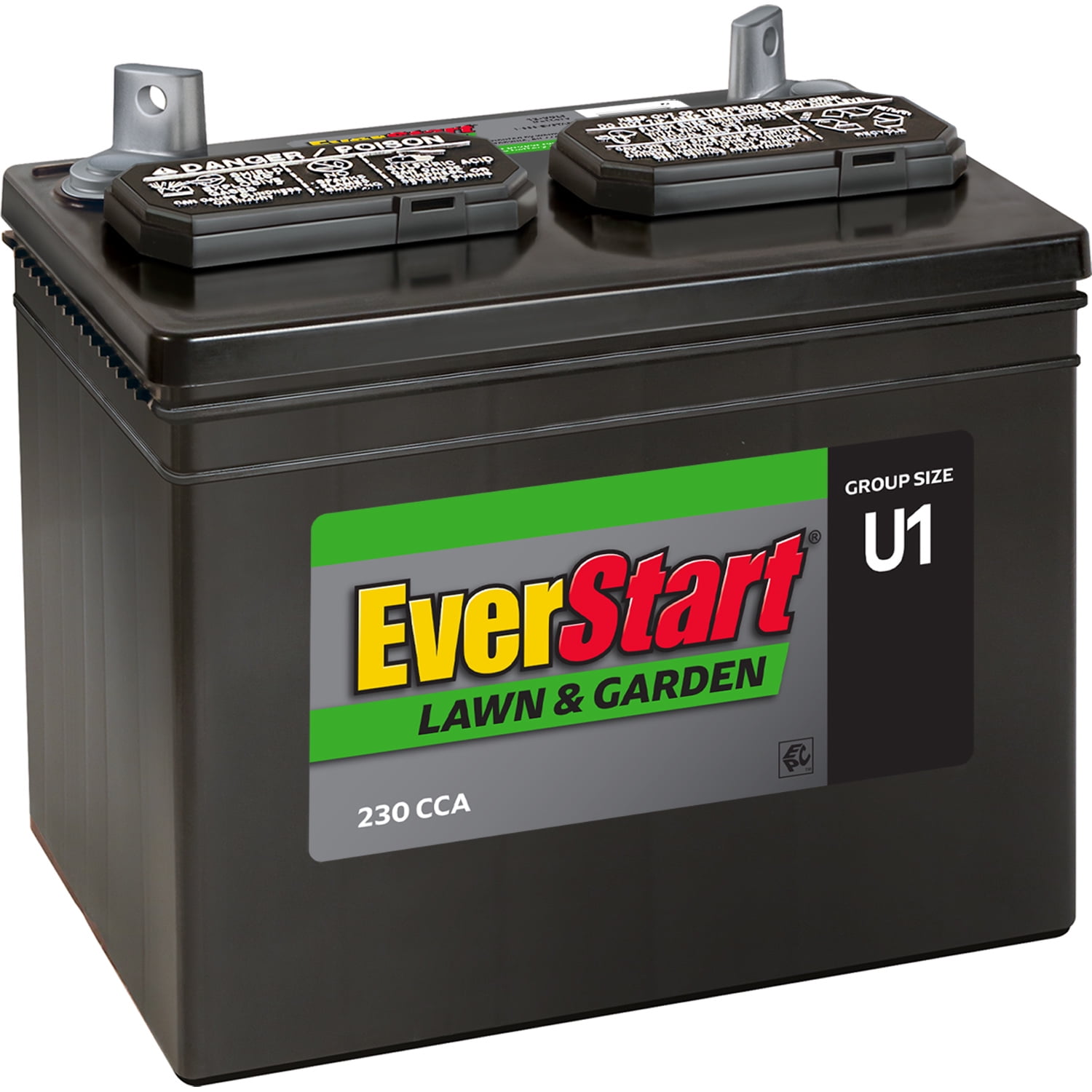
Image Source: i5.walmartimages.com
Deciphering Lawn Mower Battery Voltages
When we talk about volts, we’re referring to the electrical potential difference that drives the flow of electricity. Think of it like water pressure in a pipe – higher pressure means more power to push the water through. In a lawn mower battery, voltage dictates the “oomph” available to start the engine (in gas mowers) or power the motor (in electric mowers).
Gas Lawn Mower Battery Voltage
Many modern gas lawn mowers come equipped with an electric start feature. This convenience requires a battery to ignite the engine. For these models, you’ll most commonly find a 12 volt lawn mower battery. These batteries are typically small, sealed lead-acid (SLA) batteries, often referred to as “power sports” batteries because they’re also used in motorcycles, ATVs, and snowmobiles.
- Why 12 volts? A 12-volt system provides sufficient power to turn over a small gasoline engine. The cranking amps (CA) and cold cranking amps (CCA) are more critical for starting power than the voltage alone, but the 12-volt standard is well-established and efficient for this application.
- Common Applications: Walk-behind mowers with electric start, and the vast majority of riding mower battery voltage requirements fall within this 12-volt range.
Electric Lawn Mower Voltage
The landscape of electric lawn mower voltage is much more varied, reflecting the diversity of electric mower designs.
-
Cordless Lawn Mower Battery: This is where things get interesting. Cordless lawn mower battery systems are designed for portability and freedom from cords. They typically operate on higher voltages than their gas-powered counterparts’ starting batteries.
- 36-Volt Systems: These were once common for entry-level and smaller electric mowers. They offer decent cutting power for smaller yards.
- 40-Volt Systems: This has become a very popular voltage for many residential electric mowers. It strikes a good balance between power, run time, and battery weight. Many brands use 40V as a standard.
- 56-Volt Systems: Some premium brands have moved to higher voltages like 56V. These systems can deliver more power and potentially longer run times, often targeting users who need more robust performance for larger properties or tougher grass.
- 80-Volt and Beyond: For professional-grade or high-performance electric mowers, you might see even higher voltages, such as 80V or even higher. These are designed to tackle demanding jobs and offer performance comparable to gas mowers.
-
How Voltage Affects Performance: Generally, a higher voltage system can:
- Deliver more power to the motor, allowing the mower to cut through thicker grass more easily.
- Potentially offer longer run times, though battery capacity (measured in amp-hours or amp-hours) also plays a huge role.
- Run motors more efficiently, leading to less heat and longer motor life.
-
Battery Packs: It’s important to note that many higher-voltage cordless lawn mower battery systems use a pack of individual lithium-ion cells connected in series. For example, a 40V battery might consist of ten 4V cells, and an 80V battery might be two 40V packs connected in series, or a larger configuration of individual cells.
Identifying Your Lawn Mower Battery Type
Knowing your battery type is crucial for proper maintenance and for purchasing a replacement lawn mower battery voltage.
Key Battery Types:
-
Sealed Lead-Acid (SLA) Batteries:
- Description: These are the most common types found in gas mowers with electric start. They are characterized by their robust construction and ability to deliver high cranking amps. They are also known as Maintenance-Free batteries, though they still require proper charging.
- Voltage: Almost always 12 volt lawn mower battery.
- Pros: High CCA, relatively inexpensive, durable.
- Cons: Heavy, shorter lifespan compared to lithium-ion, can be damaged by deep discharge.
-
Lithium-Ion (Li-ion) Batteries:
- Description: These are the batteries powering most modern cordless lawn mower battery systems. They are much lighter than lead-acid batteries and offer superior energy density, meaning more power for their weight.
- Voltage: Varies widely from 36V, 40V, 56V, 80V, and up.
- Pros: Lightweight, long lifespan, can be discharged deeper without damage, faster charging.
- Cons: More expensive upfront, performance can degrade in very cold temperatures.
What About Older Mowers?
Older gas mowers might have a 6-volt system, especially if they are older tractors or simpler riding mowers. However, 12-volt systems became the standard over time due to their greater power and efficiency.
Understanding Mower Battery Size and Fit
Beyond voltage, the physical lawn mower battery size is a critical factor. A battery must fit correctly in its designated tray and have the proper terminal configuration to connect to your mower’s wiring.
- Group Sizes: For 12-volt SLA batteries, you’ll often see them referred to by “Group Sizes” (e.g., Group U1, Group 24F). These designations refer to standardized dimensions and terminal placement. Always check your mower’s manual or the existing battery for its group size.
- Dimensions: Pay close attention to the length, width, and height of the battery. A battery that’s too big won’t fit, and one that’s too small might not be secure.
- Terminal Type and Orientation: Ensure the positive and negative terminals are on the correct sides and are the right type (e.g., top post, side post) for your mower’s cables.
The Importance of Mower Battery Charge
A proper mower battery charge is vital for the longevity and performance of any lawn mower battery.
Maintaining Lead-Acid Batteries:
- Prevent Deep Discharge: SLA batteries don’t like being completely drained. If a gas mower sits for a long time without being run, or if the lights are left on, the battery can discharge too deeply, which can damage it.
- Use a Smart Charger: Invest in a quality trickle charger or a battery tender. These devices maintain a proper charge without overcharging, extending the battery’s life.
- Regular Use: The best way to maintain a lead-acid battery is to use your mower regularly. This keeps the battery topped up and the internal components active.
Maintaining Lithium-Ion Batteries:
- Storage Charge: Li-ion batteries generally have a lower self-discharge rate than lead-acid. However, it’s still good practice to store them with a partial charge (around 50-70%) rather than fully depleted or fully charged for extended periods.
- Use the Correct Charger: Always use the charger specifically designed for your mower’s battery voltage and chemistry. Using the wrong charger can be dangerous and will damage the battery.
- Temperature: Avoid extreme temperatures. While Li-ion batteries perform well, very high heat or prolonged freezing can degrade their performance and lifespan.
Selecting a Replacement Lawn Mower Battery Voltage
When it’s time to replace your mower battery, selecting the correct replacement lawn mower battery voltage is paramount.
For Gas Mowers (12-Volt):
- Check Your Manual: Your mower’s owner’s manual is the definitive source for the correct battery specifications.
- Examine the Old Battery: Look for the voltage (likely 12V) and the group size printed on the label.
- Match Specs: Find a replacement battery that matches the voltage and group size. Also, consider the cranking amps (CA) and cold cranking amps (CCA) – higher numbers generally mean better starting power, especially in cooler weather.
For Cordless Electric Mowers (Variable Voltage):
- Identify Your Mower Model: Know the exact make and model of your electric mower.
- Battery Specifications: The battery will have its voltage clearly marked, such as 40V, 56V, etc.
- Capacity (Ah): Pay attention to the amp-hour (Ah) rating. A higher Ah rating means more run time on a single charge.
- Compatibility: Ensure the replacement battery is compatible with your mower and its charger. Often, batteries within a brand’s ecosystem are interchangeable across different tools (e.g., a 40V battery might power your mower, string trimmer, and leaf blower from the same brand).
Common Mower Battery Issues and Troubleshooting
Even with proper care, mower batteries can experience problems.
Issues with Lead-Acid Batteries:
- Sulfation: If a lead-acid battery is left discharged for too long, sulfate crystals can form on the plates, reducing its capacity and ability to hold a charge. This is often irreversible.
- Low Cranking Power: A weak battery might struggle to turn the engine over. This could be due to age, sulfation, or simply not having enough mower battery charge.
- Corrosion: Battery terminals can corrode, hindering electrical connection. Clean terminals with a wire brush and a baking soda/water solution.
Issues with Lithium-Ion Batteries:
- Not Charging: This could be a faulty charger, a dead battery cell, or a problem with the battery’s internal management system.
- Reduced Run Time: Over time, all batteries lose capacity. If your Li-ion battery’s run time has significantly decreased, it might be nearing the end of its life.
- Error Codes: Some smart battery systems will display error codes if they detect a problem. Consult your mower’s manual for these codes.
Longevity and Replacement Cycles
How long can you expect your mower battery to last?
- Lead-Acid Batteries: Typically last 3-5 years with proper maintenance.
- Lithium-Ion Batteries: Can last 5-10 years or even longer, depending on usage and care. Their lifespan is often measured in charge cycles.
When it’s time for a replacement lawn mower battery voltage, consider the factors we’ve discussed to ensure you get the right fit and performance for your mowing needs.
Frequently Asked Questions (FAQ)
Here are some common questions about lawn mower batteries:
Q1: Can I use a higher voltage battery than what my mower calls for?
- Answer: Generally, no. Using a higher voltage battery than your mower is designed for can severely damage the mower’s electrical components, including the motor or starter, and potentially cause a fire hazard. Always stick to the voltage specified by the manufacturer.
Q2: My gas mower is hard to start. Is it the battery?
- Answer: It could be. A weak battery with insufficient cranking amps or a low mower battery charge is a common cause of hard starting. Other potential causes include a dirty spark plug, fuel issues, or carburetor problems. Check the battery first.
Q3: How often should I charge my cordless lawn mower battery?
- Answer: For cordless lawn mower battery systems, it’s best to charge the battery after each use to ensure it’s ready for the next mow. For long-term storage, aim for a partial charge (around 50-70%).
Q4: Can I use a car battery in my riding mower?
- Answer: While both are 12-volt, car batteries are designed for different purposes than mower batteries. Car batteries are designed for high cranking amps for a short burst to start an engine, whereas mower batteries (especially SLA types) are designed for more sustained discharge. A car battery might be physically too large and heavy, and its cycle life may not be as suitable for the demands of a mower. It’s best to use a battery specifically designed for lawn and garden equipment.
Q5: What is the difference between amp-hours (Ah) and volts (V)?
- Answer: Voltage (V) is the electrical pressure. Amp-hours (Ah) indicate the battery’s capacity – how much current it can deliver over a period of time. A higher Ah rating means the battery can power your mower for longer. For example, a 40V 5.0Ah battery will provide the same voltage as a 40V 2.0Ah battery, but it will last twice as long on a single charge.
Q6: My electric mower battery won’t charge. What should I do?
- Answer: First, check that the charger is properly plugged into a working outlet and that the battery is securely connected to the charger. Ensure there are no visible signs of damage to the battery or charger. If the problem persists, consult your mower’s manual or contact the manufacturer for support.
By paying attention to your mower’s battery voltage, type, and size, you can ensure optimal performance and longevity for your lawn care equipment. Whether you’re dealing with a traditional gas mower or a cutting-edge electric model, a healthy battery is key to a well-maintained lawn.