
What is yard dice? Yard dice are oversized dice, typically made of wood, used for playing various games outdoors. Can I play with just one die? While some games can be adapted, yard dice are most fun and effective when you have a set of at least four dice, and often six or even ten for more complex games. Who is yard dice for? Yard dice are fantastic for all ages, making them a perfect addition to family gatherings, parties, or casual backyard hangouts.
Yard dice bring the classic fun of tabletop dice games to the great outdoors. These giant dice, often crafted from sturdy wood, are designed for easy rolling and visibility, making them perfect for lawn games. Whether you’re looking for a simple way to entertain kids or a more strategic challenge for adults, yard dice offer a versatile and enjoyable experience. This guide will walk you through the basics of how to play yard dice, explore popular dice games, and offer tips to maximize your outdoor gaming fun.
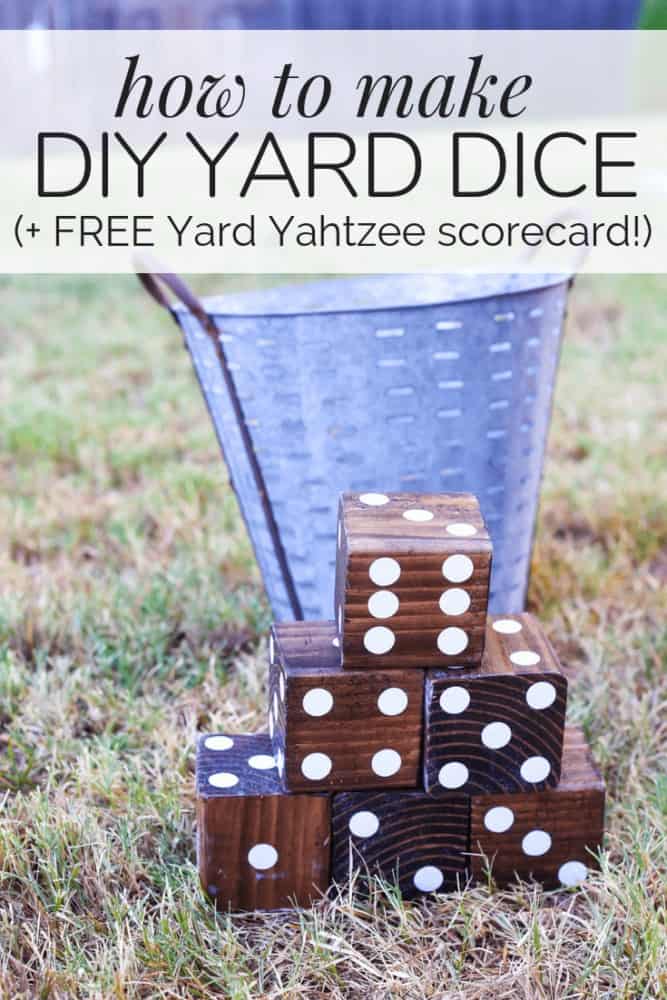
Image Source: www.loveandrenovations.com
Getting Started with Yard Dice
Before diving into specific games, it’s important to know what you need and some general principles for playing with these larger dice.
What You’ll Need
- Yard Dice Set: Most sets come with four to six dice, usually 3.5 inches or larger. They are often made of wood, but some are made of durable plastic.
- Scoring Method: You’ll need a way to keep track of scores. This could be a whiteboard, chalkboard, large notepad, or even just paper and a pen. For a more rustic feel, you might use chalk on a patio or driveway.
- Playing Area: A flat, open space is ideal. A lawn, patio, deck, or even a beach can work well. Avoid areas with too many obstacles that could impede the dice.
- Players: Yard dice games can be played solo, but they are much more fun with two or more players, or even in teams.
Basic Rolling Etiquette
- Fair Rolls: Ensure dice are rolled from a designated area. This could be a specific spot on the lawn, a tossing board, or even a bucket. This ensures everyone is playing by the same rules and prevents dice from rolling too far away.
- Re-rolling: If a die lands in an unfair spot (e.g., on a foot, in a bush), the roll can be declared invalid and re-rolled. This is usually agreed upon before the game starts.
- Keeping Score: Be clear about how points are tallied. This avoids confusion and arguments during the game.
Popular Yard Dice Games
There are countless dice games you can play with yard dice, many of which are adaptations of classic dice games. Here are a few favorites that are easy to learn and provide hours of fun.
1. Yahtzee (Yardzee)
Yahtzee, or “Yardzee” as it’s commonly called when played with giant dice, is a game of chance and strategy. The goal is to score points by rolling specific combinations.
How to Play Yardzee: Dice Rules
- Objective: To score the most points by rolling combinations like straights, full houses, and five of a kind.
- Players: 2 or more.
- Setup: Each player gets a scoring card.
- Gameplay:
- On your turn, you have up to three rolls to try and achieve a desired combination.
- Roll all five dice (or as many as you need to start).
- You can choose to keep any dice you like and re-roll the rest.
- You can re-roll up to two more times.
- After your third roll, you must record a score for one of the categories on your scoring card.
- If you roll a “Yahtzee” (five of a kind), you get 50 points, plus bonus points if you achieve multiple Yahtzees.
- Scoring Categories:
- Aces (1s) through Sixes (6s): Sum of the numbers shown.
- 3 of a Kind: Sum of all five dice if at least three are the same.
- 4 of a Kind: Sum of all five dice if at least four are the same.
- Full House: 25 points (three of one number, two of another).
- Small Straight: 30 points (four dice in sequence, e.g., 1-2-3-4).
- Large Straight: 40 points (five dice in sequence, e.g., 1-2-3-4-5).
- Chance: Sum of all five dice.
- Yahtzee: 50 points (five of a kind).
Dice Strategy for Yardzee
- Focus on Straights and Yahtzees: These often yield the highest scores.
- Don’t Neglect Lower Scores: If you’re consistently rolling low numbers, it’s better to score them rather than waste rolls trying for a Yahtzee.
- Upper Section Bonus: Aim to get a total of 63 points or more in the upper section (Aces through Sixes) to get a 35-point bonus.
2. Farkle
Farkle is a popular dice game known for its “risk it” element. Players score points by rolling specific combinations, but if they fail to score on a roll, they “farkle” and lose all accumulated points for that turn.
How to Play Farkle: Dice Rules
- Objective: To be the first player to reach a predetermined score (e.g., 10,000 points).
- Players: 2 or more.
- Setup: You’ll need at least six dice, but more is better for this game. A scoring sheet is essential.
- Gameplay:
- On your turn, roll all the dice.
- You must identify scoring dice on each roll. Scoring dice include:
- 1s are worth 100 points.
- 5s are worth 50 points.
- Three of a kind (e.g., three 2s) are worth 100 times the number rolled (e.g., three 2s = 200 points).
- Four, five, or six of a kind are worth double the points of three of a kind.
- A straight (1-2-3-4-5-6) is worth 1,500 points.
- After identifying scoring dice, you can choose to “bank” your points and end your turn, or continue rolling with the remaining dice.
- If you roll and do not score with any dice, you “farkle” and lose all points accumulated during that turn. Your turn ends immediately.
- If you score with all dice on a roll, you have “hot dice” and can roll all the dice again, adding to your current turn’s score.
Dice Strategy for Farkle
- Know When to Bank: This is the core of Farkle strategy. If you have a significant number of points but still have dice left that don’t score, consider banking them rather than risking a farkle.
- Aim for Combinations: Three of a kind is a great way to score big, especially with the higher numbers.
- “Hot Dice” Management: If you get hot dice, decide if it’s worth pushing your luck. A few more rolls could significantly boost your score, but a bad roll could mean losing everything.
3. Left Center Right (LCR)
LCR is a lively and simple dice game that’s incredibly easy to learn and play, making it a hit at parties and family gatherings. It’s a game of pure luck, with minimal strategy involved, which makes it accessible to everyone.
How to Play Left Center Right: Dice Rules
- Objective: To be the last player with chips (or points).
- Players: 3 or more.
- Setup: Each player starts with a set number of chips (e.g., 3). You’ll need three special LCR dice. These dice have symbols for Left, Center, Right, and dots (which represent nothing).
- Gameplay:
- Players take turns in clockwise order.
- On your turn, roll the three LCR dice.
- For each “Left” symbol rolled, give one chip to the player on your left.
- For each “Center” symbol rolled, place one chip in the center pot.
- For each “Right” symbol rolled, give one chip to the player on your right.
- For each dot rolled, nothing happens.
- If a player runs out of chips, they are out of the game. However, if they have chips to give away on a roll, they must do so, and if they can’t, they receive one chip from the center pot (if available) for each chip they couldn’t give away. This allows players to stay in the game even after running out of their initial chips.
- When the center pot has accumulated chips, a player who rolls a “Center” symbol takes all the chips from the center pot.
- The game ends when only one player has chips left. That player is the winner!
Dice Strategy for LCR
LCR is a game of pure luck, so there isn’t much strategy involved. The dice dictate the flow of the game. However, some players like to “save” their dice rolls if they get all dots, but this is entirely optional and not a rule. The main “strategy” is to simply play and enjoy the unpredictable nature of the rolls!
4. Pig
Pig is another simple dice game that’s great for younger players or for a quick, fun game.
How to Play Pig: Dice Rules
- Objective: To be the first player to reach a target score (e.g., 100 points).
- Players: 2 or more.
- Setup: A single die is usually sufficient, but you can use yard dice. A scoring sheet is helpful.
- Gameplay:
- Players take turns rolling the die.
- On your turn, you can roll the die as many times as you want.
- You can choose to “hold” your points at any time, adding the total to your score.
- If you roll a 1, your turn ends immediately, and you score zero points for that turn.
- The first player to reach the target score wins.
Dice Strategy for Pig
- Risk Assessment: The key is deciding when to hold and when to keep rolling. If you’re close to the target score, it might be safer to hold. If you’re far away, you might risk a few more rolls to try and gain ground.
- Opponent’s Score: Consider how close your opponents are to winning. If someone is about to hit the target, you might need to take more risks.
More Yard Dice Games and Variations
The beauty of yard dice lies in their adaptability. You can easily modify existing games or create your own!
Dice Variations for Added Fun
- Different Numbers of Dice: While some games specify a number of dice, feel free to experiment. Using more dice in Farkle can lead to more exciting scoring opportunities.
- Customizable Dice: If you have the ability, you could even paint or sticker your yard dice with custom symbols for unique games.
- Combining Games: You could try playing a round of Yardzee, then a round of Farkle, keeping a running total across both games.
Other Popular Dice Games to Adapt
- Craps: While traditionally played with smaller dice and a specific table, you can adapt the basic concept of betting on the outcome of a dice roll.
- Bunco: Typically played with three dice, Bunco involves scoring points based on matching numbers rolled. You can adjust the scoring to fit your yard dice.
- Machi Koro: This is a board game that uses dice, but the core mechanic of rolling dice to collect resources can inspire your own yard dice creations.
Tips for Playing Yard Dice Outdoors
Playing games outside adds a unique dimension to the experience. Here are some tips to make your yard dice sessions even better.
Maximizing the Outdoor Experience
- Check the Weather: Sunshine and a gentle breeze are ideal. Avoid playing in strong winds, which can blow dice around, or during rain.
- Comfort is Key: Set up chairs or blankets for players to sit comfortably. Have drinks and snacks readily available.
- Music and Ambiance: Create a relaxed atmosphere with some background music.
- Designated Rolling Area: As mentioned earlier, having a specific spot for rolling ensures fairness and keeps the dice contained. A designated “tossing mat” or even a specific area of the patio works well.
- Lighting: If you plan to play into the evening, ensure there’s adequate lighting in your playing area so you can see the dice and the score.
Keeping Track of Dice and Scores
- Scoreboards: A large, portable whiteboard or chalkboard is excellent for keeping scores visible to everyone. You can also use large flip charts.
- Dice Trays: While not always practical for giant dice, you can use buckets or shallow bins to collect and roll dice, especially if the ground is uneven.
- Color Coding: If your dice set has different colors, you might use this for specific game variations or to help players distinguish their dice.
The Appeal of Lawn Games and Backyard Fun
Yard dice are more than just a game; they are a gateway to shared experiences and a way to enjoy the outdoors.
Why Yard Dice are Great Lawn Games
- Accessibility: They are easy to learn and play, making them perfect for mixed-age groups.
- Portability: While large, they are generally easy to transport to different outdoor locations.
- Engagement: They encourage interaction and friendly competition.
- Nostalgia: They tap into the simple joy of playing games, reminiscent of childhood fun.
- Versatility: As shown, they can be used for a wide range of dice games.
Lawn games and outdoor activities are fantastic for promoting physical activity and mental engagement in a relaxed setting. Yard dice fit perfectly into this category, offering a blend of chance and mild strategy that can be enjoyed by everyone. They encourage people to put down their screens and connect with each other in person, fostering communication and laughter.
Frequently Asked Questions About Yard Dice
Here are some common questions people have about playing with yard dice.
What are the best dice games to play with yard dice?
The most popular dice games to play with yard dice are Yardzee (a larger version of Yahtzee), Farkle, and Left Center Right (LCR). Pig is also a good option for a simple, quick game.
How many dice do I need for yard dice games?
Most games are designed for at least four to six dice. Yardzee typically uses five dice, while Farkle can be played with six or more. LCR uses three special dice. Having a set of six is a good starting point for versatility.
Can I play yard dice games on grass?
Yes, you can play yard dice on grass. However, it’s best to play on a relatively flat and firm area of the lawn. If the grass is very thick or uneven, the dice might not roll predictably. Some players prefer to use a designated tossing board or a flat surface like a patio for more consistent rolls.
Are there specific dice rules for yard dice?
The specific dice rules depend on the game you are playing. For popular games like Yardzee or Farkle, you’ll follow the established rules for those games, just on a larger scale. Always clarify the rules before you begin, especially if you’re adapting a game or creating your own.
What makes yard dice different from regular dice?
The primary difference is size. Yard dice are significantly larger, making them easier to see and handle outdoors. They are typically made of wood or durable plastic and are designed for a more robust outdoor experience.
How do I store my yard dice?
Yard dice sets often come with a carrying bag or a box for storage. Store them in a dry place to prevent warping or damage, especially if they are made of wood. Keeping them clean will also ensure they last longer.
Can children play yard dice games?
Absolutely! Yard dice games are generally very family-friendly. Simple games like Pig or LCR are perfect for younger children. Older children and adults can enjoy the more strategic elements of games like Yardzee. Always supervise younger children during play.
Yard dice offer a fantastic way to bring classic dice games into the sunshine. With a little preparation and a willingness to have fun, you can create memorable outdoor gaming experiences for everyone. So gather your dice, find a good spot, and get ready for some giant dice fun!