
Wondering how long to water your lawn with an oscillating sprinkler? Generally, you’ll want to water for about 20-30 minutes per zone, aiming to moisten the soil to a depth of 4-6 inches. This duration can vary depending on factors like your sprinkler’s output, the soil type, and the weather.
Watering your lawn correctly is key to a lush, healthy green carpet. Overwatering can lead to shallow roots and fungal diseases, while underwatering stresses your grass, making it susceptible to pests and drought. An oscillating sprinkler, with its back-and-forth sweeping motion, is a common and effective tool for evenly distributing water. But how long should you let it run? This guide will delve into the nuances of lawn watering duration oscillating sprinkler use, helping you achieve optimal results.
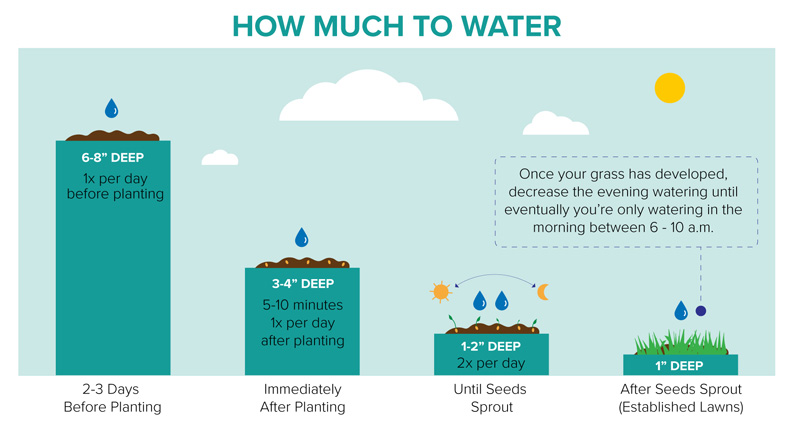
Image Source: www.melnor.com
Fathoming Your Sprinkler’s Water Output
Before you can determine the oscillating sprinkler run time, you need to know how much water oscillating sprinkler systems deliver. This is primarily determined by the sprinkler head’s output rate and the water pressure in your system.
Sprinkler Head Output Rate
Each oscillating sprinkler head has a specific output rate, often measured in gallons per minute (GPM) or inches per hour (IPH). This information might be printed on the sprinkler itself or found in the manufacturer’s manual. If not, you can perform a simple test:
- Place a straight-sided can or container (like a tuna can or a large coffee can) in the sprinkler’s path.
- Run the sprinkler for a set amount of time, say 10 minutes.
- Measure the depth of water collected in the can.
- Calculate the output per hour:
- If you measured in inches: Multiply the depth by 6 (to convert 10 minutes to an hour). This gives you inches per hour.
- If you measured in ounces: Convert ounces to gallons (1 gallon = 128 ounces). Divide gallons by the time in hours (10 minutes = 1/6 hour) to get GPM. Then, multiply GPM by 60 to get GPH (gallons per hour). To convert GPH to IPH (inches per hour), you’ll need to know your sprinkler’s coverage area and use a conversion factor based on the volume of water.
A typical oscillating sprinkler might deliver around 0.3 to 0.5 inches of water per hour.
Water Pressure’s Role
Water pressure is another crucial factor. Higher pressure generally means more water output, while lower pressure reduces it. You can check your home’s water pressure with a pressure gauge that screws onto an outdoor faucet. The ideal pressure for most sprinkler systems is between 30 and 50 PSI (pounds per square inch). If your pressure is too high, you might need a pressure regulator. If it’s too low, you might need to adjust your main water valve or consider a booster pump.
Achieving Deep Watering with Oscillating Sprinklers
The goal of watering is to encourage deep root growth. Shallow roots make grass more vulnerable to drought and disease. Deep watering lawn oscillating sprinkler use means applying enough water to moisten the soil to a depth of 4-6 inches.
Why Deep Watering Matters
- Stronger Roots: Grass with deep roots can access moisture further down in the soil, making it more resilient during dry spells.
- Reduced Weed Growth: When the surface soil dries out, weed seeds are less likely to germinate.
- Healthier Grass: Deep watering promotes overall plant health and vigor.
How to Gauge Soil Moisture
After running your sprinkler, you can check how deeply the water has penetrated the soil.
- Use a trowel or screwdriver. Gently push it into the watered soil.
- Observe the moisture level. The soil should be moist down to at least 4 inches. If it’s only wet on the surface, you need to water longer. If it’s saturated and muddy, you’re likely overwatering.
Determining Oscillating Sprinkler Run Time
Now that you know your sprinkler’s output, you can calculate the lawn watering duration oscillating sprinkler needs to deliver the desired amount of water.
The Calculation Method
Let’s say your oscillating sprinkler delivers 0.4 inches of water per hour. To achieve 1 inch of water (a common target for a good watering session), you would need to run the sprinkler for:
Run Time (Hours) = Desired Water Depth (Inches) / Sprinkler Output (Inches per Hour)
In our example:
Run Time (Hours) = 1 inch / 0.4 inches per hour = 2.5 hours
However, this is if the sprinkler is stationary. An oscillating sprinkler moves. The effective time it spends in one spot is what matters. A more practical approach is to consider the time it takes to apply the desired amount of water to a specific area.
A general rule of thumb for oscillating sprinklers is:
- Apply 1 inch of water.
- This typically takes 20-30 minutes for a single zone.
This is a starting point. You must adjust based on your observations.
Factors Influencing Run Time
Several factors can alter the ideal oscillating sprinkler run time:
- Soil Type:
- Sandy soils: Drain quickly. They may require more frequent, shorter watering sessions.
- Clay soils: Absorb water slowly. They can be prone to runoff if watered too quickly or for too long. It’s better to water in cycles (e.g., 15 minutes on, then let it soak for an hour, then another 15 minutes).
- Grass Type: Different grass varieties have varying water needs. Cool-season grasses (like fescue and bluegrass) often need more water than warm-season grasses (like Bermuda and Zoysia) during hot periods.
- Weather Conditions:
- Hot and dry weather: Increases evaporation. You may need to water longer or more frequently.
- Windy conditions: Can cause uneven distribution and increase evaporation. Adjust watering times or water during calmer periods.
- Rainfall: Always factor in natural rainfall. Use a rain gauge and adjust your schedule accordingly.
- Sun Exposure: Areas that receive full sun will dry out faster than shaded areas and may need more water.
Optimizing Your Watering Schedule
A consistent and effective watering schedule oscillating sprinkler use relies on knowing both how long to water and how often.
How Often to Water Lawn with Oscillating Sprinkler
Most established lawns benefit from deep, infrequent watering. This typically means watering 1 to 3 times per week, depending on the season, weather, and grass type. The key is to let the top inch or two of soil dry out between waterings.
- Summer: You might need to water more often, especially during heatwaves.
- Spring and Fall: Watering needs usually decrease.
- Dormant Lawns: May require very little or no supplemental watering.
The Best Time to Water Lawn Oscillating Sprinkler
The best time to water lawn oscillating sprinkler is early in the morning, typically between 4 AM and 10 AM.
Why early morning is best:
- Reduced Evaporation: Temperatures are cooler, and winds are often calmer, meaning less water is lost to evaporation.
- Disease Prevention: Watering in the morning allows grass blades to dry off during the day. Wet foliage overnight can encourage fungal diseases.
- Water Pressure: Water pressure is usually at its highest in the early morning hours.
Times to avoid:
- Midday: High temperatures and strong sunlight lead to rapid evaporation. Much of the water applied will never reach the roots.
- Evening: Leaving grass wet overnight creates a perfect environment for fungal growth and diseases.
Understanding Oscillating Sprinkler Coverage Area
The oscillating sprinkler coverage area is vital for ensuring even watering. An oscillating sprinkler typically covers a rectangular or square area. The size of this area depends on the sprinkler’s design, nozzle settings, and water pressure.
- Adjustable Sprinklers: Many oscillating sprinklers allow you to adjust the spray pattern and distance. This is crucial for matching the sprinkler’s reach to the size and shape of your lawn section.
- Overlap is Key: To ensure uniform coverage, you need to “headlight” your sprinklers. This means placing them so that the spray from one sprinkler reaches the edge of the next sprinkler’s coverage area. Without proper overlap, you’ll have dry spots and overwatered areas.
Table 1: Typical Coverage Areas for Oscillating Sprinklers
| Sprinkler Type | Typical Coverage (Sq Ft) | Notes |
|---|---|---|
| Small/Compact | 100 – 400 sq ft | Good for small, square or rectangular areas. |
| Medium/Standard | 400 – 1500 sq ft | Versatile for most residential lawns. |
| Large/Heavy-Duty | 1500 – 3000+ sq ft | For larger, rectangular lawns or specific zones. |
Important Note: The stated coverage area is often an estimate. Your actual coverage may vary based on water pressure and nozzle adjustments.
Utilizing a Sprinkler Watering Time Calculator
While you can do the math yourself, a sprinkler watering time calculator can simplify the process. These online tools or simple formulas help you determine how long to water based on your sprinkler’s output and your lawn’s needs.
You’ll typically need to input:
- Your sprinkler’s output rate (in inches per hour or GPM).
- The desired watering depth (usually 1 inch).
- The area you are watering.
These calculators often provide a run time per zone.
Example Calculation Using a Calculator
Let’s say you have a zone that is 10 feet by 20 feet (200 sq ft). Your oscillating sprinkler, when tested, delivers 0.5 inches per hour. You want to apply 1 inch of water.
- Desired Water Depth: 1 inch
- Sprinkler Output: 0.5 inches/hour
- Run Time per Inch: 1 inch / 0.5 inches/hour = 2 hours
This means that if the sprinkler were stationary and covered the entire zone evenly, it would need to run for 2 hours to apply 1 inch of water. However, since it’s an oscillating sprinkler, it moves across the zone.
The key is that the oscillating sprinkler run time is the total time the sprinkler is on in that zone to deliver the required amount of water. If your sprinkler can cover the 200 sq ft zone evenly, and it takes 2 hours of continuous operation to deliver 1 inch of water across its entire potential coverage, then you run it for the duration needed to saturate that 200 sq ft zone.
A more precise way is to focus on the rate at which water is applied to your specific area. If your sprinkler applies water at 0.5 inches per hour, and you want 1 inch, you need to expose each square foot of your lawn to water for the time it takes to deliver that 1 inch.
A simpler way to think about it:
If your sprinkler puts out 0.4 inches per hour and you want to apply 1 inch, you’ll run it for 2.5 hours total to get 1 inch of water on a spot. But in a typical lawn setting, you’re moving the sprinkler. The goal is to ensure that the average amount of water received by the grass in that zone is 1 inch after the sprinkler has traversed its path.
For an oscillating sprinkler on a typical lawn, a 20-30 minute run time per zone is a good starting point to apply roughly 0.5 inches of water. To reach 1 inch, you might run it for 40-60 minutes. Always check the soil moisture to confirm.
Adjusting for Different Lawn Areas
Not all parts of your lawn are the same. You might have slopes, shady spots, or areas with different soil compositions.
Zone Watering
Divide your lawn into zones based on similar watering needs. An oscillating sprinkler is best suited for rectangular areas.
- Rectangular Lawns: A single oscillating sprinkler can often cover a significant portion of a rectangular lawn effectively, provided you adjust its range and movement.
- Irregularly Shaped Lawns: You may need to move the sprinkler or use multiple sprinklers to cover all areas adequately.
Slope Considerations
Watering on slopes can be tricky. Water tends to run off the surface before it can soak in.
- Cycle and Soak: For sloped areas, use the “cycle and soak” method. Water for a shorter period (e.g., 10-15 minutes), let the water soak into the soil for an hour or two, and then water again. This prevents runoff and allows water to penetrate deeper.
- Adjust Sprinkler Range: Reduce the sprinkler’s reach so it doesn’t spray water onto hard surfaces or areas that are already saturated.
Maintaining Your Oscillating Sprinkler
A well-maintained sprinkler performs better and lasts longer.
- Clean Nozzles: Clogged nozzles reduce water flow and can disrupt the spray pattern. Clean them periodically with a small brush or pin.
- Check for Leaks: Inspect the hose connections and the sprinkler body for any leaks.
- Proper Storage: In colder climates, drain and store your sprinkler indoors during winter to prevent damage from freezing.
Frequently Asked Questions (FAQ)
Q1: How do I know if my oscillating sprinkler is watering evenly?
A1: Place several empty cans (like tuna cans or cat food cans) around the area the sprinkler is covering. Run the sprinkler for a set time (e.g., 15 minutes). Measure the amount of water in each can. The water depth should be relatively consistent across all cans. If there are significant differences, adjust the sprinkler’s position or its spray pattern.
Q2: Can I use a sprinkler watering time calculator for any sprinkler?
A2: While the principles apply broadly, a sprinkler watering time calculator is most accurate when you know the specific output rate of your sprinkler. For oscillating sprinklers, testing their output rate as described earlier is the best way to get accurate figures for calculations.
Q3: How much water does an oscillating sprinkler typically apply in 30 minutes?
A3: If your oscillating sprinkler applies 0.4 inches per hour, in 30 minutes (0.5 hours), it will apply approximately 0.2 inches of water (0.4 inches/hour * 0.5 hours). This is a good amount for a light watering or if you plan to water again later in the day. For a deep watering, you’ll need to run it longer or repeat the process.
Q4: What is the optimal watering depth for my lawn?
A4: For most established lawns, the optimal watering depth is 4-6 inches. This encourages deep root growth. You want to moisten the soil to this depth without waterlogging it.
Q5: Is it better to water my lawn every day with an oscillating sprinkler?
A5: No, it is generally not recommended to water your lawn every day with an oscillating sprinkler. Deep, infrequent watering promotes healthier, more drought-tolerant grass. Watering daily often leads to shallow roots and can increase the risk of fungal diseases. Aim for 1-3 times per week, allowing the soil to dry slightly between waterings.
Q6: How does the oscillating sprinkler coverage area affect my watering schedule?
A6: Knowing your oscillating sprinkler coverage area is crucial for planning. If your sprinkler covers a small area, you’ll need to move it more frequently to water your entire lawn. If it covers a larger area, you might be able to water longer in one spot. Overlapping coverage ensures no dry spots, so you might need to adjust oscillating sprinkler run time or placement to achieve this.
By following these guidelines and paying attention to your lawn’s specific needs, you can effectively use your oscillating sprinkler to maintain a healthy and vibrant landscape. Remember, observation and adjustment are key to successful lawn care.