
When it comes to getting paid for your hard work, how to bill lawn care customers effectively is paramount. The best strategy involves clear communication, accurate record-keeping, and offering convenient payment options. This guide will walk you through everything you need to know to ensure your lawn care business runs smoothly and profitably.
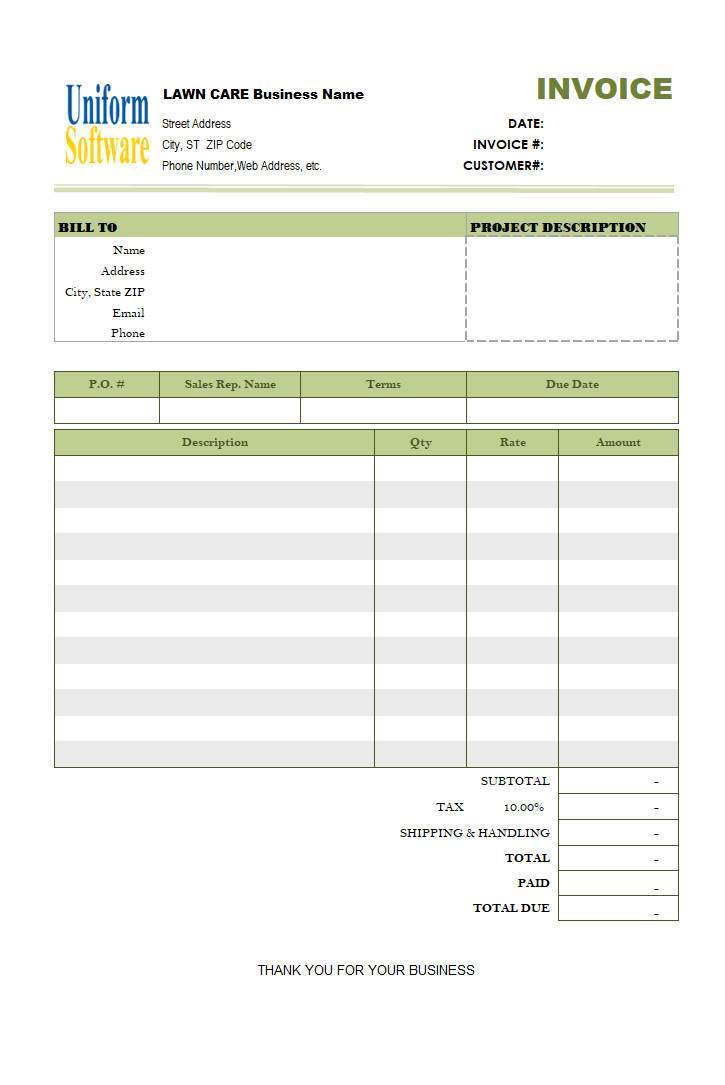
Image Source: uniformsoftware.com
Crafting Clear Lawn Care Invoices
Creating professional and easy-to-understand lawn care invoices is the foundation of a good billing system. A well-made invoice acts as a receipt, a record of services, and a prompt for payment.
Essential Components of a Lawn Care Invoice
Every invoice you send out should contain specific information to avoid confusion and facilitate prompt payment.
- Your Business Information:
- Business Name
- Your Name (if a sole proprietor)
- Address
- Phone Number
- Email Address
- Website (if applicable)
- Client Information:
- Client’s Full Name
- Client’s Address
- Client’s Phone Number
- Client’s Email Address
- Invoice Details:
- Unique Invoice Number (crucial for tracking)
- Invoice Date
- Service Date(s)
- Due Date (based on your payment terms)
- Description of Services:
- Detailed breakdown of each service performed (e.g., mowing, trimming, fertilizing, aeration).
- Specify the area serviced (e.g., front yard, back yard, total property).
- List any materials used and their costs (e.g., fertilizer type, weed killer).
- Pricing Breakdown:
- Unit price for each service.
- Quantity of each service.
- Subtotal for each service.
- Applicable taxes.
- Total Amount Due.
- Payment Information:
- Accepted payment methods.
- Instructions for payment.
- Any late payment penalties (clearly stated).
Utilizing Lawn Care Invoice Templates
Using lawn care invoice templates can save you time and ensure consistency in your billing. Many software programs and online services offer customizable templates.
- Digital Templates:
- Word Processors/Spreadsheets: Basic templates can be created or found in Microsoft Word, Google Docs, Excel, or Google Sheets. These are simple and free to use.
- Accounting Software: QuickBooks, Xero, and other accounting platforms have built-in invoicing features with professional templates.
- CRM/Field Service Software: Specialized software for lawn care businesses often includes robust invoicing capabilities tailored to the industry.
- Key features to look for in a template:
- Professional design.
- Easy customization.
- Ability to add your logo.
- Fields for all necessary information.
- Option to save and send as a PDF.
Developing Effective Lawn Care Billing Strategies
Beyond just sending an invoice, a strategic approach to billing can significantly impact your cash flow and client relationships. Lawn care billing strategies should focus on clarity, promptness, and customer satisfaction.
Determining Your Lawn Service Pricing
Accurate lawn service pricing is crucial for profitability and competitiveness. It involves understanding your costs and the value you provide.
- Cost-Plus Pricing: Calculate all your operating costs (labor, fuel, equipment maintenance, insurance, marketing, administrative costs) and add a profit margin.
- Value-Based Pricing: Price services based on the perceived value to the customer, considering factors like property size, complexity, and desired quality of work.
- Competitive Pricing: Research what competitors in your area are charging for similar services.
- Factors to Consider When Setting Prices:
- Property Size: Larger properties naturally cost more to service.
- Terrain and Accessibility: Steep slopes, tight spaces, or remote locations can increase labor time.
- Type of Services: Basic mowing is different from intricate landscaping or specialized treatments.
- Frequency of Service: Contracts for weekly or bi-weekly services might offer a slight discount compared to one-off jobs.
- Equipment Used: Specialized equipment can justify higher prices.
- Your Overhead Costs: Don’t forget insurance, vehicle expenses, and administrative tasks.
How to Charge for Lawn Care
The method you use to how to charge for lawn care can impact client perception and your administrative workload.
- Per Visit (One-Time Services): Charge for each service as it’s completed. This is common for seasonal cleanups or specific project work.
- Recurring Services (Contracts): Offer monthly or seasonal contracts for regular maintenance. This provides predictable income.
- Hourly Rate: Suitable for unpredictable tasks or specialized work where the time involved is hard to estimate upfront. Be transparent about your hourly rate.
- Flat Rate/Package Pricing: Bundle several services together for a fixed price. This can be attractive to clients looking for comprehensive care.
Setting Lawn Maintenance Payment Terms
Clear lawn maintenance payment terms prevent disputes and ensure you get paid on time. These terms should be communicated upfront and included on all invoices.
Common Payment Terms
- Due Upon Receipt: Payment is expected immediately after the invoice is delivered.
- Net 15: Payment is due 15 days from the invoice date.
- Net 30: Payment is due 30 days from the invoice date.
- Due at Time of Service: Common for one-off jobs or new clients.
Late Payment Policies
It’s wise to have a clear policy for late payments.
- Grace Period: Consider a short grace period (e.g., 3-5 days) before applying penalties.
- Late Fees: Specify a flat fee or a percentage of the outstanding amount for payments received after the due date.
- Interest Charges: Some businesses charge a monthly interest rate on overdue balances.
- Communication: Always communicate your late payment policy clearly and politely when discussing services.
Offering Convenient Lawn Care Payment Options
The easier it is for clients to pay you, the faster you’ll get paid. Offering multiple lawn care payment options enhances customer satisfaction and streamlines your payment process.
Traditional Payment Methods
- Cash: Still a viable option for some clients, especially for smaller jobs. Keep detailed records.
- Checks: A common method, but can involve processing delays and the risk of bounced checks.
Modern Payment Solutions
- Credit/Debit Cards: Widely accepted and preferred by many customers. You’ll need a payment processor (e.g., Square, Stripe, PayPal) and potentially a card reader.
- Online Payment Portals: Many accounting software solutions and payment processors offer online portals where clients can view invoices and pay directly.
- Bank Transfers/ACH: Direct bank transfers are efficient and have lower processing fees than credit cards. You’ll need to collect client bank details (securely, of course).
- Mobile Payment Apps: Apps like Venmo or Zelle can be convenient for smaller businesses, but ensure they are suitable for business transactions and that you’re tracking payments properly.
Table: Comparison of Payment Methods
| Payment Method | Pros | Cons | Best For |
|---|---|---|---|
| Cash | Immediate payment, no fees | Security risks, difficult to track | Small, cash-based businesses, one-off jobs |
| Checks | Widely accepted, good for record-keeping | Processing delays, risk of bounces | Traditional clients, larger businesses |
| Credit/Debit Cards | Customer convenience, faster payment | Processing fees, equipment costs | Most businesses, online payments |
| Online Payment Portals | Convenient, automated, professional | Requires integration, potential fees | Businesses using accounting software, recurring clients |
| Bank Transfers/ACH | Low fees, direct deposit | Requires client bank info, setup time | Recurring payments, larger transactions |
| Mobile Payment Apps | Fast, convenient for small amounts | Less formal, may have transaction limits | Very small businesses, informal transactions |
Best Practices for Lawn Care Billing
Adhering to best practices for lawn care billing will foster trust, reduce administrative headaches, and improve your bottom line.
Timely Invoicing
Send invoices promptly after service completion. Waiting too long can lead to confusion about what was done and when.
Consistent Communication
Maintain open lines of communication with your clients. If there’s a delay in payment or a question about an invoice, reach out proactively.
Detailed Service Records
Keep meticulous records of every service performed for each client. This is vital for accurate invoicing lawn care clients and for resolving any disputes.
Follow-Up on Overdue Invoices
Don’t be afraid to follow up on unpaid invoices. A polite reminder can often resolve the issue.
- First Reminder: A few days after the due date.
- Second Reminder: A week or two after the first reminder.
- Final Notice: If payment is still outstanding, issue a final notice detailing consequences (e.g., late fees, service suspension).
Automate Where Possible
Utilize software to automate invoicing, payment reminders, and payment processing. This frees up your time to focus on your core business.
Managing Lawn Care Service Contracts
For recurring services, having solid lawn care service contracts is essential. These agreements protect both you and your clients.
Key Elements of a Lawn Care Contract
- Parties Involved: Full legal names and addresses of your business and the client.
- Scope of Services: A clear, detailed description of all services to be performed (e.g., weekly mowing, seasonal fertilization schedule, tree trimming frequency).
- Schedule of Services: Specific dates or frequency of service visits.
- Pricing and Payment Terms: Clearly state the total cost, payment schedule (e.g., monthly, seasonal), and due dates.
- Contract Duration: The start and end dates of the contract.
- Cancellation Policy: Conditions under which either party can terminate the contract and any associated fees.
- Responsibilities: Outline what each party is responsible for (e.g., client ensuring access to property, you providing specific quality of work).
- Insurance and Liability: Mention your business insurance coverage.
- Governing Law: The state laws that will govern the contract.
- Signatures: Both parties must sign and date the contract.
Benefits of Using Contracts
- Clear Expectations: Ensures both parties know what to expect.
- Legal Protection: Provides a legal framework for the agreement.
- Cash Flow Stability: Predictable income for recurring services.
- Reduced Disputes: Minimizes misunderstandings regarding services or payments.
Tracking Payments and Managing Accounts Receivable
Efficiently tracking payments and managing accounts receivable is vital for the financial health of your lawn care business.
Methods for Tracking Payments
- Spreadsheets: A simple way to track invoices, payments, and outstanding balances for smaller businesses.
- Accounting Software: Dedicated software like QuickBooks, Xero, or Wave provides robust features for tracking invoices, payments, expenses, and generating financial reports.
- CRM/Field Service Software: Many specialized business management tools include integrated invoicing and payment tracking.
Key Metrics to Monitor
- Accounts Receivable Aging: Track how long invoices have been outstanding.
- Days Sales Outstanding (DSO): The average number of days it takes to collect payment after a sale.
- Customer Payment History: Identify clients who consistently pay late or have payment issues.
Frequently Asked Questions (FAQ)
Here are some common questions related to billing for lawn care services:
Q1: What is the best way to handle initial client payments?
A1: For new clients or significant one-off projects, consider requesting a deposit upfront (e.g., 25-50%) to secure the booking and cover initial costs. This also demonstrates commitment from the client.
Q2: Can I charge a late fee on overdue invoices?
A2: Yes, you can, provided you clearly state your late fee policy in your payment terms and on your invoices. Ensure the fee is reasonable and compliant with local regulations.
Q3: How often should I send invoices for recurring lawn maintenance?
A3: Most lawn care businesses invoice on a monthly basis for recurring services. Some may opt for bi-weekly invoicing, especially for high-frequency services. The key is consistency.
Q4: What should I do if a client’s check bounces?
A4: Contact the client immediately to inform them. You can charge a bounced check fee (if your policy allows and is stated) to cover bank fees. Request payment via a more reliable method like cash, certified check, or credit card.
Q5: How do I know if my lawn service pricing is competitive?
A5: Research local competitors by checking their websites, asking for quotes (as a potential customer), or networking with other industry professionals. Also, ensure your pricing covers your costs and allows for a healthy profit margin.
By implementing these strategies and best practices, you can establish a robust and efficient billing system for your lawn care business, ensuring you get paid fairly and on time for the valuable services you provide.